Artwork
Madonna and Child with Saints Francis and Dominic and Angels
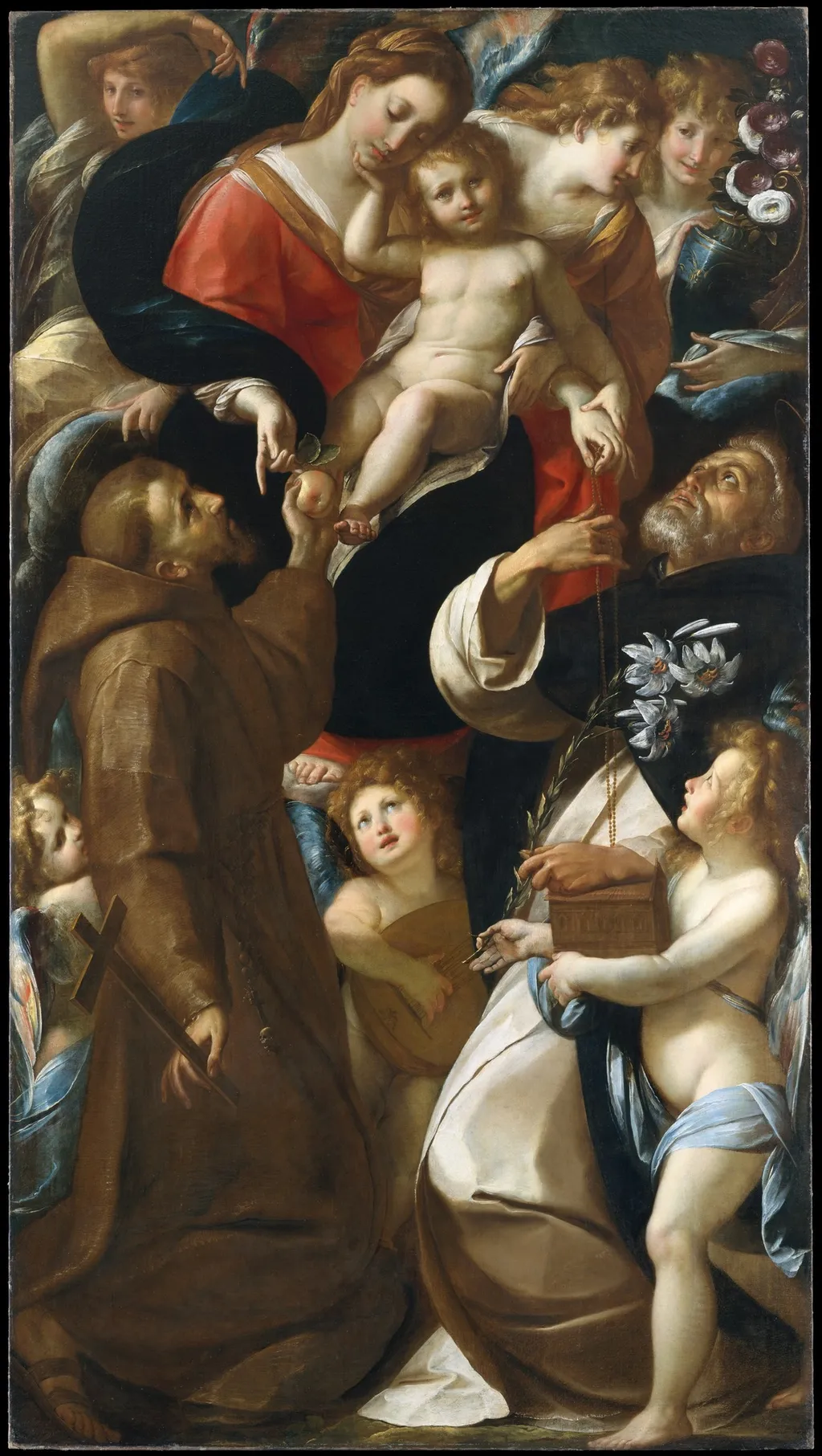
Madonna and Child with Saints Francis and Dominic and Angels is an oil painting by the Early Baroque Italian artist Giulio Cesare Procaccini. It dates from 1610 and is held in the collection of the Metropolitan Museum of Art.
About this work
Subject & Meaning
The arrangement creates a hierarchical structure typical of religious paintings from this period, directing the viewer's focus toward the central holy figures.
The painting depicts a sacred assembly centered on the Madonna and Child, who serve as the main subject of the composition. Flanking the Virgin and the Christ Child are two prominent saints: Francis of Assisi and Saint Dominic, representing the Franciscan and Dominican orders respectively. The scene is further populated by angels, enhancing the celestial nature of the gathering.
As a work of religious art created in 1610, the iconography emphasizes the intercession of these saints before the divine mother and child. The inclusion of Francis and Dominic, both foundational figures in the Catholic Church, suggests a thematic focus on spiritual devotion and the unity of different religious traditions under the protection of Mary. The arrangement creates a hierarchical structure typical of religious paintings from this period, directing the viewer's focus toward the central holy figures.
Technique & Style
Giulio Cesare Procaccini executed Madonna and Child with Saints Francis and Dominic and Angels in 1610 using oil paint applied to a canvas support. The work measures 257 cm in height and 143 cm in width, establishing a substantial vertical format typical for religious altarpieces of the period. As a painting classified within the religious genre, the piece depicts the Virgin Mary, the Christ Child, Saint Dominic, Saint Francis of Assisi, and angels.
The medium of oil on canvas allowed for the rich coloration and textural depth characteristic of Procaccini's Baroque style, facilitating the detailed rendering of the sacred figures and their celestial attendants. The physical dimensions and material composition reflect the standard practices for major devotional commissions of the early 17th century, ensuring durability and visual impact within a church or collection setting.
History & Provenance
Giulio Cesare Procaccini executed the oil painting Madonna and Child with Saints Francis and Dominic and Angels in 1610. Created on canvas, the work measures 257 by 143 centimeters and depicts a religious scene featuring the Virgin Mary, the Christ Child, Saint Dominic, Saint Francis of Assisi, and angels. The piece is currently held in the collection of the Metropolitan Museum of Art, where it remains located.
While the specific original commissioner and the detailed chain of ownership prior to its museum acquisition are not detailed in the available records, the work's inception is firmly established at the beginning of the seventeenth century.
Context
Created in 1610, this oil on canvas by Giulio Cesare Procaccini exemplifies the mature religious compositions of the Lombard Baroque, reflecting the Counter‑Reformation emphasis on devotional imagery. As recorded in the Metropolitan Museum of Art’s collection data, the painting portrays the Madonna and Child flanked by Saints Francis and Dominic with attendant angels, a subject documented in both the work’s internal description and its Wikidata entry. Scholarship identifies Procaccini’s stylistic lineage in the influence of Leonardo and the Lombard school, positioning this piece within the broader trajectory of early‑17th‑century Italian sacred art.
Critical literature discusses its graceful modeling and devotional intensity, noting its significance in the artist’s oeuvre and its role in shaping the visual language of Counter‑Reformation altar pieces.
Overview
Created in 1610 by Giulio Cesare Procaccini, this oil painting depicts a sacred conversation featuring the Virgin Mary, the Christ Child, Saint Francis of Assisi, and Saint Dominic. The composition arranges these figures in a dense, pyramidal grouping characteristic of the Italian Baroque, emphasizing intimate interaction over spatial depth. The Virgin, draped in a red robe, holds the nude Christ Child, who extends his hand toward Saint Francis.
The saint, identifiable by his brown habit and stigmata, leans forward in a gesture of veneration. Opposite him stands Saint Dominic in a black and white habit. Four putti float in the upper register, some holding floral garlands or musical instruments, adding a celestial dimension to the scene.
Procaccini employs a warm, rich palette and soft chiaroscuro to model the fleshy forms and drapery, reflecting his transition from Mannerist elegance to a more robust, naturalistic style prevalent in early 17th-century Lombardy. This work exemplifies the artist's ability to synthesize religious devotion with dynamic physical presence, marking a significant moment in his mature career before his later, more dramatic phases.
Artist & collection
Artist
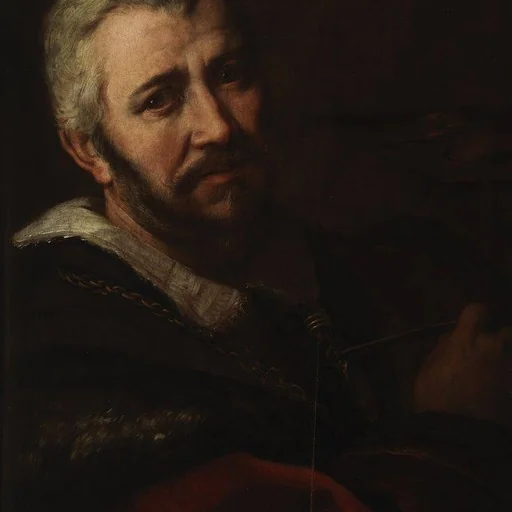
Giulio Cesare Procaccini (30 May 1574 – 14 November 1625) was an Italian painter and sculptor of the early Baroque era in Milan.

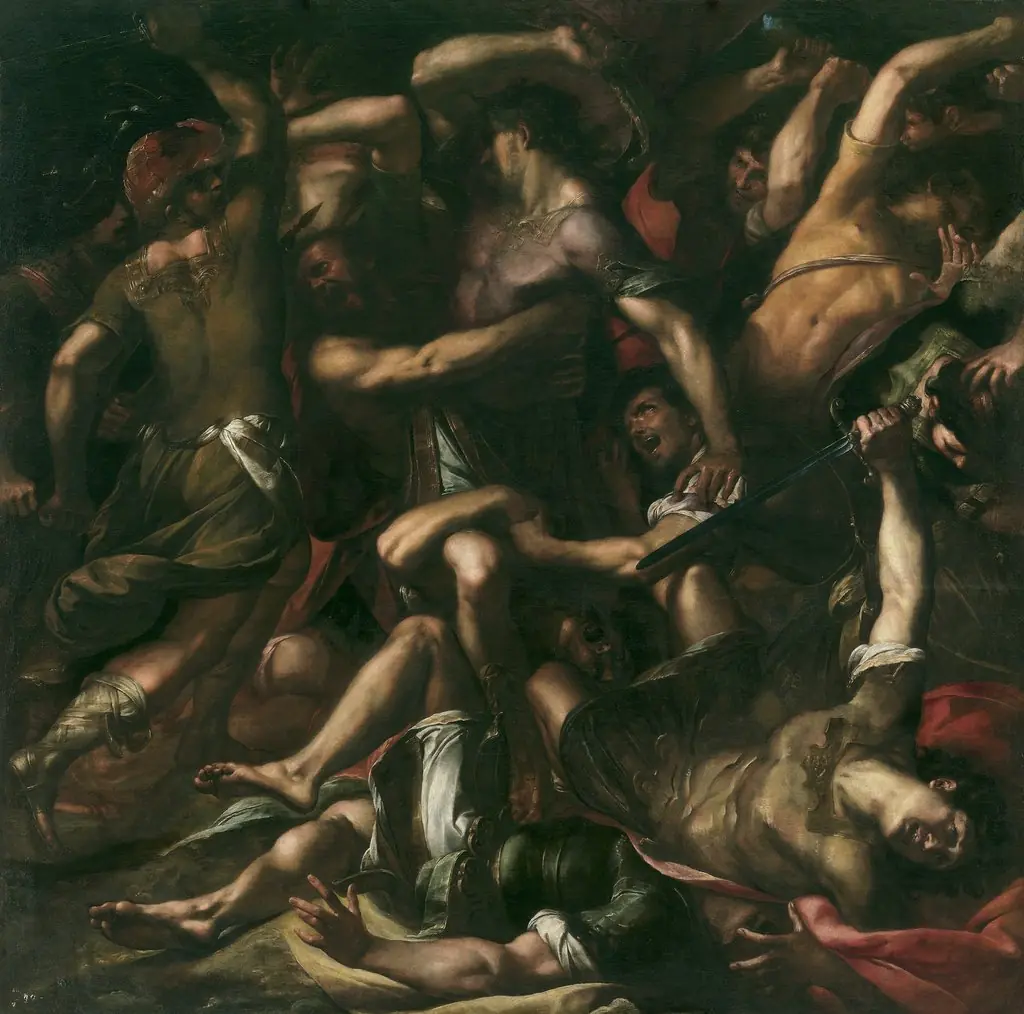
- The Virgin and Child between the Theological Virtues and Saints
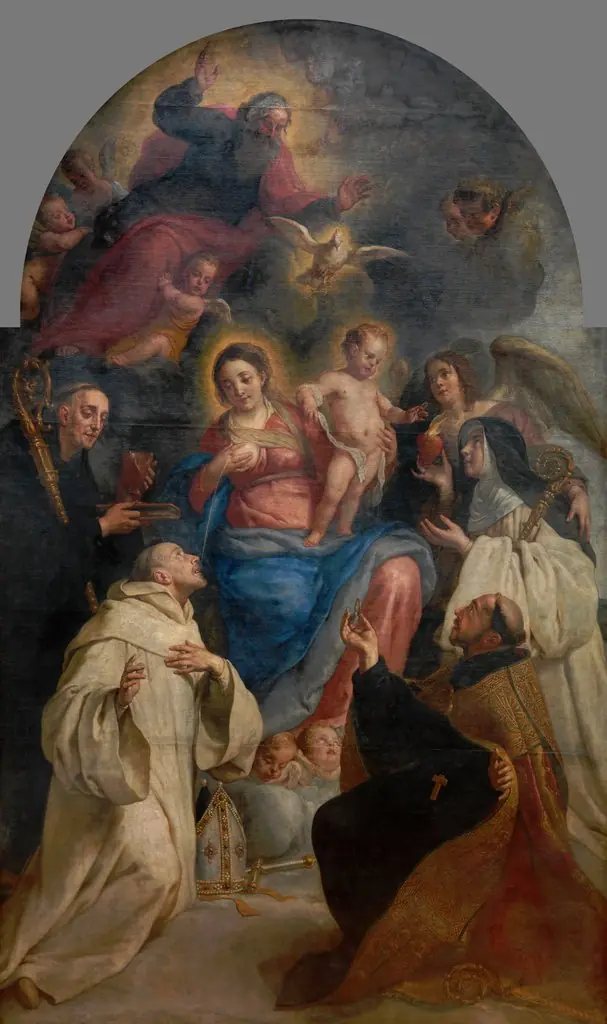 Lactatio of Saint Bernard of Clairvaux
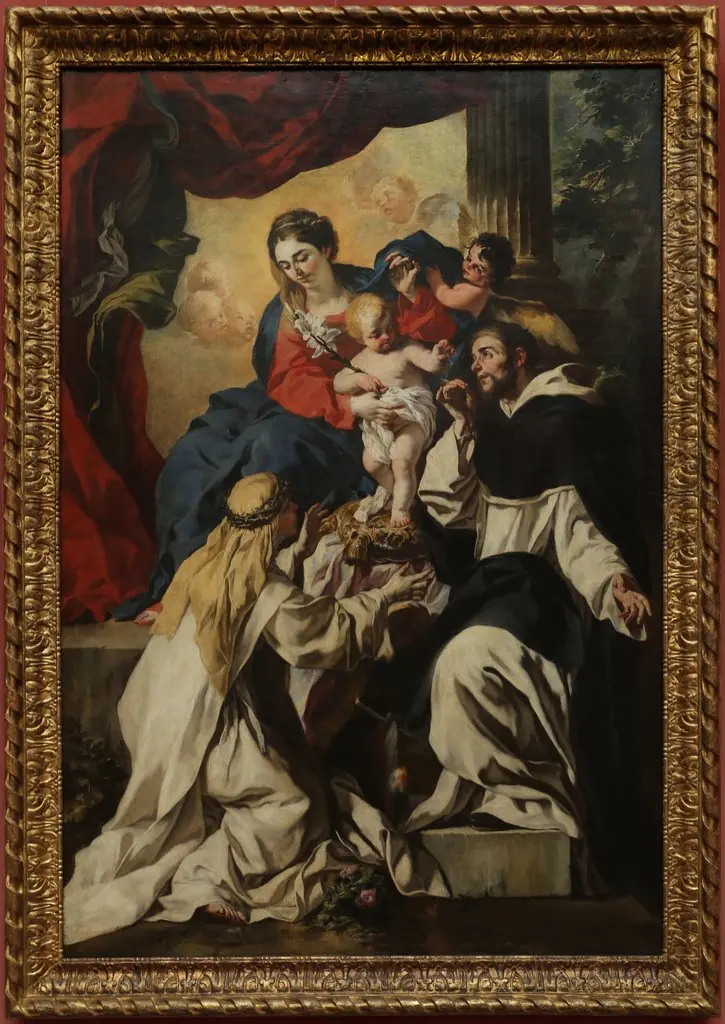 Die thronende Maria mit dem Kind, dem Heiligen Dominikus und der Heiligen Katharina von Siena (Rosenkranzmadonna)
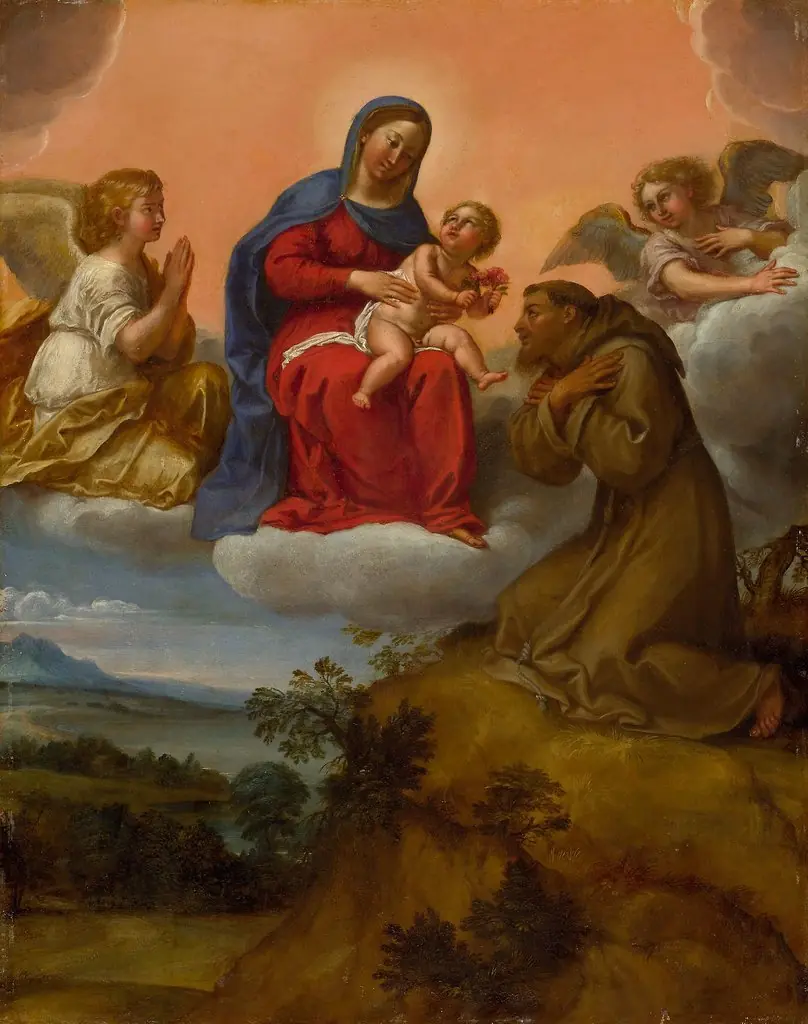 Virgin and Child Adored by Saint Francis
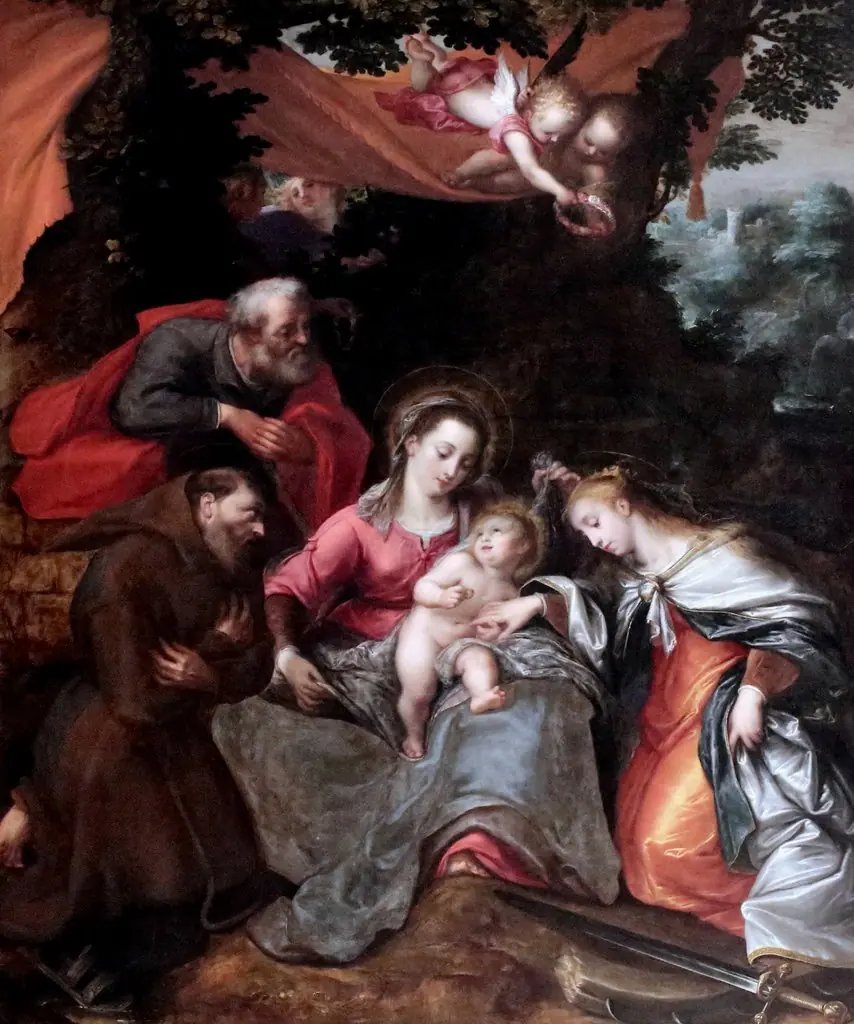 The Mystic Marriage of St. Catherine
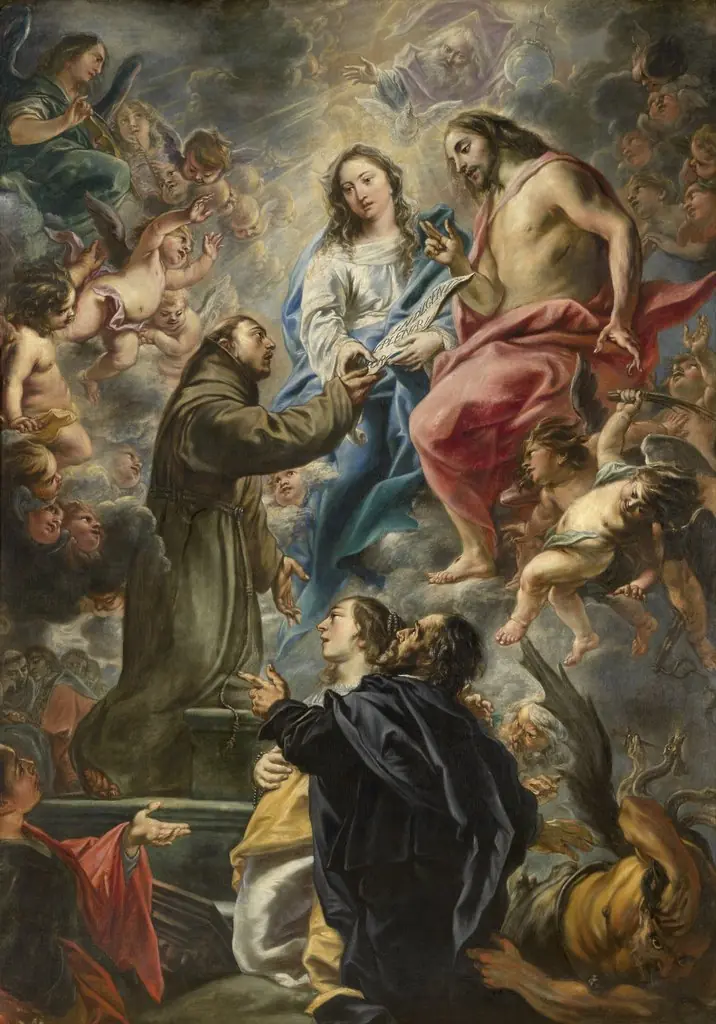 Portiuncula
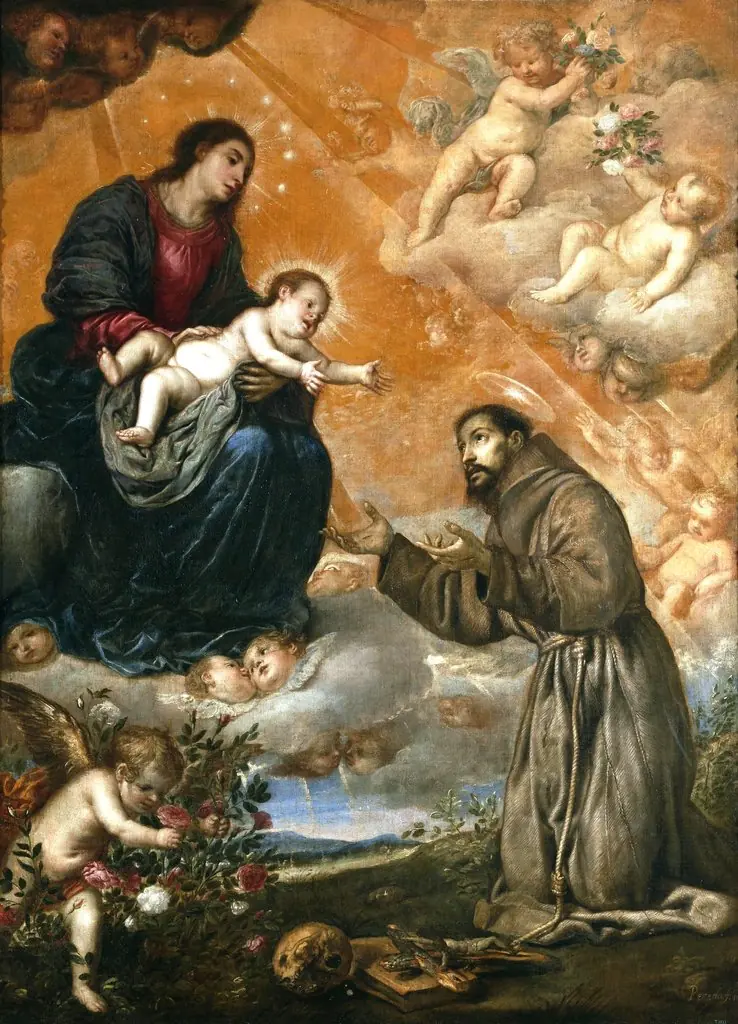 Saint Francis of Assisi in the Portiuncula
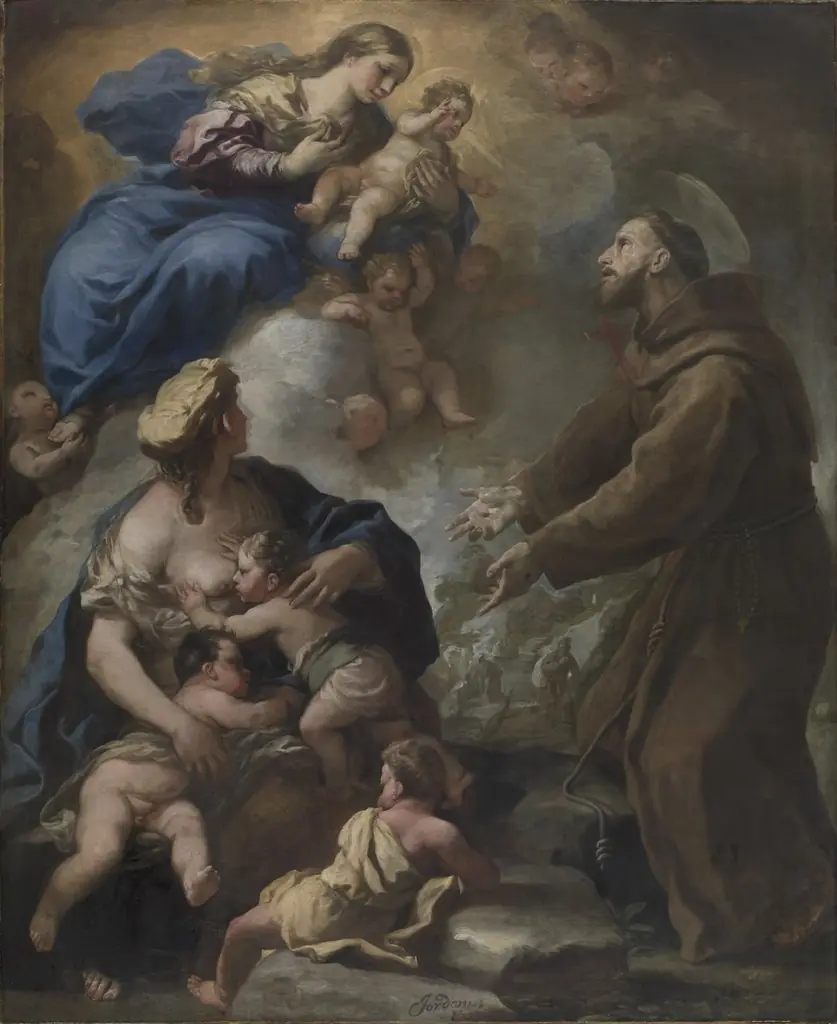 The Virgin and Child Appearing to Saint Francis of Assisi
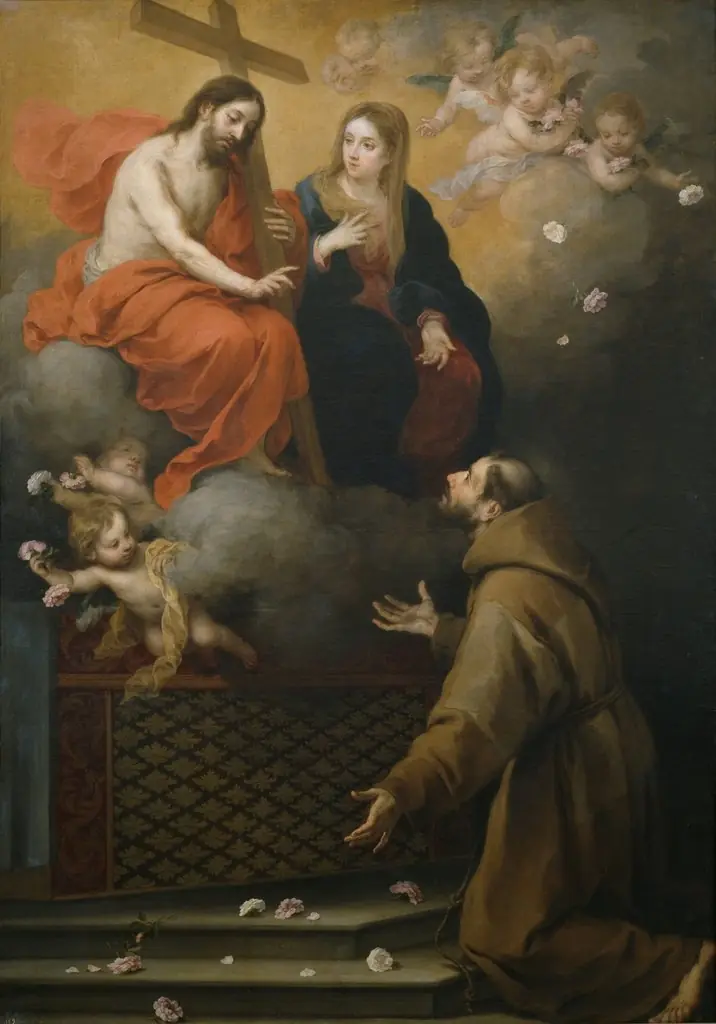 The Vision of Saint Francis in the Portiuncula
 Saint Anthony of Padua
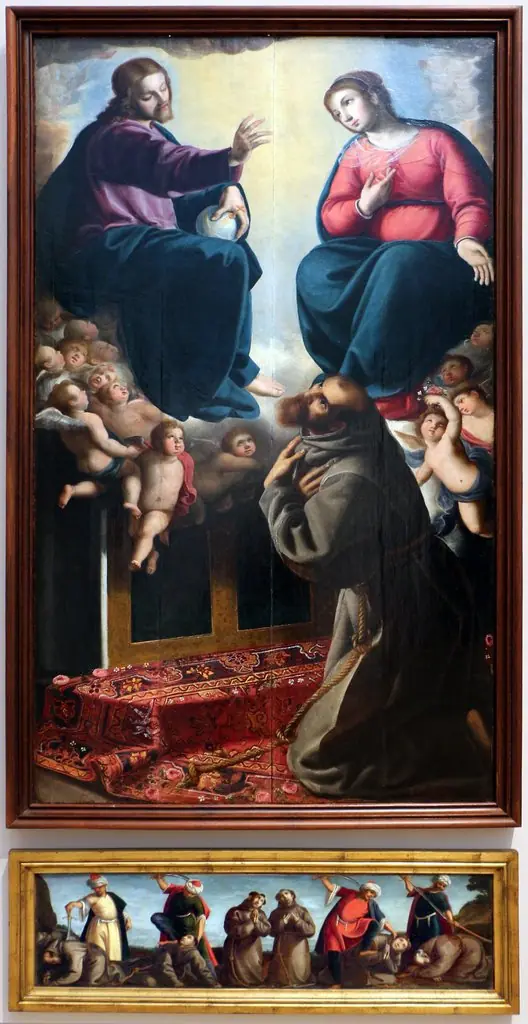 Visão de São Francisco de Assis e os Sete Mártires de Marrocos
 The Holy Family of Cardinal Fernando de’ Medici