Artwork
The Archangel Michael and the Rebel Angels
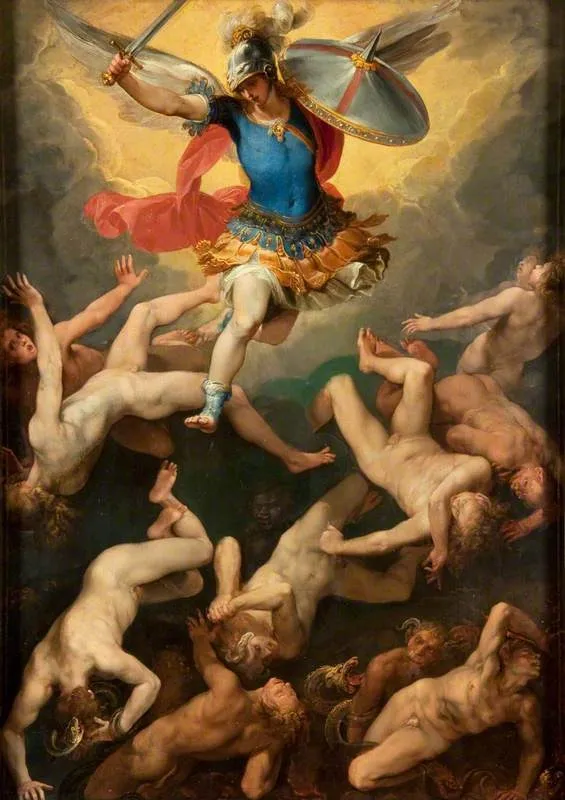
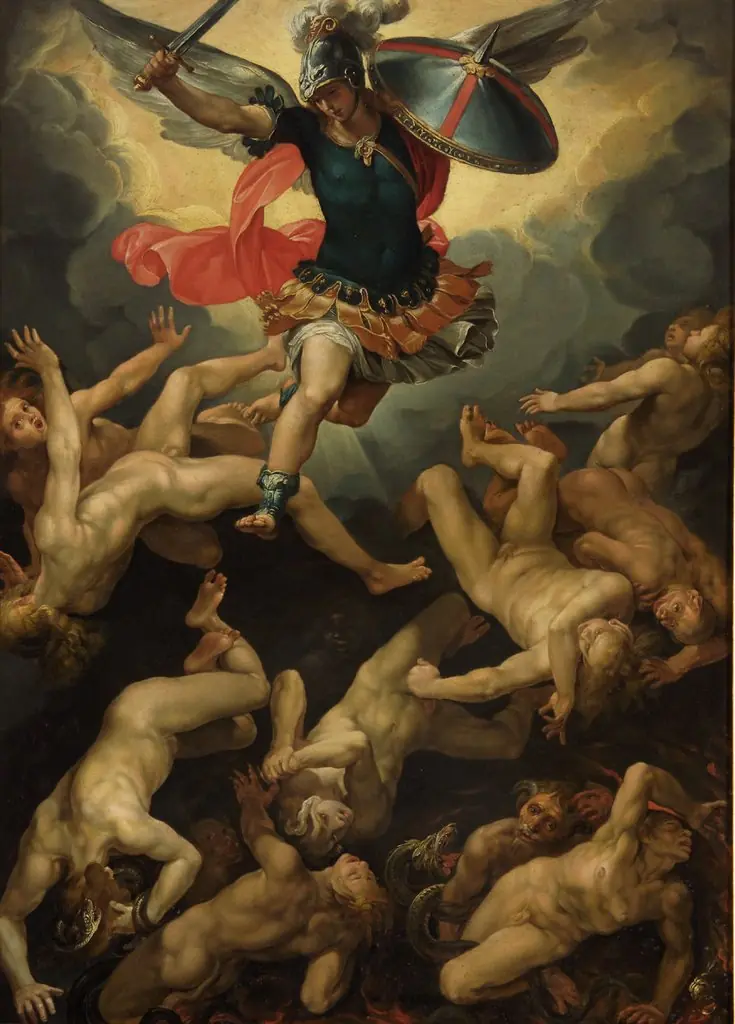
The Archangel Michael and the Rebel Angels is an oil painting by the Early Baroque Italian artist Giuseppe Cesari. It dates from 1596 and is held in the collection of the Kelvingrove Art Gallery and Museum.
About this work
Overview
The small-scale panel reflects the technical precision favored in copper painting, a medium prized for its smooth surface and luminous finish.
Painted in 1596 on copper, The Archangel Michael and the Rebel Angels is an early Baroque work by Giuseppe Cesari, known as Il Giuseppino. A leading Roman artist of his time and a knight of the Papal Court, Cesari produced this piece during his peak influence. The small-scale panel reflects the technical precision favored in copper painting, a medium prized for its smooth surface and luminous finish.
Subject & Meaning
The painting illustrates the celestial battle described in the Book of Revelation, where the Archangel Michael defeats fallen angels cast from heaven. Michael, positioned centrally, embodies divine authority, while the tumbling figures represent the expelled rebels. The composition reinforces a moral dichotomy: order versus chaos, divine will versus disobedience, rendered through dynamic motion and stark spatial contrast.
Technique & Style
Cesari employed copper as a support to achieve fine detail and vivid color saturation. His brushwork is precise, with sharp contours and fluid drapery that enhance the sense of movement. The figures are elongated in Mannerist tradition, yet the dramatic lighting and energetic poses anticipate Baroque dynamism.
The contrast between Michael’s radiant blue and red garments and the murky, cloud-filled background heightens the scene’s theatrical tension.
History & Provenance
Commissioned during Cesari’s Roman prominence, the painting entered the Kelvingrove Art Gallery and Museum’s collection in the 19th century. Its journey from papal circles to a Scottish public institution reflects broader patterns of art dispersal following the decline of ecclesiastical patronage. No definitive record of its early ownership survives, but its survival in good condition suggests careful preservation.
Context
Cesari operated a large workshop in Rome that trained emerging artists, including Caravaggio. While his style remained rooted in Mannerist elegance, the increasing emphasis on emotional intensity and chiaroscuro in his later works mirrors the broader shift toward Baroque expression. This painting sits at the intersection of these two eras, bridging idealized form with emerging naturalism.
Legacy
Though overshadowed by contemporaries like Caravaggio, Cesari’s influence on Roman painting endured through his students and his role in shaping artistic practice. The Archangel Michael and the Rebel Angels exemplifies the transitional phase in late 16th-century Italian art, where religious themes were rendered with heightened drama and technical refinement, setting the stage for the Baroque’s full emergence.
Artist & collection

Artist
Giuseppe Cesari (14 February 1568 – 3 July 1640) was an Italian Mannerist painter, also named Il Giuseppino and called Cavaliere d'Arpino, because he was created Knight of the Supreme Order of Christ by his patron Pope Clement VIII.