Artwork
Perseus and Andromeda
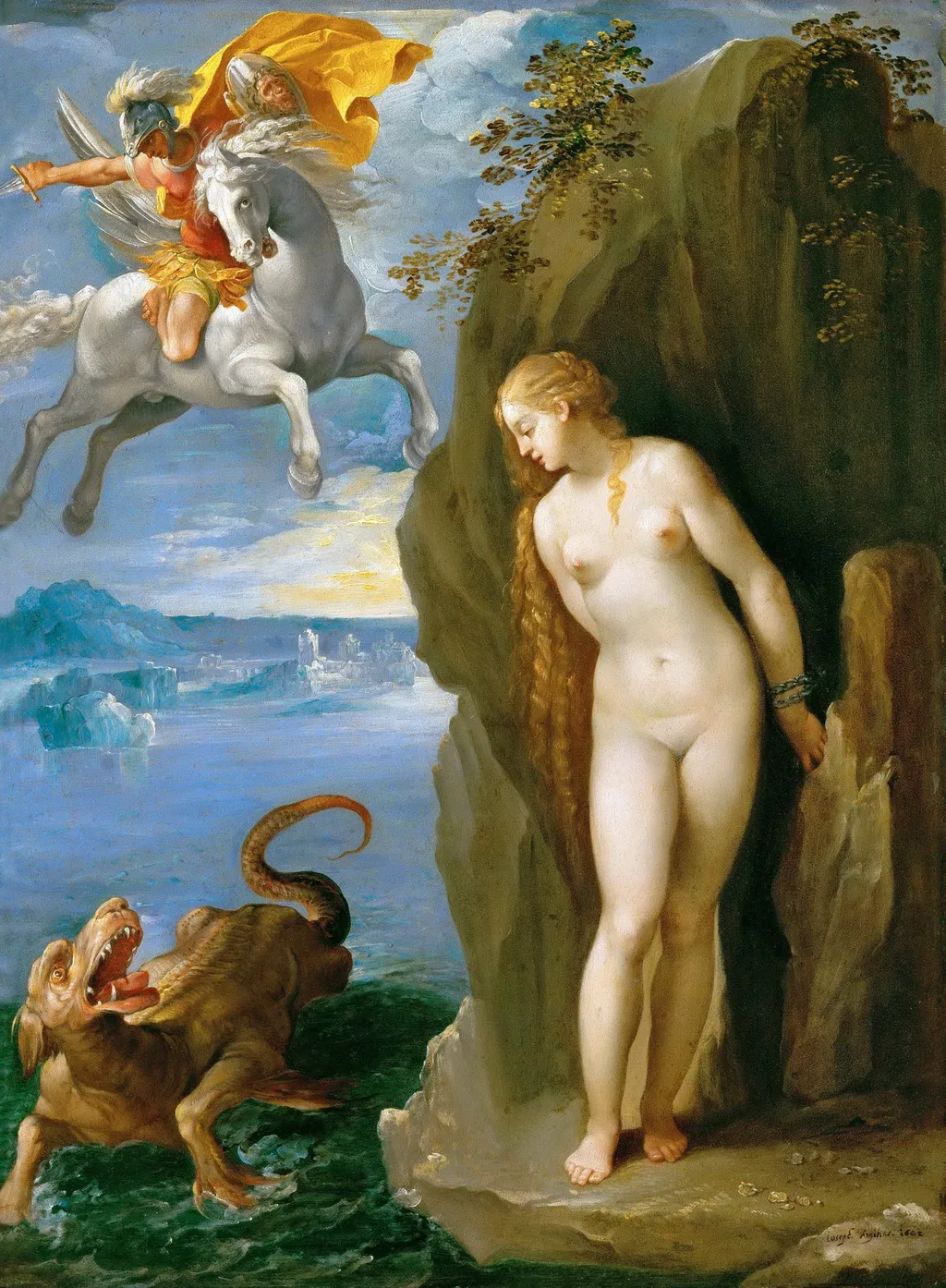
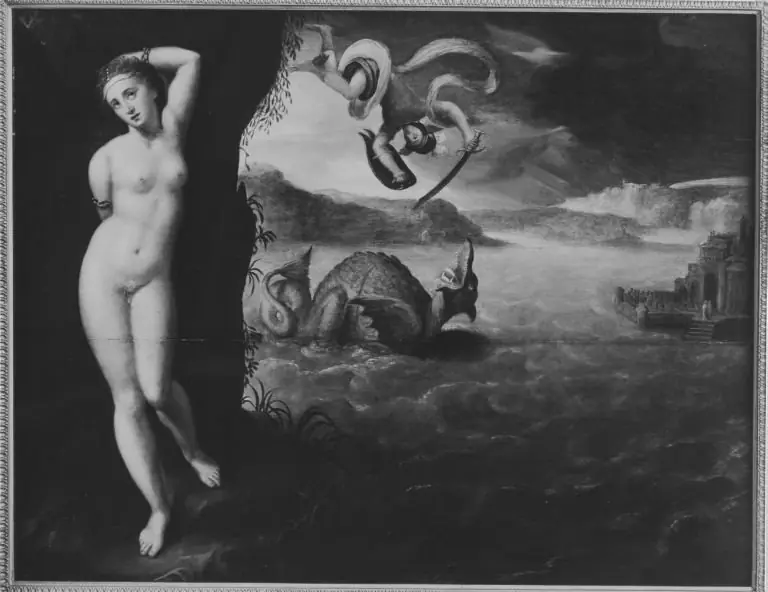
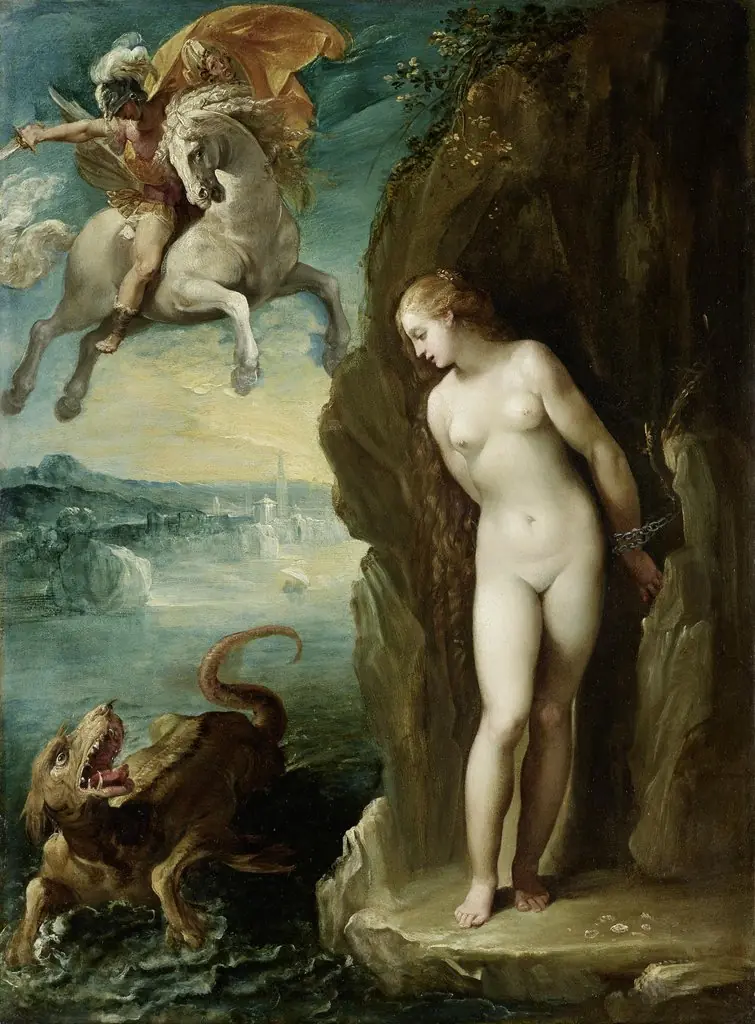
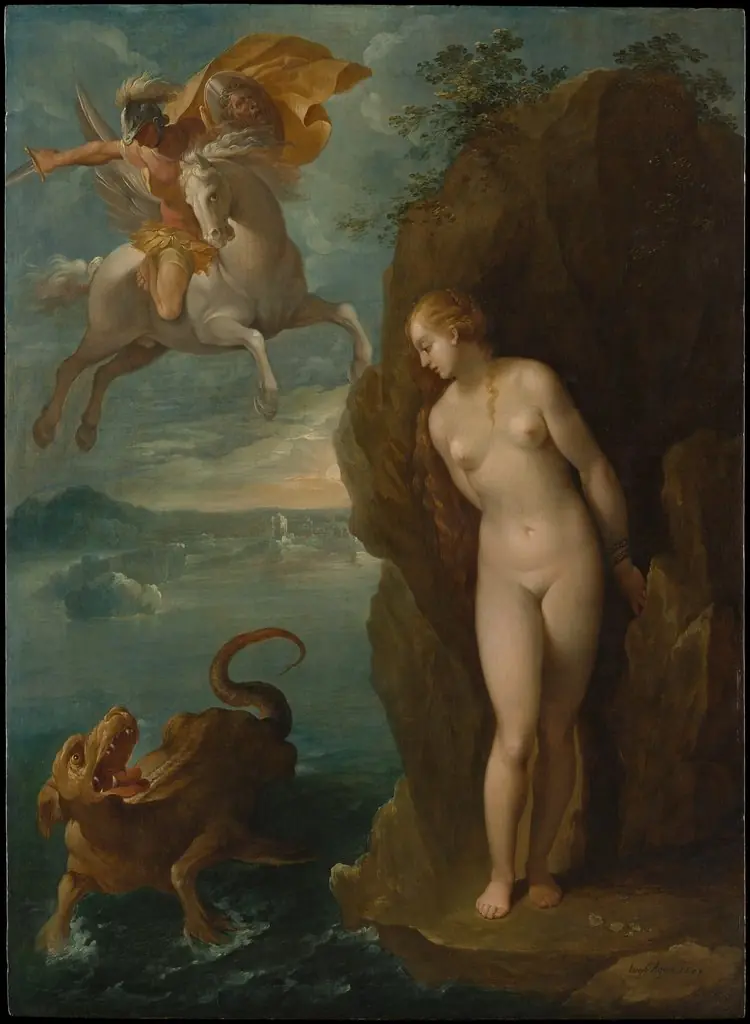
Perseus and Andromeda is an oil painting by the Early Baroque Italian artist Giuseppe Cesari. It dates from 1602 and is held in the collection of the Kunsthistorisches Museum.
About this work
Subject & Meaning
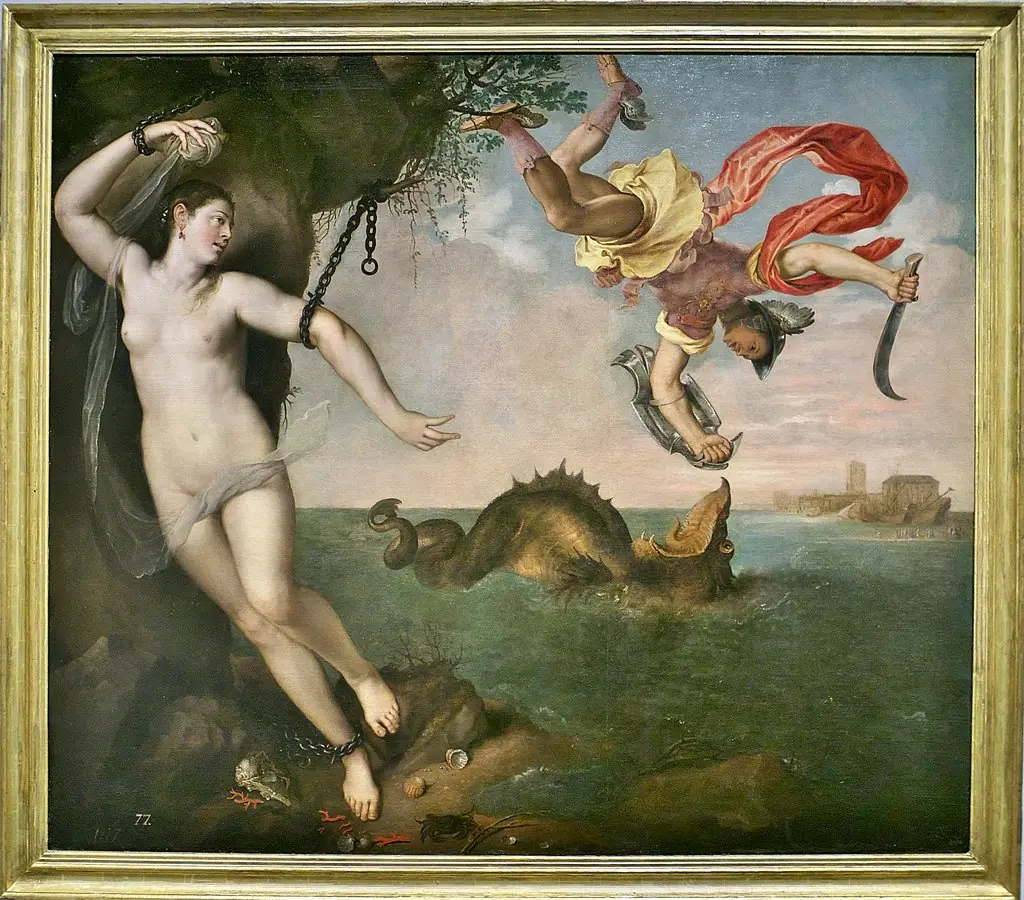
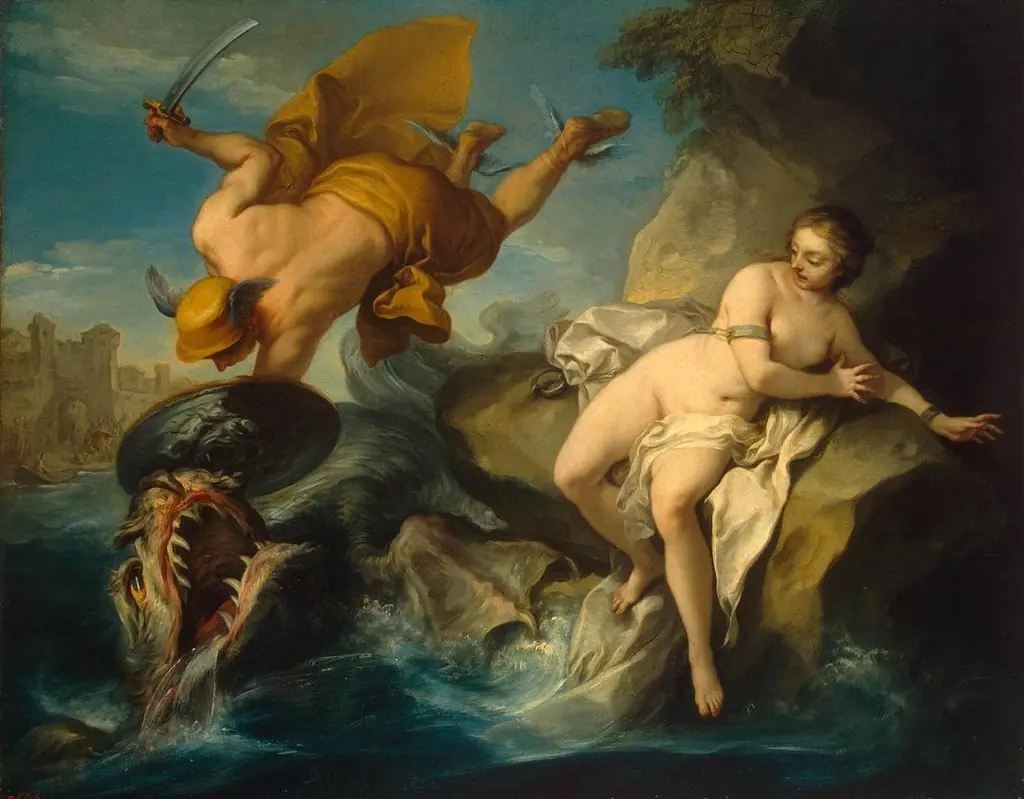
The mythological narrative portrays the hero Perseus in the act of rescuing Andromeda from a sea monster, a moment drawn from classical legend that underscores themes of valor and divine intervention. In the composition, Perseus, winged and armed, confronts the beast while Andromeda is bound to a rock, symbolizing both vulnerability and the promise of salvation through heroic action. The scene reflects Counter‑Baroque emphasis on dramatic movement and emotional intensity, aligning with the stylistic traits of Giuseppe Cesari’s late mannerism.
The work’s iconography relies on traditional attributes: Perseus bears the severed head of Medusa and a sword, while Andromeda is depicted in a flowing garment that highlights her distress. These elements reinforce the allegorical message of heroic rescue and the triumph of order over chaos, a recurring motif in mythological paintings of the period.
Technique & Style
Executed in 1602, this mythological painting by Giuseppe Cesari utilizes oil paint applied directly onto a slate support.
Executed in 1602, this mythological painting by Giuseppe Cesari utilizes oil paint applied directly onto a slate support. The work measures 51.8 cm in height and 38.2 cm in width. The choice of slate as a ground provides a smooth, non-absorbent surface that influences the handling of the oil medium, allowing for distinct formal qualities characteristic of the artist's approach to mythological subjects during this period.
History & Provenance
Giuseppe Cesari, also known as the Cavaliere d'Arpino, created the mythological painting Perseus and Andromeda in 1602. The work is executed in oil paint on a slate support, measuring 51.8 cm in height and 38.2 cm in width. It depicts the figures of Perseus and Andromeda, consistent with the artist's engagement with classical mythology during this period. The painting is currently held in the collection of the Kunsthistorisches Museum.
The painting is held in the Kunsthistorisches Museum, Vienna, inventoried as GG_735. It has been exhibited at the museum itself; in 2017 it appeared in the special exhibition "Cavalier d’Arpino: The Rediscovery of a Masterpiece" held at the Kunsthistorisches Museum. The slate support measures 51.8 cm in height and 38.2 cm in width.
Overview
Giuseppe Cesari, known as Il Giuseppino or Cavaliere d’Arpino, painted Perseus and Andromeda in 1602. Executed on a slate support, the work belongs to the early Baroque period in Italy and is now part of the Kunsthistorisches Museum’s collection.
Context
The painting aligns with a broader 16th‑ and 17th‑century fascination with mythological subjects, serving both decorative and didactic purposes in elite Roman circles. Its narrative emphasis on heroic rescue reflects contemporary ideals of virtue and divine favor.
Own this work as a print
Artist & collection

Artist
Giuseppe Cesari (14 February 1568 – 3 July 1640) was an Italian Mannerist painter, also named Il Giuseppino and called Cavaliere d'Arpino, because he was created Knight of the Supreme Order of Christ by his patron Pope Clement VIII.