Artwork
I Went Down that There Slide Faster than the Empire State Express
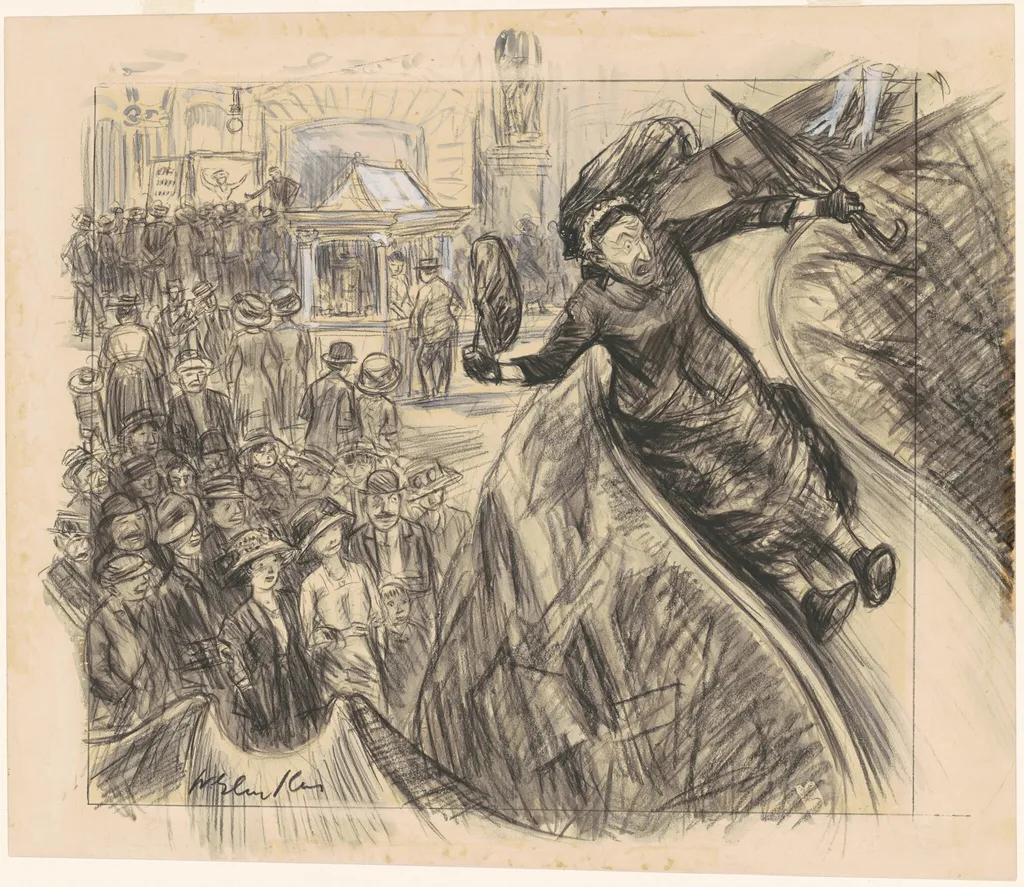
I Went Down that There Slide Faster than the Empire State Express is a gouache drawing by William James Glackens. It dates from 1912 and is held in the collection of the National Gallery of Art.
- Inscription
- Inscribed:lower left in black conté crayon: W. Glackens; upper left verso in green colored pencil by unknown hand: C 13; center verso in graphite: I went down that there slide / faster than the Empire State Express; lower center verso in graphite by unknown hand: - 4 1/2" - / 10 1/8 x 11 3/8 / with rule
About this work
Overview
William Glackens’ 1912 drawing, titled I Went Down that There Slide Faster than the Empire State Express, portrays a bustling amusement‑park scene. A woman in a dark coat and hat hurtles down a large slide while a surrounding crowd watches, their expressions ranging from delight to concern. The composition captures a fleeting moment of kinetic excitement amid an urban backdrop.
Subject & Meaning
The central figure, a woman with outstretched arms, embodies the thrill of modern leisure activities in the early twentieth century. The gathering spectators suggest a communal experience, reflecting the era’s fascination with speed and public amusement. The work can be read as a snapshot of contemporary urban recreation, highlighting both individual daring and collective amusement.
Technique & Style
Executed in conté crayon and gouache on wove paper, the piece combines the precision of drawing with the opacity of watercolor. Gladdened lines define the figures and architecture, while bold washes of color inject vigor into the scene. The contrast between the dark attire of the rider and the brighter surroundings intensifies the sense of motion.
History & Provenance
Created in 1912, the drawing belongs to Glackens’ body of work produced during his involvement with the Ashcan School, which emphasized everyday urban life. The piece has remained in private collections before entering a museum holding focused on early American modernism, where it is displayed as an example of the artist’s interest in popular culture.
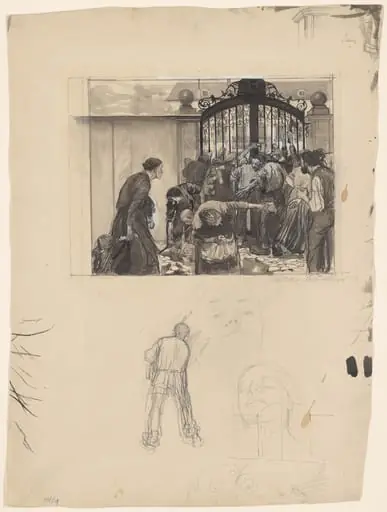
Own this work as a print
Artist & collection
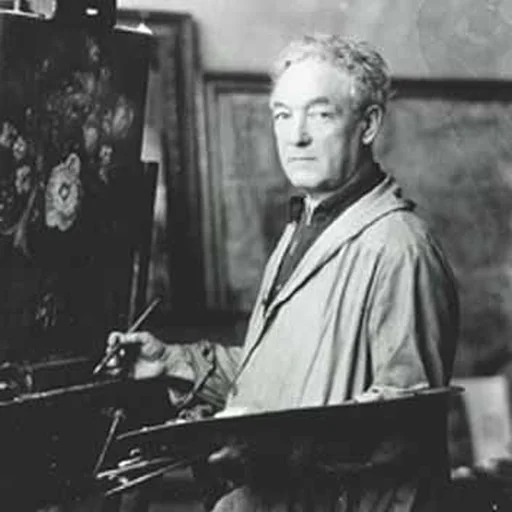
Artist
William James Glackens was an American realist painter and one of the founders of the Ashcan School, which rejected the formal boundaries of artistic beauty laid down by the conservative National Academy of Design.

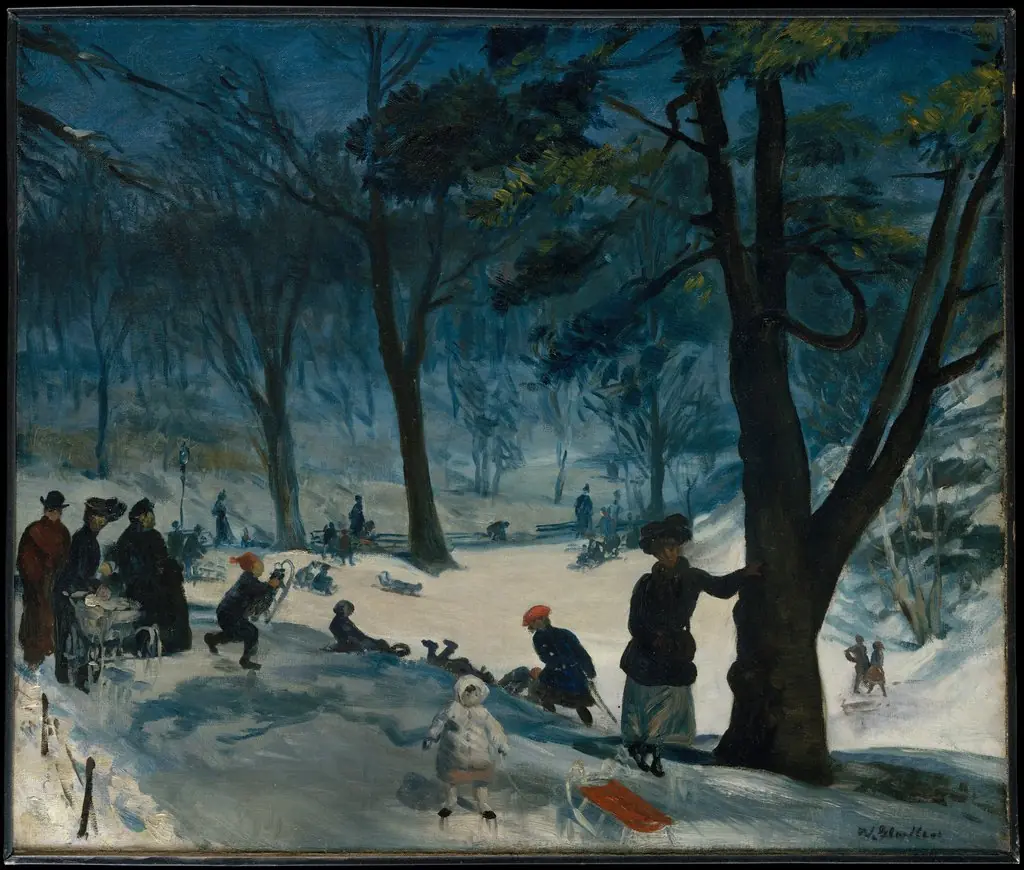
- Untitled
 History of a Picture No. 2: The Public
 Au pied du Sinaï: La Halle aux Draps, Cracovie
 The Square at Evening
 Malresl Working in the Kitchen
 L'avocat pourchassé (The Lawyer Pursued)
 Woman Entering a Fiacre (recto)
 On the Street
 Les Moutons de Boisdeffre
 Wedding at the Louvre
 Emilienne d'Alençon
 New York Night (recto) Study for New York Night (verso)