Artwork
H Beard Print Collection
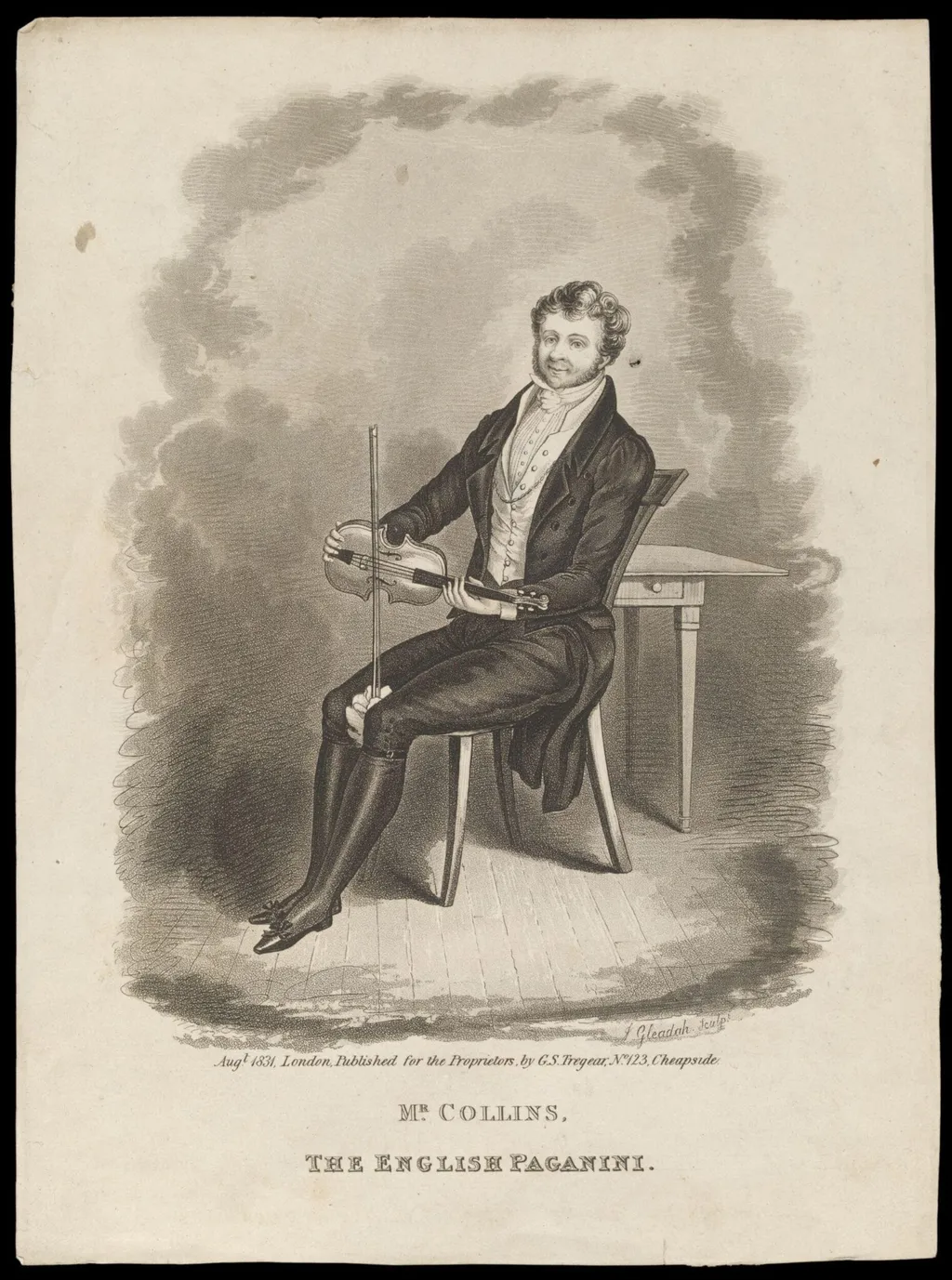
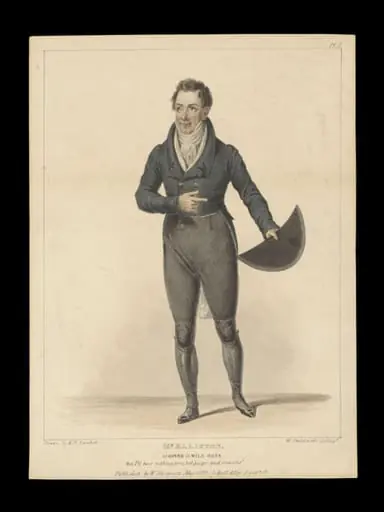
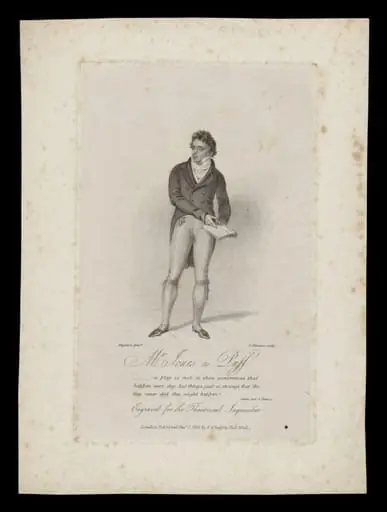
H Beard Print Collection is a print by the Romanticist artist Joshua Gleadah. It dates from 1831 and is held in the collection of the Victoria and Albert Museum. A lithographic portrait from August 1831, produced in London by publisher G.
About this work
The H Beard Print Collection is a print made by Joshua Gleadah in August 1831. It's a portrait of Mr Collins, known as 'The English Paganini'. This print is interesting because it was published in London by G. S. Tregear, which suggests it was made for a specific audience. You can learn more about this style by looking into the movement: Romanticism.
Overview
' Created by artist Joshua Gleadah, the print belongs to the Harry Beard Print Collection, a curated assemblage of 19th-century British popular imagery.
A lithographic portrait from August 1831, produced in London by publisher G. S. Tregear, depicts the violinist Mr. Collins, celebrated as 'The English Paganini.' Created by artist Joshua Gleadah, the print belongs to the Harry Beard Print Collection, a curated assemblage of 19th-century British popular imagery. Its production reflects the era’s growing demand for visual representations of celebrity musicians.
Subject & Meaning
Mr. Collins, a violinist of considerable public acclaim, earned the epithet 'The English Paganini' for his virtuosic technique and charismatic stage presence, drawing comparisons to the famed Italian virtuoso Niccolò Paganini. The portrait captures him in a pose that emphasizes his artistry and theatricality, positioning him as a cultural icon of Romantic-era Britain. The title underscores the public’s fascination with musical genius and national pride.
Technique & Style
Executed as a lithograph, the print employs the emerging commercial printing technology of the early 1830s, allowing for wider distribution than hand-drawn engravings. The style is linear and expressive, with attention to facial detail and dramatic lighting that aligns with Romantic portraiture conventions. The composition avoids elaborate backgrounds, focusing attention on the subject’s intensity and presence.
History & Provenance
The print was published in London by G. S. Tregear, a prolific publisher of popular prints during the 1830s. It entered the Harry Beard Collection, assembled by a 19th-century theater enthusiast, and now resides in a public archive. Its survival reflects its appeal to middle-class audiences seeking affordable images of contemporary performers, preserving a snapshot of musical culture at the time.
Context
In the early 1830s, London’s cultural scene thrived on the rise of celebrity musicians, fueled by expanding print media and public concerts. The comparison to Paganini, then at the height of his fame, reveals how British audiences sought to claim their own virtuosos. Lithographs like this one bridged the gap between live performance and domestic consumption, making fame accessible beyond the concert hall.
Legacy
Though Collins is now largely forgotten, the print endures as a record of how musical fame was constructed and disseminated in the early Victorian era. It illustrates the intersection of art, commerce, and celebrity culture, offering insight into the mechanisms of public image-making before photography became widespread. The work remains a valuable artifact for understanding 19th-century visual and musical life.
Own this work as a print
Artist & collection
Artist
This 19th-century printmaker made a single known work: a hand-colored print called H Beard Print Collection (August 1831).