Artwork
Portrait of Grinling Gibbons
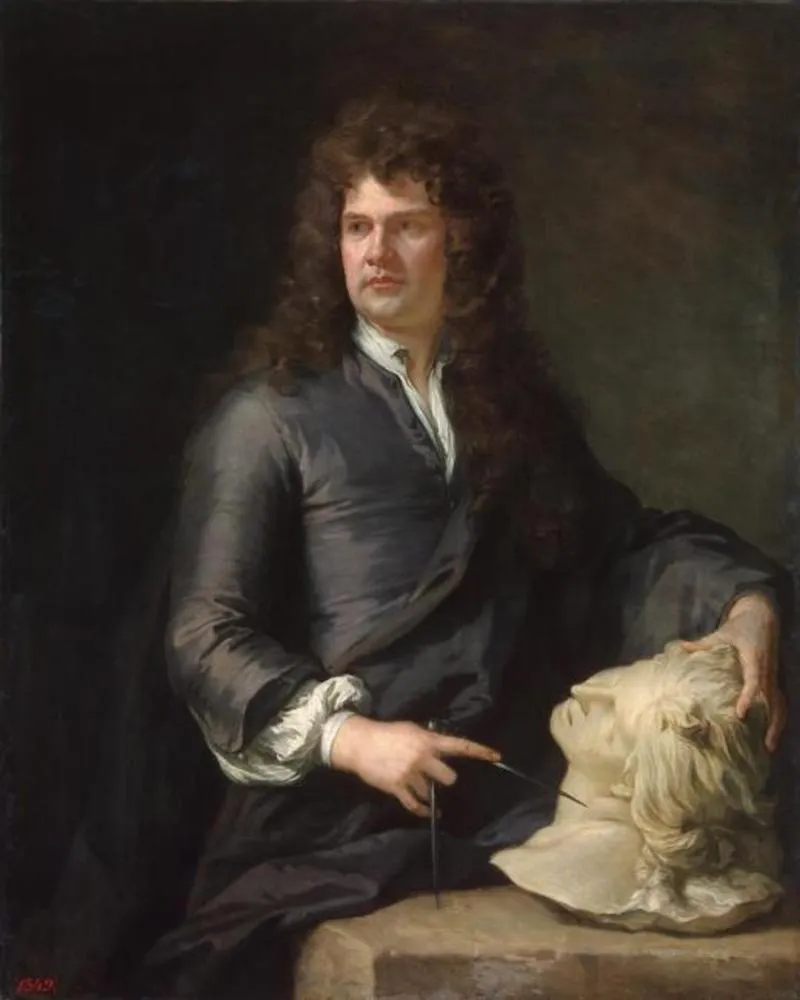
Portrait of Grinling Gibbons is an oil painting by the Dutch Golden Age artist Sir Godfrey Kneller. It dates from 1693 and is held in the collection of the Hermitage Museum.
About this work
Overview
The Portrait of Grinling Gibbons is an oil on canvas portrait painted by Sir Godfrey Kneller in 1685, now held in the Hermitage Museum, Saint Petersburg.
The Portrait of Grinling Gibbons is an oil on canvas portrait painted by Sir Godfrey Kneller in 1685, now held in the Hermitage Museum, Saint Petersburg. Measuring 125.5 by 101 centimetres, the painting depicts the celebrated decorative woodcarver Grinling Gibbons at three-quarter length, and it stands as one of Kneller's most admired compositions from the later Stuart period. The work has long been recognised for its refined execution and its value as a document of one of Britain's greatest craftsmen, produced by the leading portrait painter of the age.
Subject & Meaning
The sitter, Grinling Gibbons (1648-1721), was the pre-eminent decorative woodcarver of his generation, born in Rotterdam of English parents and trained possibly in the workshop of Artus Quellinus in Amsterdam before moving to England. In the portrait, Gibbons stands turned slightly toward the viewer, his right hand holding a thin pointed tool while his left hand rests upon a white sculpted head placed on a stone ledge before him. The sculpted head has been identified as a cast of Gian Lorenzo Bernini's Proserpina, from the famous Pluto and Proserpina group in the Galleria Borghese. Scholar J. D. Stewart proposed that the portrait carries a classical allegory of wisdom controlling the senses: the sculptor's firm grip on the bust and his compasses subdue Proserpina, goddess of the senses. This reading elevates the portrait beyond mere likeness to a statement about the intellectual and moral authority of the artist-craftsman.
Technique & Style
Kneller executed the portrait in oil on canvas with a smooth, controlled brushwork and a polished finish that demonstrates his mastery of the formal Baroque portrait style. The palette is restrained, dominated by blacks, grays, and whites with subtle warm undertones in the flesh tones. Light falls from the left, illuminating the face, hands, and the sculpted head, which shows detailed curly hair and upturned features, while the background remains dark and undefined in muted brown and gray tones. The careful modeling of fabrics and surfaces, particularly the dark gray coat with white shirt visible at collar and cuffs, reveals Kneller's attention to textural differentiation. A small red inscription appears in the lower left corner. The overall effect is one of dignified composure, with the sitter's long, dark, curly hair and direct engagement with the viewer conveying both status and individual character.
History & Provenance
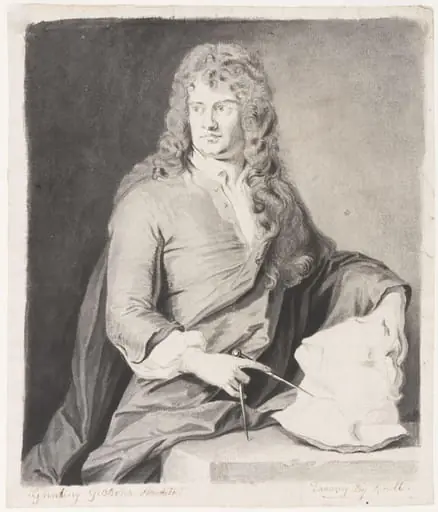
The painting was created in 1685 in the United Kingdom, during the period when Kneller was establishing himself as the dominant portrait painter in England. The original painting entered the collection of Horace Walpole, who considered it 'a Master-piece, and equal to any of Vandyke's.' From the Walpole collection it passed to the Hermitage Museum, where it remains today with the inventory number 1346. Two of Kneller's preliminary drawings for the composition are known in a private collection. The portrait's fame was assured through early reproduction: John Smith produced a mezzotint after the painting in 1690, reversing the composition, and a preparatory chalk drawing by Smith for this print survives in the Ashmolean Museum. The National Portrait Gallery, London, holds a later copy (NPG 2925), perhaps from the later eighteenth century, which was purchased in 1937 after belonging to the Earls of Aylesford at Packington Hall. Another good early copy from Serlby Hall was sold at Christie's in 1979, and a reduced, reversed version by George Clint is at Petworth.
Context
Kneller's portrait of Gibbons belongs to a significant moment in English art, when a foreign-born painter of German extraction had become the principal visual chronicler of the nation's elite. The painting exemplifies Kneller's ability to adapt Continental Baroque conventions to English taste, producing portraits that conveyed both the status and the inner life of his sitters. The choice of Gibbons as subject is notable: unlike the aristocratic and royal patrons who dominated Kneller's practice, Gibbons was a craftsman, albeit one who had received royal patronage from Charles II following his 'discovery' by John Evelyn. The portrait's composition has been compared to Anthony van Dyck's grisaille of Andreas Colyns de Nole, suggesting Kneller's awareness of earlier traditions of artist-portraits that included attributes of the sitter's profession. The work has been discussed in major catalogues including J. D. Stewart's monograph on Kneller (1983) and the exhibition catalogue A Capital Collection: Houghton Hall and the Hermitage (2002).
Legacy
The portrait's influence and reputation were secured through its wide dissemination in reproductive prints. John Smith's 1690 mezzotint, which lettered the sit 'Mr Grinlin Gibbons,' made the image accessible to collectors and helped establish the visual identity of Gibbons for subsequent generations. Horace Walpole's enthusiastic praise placed the painting in the highest company of British portraiture. Today, the original in the Hermitage remains a key work for understanding both Kneller's achievement and the cultural status of the decorative arts in late seventeenth-century England. The multiple copies and versions attest to its enduring significance, while scholarly attention to its allegorical programme has enriched understanding of how painters and patrons negotiated meaning in Baroque portraiture. The portrait continues to serve as a primary document for the study of Grinling Gibbons, whose woodcarvings survive at Windsor Castle and elsewhere, but whose likeness depends substantially upon Kneller's compelling image.
Artist & collection
Artist
Sir Godfrey Kneller, 1st Baronet (born Gottfried Kniller; 8 August 1646 – 19 October 1723) was a German-born British painter.

 Portrait of a Man
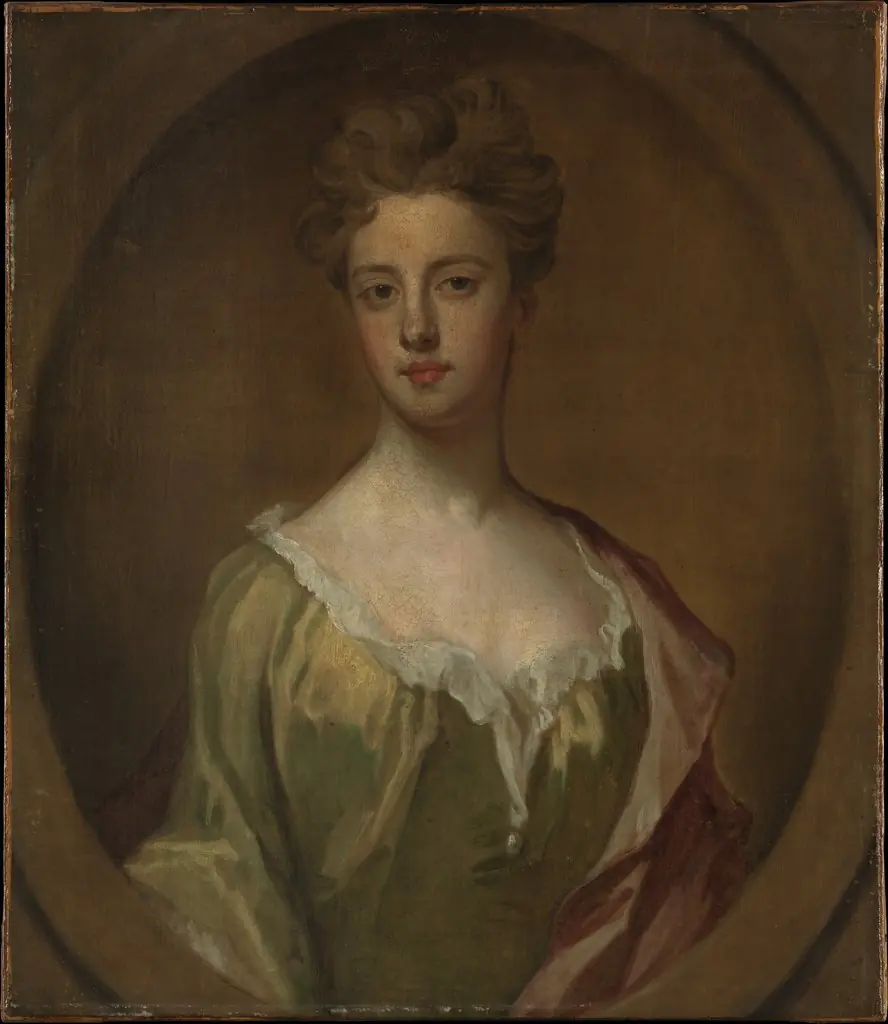 Lady Mary Berkeley, Wife of Thomas Chambers
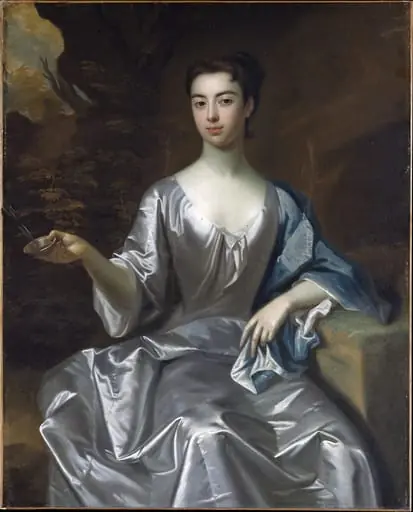 Portrait of a Woman, Called Maria Taylor Byrd
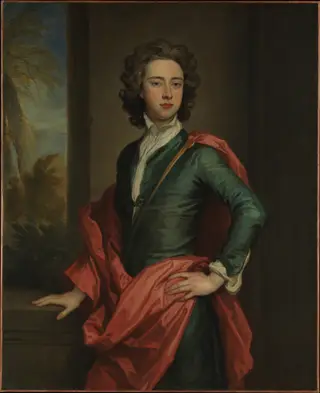 Charles Beauclerk (1670–1726), Duke of St. Albans
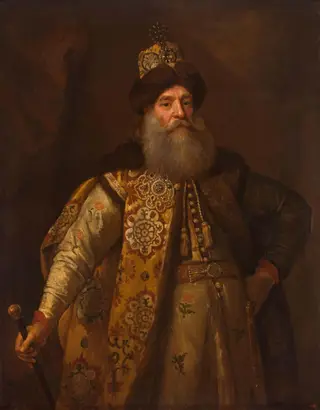 Portrait of Piotr Potyomkin (1617-1700)
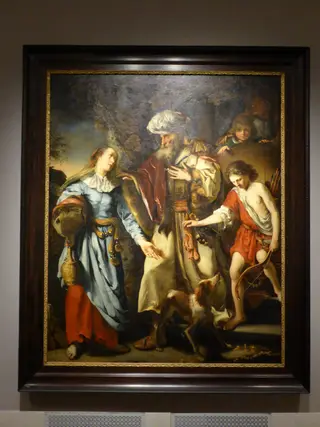 Abraham banishes Hagar and Ishmael
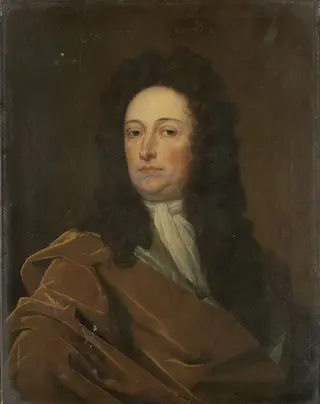 Aernout van Citters (1633-96), Ambassador of the Dutch Republic in London
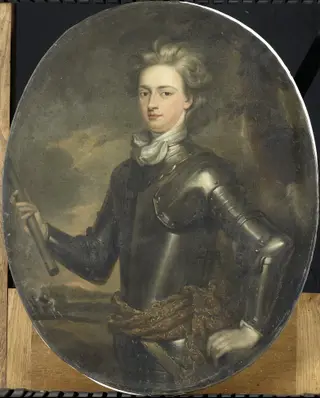 Portrait of the first Earl of Albemarle
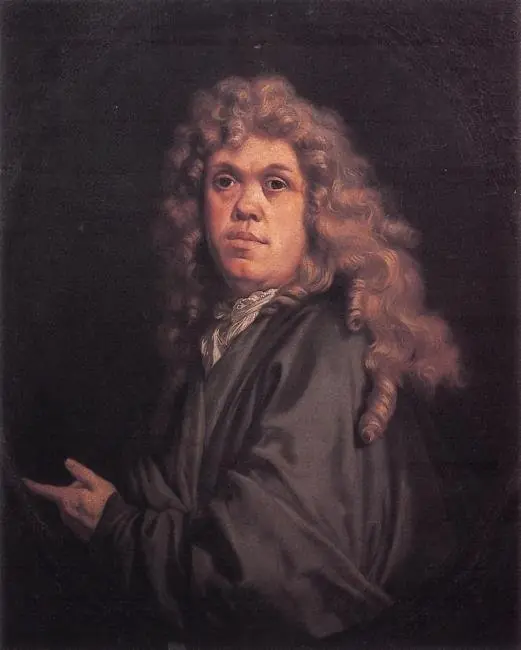 Self-portrait
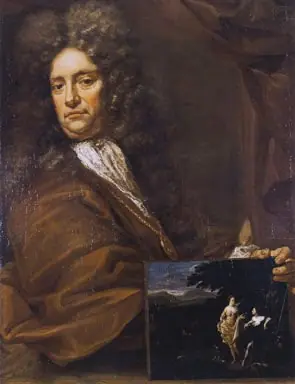 Self-portrait
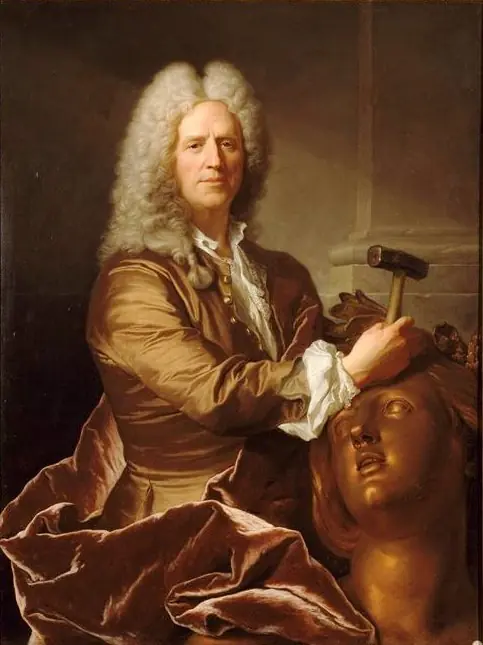 Portrait of Nicolas Coustou (1658-1733), French sculptor
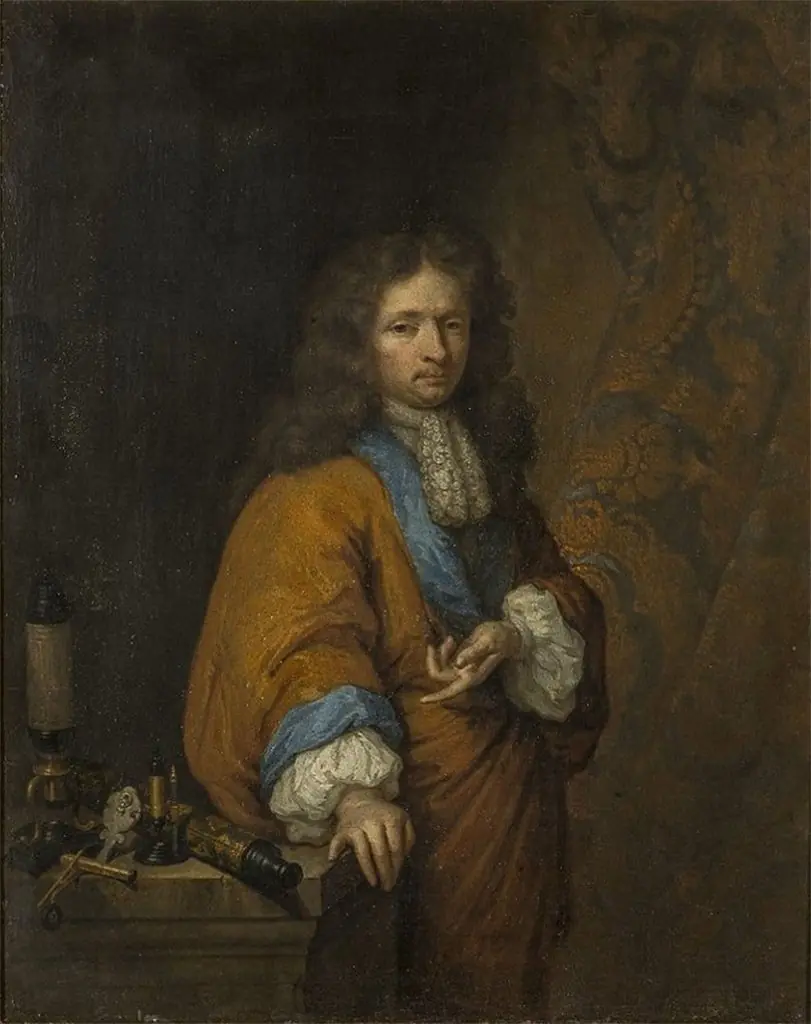 Portrait of a Scholar
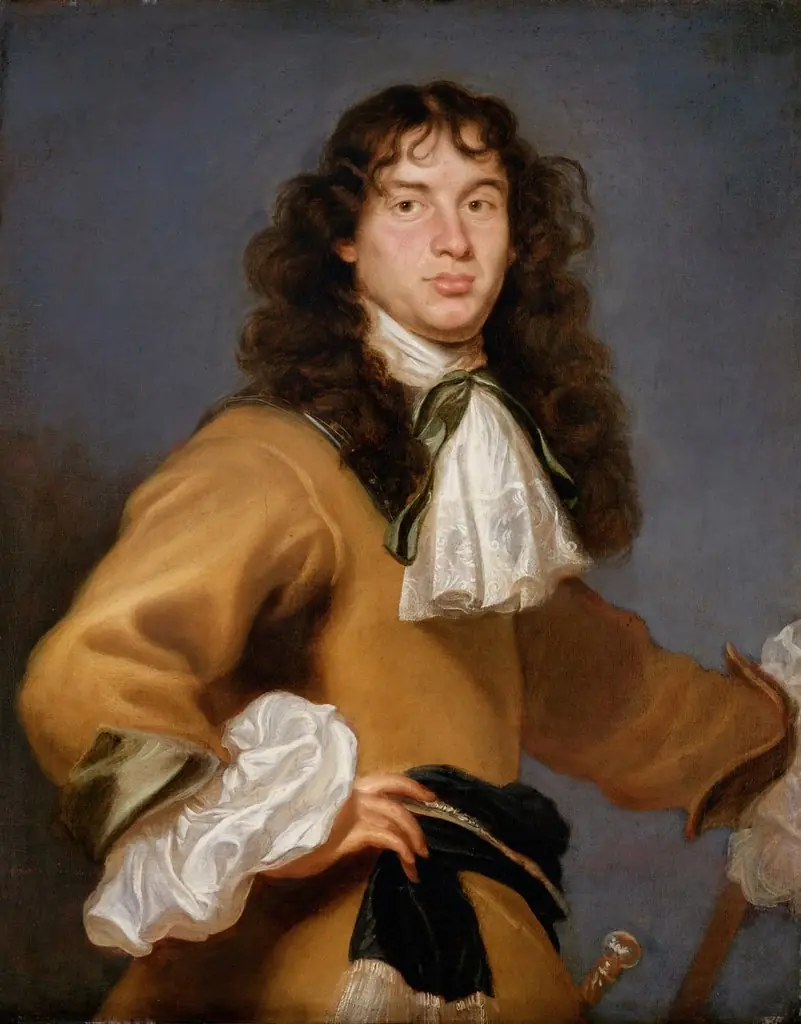 Portrait of an unknown man
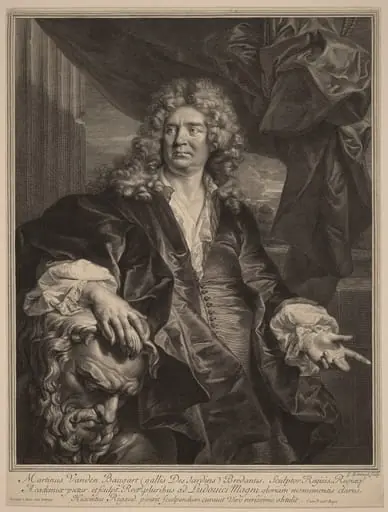 Martin Desjardins
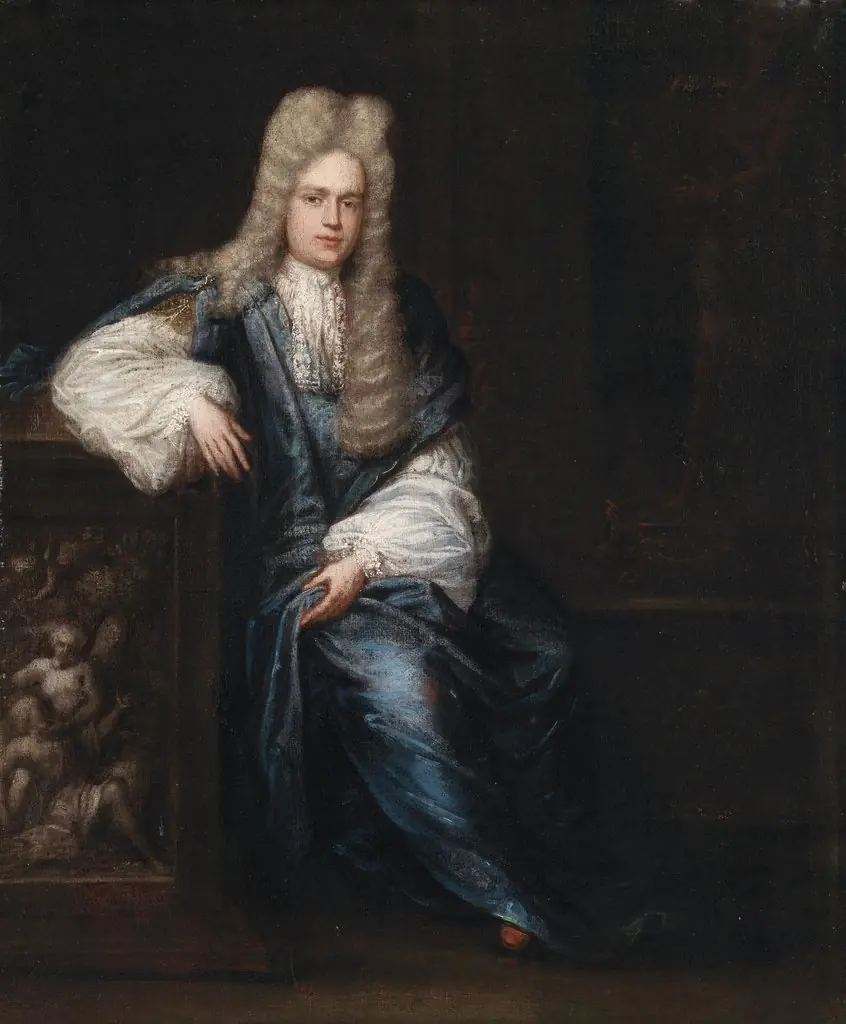 Portrait of Samuel Lovell
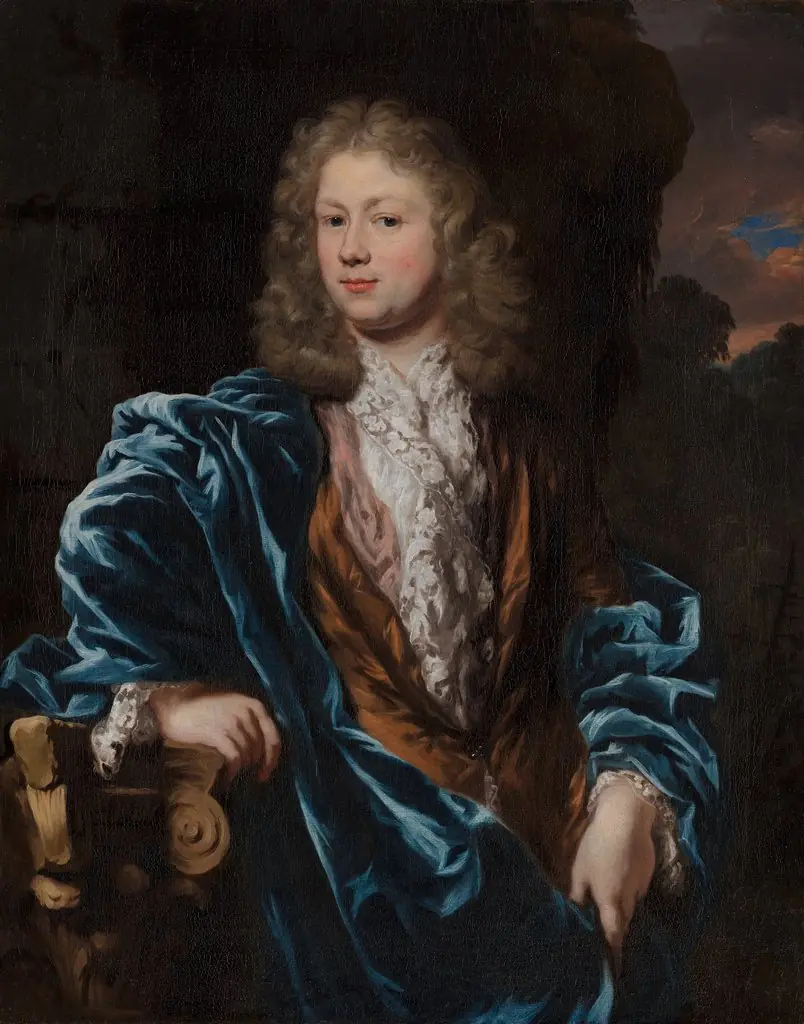 Portrait of Cornelis ten Hove
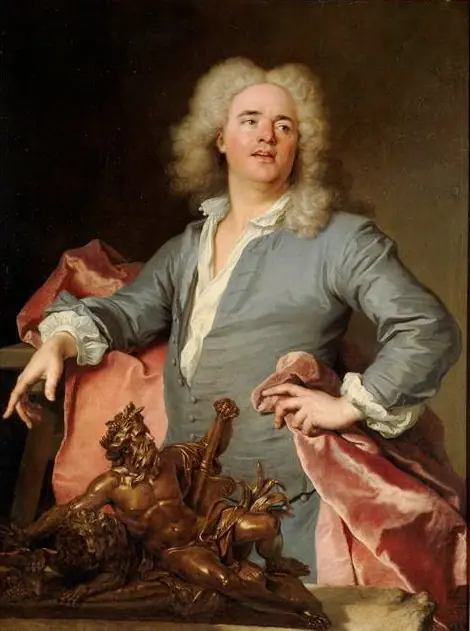 Guillaume Ier Coustou (1677-1746), sculptor
 Captain Thomas Church
 Portrait of a man in a wig
- Portrait of Grinling Gibbons