Artwork
Blossoming Chestnut Branches
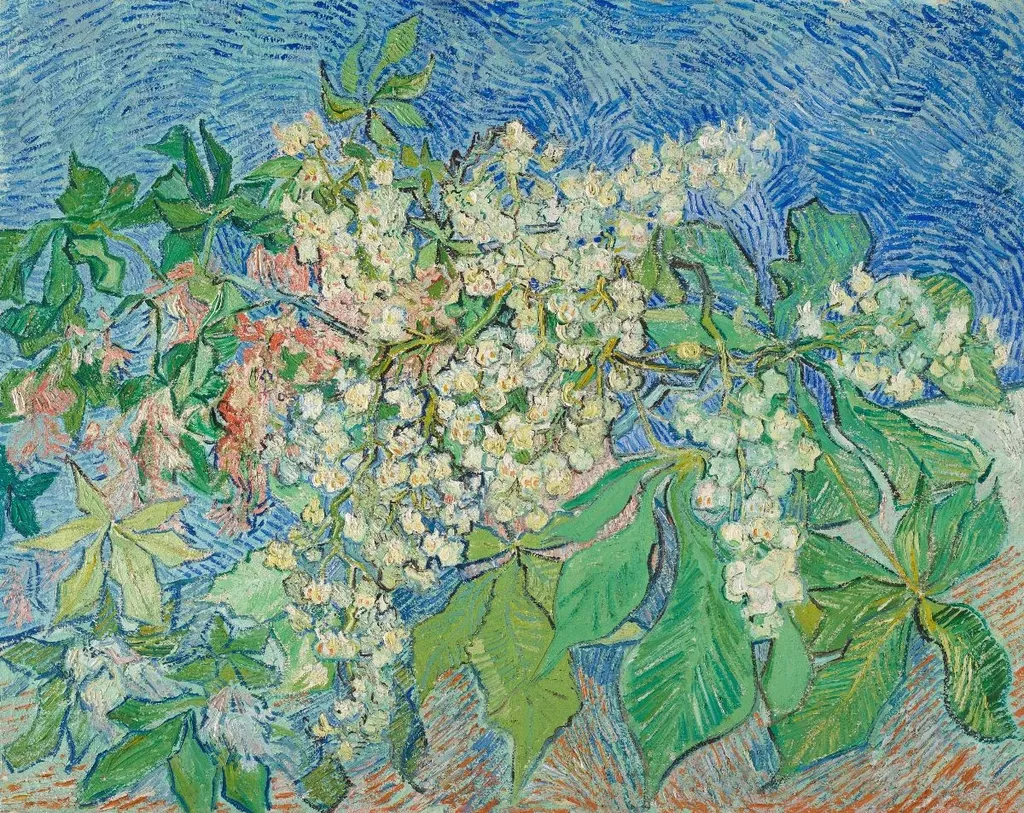
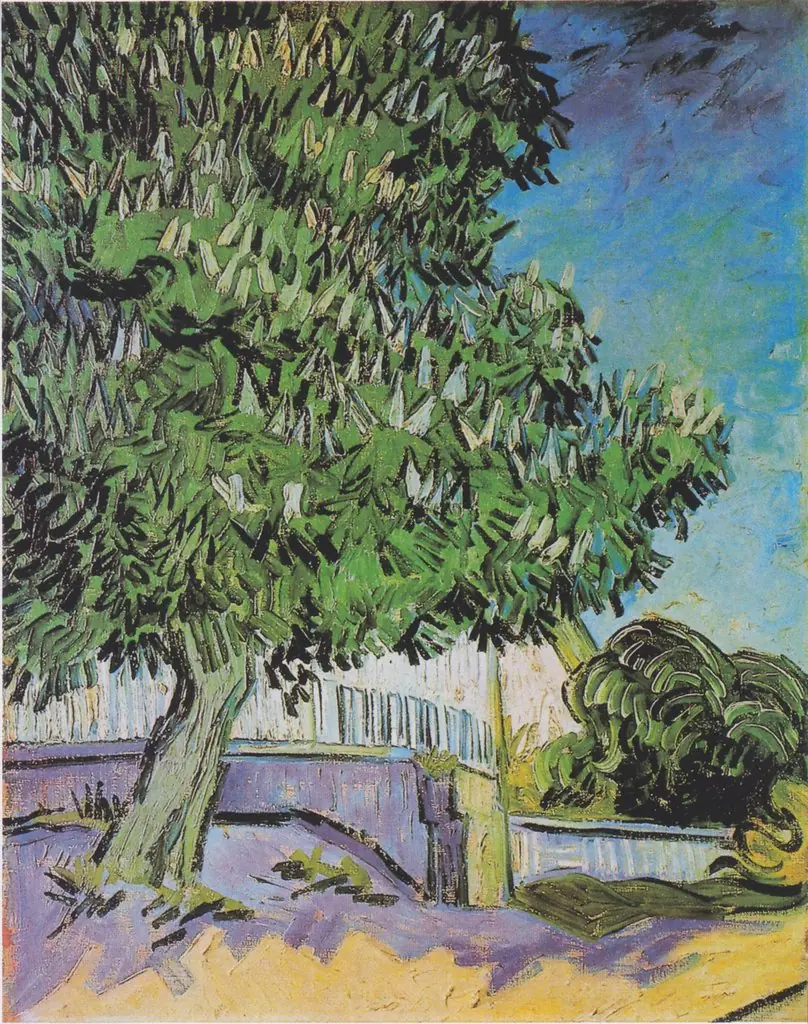
Blossoming Chestnut Branches is an oil painting by the Post-Impressionist artist Vincent van Gogh. It dates from 1890 and is held in the collection of the Foundation E.G. Bührle Collection.
About this work
Overview
Executed in oil on canvas, the work reflects the artist’s intense focus on nature in his last months.
Painted in May 1890 during Vincent van Gogh’s final weeks in Auvers-sur-Oise, Blossoming Chestnut Branches captures a single bough of flowering chestnut against a pale sky. Executed in oil on canvas, the work reflects the artist’s intense focus on nature in his last months. It was among four paintings stolen from the Bührle Foundation in Zurich in 2008, recovered nine days later in a parked car, undamaged and returned to its collection.
Subject & Meaning
The painting centers on a slender branch heavy with clusters of small white blossoms and fresh green leaves, isolated against a soft blue background. Van Gogh often used floral motifs to convey renewal and fleeting beauty. Here, the delicate bloom may reflect his own fragile state in the final phase of his life, offering a quiet meditation on transience rather than overt emotion.
Technique & Style
Van Gogh applied thick, directional brushstrokes to render the branch and blossoms, creating a sense of rhythmic motion. The flowers are rendered with short, stippled touches, while the leaves are defined by swift, angular strokes of viridian and yellow-green. The sky, painted with broader, lighter sweeps, provides contrast without distraction, emphasizing the branch’s organic vitality through texture rather than detail.
History & Provenance
The painting remained in the collection of the Foundation E.G. Bührle in Zurich until its theft on February 10, 2008. It was recovered alongside another stolen work nine days later in a vehicle parked in the city. No damage was reported, and the painting was returned to the foundation.
Its provenance traces back to van Gogh’s 1890 output in Auvers, where he produced over seventy works in just over two months.
Context
Painted shortly before van Gogh’s death in July 1890, this work belongs to a prolific final period marked by studies of trees, skies, and fields. Unlike his earlier, more turbulent compositions, Blossoming Chestnut Branches suggests a calmer engagement with nature. It aligns with other late works where he sought harmony in simple natural forms, possibly reflecting a desire for peace amid personal turmoil.
Legacy
Though not among van Gogh’s most widely reproduced works, Blossoming Chestnut Branches is recognized for its intimate scale and refined execution. Its recovery after theft underscored the vulnerability of cultural heritage and reinforced the importance of institutional security. The painting continues to be studied as a quiet testament to van Gogh’s enduring observation of the natural world in his final days.
Artist & collection
Artist
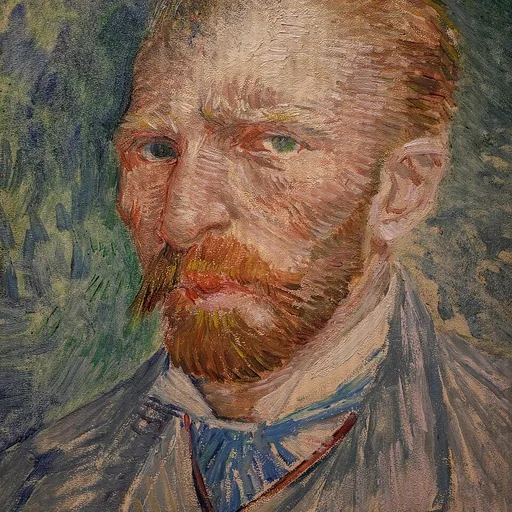
Vincent Willem van Gogh was a Dutch Post-Impressionist painter who is among the most famous and influential figures in the history of Western art.