Artwork
Deucalion and Pyrra Repeopling the Earth
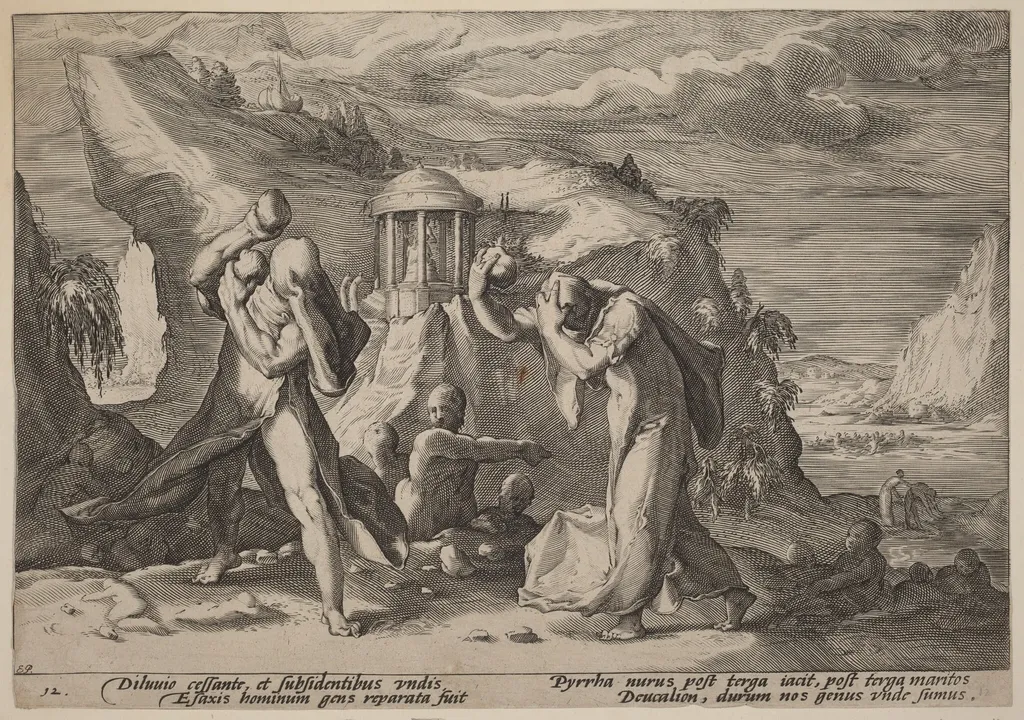
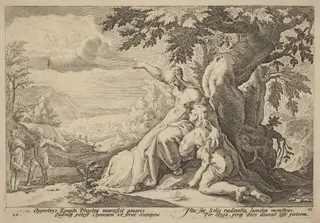
Deucalion and Pyrra Repeopling the Earth is an ink print by the Renaissance artist Hendrick Goltzius. It dates from 1589 and is held in the collection of the National Gallery of Art.
- Inscription
- Inscribed:in plate, along lower edge: Diluvio cessante, et substidentibus indis / Esaxis hominum gens reparata fuit / Pyrrha nurus post terga iacit, post terga maritos / Deucalion, durum nos genus inde sumus
About this work
Overview
Rendered in fine, precise lines on laid paper, the scene unfolds against a rugged natural setting with a distant architectural form.
This engraving by Hendrick Goltzius illustrates the myth of Deucalion and Pyrrha, who, after a great flood, repopulate the earth by casting stones over their shoulders. Rendered in fine, precise lines on laid paper, the scene unfolds against a rugged natural setting with a distant architectural form. The composition emphasizes motion and transformation, capturing the moment when inanimate rock becomes human life.
Subject & Meaning
The narrative draws from Ovid’s Metamorphoses, depicting divine renewal after catastrophe. Deucalion and Pyrrha, the sole survivors, obey an oracle’s command to throw stones behind them, each stone metamorphosing into a person. The scene symbolizes resilience and the rebirth of humanity, not through divine intervention alone, but through human action guided by sacred instruction.
Technique & Style
Goltzius employed fine, controlled etching lines to model muscular forms and create depth through subtle tonal shifts. His training in printmaking allowed him to achieve remarkable clarity and precision. The rocks mid-transformation are rendered with fluid, twisting contours, blurring the boundary between stone and flesh, suggesting a living, breathing metamorphosis.
History & Provenance
Created in the late 16th century, this print emerged from Goltzius’s prolific output during his time in Haarlem. As a leading Northern Mannerist, he translated classical myths into intricate engravings for collectors across Europe. The work was widely circulated, reflecting the period’s fascination with antiquity and the technical mastery of print reproduction.
Context
In the wake of religious upheaval and scientific inquiry, classical myths offered a secular language for exploring human origins and endurance. Goltzius’s engagement with Ovid aligned with broader humanist interests in antiquity. His prints served both as artistic demonstrations and intellectual artifacts, bridging myth and contemporary thought.
Legacy
Goltzius’s technical innovation in engraving influenced generations of printmakers. His ability to convey movement and transformation through line alone set a new standard for narrative detail in prints. This work remains a key example of how Northern artists reinterpreted classical themes with unprecedented anatomical and compositional rigor.
Own this work as a print
Artist & collection
Artist
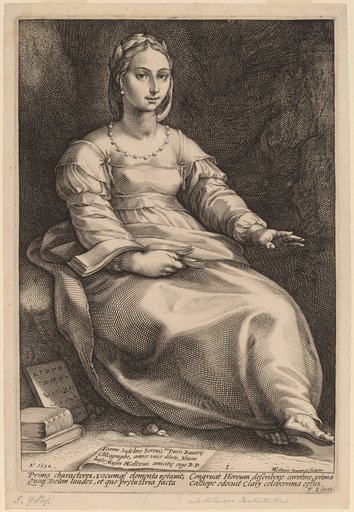
Hendrick Goltzius (German: , Dutch: ; né Goltz; January or February 1558 – 1 January 1617) was a German-born Dutch printmaker, draftsman, and painter.

 Clymene Urging Phaeton to Find Helios
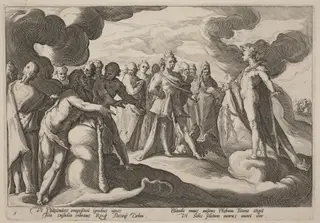 Jupiter and the Gods Asking Helios to Resume Control of the Chariot
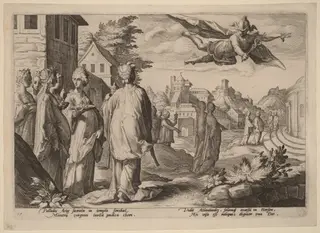 Mercury Falling in Love with Herse
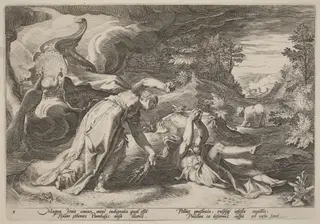 Juno Turning Callisto into a Bear
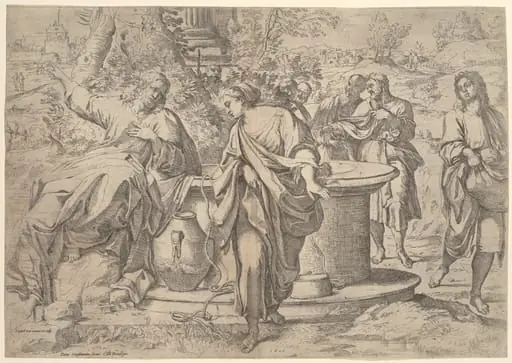 Christ and the Samaritan Woman
 Saint Benedict Healing the Possessed
 Thisbe Frightened by the Lion
 Aeneid
 Saint John the Baptist in the River Jordan
 Bacchus and Ariadne
 Samuel Anointing David
- The Sacrifice of Abraham