Artwork
Minerva
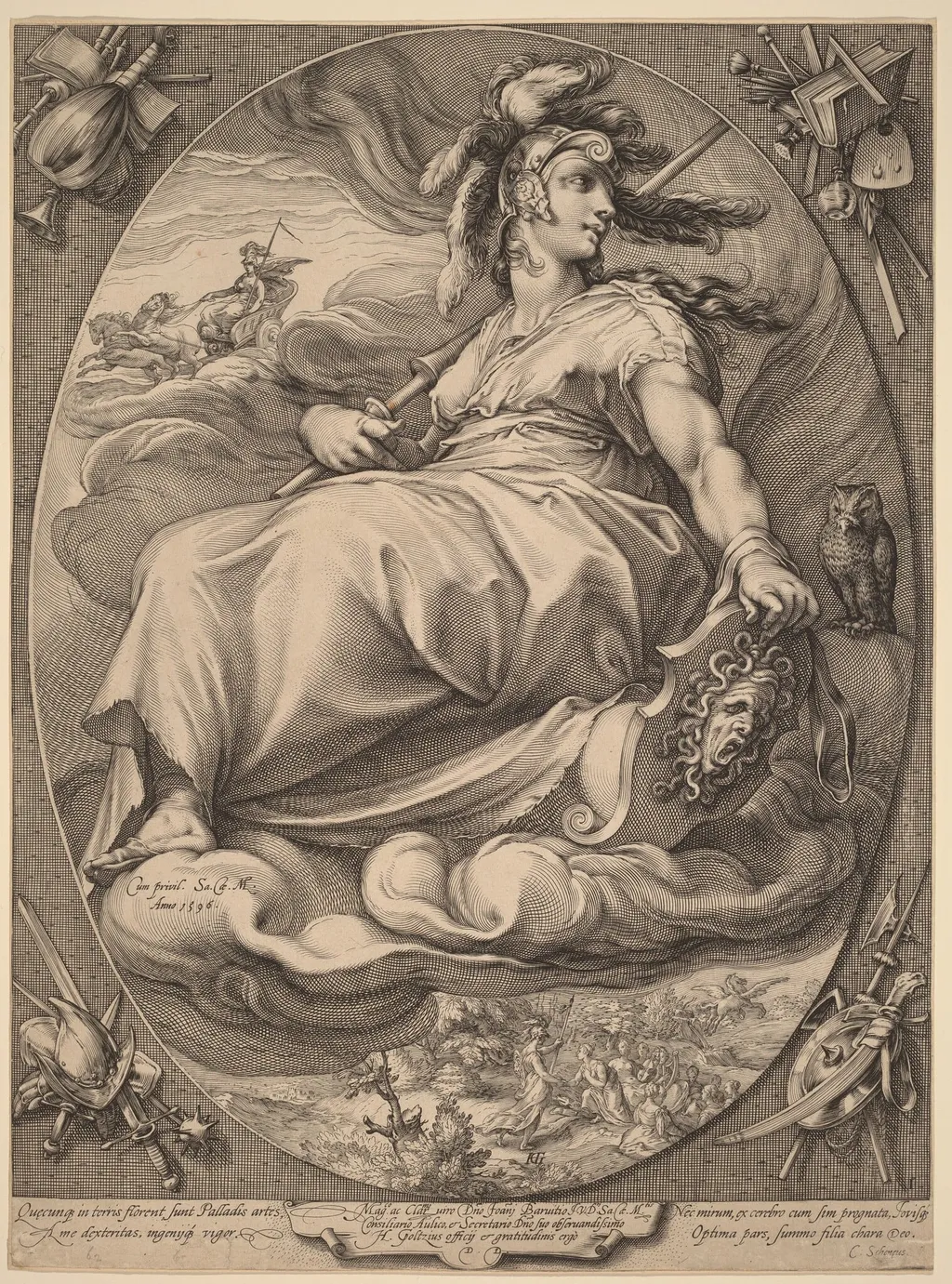
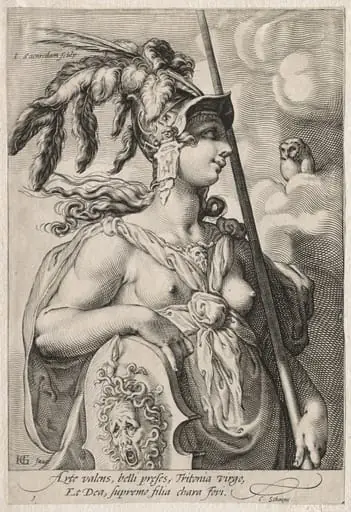
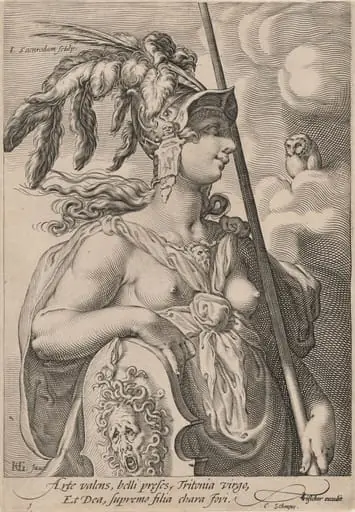
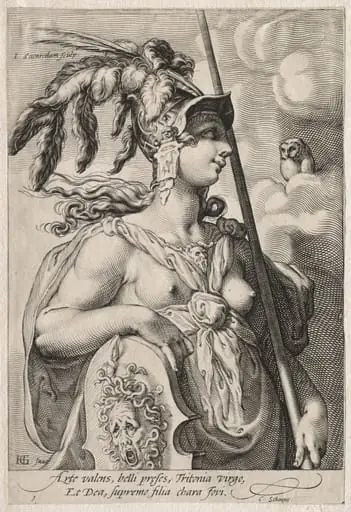
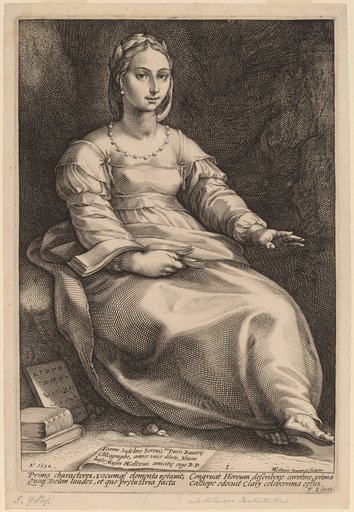
Minerva is an ink print by the Renaissance artist Hendrick Goltzius. It dates from 1596 and is held in the collection of the National Gallery of Art.
- Inscription
- Inscribed:in image, at centre left: Cum privil. Sa. Cae. M. / Anno 1596; in image, at bottom centre: HG; in image, at bottom right: I; below image, at left: Quaecunque in terris florent, Sunt Palladis artes, / A me dexteritas, ingeniiqué vigor; below image, at centre: Magco ac Clarmo uiro Dño Joañi Baruito I. U. D.ri Sa. Cae. Mtis / Consiliario Aulico, e Secretario Dño suo obseruandissimo / H. Goltzius officii e gratitudinis ergò / D. D.; below image, at right: Nec mirum, ex cerebro cum sim prognata, Iovisqué / Optima pars, summo filia charo Deo. / C. Schonaeus
- Markings
- Marked:verso, stamped in black ink: Ruth Cole (Lugt 4739)
About this work
Overview
Hendrick Goltzius executed the print titled Minerva in 1596, employing the engraving technique on laid paper.
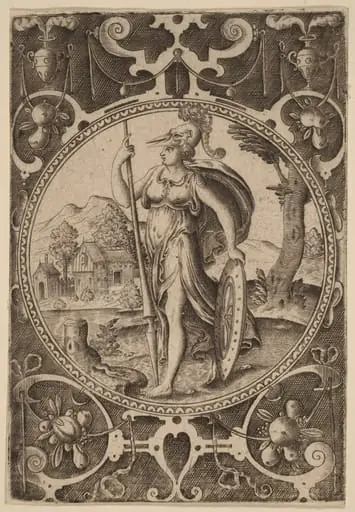
Hendrick Goltzius executed the print titled Minerva in 1596, employing the engraving technique on laid paper. The image presents a seated female figure, identified as the Roman goddess Minerva, positioned upon a cloud and equipped with classical attributes such as a helmet, sword, and a shield bearing the Medusa head. The composition balances mythological iconography with a detailed landscape background.
Subject & Meaning
The central figure embodies Minerva, the deity of wisdom and war, signified by her serene expression, feathered helmet, and martial accoutrements. The inclusion of the Medusa‑headed shield references her protective role, while the surrounding river, rider, and trees suggest a harmonious integration of civilization and nature, reinforcing the goddess’s domain over both intellect and the natural world.
Technique & Style
Goltzius’s engraving demonstrates his mastery of fine line work, using dense cross‑hatching and delicate shading to render volume and texture. The precision of the rendered clouds, drapery, and armor reflects the Northern Mannerist penchant for intricate detail, while the balanced composition and classical motifs align the work with Renaissance ideals of proportion and idealized form.
History & Provenance
Created during the early Baroque period, Minerva exemplifies Goltzius’s reputation as a leading Dutch engraver of his time. The print was likely circulated among collectors and scholars interested in mythological subjects, contributing to the artist’s widespread influence across Europe in the late sixteenth century.
Context
The engraving belongs to a broader trend of Renaissance artists revisiting classical mythology to convey moral and intellectual themes. Goltzius, working in the Netherlands, merged Northern artistic sensibilities with Italianate classicism, producing works that appealed to both humanist patrons and the emerging market for printed images.
Legacy
Minerva remains a representative example of Goltzius’s technical virtuosity and his role in disseminating Mannerist aesthetics through print. The work’s detailed execution and mythological content continue to inform studies of Northern European engraving practices and the transmission of classical iconography in the late sixteenth century.
Own this work as a print
Artist & collection
Artist
Hendrick Goltzius (German: , Dutch: ; né Goltz; January or February 1558 – 1 January 1617) was a German-born Dutch printmaker, draftsman, and painter.