Artwork
Marcus Valerius Corvus
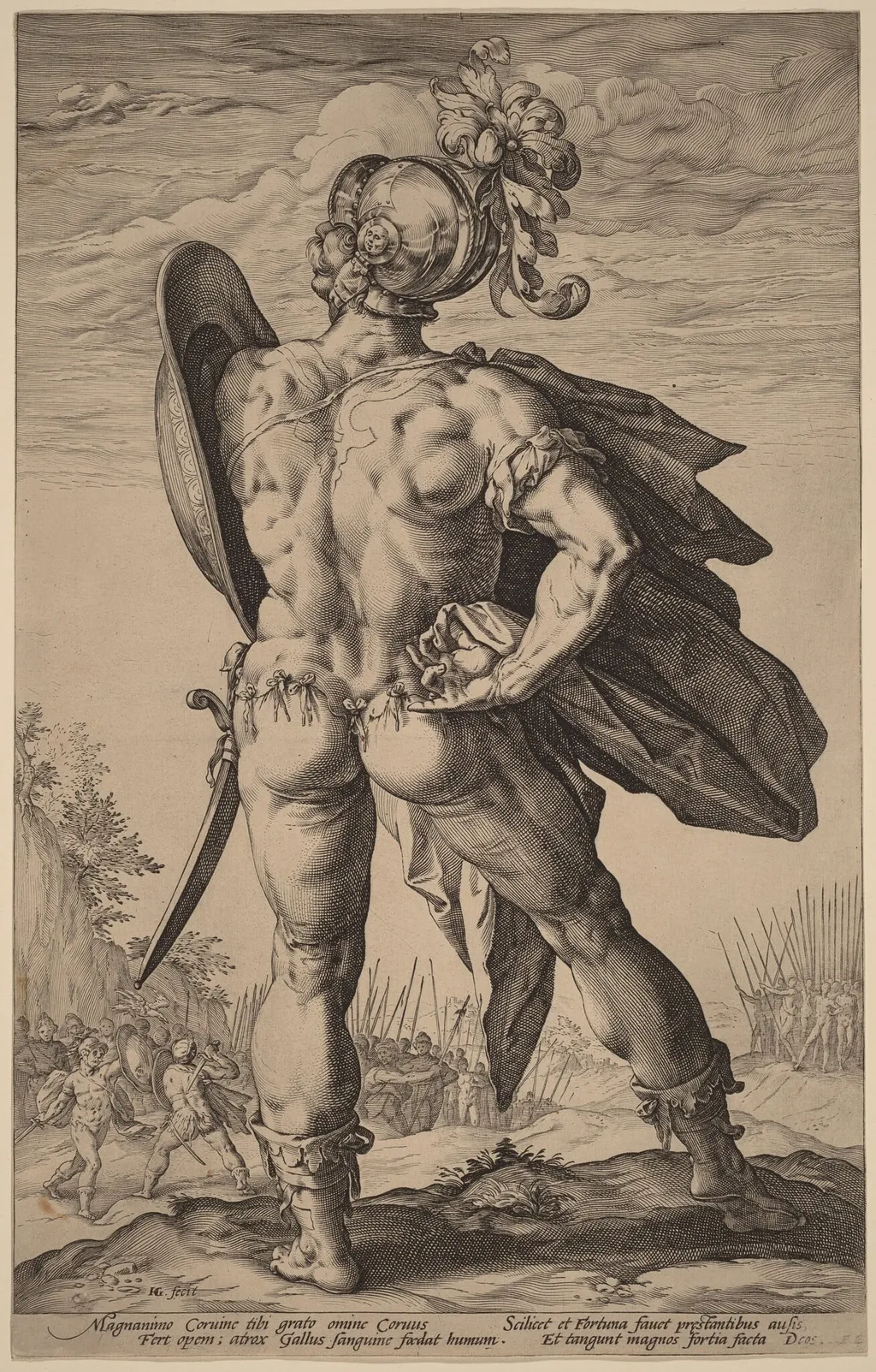
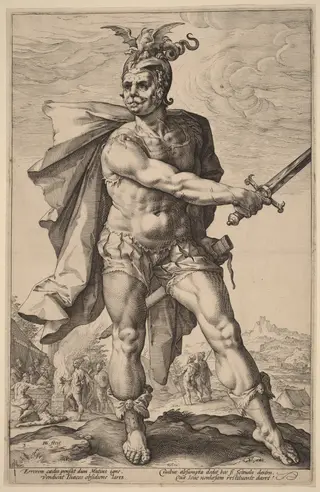
Marcus Valerius Corvus is an ink print by the Renaissance artist Hendrick Goltzius. It dates from 1586 and is held in the collection of the National Gallery of Art.
- Inscription
- Inscribed:lower left, in image, in plate: HG. fecit; in margin below image, in plate: Magnanimo Coruine tibi grato omine Coruus / Fert opem; atrox Gallus sanguine foedat humum. / Schilicet et Fortuna fauet praestantibus ausis, / Et tangunt magnos fortia facta Deos. F. [ranco] E.[stius] (Noble Corvinus, the Raven gives you help with a congenial portent; the savage Gaul defiles the soil with his blood. Fortune sides with those who try to achieve something great and the great Gods are touched by brave deeds.) [Latin translation from Leeflang, Huigen, and Ger Luijten. _Hendrick Goltzius (1558-1617): Drawings, Prints and Paintings._ Amsterdam: Rijksmuseum, 2003, p. 90.]
About this work
Overview
The 1586 engraving titled Marcus Valerius Corvus is a print by Hendrick Goltzius, a German‑born artist who worked in the Dutch Republic. Executed during the early Baroque era, the image reflects the elaborate aesthetic of Northern Mannerism. It portrays the Roman military tribune Marcus Valerius Corvus, rendered with a pronounced, solemn expression and period armor.
Subject & Meaning
The figure represented is the historic Roman tribune Marcus Valius Corvus, celebrated for his martial exploits in the third century BC. Goltzius emphasizes the tribune’s authority through a stern gaze and detailed armor, suggesting both the valor of the individual and the broader ideals of Roman civic virtue that resonated with a 16th‑century audience.
Technique & Style
Goltzius employs a dense network of fine lines to model flesh, metal, and fabric, demonstrating his mastery of engraving’s capacity for texture and depth. The composition balances intricate ornamental elements with a clear focal figure, characteristic of Northern Mannerist sensibilities that favored elaborate detail and dynamic poses within a controlled framework.
History & Provenance
Created in 1586, the print emerged at a time when Goltzius was recognized as the pre‑eminent Dutch engraver. While the original plate’s ownership record is limited, the work circulated among collectors of the period and later entered museum holdings, where it serves as a benchmark of late‑16th‑century printmaking.
Context
The engraving aligns with a broader Renaissance interest in classical antiquity, where artists revived Roman subjects to convey moral and civic lessons. Goltzius’s choice of a Roman tribune reflects contemporary humanist currents in the Dutch Republic, which sought to link contemporary civic identity with the virtues of ancient Rome.
Legacy
Goltzius’s reputation for technical precision and compositional complexity influenced subsequent generations of Northern European printmakers. The Marcus Valerius Corvus engraving exemplifies his skill and contributed to his later expansion into painting, marking a pivotal point in his artistic development and the evolution of Dutch print culture.
Own this work as a print
Artist & collection
Artist
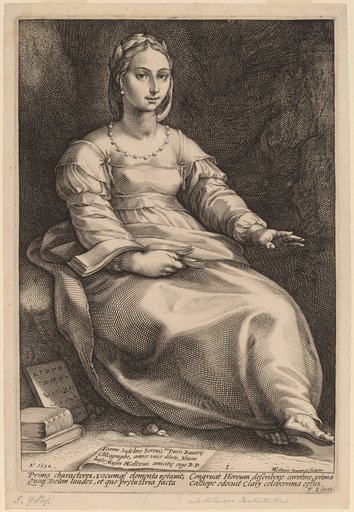
Hendrick Goltzius (German: , Dutch: ; né Goltz; January or February 1558 – 1 January 1617) was a German-born Dutch printmaker, draftsman, and painter.

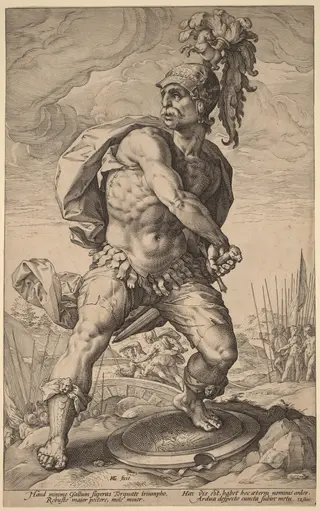
- Titus Manlius Torquatus
 Mucius Scaevola
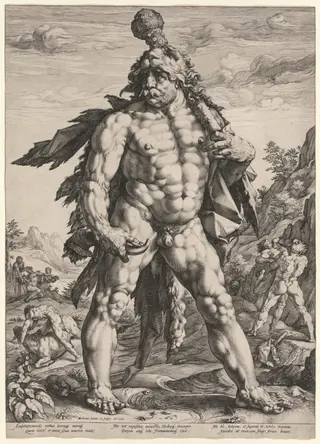 The Great Hercules or 'Knollenman'
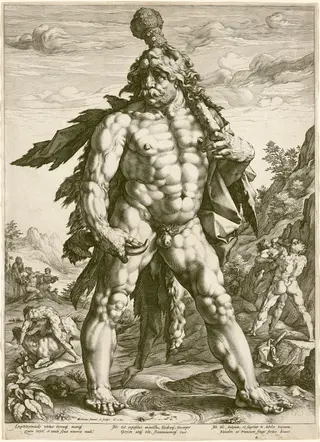 The Great Hercules
![The Farnese Hercules, three-quarter view turned to left [plate 3], by François Perrier](https://artifactworldgallery.com/img/francois-perrier--the-farnese-hercules-three-quarter-view-turned-to-left-plate--b0564bebaad016fa-w320.webp) The Farnese Hercules, three-quarter view turned to left [plate 3]
The Farnese Hercules, three-quarter view turned to left [plate 3]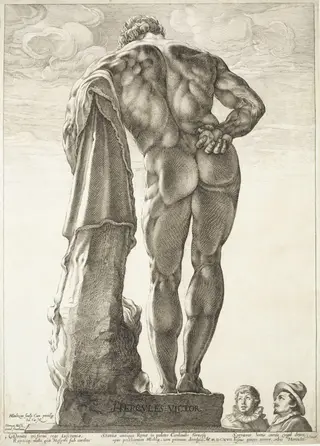 The Farnese Hercules
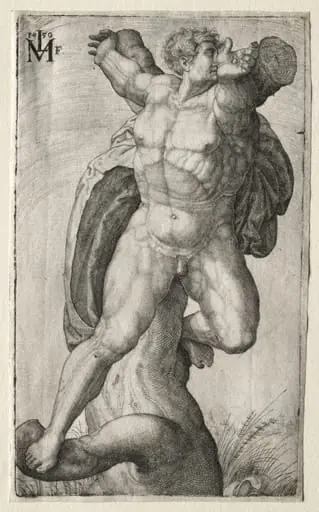 Crucified Man
![The Borghese Gladiator, back view [plate 29], by François Perrier](https://artifactworldgallery.com/img/francois-perrier--the-borghese-gladiator-back-view-plate-29--e76fdd1927ce2d52-w320.webp) The Borghese Gladiator, back view [plate 29]
The Borghese Gladiator, back view [plate 29]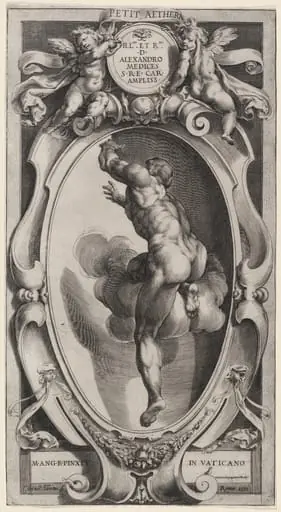 A Blessed Spirit
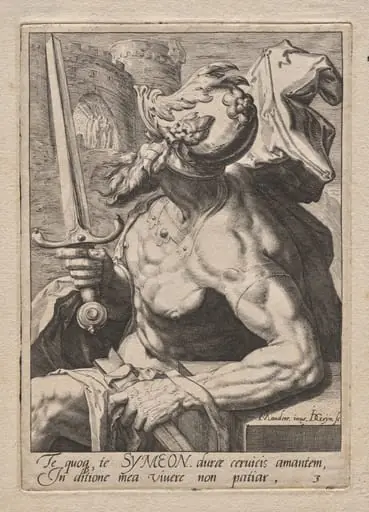 Plate 3: Simeon
![The Farnese Hercules, seen from behind [plate 4], by François Perrier](https://artifactworldgallery.com/img/francois-perrier--the-farnese-hercules-seen-from-behind-plate-4--075576b9459929be-w320.webp) The Farnese Hercules, seen from behind [plate 4]
The Farnese Hercules, seen from behind [plate 4]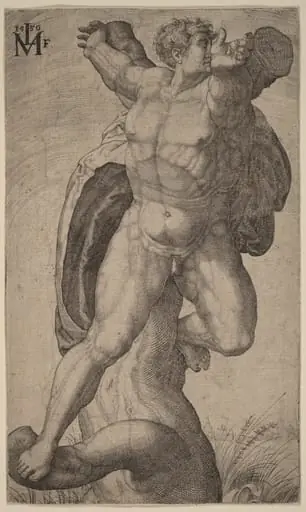 The Crucified Man