Artwork
Mucius Scaevola
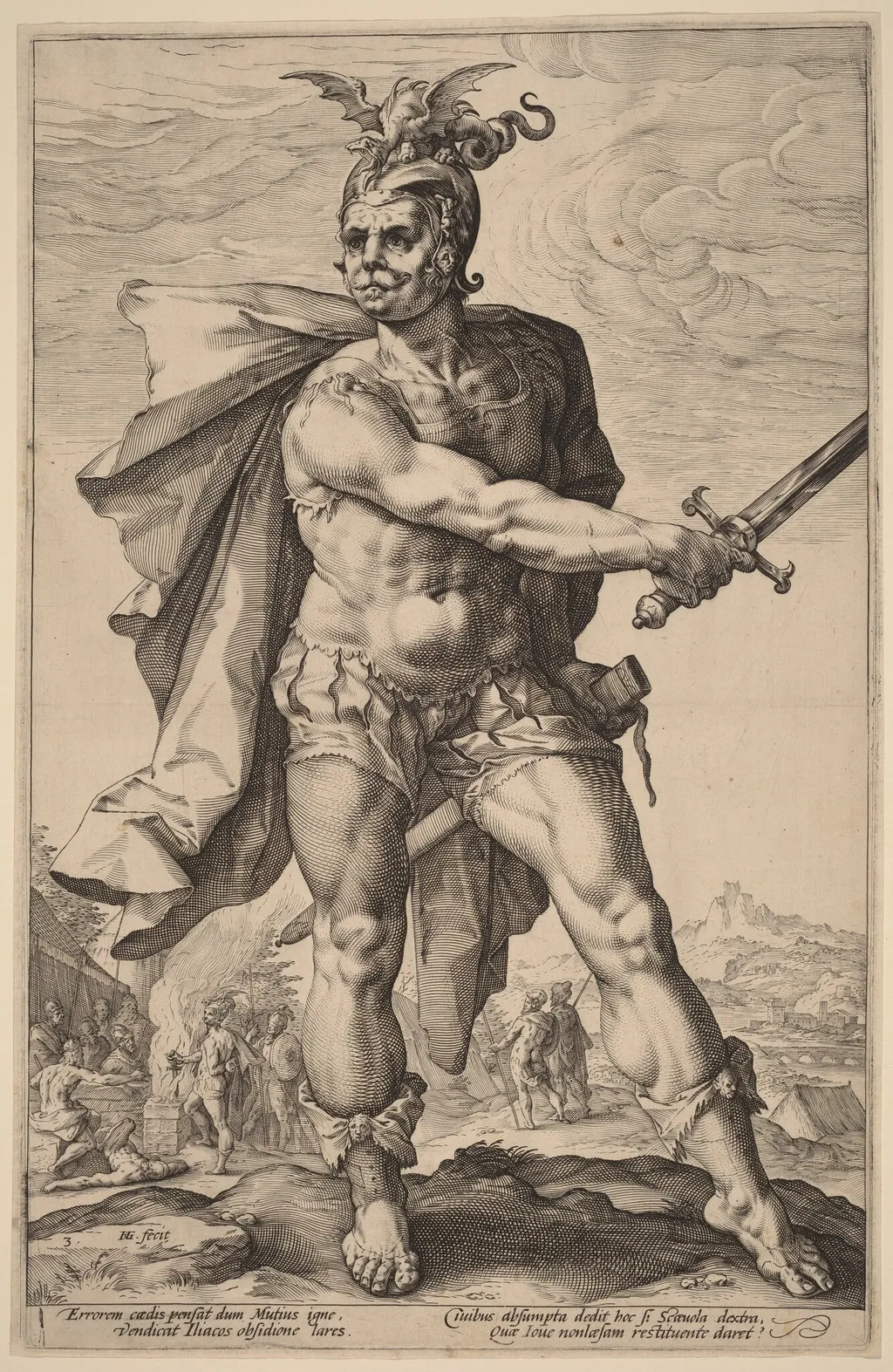
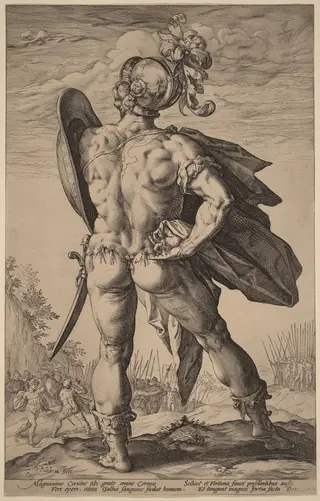
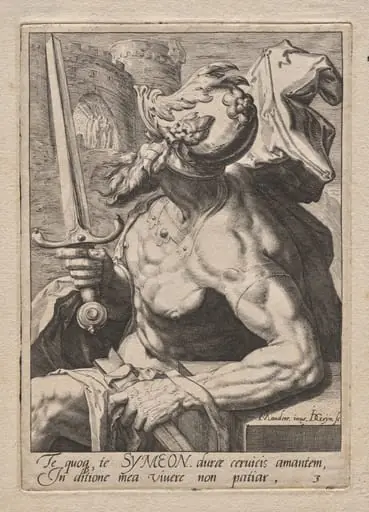
Mucius Scaevola is an ink print by the Renaissance artist Hendrick Goltzius. It dates from 1586 and is held in the collection of the National Gallery of Art.
- Inscription
- Inscribed:lower left, in image, in plate: HG. fecit; numbered, lower left in plate: 3; in margin below image, in plate: Errorem caedis pensat dum Mutius igne, / Vendicat Iliacos obsidione lares. / Civibus absumpta dedit hoc si Scaevola dextra, / Quae Iove non laesam restituente daret? (Because Mucius makes amends in the fire for his murder of the wrong man, he relieves the houses of Troy's descendants from the siege. If Scaevola achieved all this for his fellow citizens by sacrificing his right hand, what would he then achieve if Jupiter were to restore him without an injured hand?) [Latin translation from Leeflang, Huigen, and Ger Luijten. _Hendrick Goltzius (1558-1617): Drawings, Prints and Paintings._ Amsterdam: Rijksmuseum, 2003, p. 90.]
About this work
Overview
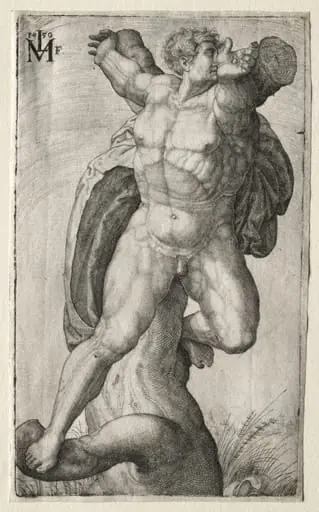
Executed as a print, the image presents a solitary figure confronting a modest flame while clutching a sword, embodying a moment drawn from Roman legend.
Hendrick Goltzius, a German‑born artist who worked in the Dutch Republic, produced the copper engraving titled Mucius Scaevola in 1586. Executed as a print, the image presents a solitary figure confronting a modest flame while clutching a sword, embodying a moment drawn from Roman legend. The work exemplifies Goltzius’s reputation as a pre‑eminent engraver of the early Baroque, often associated with Northern Mannerist tendencies.
Subject & Meaning
The composition illustrates the ancient tale of Mucius Scaevola, a Roman youth who proved his loyalty to the Republic by thrusting his right hand into a fire. By depicting the hero’s hand raised over the calm blaze, Goltzius emphasizes stoic resolve rather than dramatic suffering, inviting viewers to contemplate the virtue of self‑sacrifice in service of civic duty.
Technique & Style
Goltzius employed the traditional intaglio process, incising fine, sharply defined lines into a metal plate before applying ink and pressing it onto paper. The engraving displays his characteristic precision and intricate line work, with delicate cross‑hatching that models the flesh and the gentle flicker of the flames. The controlled composition and elongated figures reflect the elegant, exaggerated forms typical of Northern Mannerism.
History & Provenance
Created in the late sixteenth century, the print was circulated among collectors of the Dutch Republic and later entered various European collections. While specific ownership records are sparse, the engraving has been documented in several early modern print catalogues, confirming its presence in both private and institutional holdings throughout the centuries.
Own this work as a print
Artist & collection
Artist
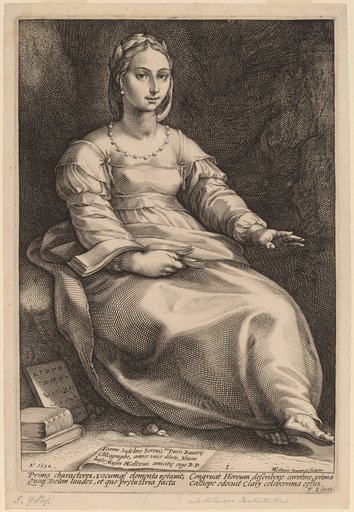
Hendrick Goltzius (German: , Dutch: ; né Goltz; January or February 1558 – 1 January 1617) was a German-born Dutch printmaker, draftsman, and painter.

![The Farnese Hercules, three-quarter view turned to left [plate 3], by François Perrier](https://artifactworldgallery.com/img/francois-perrier--the-farnese-hercules-three-quarter-view-turned-to-left-plate--b0564bebaad016fa-w320.webp)