Artwork
Pan and Syrinx
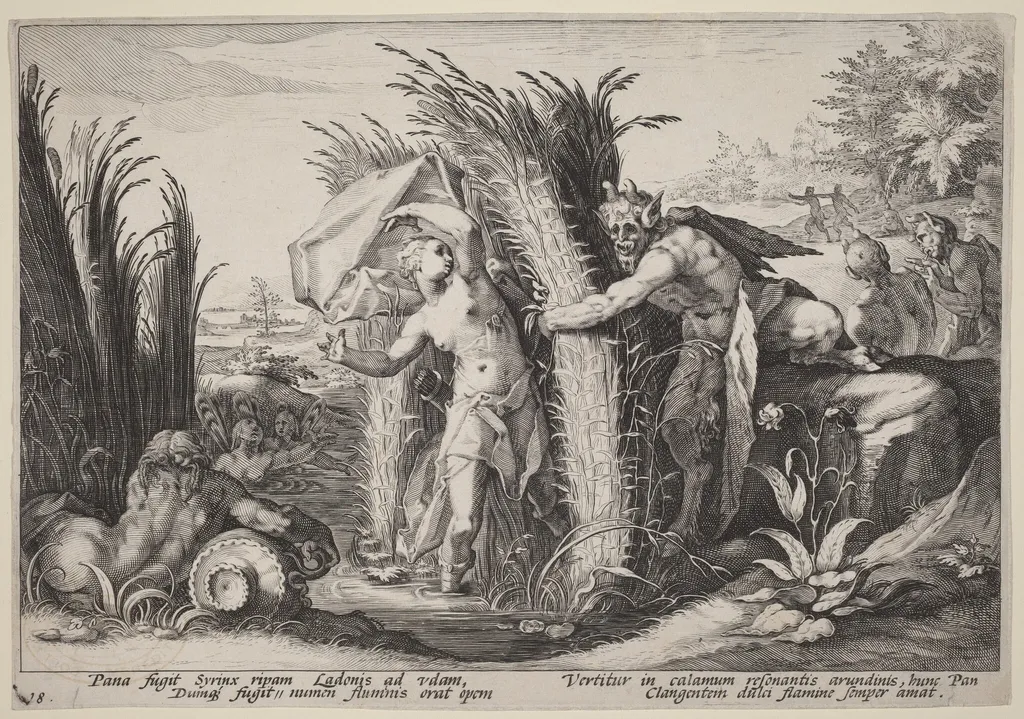
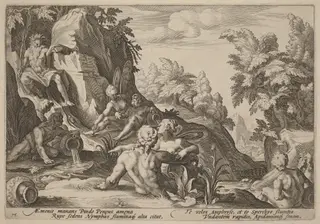
Pan and Syrinx is an ink print by the Renaissance artist Hendrick Goltzius. It dates from 1589 and is held in the collection of the National Gallery of Art.
- Inscription
- Inscribed:lower center in plate: Pana fugit Syrinx repam Ladonis ad udam ... / ... hunc Pan; by later hand, lower righ verso in graphite: #1867, 2f
About this work
Overview
This early modern print, executed in the workshop of Hendrick Goltzius, presents a dynamic mythological chase. Rendered on laid paper, the engraving captures the moment Pan pursues the nymph Syrinx amid a thicket of reeds, freezing the tension of the pursuit in a single, tightly composed scene.
Subject & Meaning
The composition draws on the Ovidian tale in which the satyr god Pan, driven by desire, follows the fleeing nymph Syrinx. As she escapes, she is transformed into reeds, a metamorphosis that the image hints at through the surrounding vegetation and the figures’ gestures, underscoring themes of unrequited longing and metamorphosis.
Technique & Style
The print relies on dense cross‑hatching, a hallmark of Goltzius’s workshop, to model form and generate atmospheric depth. Fine, intersecting lines build the musculature of Pan, the texture of Syrinx’s hair, and the crispness of the reed stalks, creating a tactile sense of space and movement within the flat medium of engraving.
History & Provenance
Created in the late 16th century, the work reflects the flourishing print culture of the Dutch Republic. It was produced under Goltzius’s direction, whose workshop supplied a range of mythological subjects to collectors across Europe. Surviving copies are held in several major museum collections, attesting to its wide distribution during the period.
Own this work as a print
Artist & collection
Artist
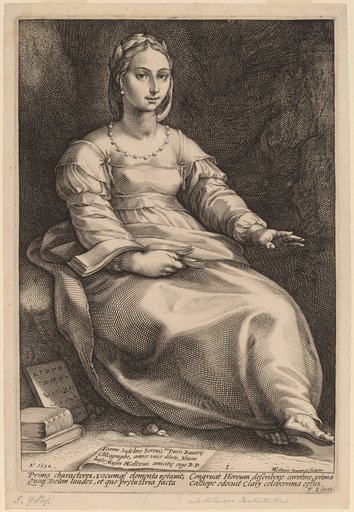
Hendrick Goltzius (German: , Dutch: ; né Goltz; January or February 1558 – 1 January 1617) was a German-born Dutch printmaker, draftsman, and painter.

 The River God Peneus Surrounded by Other Divinities
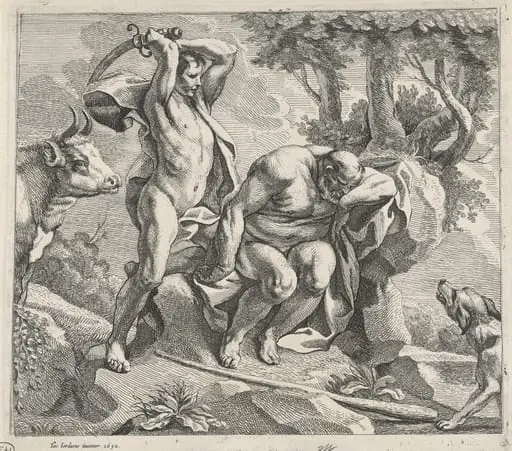 Mercury Killing Argus
![Temporalis Aeternitas [Second Version], by Italian 17th Century](https://artifactworldgallery.com/img/italian-17th-century--temporalis-aeternitas-second-version--2b55857961773f67-w320.webp) Temporalis Aeternitas [Second Version]
Temporalis Aeternitas [Second Version]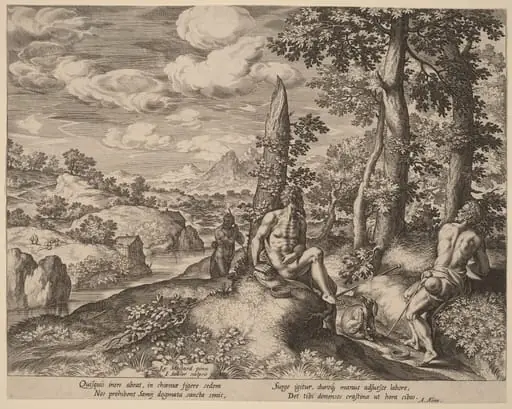 Landscape with Three Nude Men and a Dog
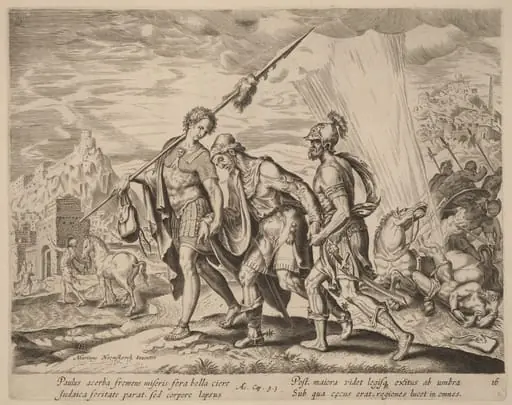 The Conversion of Saint Paul
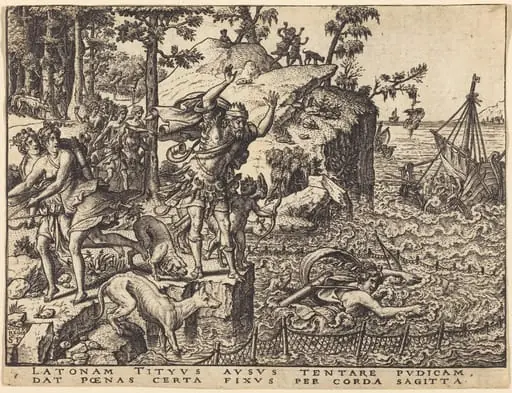 Britomartis Jumps into the Sea
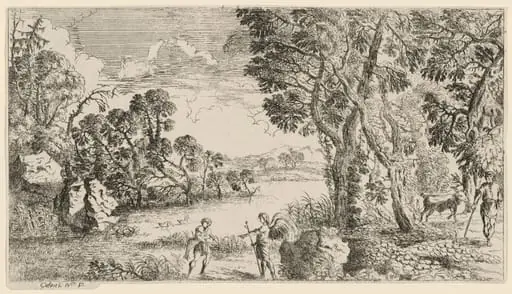 River Landscape with Tobias and the Angel
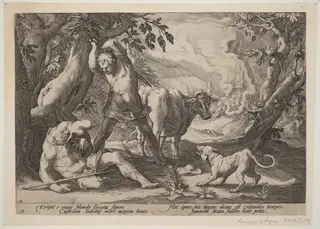 Landscape with Mercury Raising His Sword to Kill a Sleeping Argus
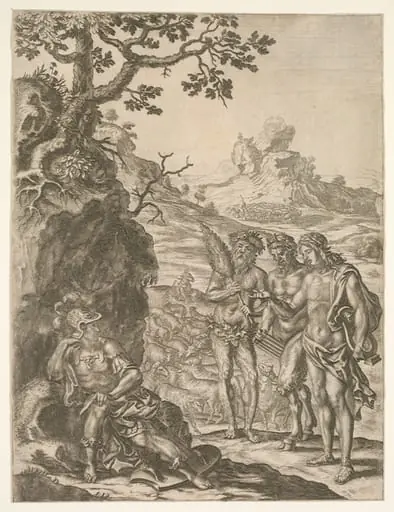 Aeneid
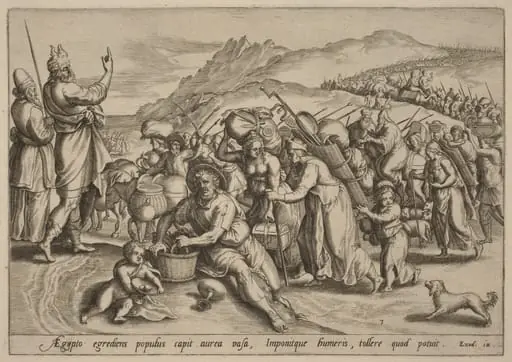 The Exodus from Egypt