Artwork
The Adoration of the Magi
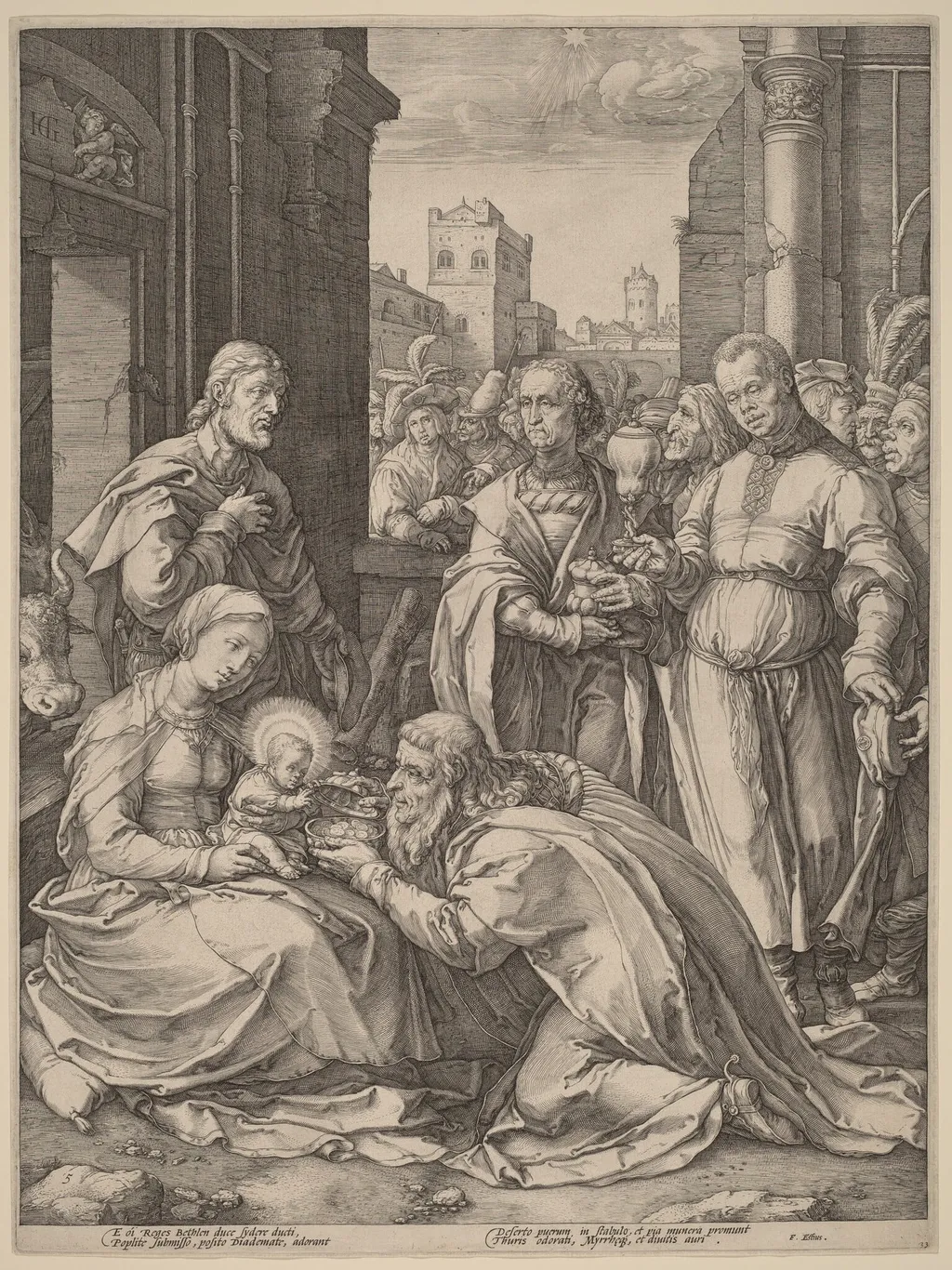
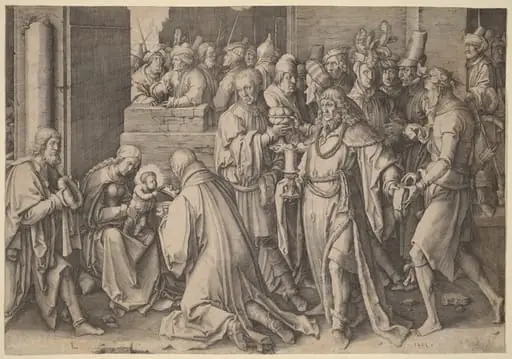
The Adoration of the Magi is an ink print by the Renaissance artist Hendrick Goltzius. It dates from 1594 and is held in the collection of the National Gallery of Art.
- Inscription
- Inscribed:upper left, above door, in plate: HG (in monogram); lower left, numbered in rock, in plate: 5; below image, in plate: Eói Reges Bethlen duce sydere ducti, / Poplite submisso, posito Didemate, adorant / Deserto puerum in stabulo, et pia munera promunt / Thuris odorati, Myrrhaeque, et divitis auri. / F. Estius. (The Magi from the East follow the star to Bethlehem, kneel and throw down their crowns; they worship; they worship the boy in the secluded stable and present their pious gifts of fragrant incense, myrrh and costly gold. F[ranco] Estius; llower right, in ink by a later hand: 33; verso, lower left, in graphite by later hand: 7267 / n-- / 11 4 51 B-2 / Wallach(?); verso, lower center, in graphite by later hand: No 19; verso, lower right, in graphite by later hand: A / B19 / FR/AR [Latin translation from Leeflang, Huigen, and Ger Luijten. _Hendrick Goltzius (1558-1617): Drawings, Prints and Paintings._ Amsterdam: Rijksmuseum, 2003, p. 210.]
About this work
Overview
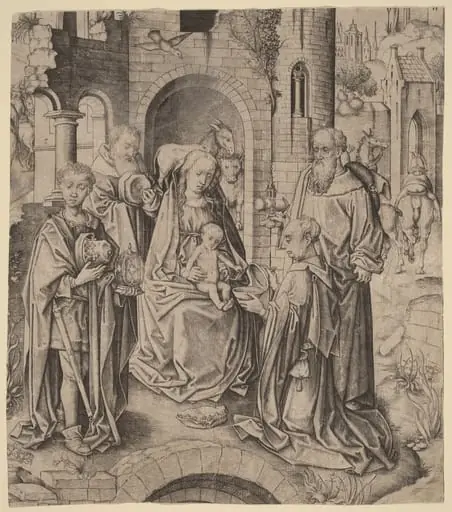
Hendrick Goltzius’s 1594 engraving titled The Adoration of the Magi presents a densely populated biblical tableau on laid paper. The composition centers on an infant, cradled by a woman, while three richly attired visitors present gifts. Figures populate the foreground and recede into a hinted architectural setting, creating a layered scene that balances narrative focus with ornamental detail.
Subject & Meaning
The image illustrates the New Testament episode in which the three Magi honor the newborn Christ with gold, frankincense, and myrrh. Goltzius emphasizes the act of offering and the reverent attention of onlookers, suggesting both the spiritual significance of the gifts and the communal acknowledgment of the infant’s divine role.
Technique & Style
Executed as an intaglio engraving, the work showcases Goltzius’s command of line, cross‑hatching, and varied burr to model flesh, fabric, and stone. The intricate hatching builds tonal depth, while the elongated figures and ornate drapery reflect the Northern Mannerist taste for complexity and elegant exaggeration.
History & Provenance
Created in the Dutch Republic during the late sixteenth century, the print was produced at a time when Goltzius was establishing his reputation as the foremost Dutch engraver. The work circulated through print markets, reaching collectors across Europe, and survives today in several museum collections that specialize in early modern graphic art.
Context
The engraving emerges from a period of heightened interest in biblical narrative prints, which served both devotional and educational purposes. Goltzius’s rendition aligns with the Baroque shift toward dynamic composition, yet retains the refined, decorative qualities characteristic of Northern Mannerism.
Own this work as a print
Artist & collection
Artist
Hendrick Goltzius (German: , Dutch: ; né Goltz; January or February 1558 – 1 January 1617) was a German-born Dutch printmaker, draftsman, and painter.