Artwork
狩野探幽筆 神農・夏冬山水図|Winter Landscape
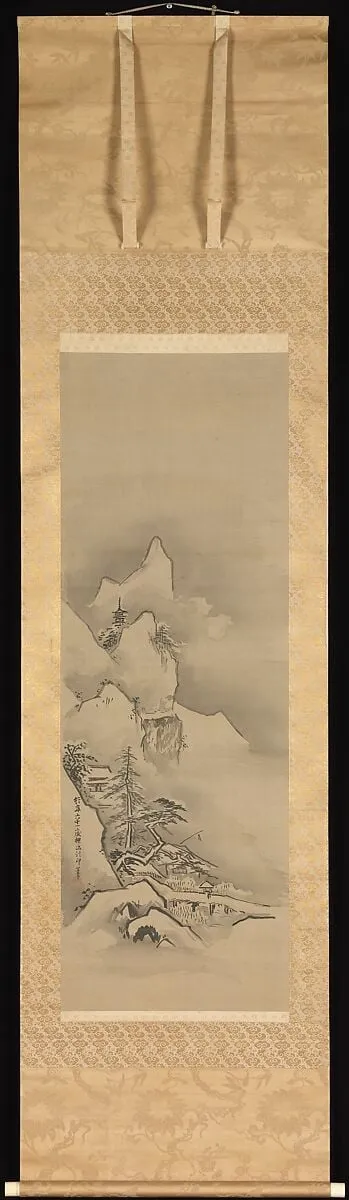
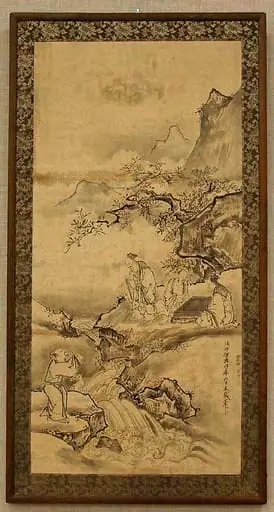
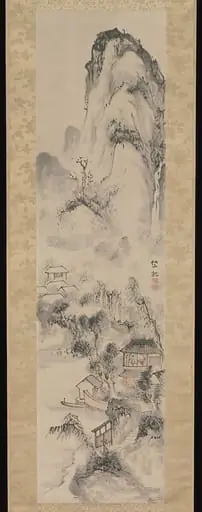
狩野探幽筆 神農・夏冬山水図|Winter Landscape is an ink painting by the Baroque artist Kano Tan'yū. It dates from 1662 and is held in the collection of the Metropolitan Museum of Art.
About this work
Subject & Meaning
The depiction emphasizes the quietude and visual texture associated with snow, serving as a seasonal representation within the artist's series.
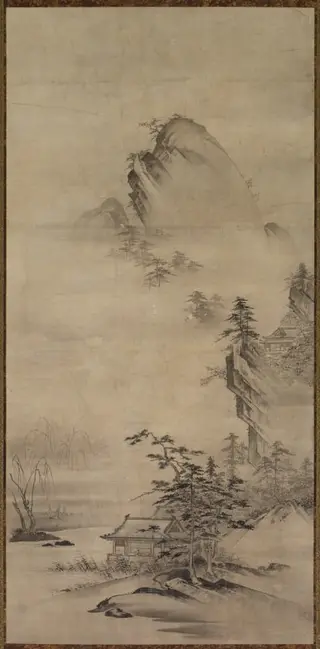
The work depicts a winter landscape, characterized by snow-covered terrain rendered in ink and color on silk. As part of a set of three hanging scrolls created in 1662 by Kano Tan'yū, this panel specifically represents the seasonal theme of winter. The subject matter focuses on the natural environment during the cold season, utilizing the traditional landscape painting genre to convey the atmosphere of snow.
The imagery aligns with the broader set's likely exploration of seasonal variations, presenting a stark, wintry scene typical of Japanese ink painting traditions from the Edo period. The depiction emphasizes the quietude and visual texture associated with snow, serving as a seasonal representation within the artist's series.
Technique & Style
The work is executed in ink and polychrome on silk, forming one of three hanging scrolls created in 1662 by Kano Tan’yū. The silk support is typical of Japanese hanging scrolls, allowing the piece to be rolled for storage and display. Measuring approximately 113 cm in height and 39.4 cm in width, the composition depicts a winter scene blanketed in snow, rendered with delicate brushwork and subtle color washes that emphasize atmospheric depth.
The stylistic approach combines meticulous line work with muted tonal gradations, characteristic of the Kanō school’s landscape tradition, while the overall handling reflects the scroll’s functional use in interior settings.
History & Provenance
Winter Landscape was created by Kano Tan'yū in 1662, executed in ink and color on silk as one component of a set of three hanging scrolls. The work was produced in Japan during the early Edo period, a time when Tan'yū held a prominent position within the Kanō school. The painting entered the collection of the Metropolitan Museum of Art, where it remains held today.
No further details regarding an original patron, intermediate ownership transfers, or specific commissioning circumstances are documented in the available sources.
Legacy
The painting is a representative work of the Kano school, exemplifying the winter landscape genre through its snowy mountain composition. Created in 1662 by Kano Tan’yū, it is executed in ink and color on silk as part of a three‑scroll hanging set. Its depiction of snow aligns with the genre’s emphasis on seasonal atmosphere.
The work is held in the Metropolitan Museum of Art, where its inclusion in a major collection has sustained scholarly interest and reinforced the artist’s reputation as a master of Edo‑period landscape painting.
Overview
Painted in 1662 by Kano Tan'yū, this hanging scroll depicts a winter landscape as part of a three-panel set illustrating the same mountain across different seasons. The composition centers on a snow-covered peak shrouded in mist, with a solitary pine tree clinging precariously to a cliff face. A diminutive traveler ascends a winding path, emphasizing the vastness and stillness of the natural world.
Executed in ink and color on silk, the work relies heavily on subtle ink washes to render the atmosphere and snow, contrasting with sharp, deliberate brushstrokes that define the pine needles and rocky textures. Created late in the artist's career, this piece exemplifies Tan'yū's mature style, which moved away from the vibrant polychromy of his early Edo period works toward a more restrained, monochromatic elegance. The series reflects the influence of Chinese literati painting traditions while maintaining the distinct aesthetic sensibilities of the Kano school.
As one of the three seasonal views, the winter scroll specifically captures the quietude and isolation of the season, serving as a meditative study of nature's endurance and the artist's technical mastery in conveying atmospheric depth through minimal means.
Context
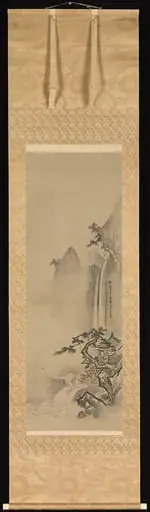
Created when Kano Tan'yū was almost seventy, this painting reflects the artist's mature style. While he managed a prominent workshop, Tan'yū personally painted this scroll. It forms one part of a seasonal triptych, where the winter scene's quiet composition offers a contemplative counterpoint to the more vibrant depictions of summer and autumn.
Artist & collection

 Landscape with a Pavilion
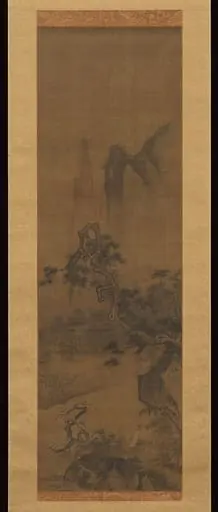 南宋 佚名 賞梅圖 軸|Scholar admiring plum blossoms
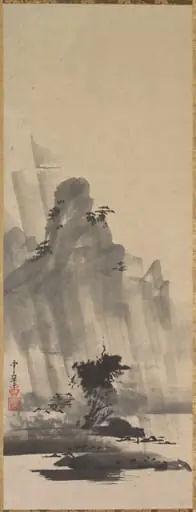 Mountain and River in Storm
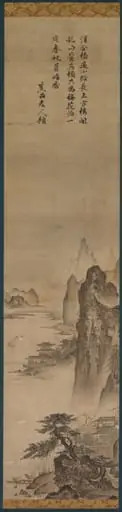 Landscape
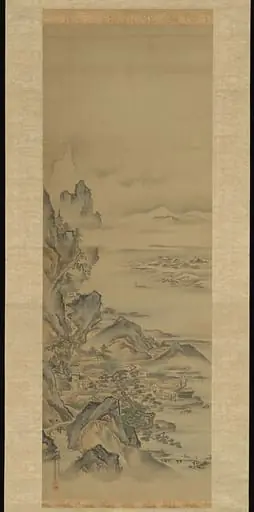 狩野探水守常筆 蓬莱山・瀟湘八景図|Mount Penglai with Eight Views of Xiao and Xiang
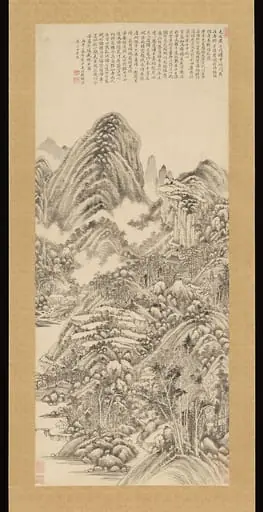 清 王時敏 仿黃公望山水圖 軸 絹本|Landscape in the style of Huang Gongwang
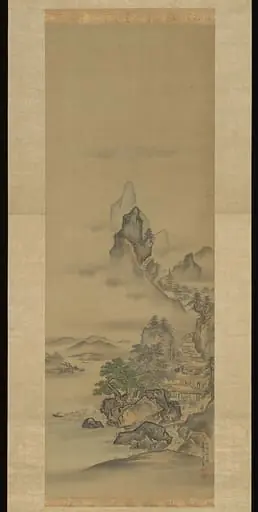 狩野探水守常筆 蓬莱山・瀟湘八景図|Mount Penglai with Eight Views of Xiao and Xiang
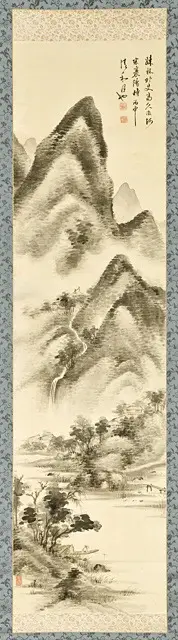 Mountain Landscape in the 'Mi' Style
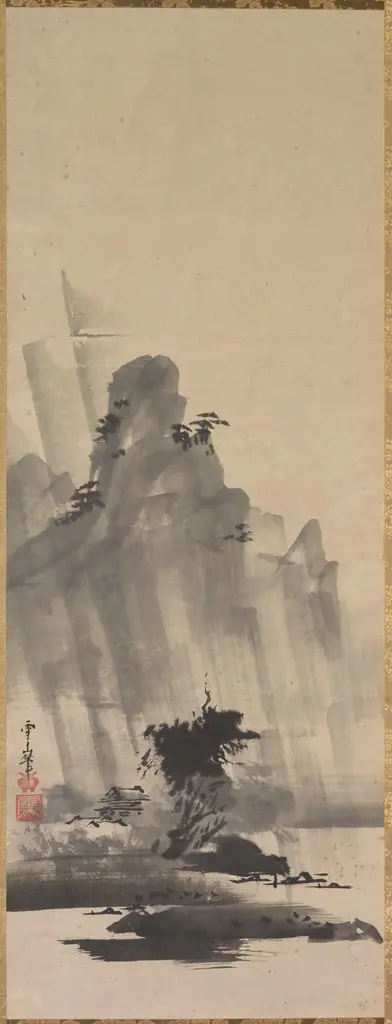 Mountain and River in Storm
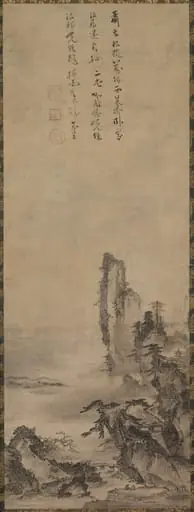 Lonely Temple and Towering Cliff
 Untitled