Artwork
Glass and Checkerboard
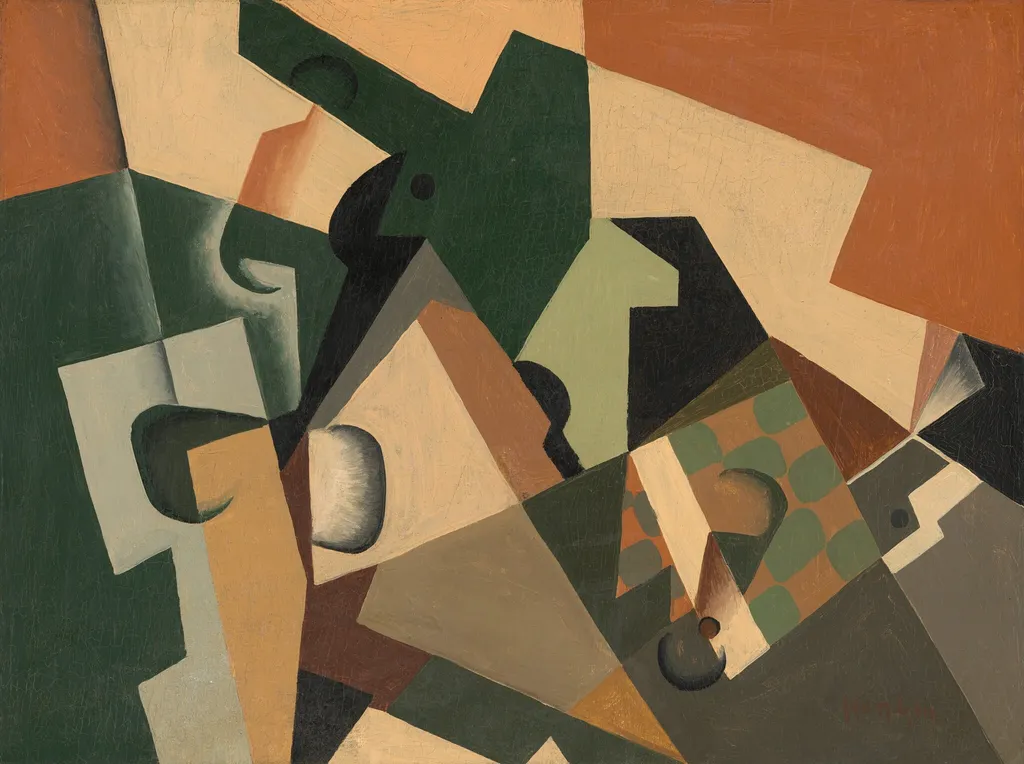
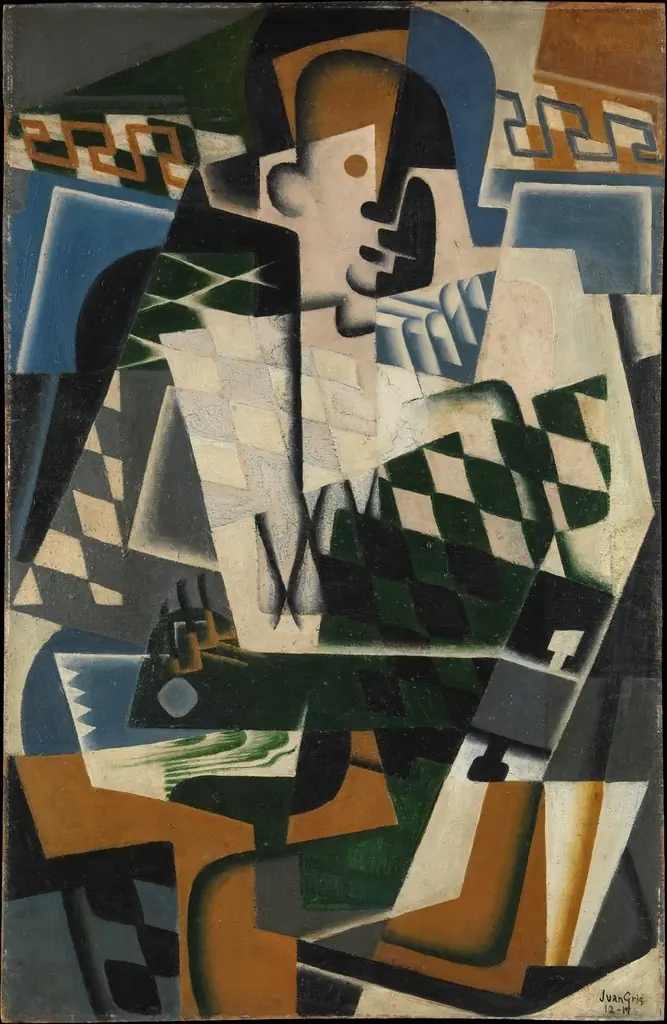
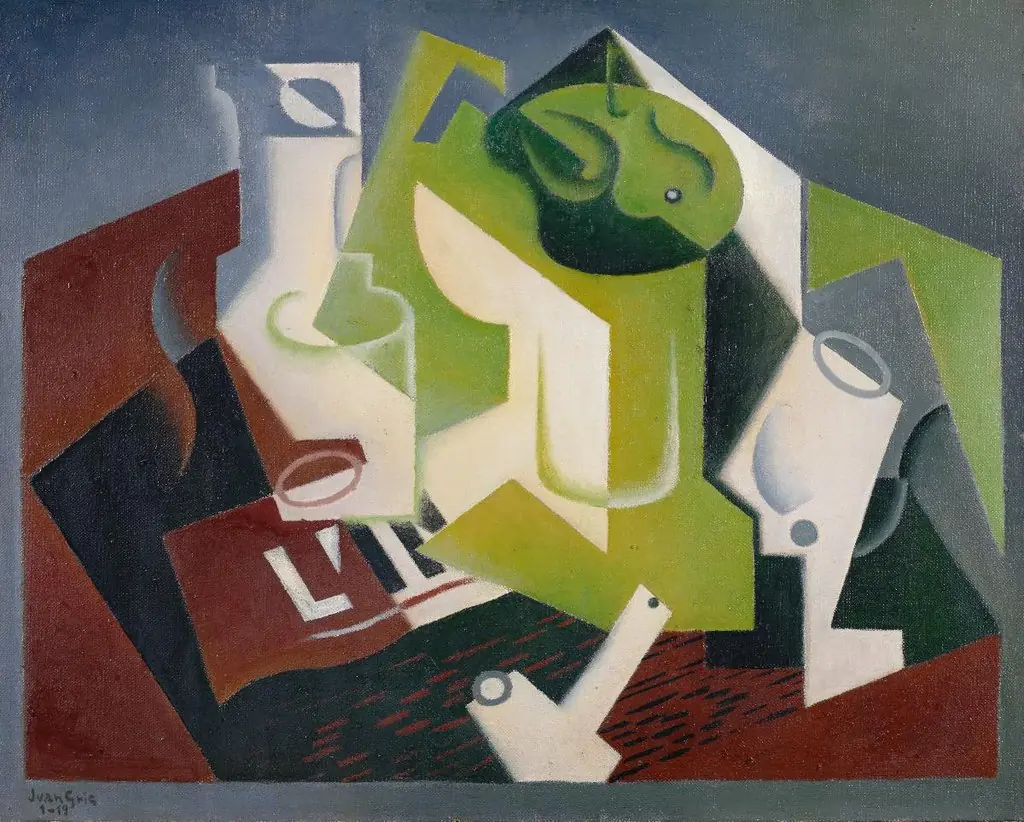
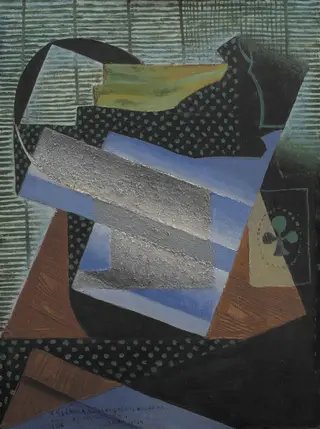
Glass and Checkerboard is an oil painting by the Cubism Analytic artist Juan Gris. It dates from 1917 and is held in the collection of the National Gallery of Art.
- Inscription
- Inscribed:lower right: Juan Gris
About this work
Technique & Style
The piece is classified as a painting within the artist's oeuvre, reflecting the material choices typical of Juan Gris during this period of his career.
Created in 1917, Glass and Checkerboard is an oil painting executed on a wood panel support. The work measures 29.85 cm in height and 41.28 cm in width. As a painted composition, it utilizes oil paint as its primary medium, applied directly to the rigid wooden surface rather than a flexible canvas.
The piece is classified as a painting within the artist's oeuvre, reflecting the material choices typical of Juan Gris during this period of his career.
History & Provenance
Glass and Checkerboard was created by Juan Gris in 1917, executed in oil on wood. According to the provenance record, the painting was purchased, possibly in the 1950s, by the New York collector Ian Woodner (1903–1990). It subsequently passed by inheritance to his daughter, Dian Woodner, also in New York.
In 2017, Dian Woodner gave the work to the National Gallery of Art as a gift, where it remains in the collection.
The painting was produced in 1917, a period associated with Gris's mature Cubist work, and its modest dimensions, approximately 29.85 by 41.28 centimeters on a wood panel, are consistent with the intimate scale of his still-life compositions from these years.
Juan Gris's 1917 painting Glass and Checkerboard is held in the collection of the National Gallery of Art in Washington, D.C. The work was acquired by the museum in 2017 as a gift from Dian Woodner of New York. It entered her collection through inheritance from her father, Ian Woodner, who likely purchased the piece in the 1950s. The provided sources do not list a specific inventory or accession number for the work, nor do they document any exhibition history prior to its donation to the National Gallery of Art.
Context
Juan Gris's 1917 painting Glass and Checkerboard entered the National Gallery of Art collection through the Woodner family gift in 2017, having been acquired in the 1950s by Ian Woodner and passed to his daughter Dian Woodner [1-2]. The work, created during Cubism's formative period, exemplifies Gris's synthesis of analytical fragmentation with classical structure, situating it within the movement's evolution alongside Picasso and Braque [1-2]. Its precise geometric rendering of transparent glass against a checkered surface reflects contemporary debates about representation and optical perception in early 20th-century modernism [1-2].
Overview
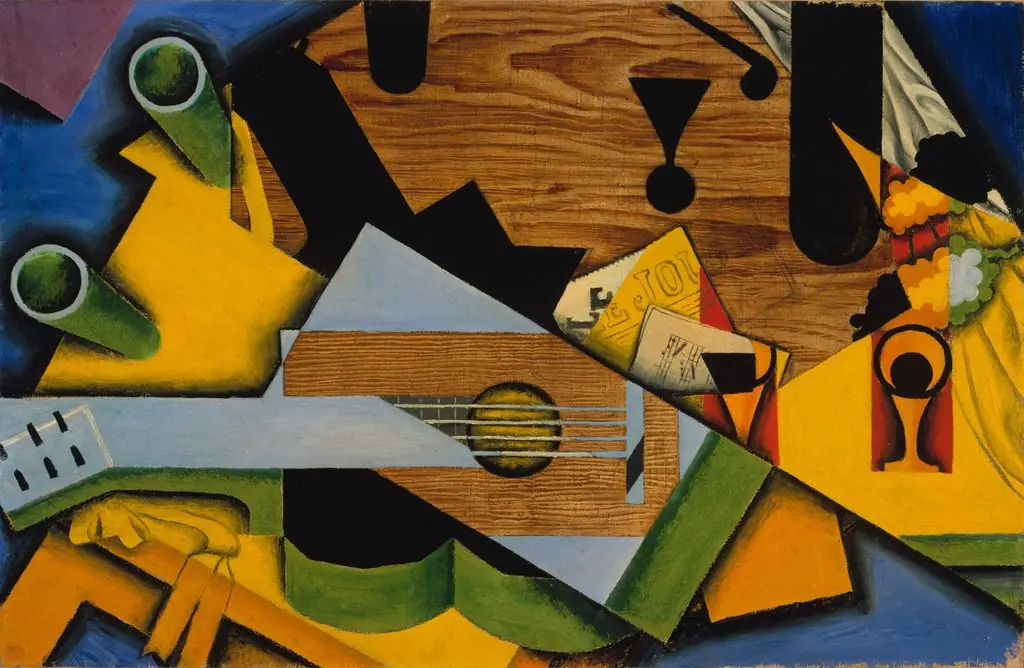
Created circa 1917, Glass and Checkerboard is an oil painting on wood by Juan Gris, a leading practitioner of Analytic Cubism. The work presents a composition of interlocking geometric planes rendered in a restrained palette of greens, browns, beiges and blacks, suggesting the forms of a glass and a checkerboard without explicit representation.
Subject & Meaning
Through fragmented surfaces and overlapping shapes, the painting abstracts everyday objects, a drinking glass and a checkerboard, into a network of planes. The subdued tones and lack of clear perspective invite viewers to reconstruct the implied objects mentally, reflecting Cubism’s interest in multiple viewpoints and the deconstruction of visual reality.
Own this work as a print
Artist & collection

Artist
José Victoriano González-Pérez, better known as Juan Gris, was a Spanish painter born in Madrid who lived and worked in France for most of his active period.