Artwork
The Grote Zavel (Grand Sablon), Brussels
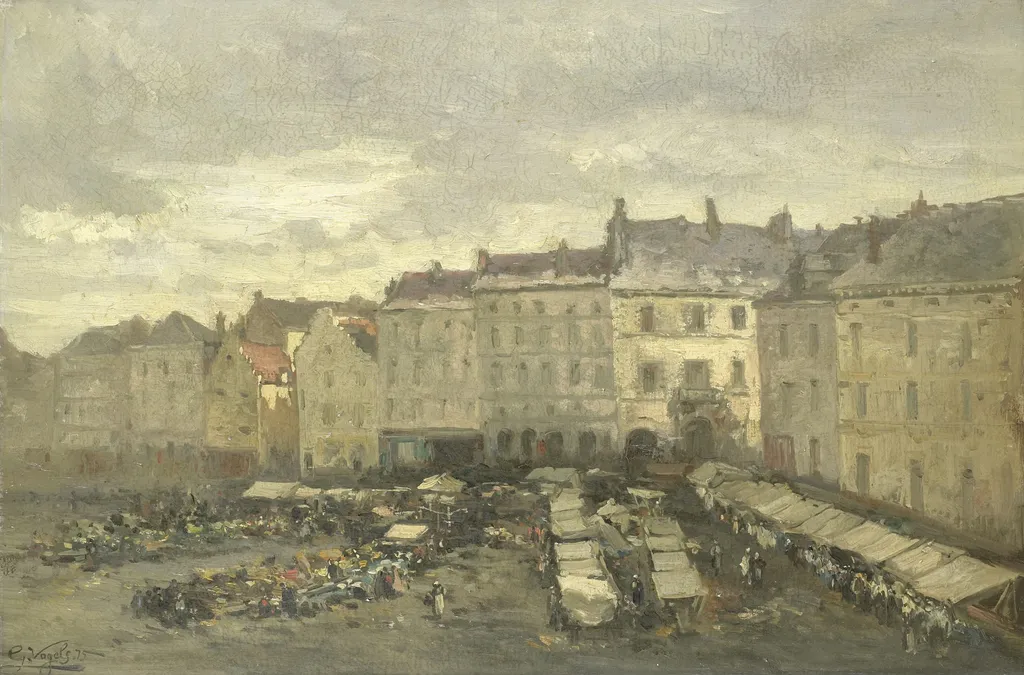
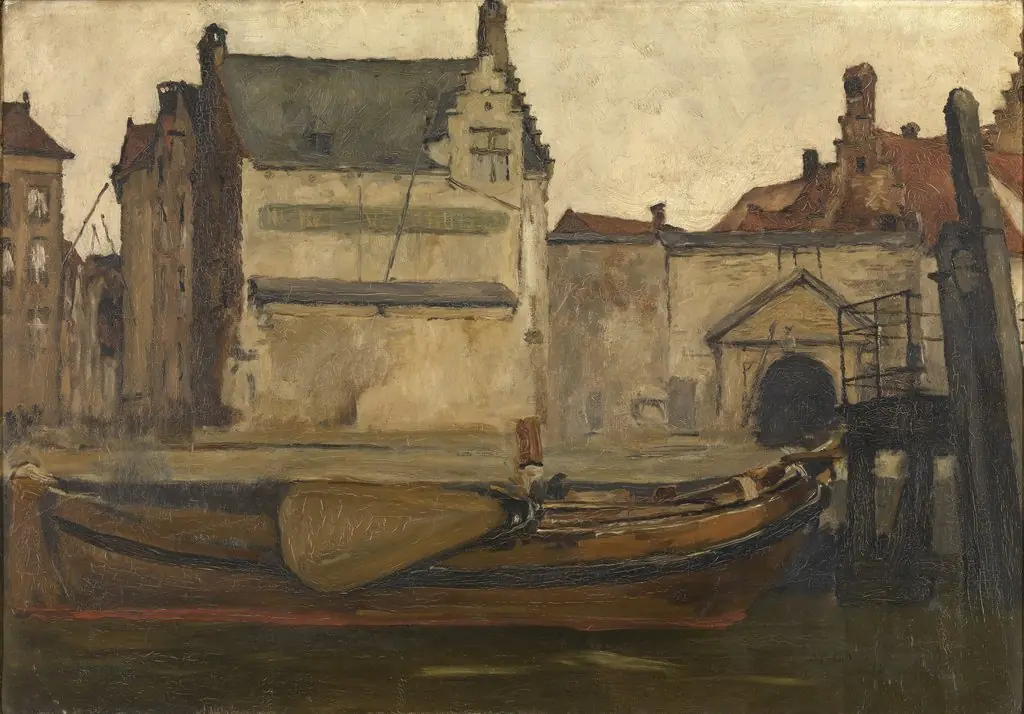
The Grote Zavel (Grand Sablon), Brussels is an oil painting by the Impressionist artist Guillaume Vogels. It dates from 1875 and is held in the collection of the Rijksmuseum.
About this work
Subject & Meaning
As a cityscape, the painting focuses on the architectural elements of the square, specifically rendering the houses that line the space.
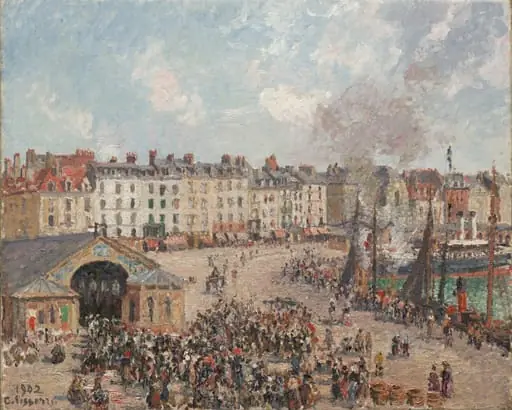
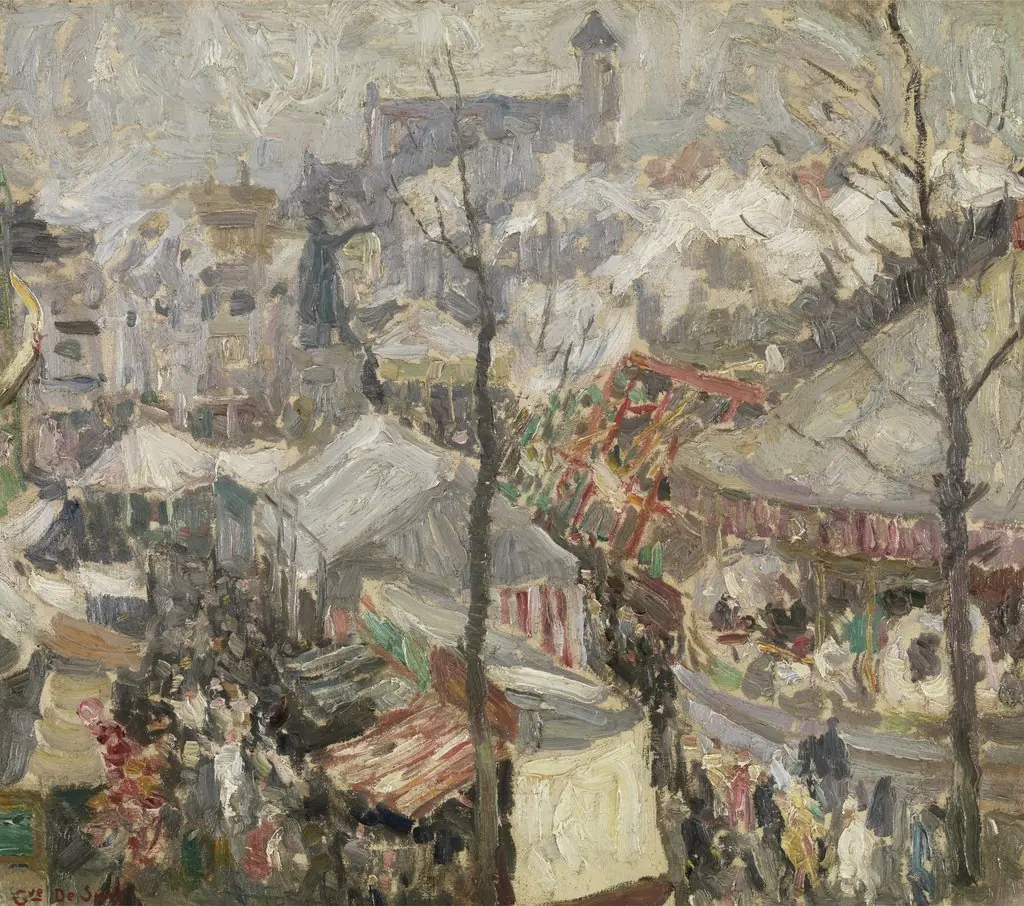
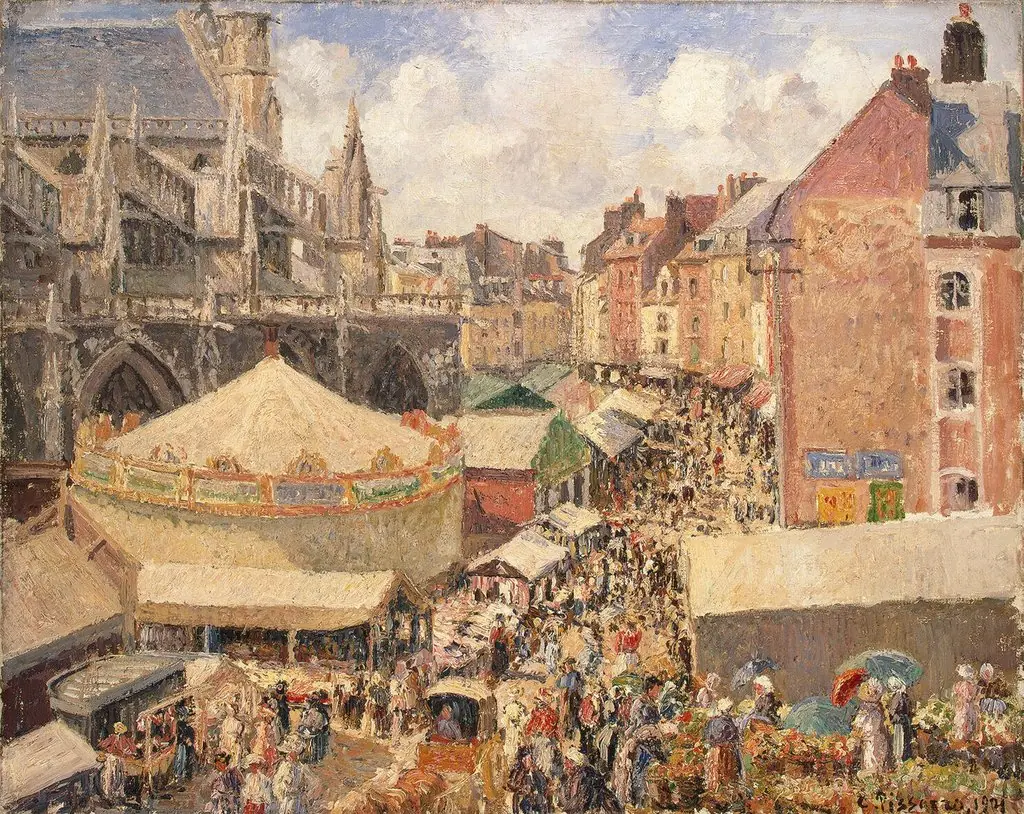
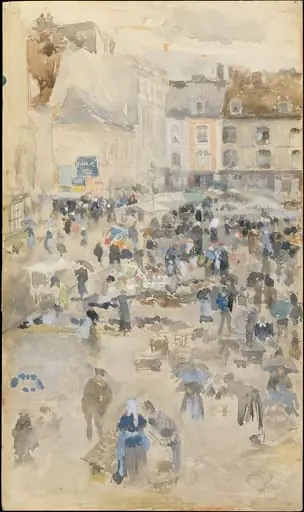
The work depicts the Place du Grand Sablon, also known as the Grote Zavel, in Brussels. As a cityscape, the painting focuses on the architectural elements of the square, specifically rendering the houses that line the space. The subject matter captures a specific urban location rather than a narrative scene or allegorical figure. The depiction serves to document the physical appearance of this Brussels landmark during the late 19th century.
Technique & Style
Guillaume Vogels executed The Grote Zavel (Grand Sablon), Brussels in 1875 using oil paint applied to a canvas support. The work measures 40.7 cm in height and 61.5 cm in width. Classified as a cityscape, the painting depicts the Place du Grand Sablon, focusing on the houses surrounding the square. The handling of the medium captures the architectural details of the urban environment within the specified dimensions.
Overview
Guillaume Vogels’ oil painting from 1875 portrays a bustling urban scene at Brussels’ Place du Grand Sablon, known locally as the Grote Zavel. The canvas captures a market atmosphere framed by the square’s surrounding architecture, with a prominent house visible among the rows of stalls. The work is part of the Rijksmuseum’s collection.
History & Provenance
Created in the mid‑1870s, the painting reflects Vogels’ interest in contemporary city life. It entered the Rijksmuseum’s holdings at an unspecified date, where it remains on display as an example of 19th‑century Belgian urban genre painting.
Own this work as a print
Artist & collection