Artwork
Fishmarket
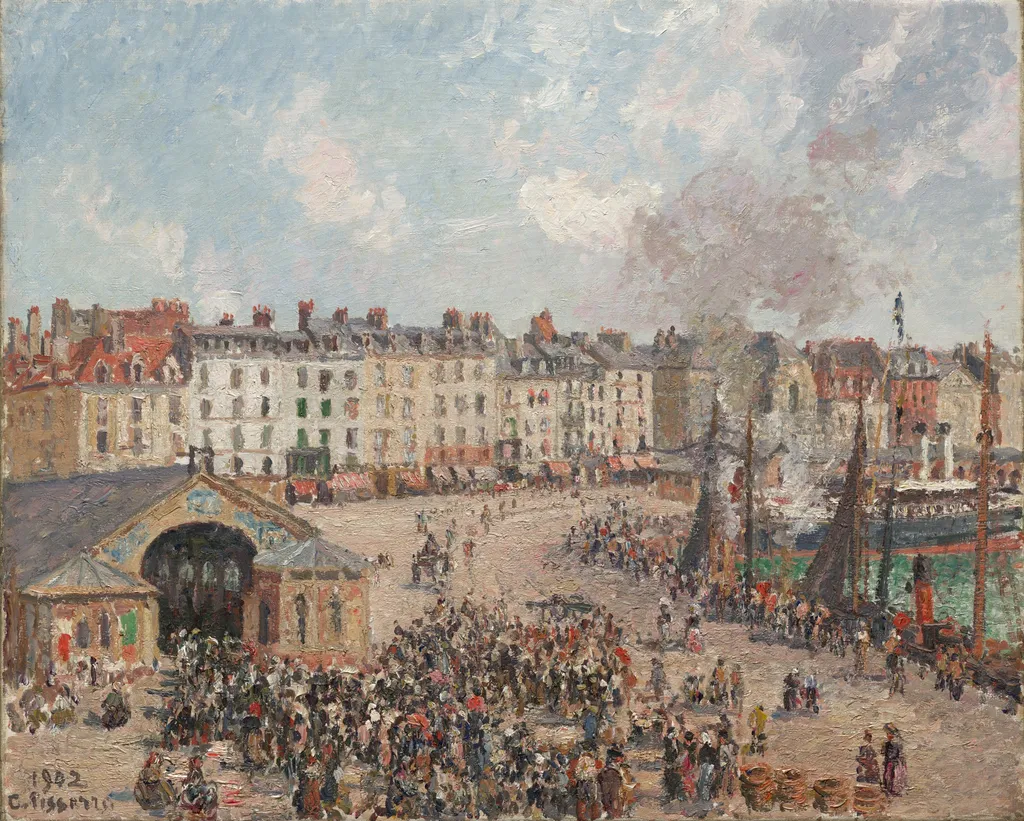
Fishmarket is an oil painting by the Impressionist artist Camille Pissarro. It dates from 1902 and is held in the collection of the Cleveland Museum of Art.
About this work
Subject & Meaning
The work captures the daily commercial activity of a fish market, focusing on the urban environment and the labor associated with the trade.
Camille Pissarro's 1902 oil painting, Fishmarket, depicts a bustling fish market scene, categorized within the cityscape genre. The work captures the daily commercial activity of a fish market, focusing on the urban environment and the labor associated with the trade. As a cityscape, the painting represents the vitality of French urban life at the turn of the twentieth century.
While the specific iconography of individual figures is not detailed in the available records, the subject matter itself serves as a document of the era's market culture. The composition emphasizes the interaction between vendors, goods, and the public space, reflecting Pissarro's continued interest in depicting the rhythms of everyday existence in France.
History & Provenance
Fishmarket is an oil painting on canvas created by Camille Pissarro in France, dated 1902. The work entered the collection of the Japanese businessman and art collector Kōjirō Matsukata at one point in its ownership history. It subsequently passed into the holdings of the Cleveland Museum of Art, where it is presently held as part of the museum's collection.
No further details regarding an original commission, intermediate owners, or specific acquisition dates are recorded in the available documentation.
Overview
Camille Pissarro's 1902 oil painting, Fishmarket, captures a lively urban scene. This work exemplifies the artist's engagement with everyday life, a common theme in his extensive career. It is currently held in the collection of The Cleveland Museum of Art, representing a significant example of his later output.
Technique & Style
Pissarro employed thick, visible brushstrokes, creating a textured surface that conveys the energy of the scene. Short, distinct marks animate the figures and surroundings, suggesting constant movement without sharp definition. The light blue sky with soft clouds, rendered with a similar technique, contributes to the painting's vibrant atmosphere. This approach reflects his contributions to Impressionist and Neo-Impressionist methods.
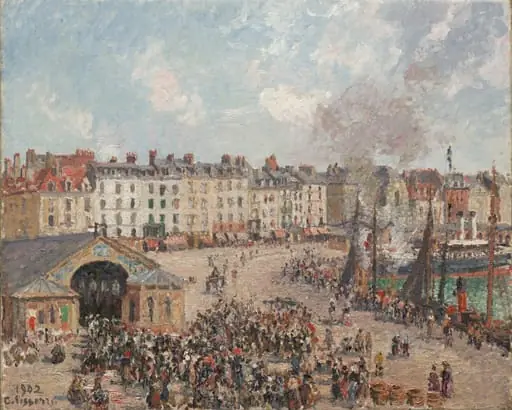
Own this work as a print
Artist & collection


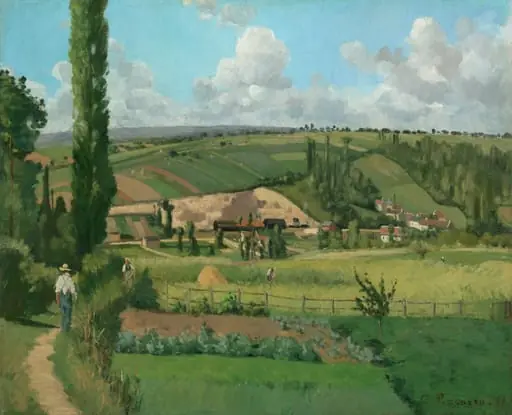
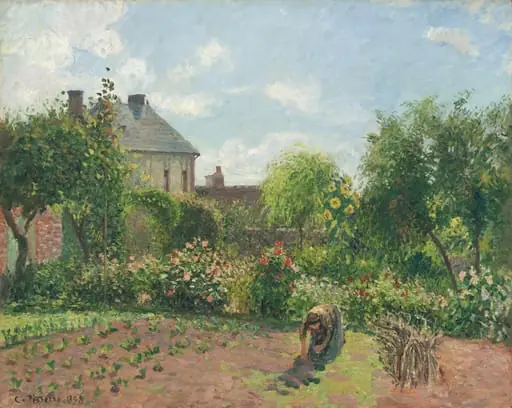
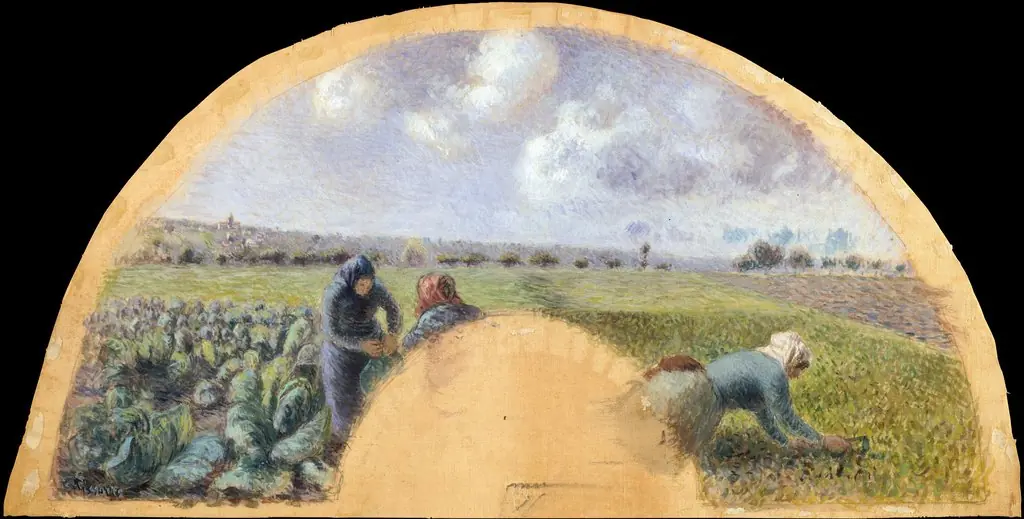
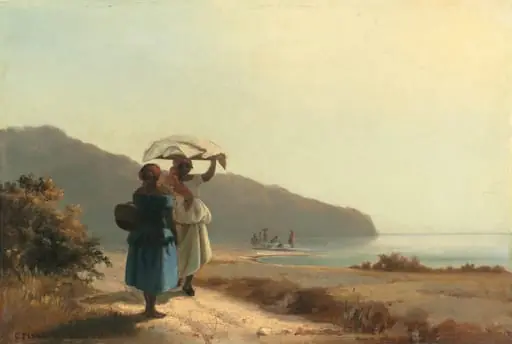
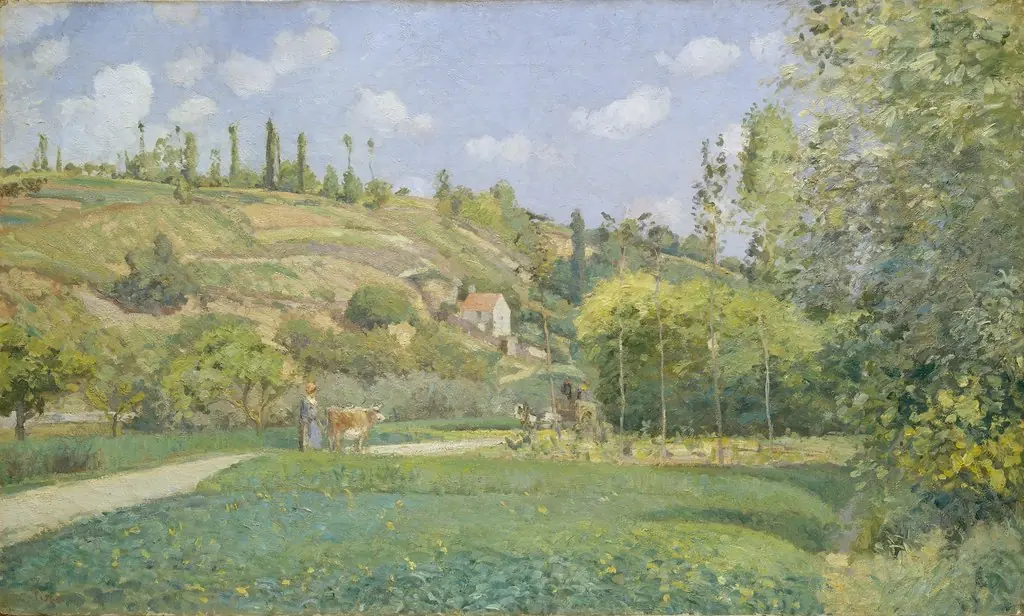
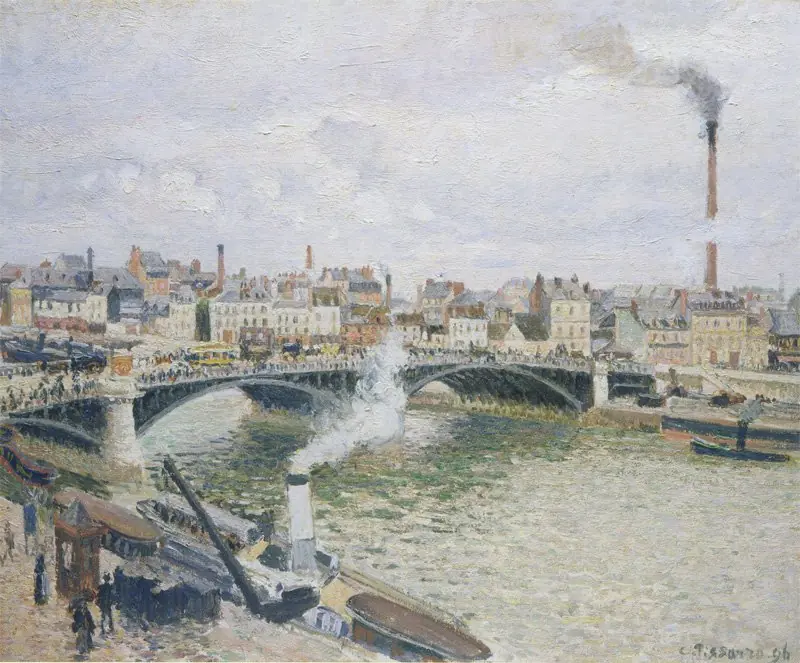
- Fishmarket
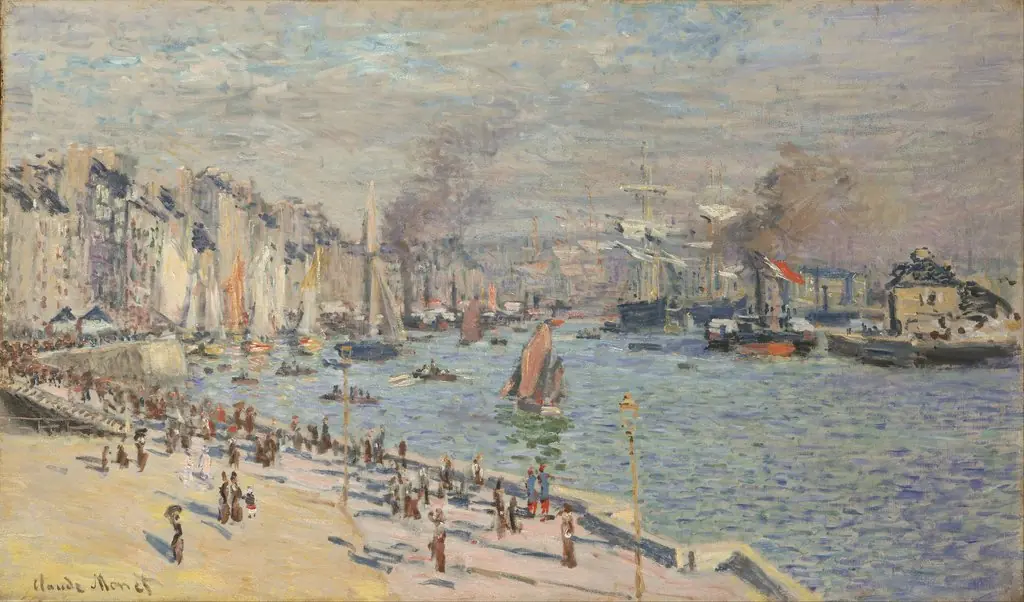 Port of Le Havre
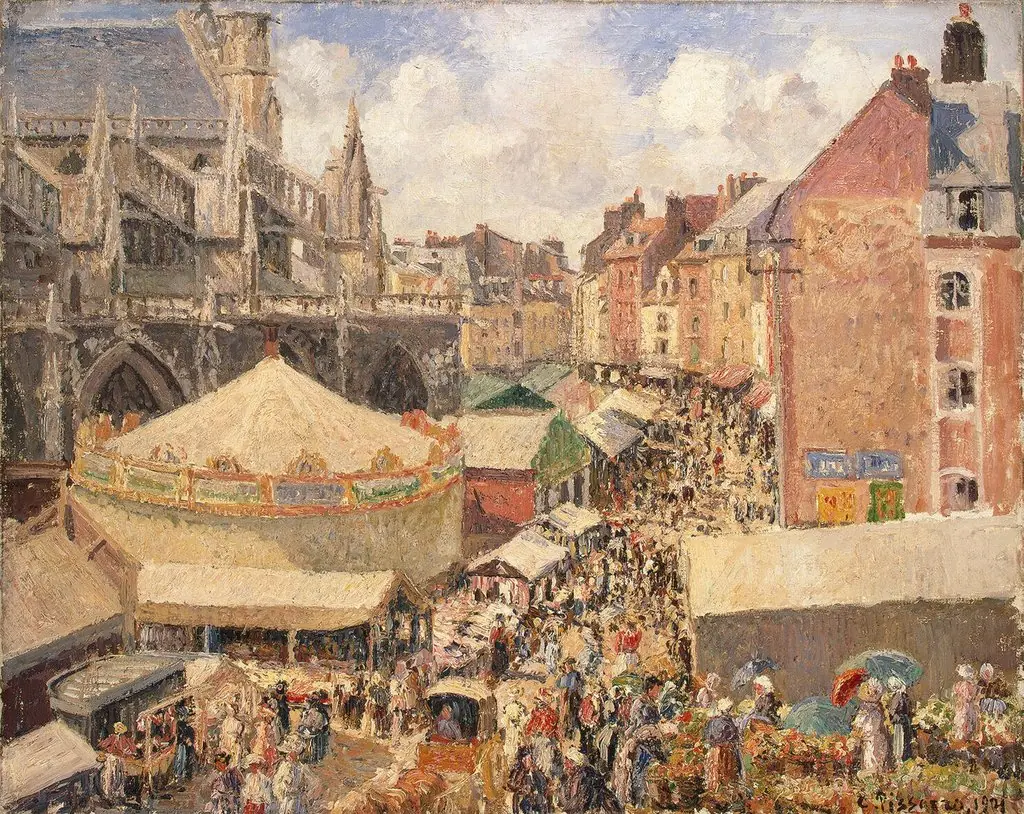 The Town Fair by the Church of Saint-Jacques in Dieppe, Morning, Sunlight
 The Grote Zavel (Grand Sablon), Brussels
 The Grote Zavel (Grand Sablon), Brussels
 Entrance to the Port of Honfleur
 Entrance to the Port of Honfleur
 Afternoon Sunshine, Pont Neuf
 The Pont-Neuf, Sunlight (Second Series)
 Fair on a Sunny Afternoon, Dieppe
 Rue de l'Épicerie, Rouen (Effect of Sunlight)
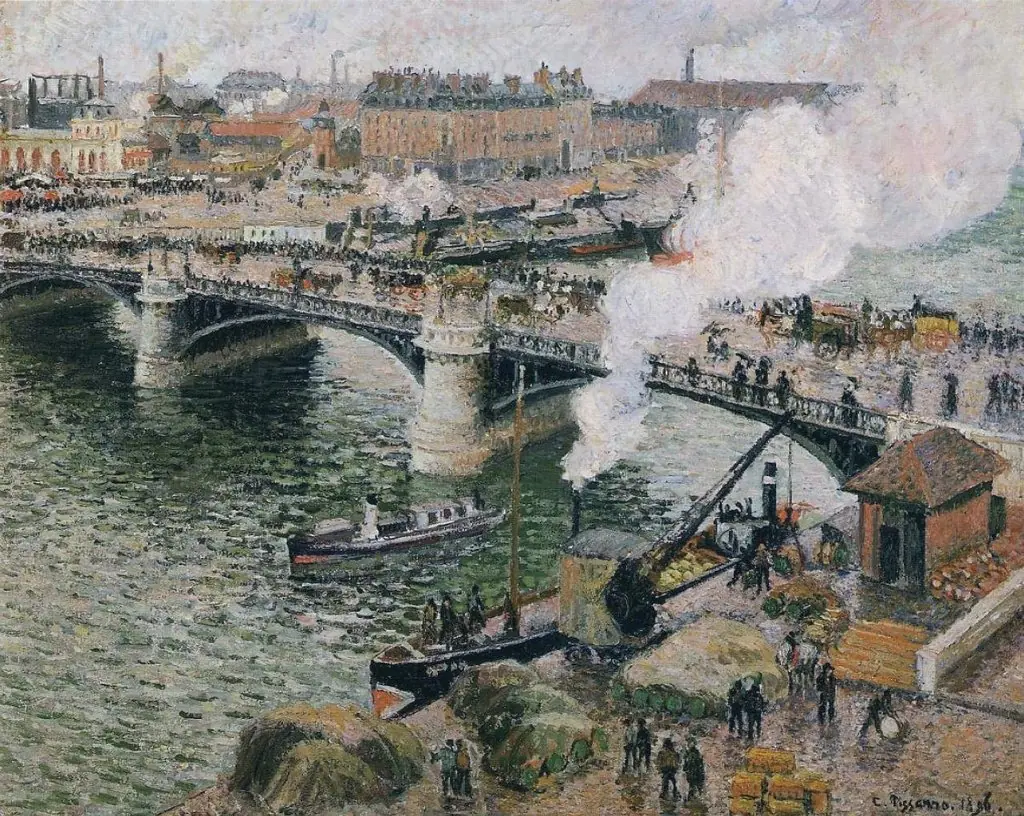 Pont Boieldieu in Rouen, Rainy Weather