Artwork
Challow Farm
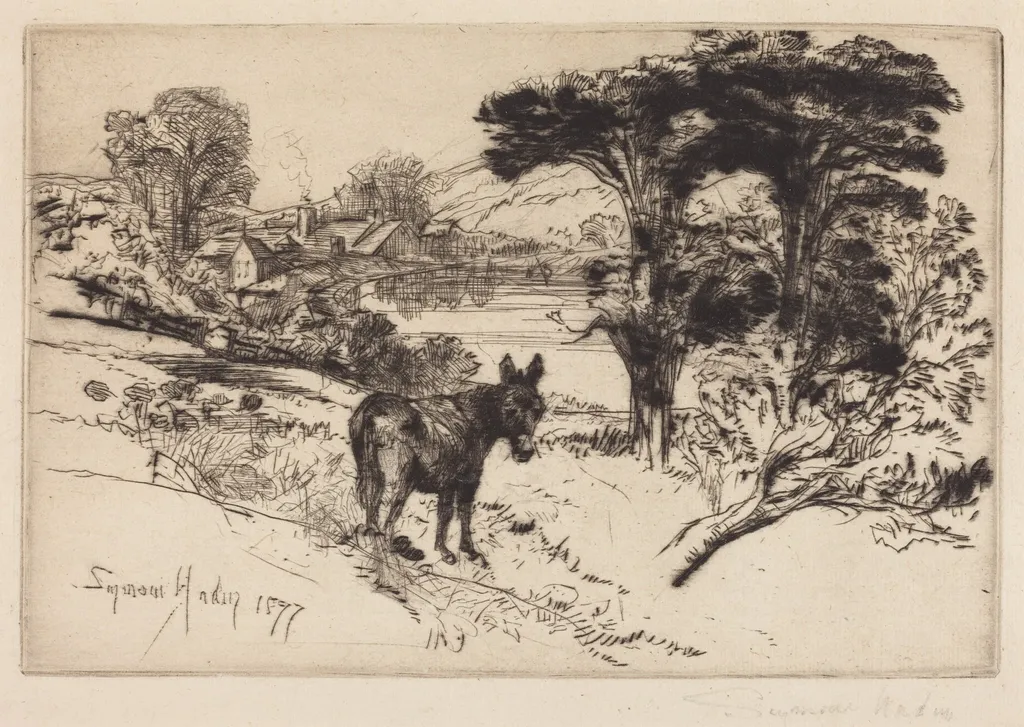
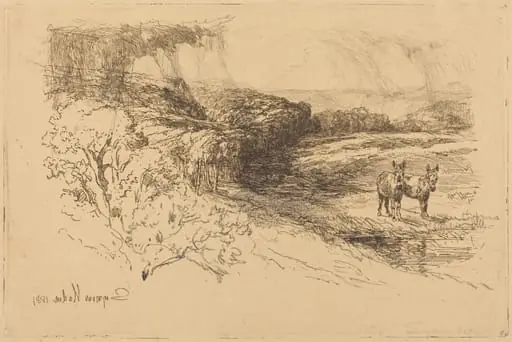
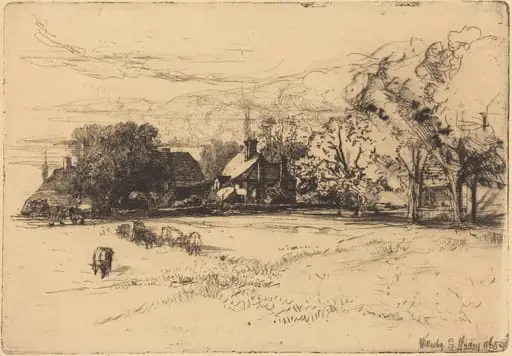
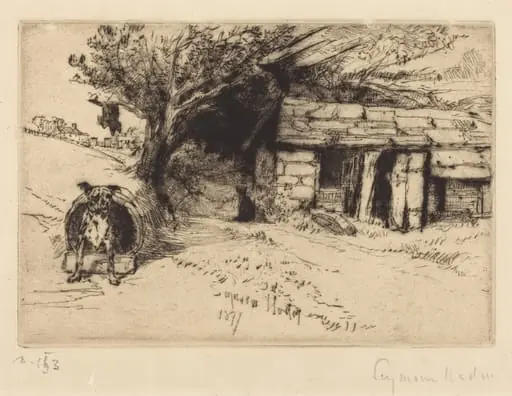
Challow Farm is an ink print by the Impressionist artist Francis Seymour Haden. It dates from 1877 and is held in the collection of the National Gallery of Art.
About this work
Overview
The work presents a solitary donkey amidst a sparse, dry landscape, with a modest dwelling and a few leaf‑less trees perched on a gentle rise in the background.
Created in 1877, Challow Farm is a print by Francis Seymour Haden executed through the drypoint technique on a copper plate. The work presents a solitary donkey amidst a sparse, dry landscape, with a modest dwelling and a few leaf‑less trees perched on a gentle rise in the background. The composition is rendered in quick, irregular lines that convey a sense of immediacy rather than meticulous finish.
Subject & Meaning
The central figure, a lone donkey, stands as a quiet sentinel in an open field of parched grass, suggesting themes of solitude and rural endurance. The surrounding elements, a modest house and skeletal trees, reinforce the atmosphere of a modest, perhaps declining, agrarian setting, inviting contemplation of the everyday lives tied to the English countryside.
Technique & Style
Haden employed drypoint, incising the image directly into copper with a sharp needle. This process leaves burrs along the lines, producing a characteristic soft, velvety edge that appears as loose, scratch‑like strokes on the final print. The method yields a tactile quality, emphasizing texture and the artist’s hand, and contributes to the work’s spontaneous, sketch‑like appearance.
History & Provenance
Challow Farm was produced during the later period of Haden’s printmaking career, a time when he explored the expressive possibilities of drypoint. While specific ownership records are limited, the print has been catalogued among Haden’s oeuvre and is referenced in scholarly listings of 19th‑century British printmakers, indicating its recognition within the artist’s body of work.
Own this work as a print
Artist & collection