Artwork
Adam and Eve
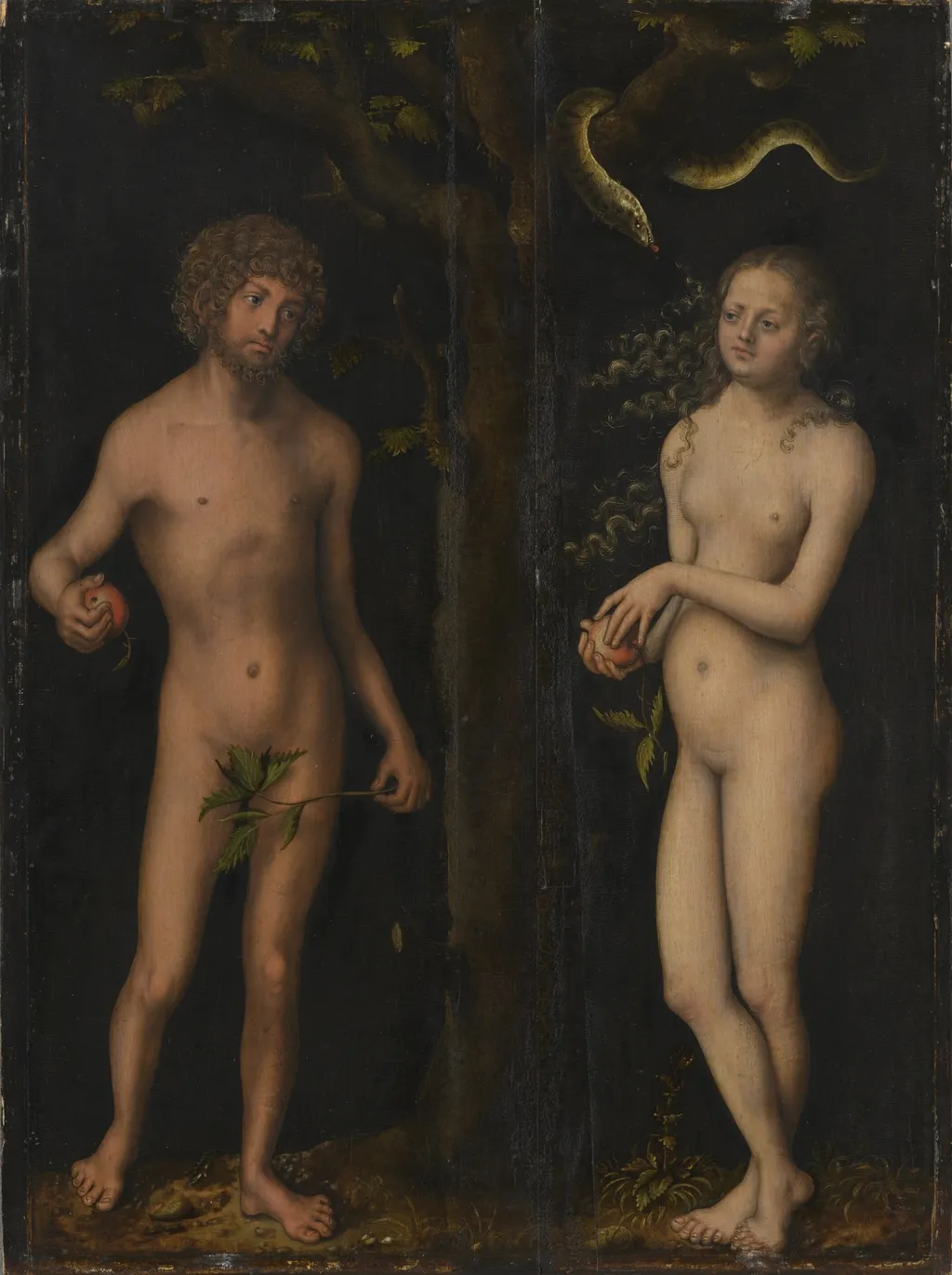
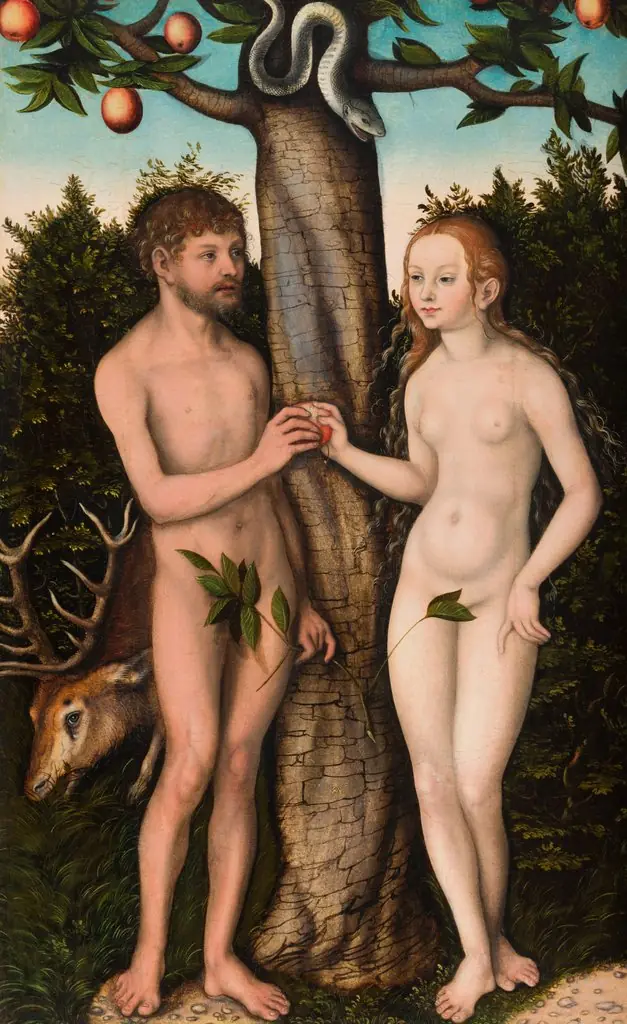
Adam and Eve is an unspecified painting by the Northern Renaissance artist Lucas Cranach the Elder. It dates from 1510 and is held in the collection of the Alte Pinakothek.
About this work
Subject & Meaning
The serpent coils around the tree, its head turned toward Eve, underscoring the moment of temptation and fall.
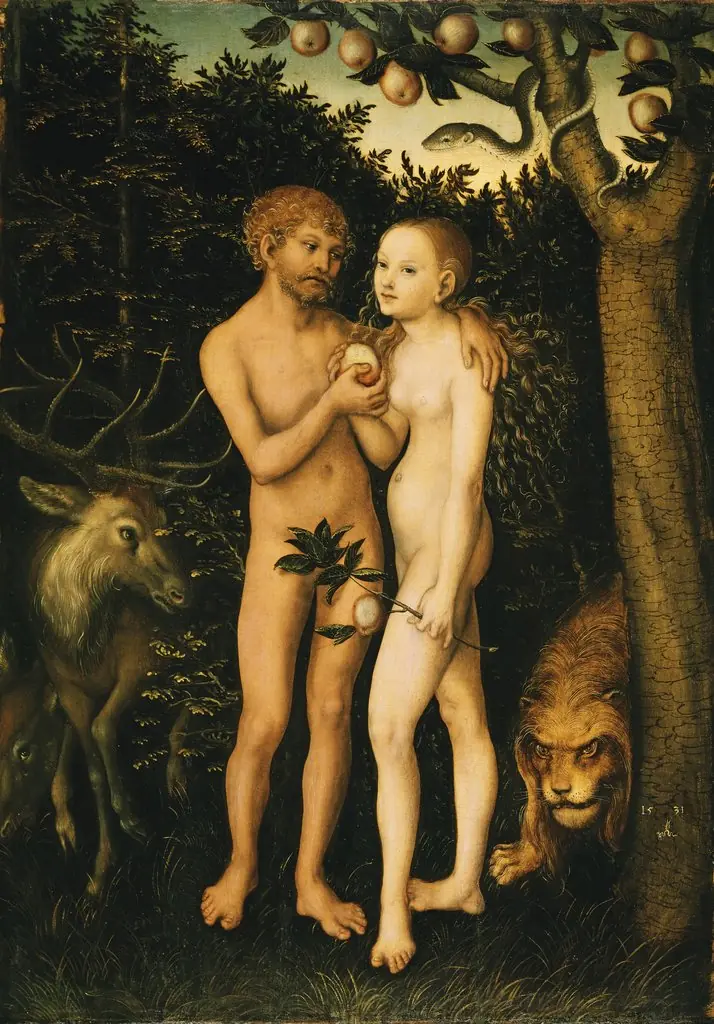
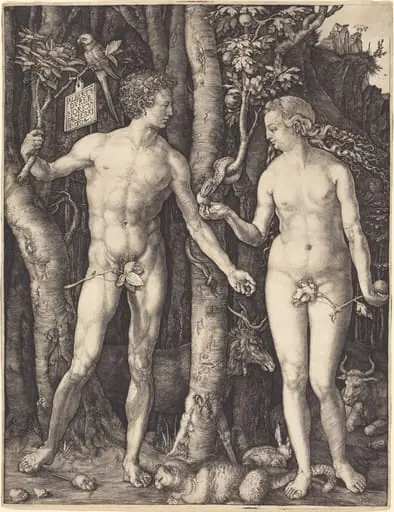
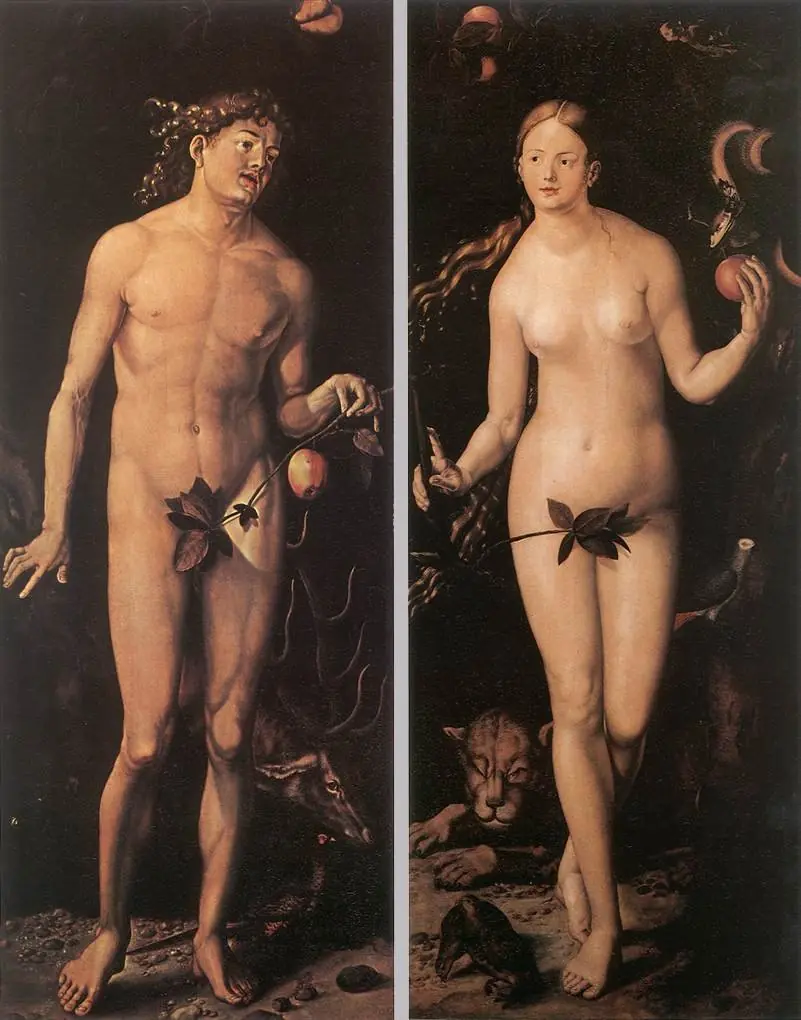
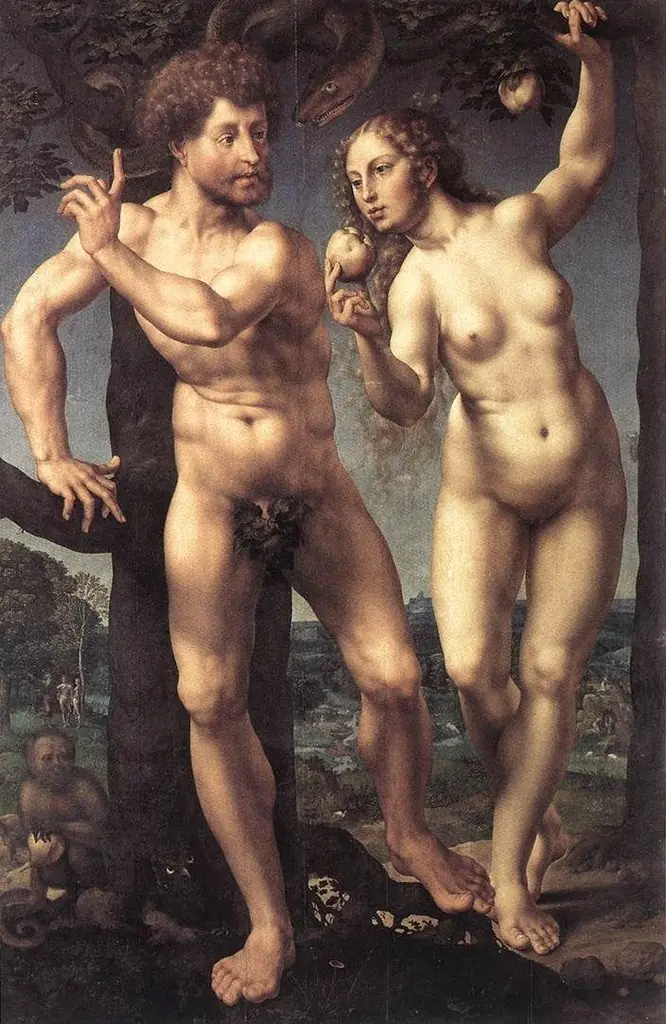
The painting depicts the biblical first parents in the moments immediately following their transgression, when shame and self-awareness first enter human experience. Cranach’s composition places Adam and Eve on either side of the Tree of Knowledge; Eve holds the forbidden fruit while Adam raises a hand toward his face in a gesture of sudden awareness of their nakedness. The serpent coils around the tree, its head turned toward Eve, underscoring the moment of temptation and fall.
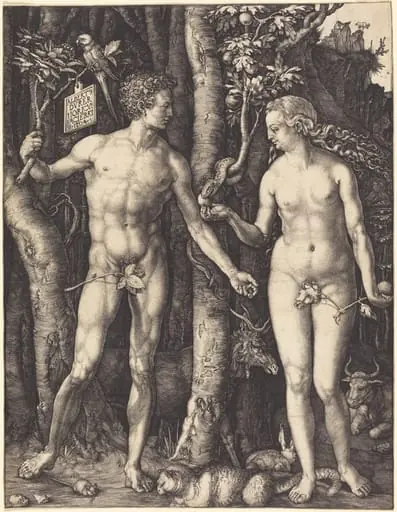
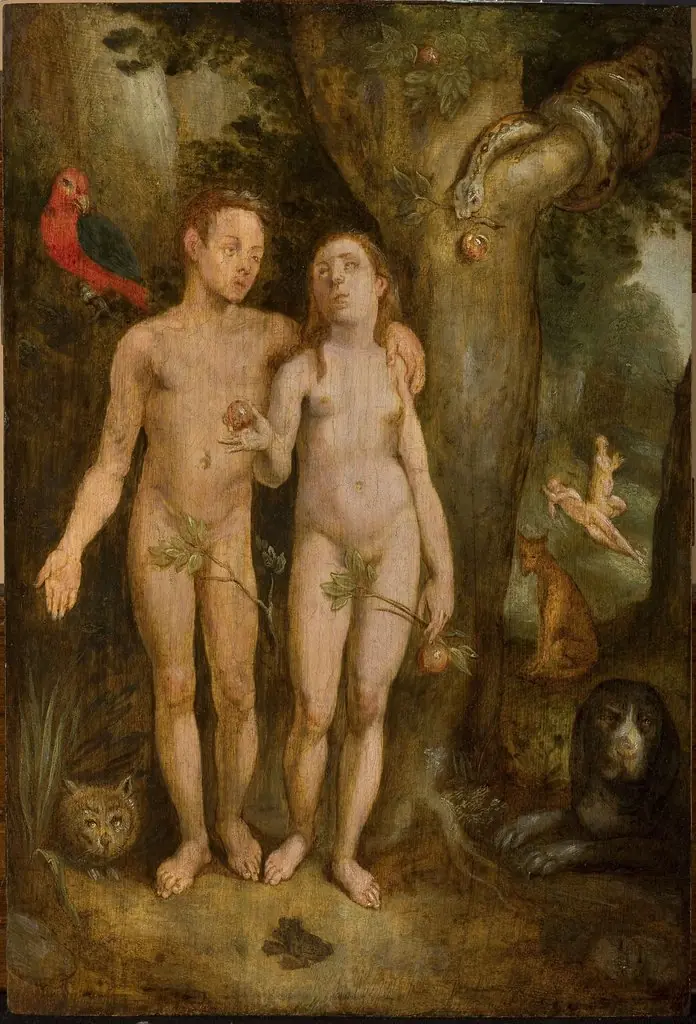
In Cranach’s rendering, the figures’ contrapposto and idealized bodies contrast with the dense, shadowed forest, evoking both classical beauty and moral consequence. The inclusion of the parrot, a traditional symbol of both mimicry and vain repetition, heightens the theme of human complicity in the Fall and the loss of innocence.
History & Provenance
Lucas Cranach the Elder painted Adam and Eve in 1510 on a lime panel, originally created as a religious work depicting the fall of man. The painting entered the collection of the Alte Pinakothek in Munich, where it remains on display as part of the Bavarian State Painting Collections. Its provenance traces directly to this institution, with no recorded earlier private ownership or sale.
The work was included in the exhibition The Old Testament – Stories and Figures, further cementing its historical presentation within the museum's programming.
The painting Adam and Eve by Lucas Cranach the Elder is held at the Alte Pinakothek within the Bavarian State Painting Collections in Munich, Germany. It was created in 1510 on a lime panel measuring 47.2 cm in height and 35.3 cm in width. The work has been featured in the exhibition The Old Testament – Stories and Figures, which focuses on the fall of man as its main subject.
Context
Adam and Eve (1510) by Lucas Cranach the Elder, housed in the Alte Pinakothek in Munich, was part of the exhibition "The Old Testament – Stories and Figures" and exemplifies early 16th-century German religious painting. The work reflects Cranach's role in the Reformation-era art scene and his engagement with biblical narratives, particularly the Fall of Man motif. Its depiction on lime panel and adherence to contemporary devotional standards underscore its significance within the artist's oeuvre and the broader context of Northern Renaissance art.
Overview
Created in 1510 by Lucas Cranach the Elder, this lime‑panel painting portrays the biblical figures of Adam and Eve. The work is part of the collection of the Alte Pinakothek in Munich and exemplifies the artist’s early engagement with religious narrative.
Technique & Style
Rendered with meticulous attention to texture, the figures exhibit a smooth, idealized flesh tone characteristic of Cranach’s early style. The natural setting is depicted with fine foliage and a realistic handling of light, while the serpent’s sinuous form adds a subtle tension to the otherwise calm tableau.
Own this work as a print
Artist & collection
Artist
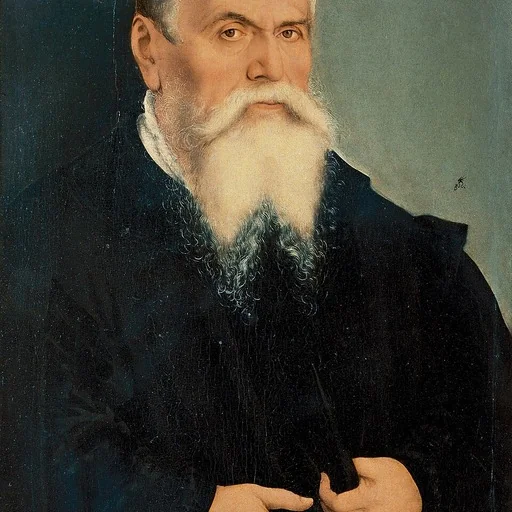
Lucas Cranach the Elder was a German Renaissance painter and printmaker in woodcut and engraving.