Artwork
Harmony (The Three Graces)
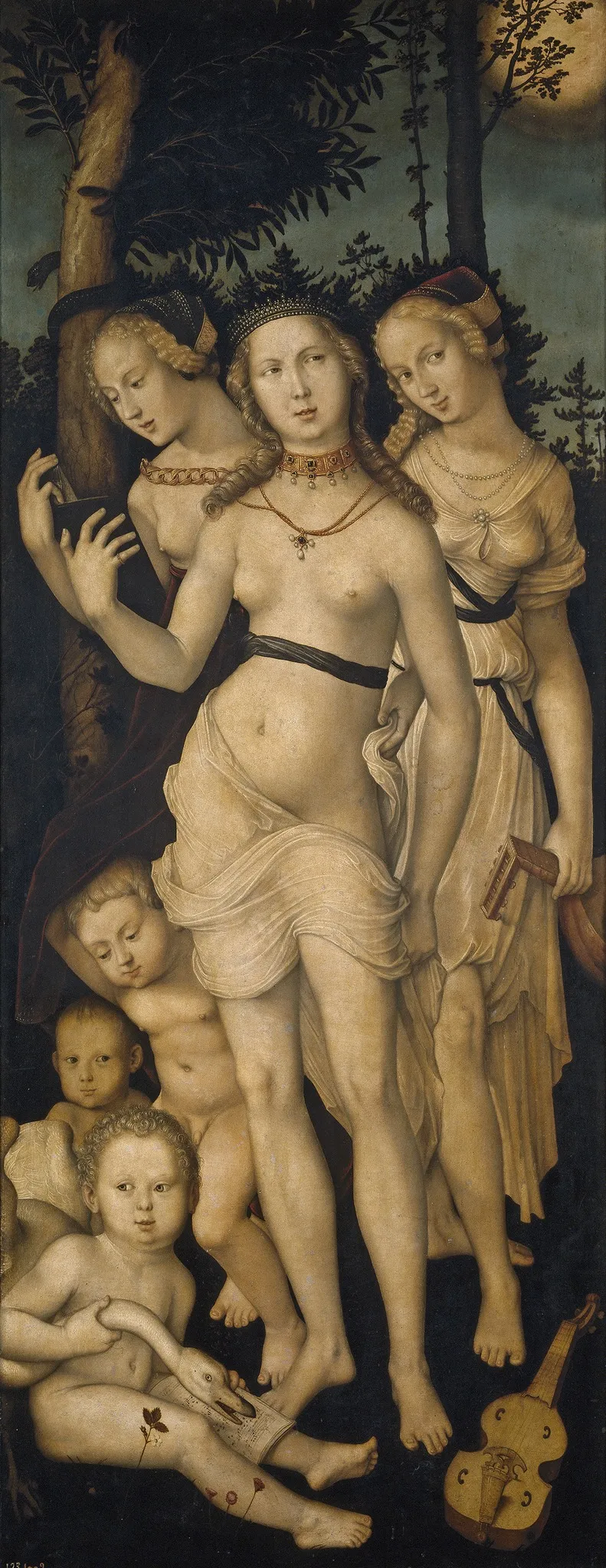
Harmony (The Three Graces) is an oil painting by the Mannerist artist Hans Baldung Grien. It dates from 1541 and is held in the collection of the Museo del Prado.
About this work
Subject & Meaning
The juxtaposition suggests that earthly pleasure and harmony, though attainable through beauty and art, remain fragile and subject to moral peril.
The painting depicts three young women arranged in a tight composition, traditionally identified as the Three Graces from classical mythology. One figure reads from an open music book while the others turn their gazes toward the right, evoking themes of harmony and beauty through their interlinked forms and shared activity. The presence of musical instruments, a lute and a viol, and a swan, long associated with music and love, reinforces the idea of harmony as both aesthetic and moral order.
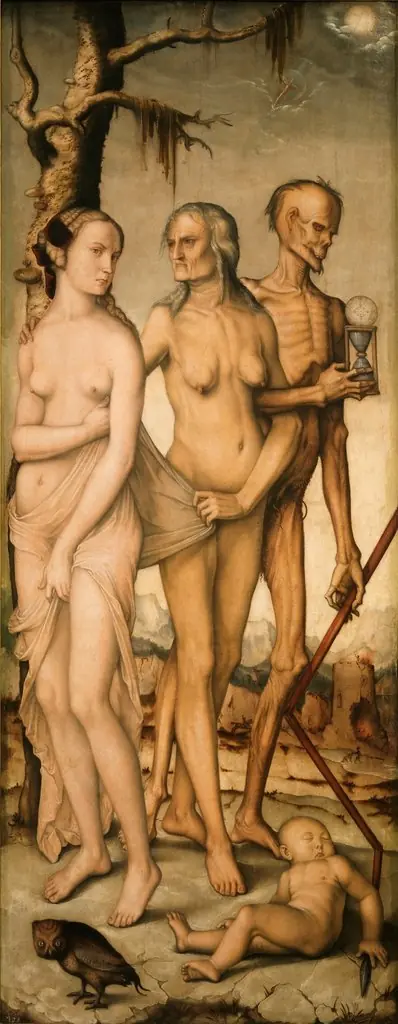
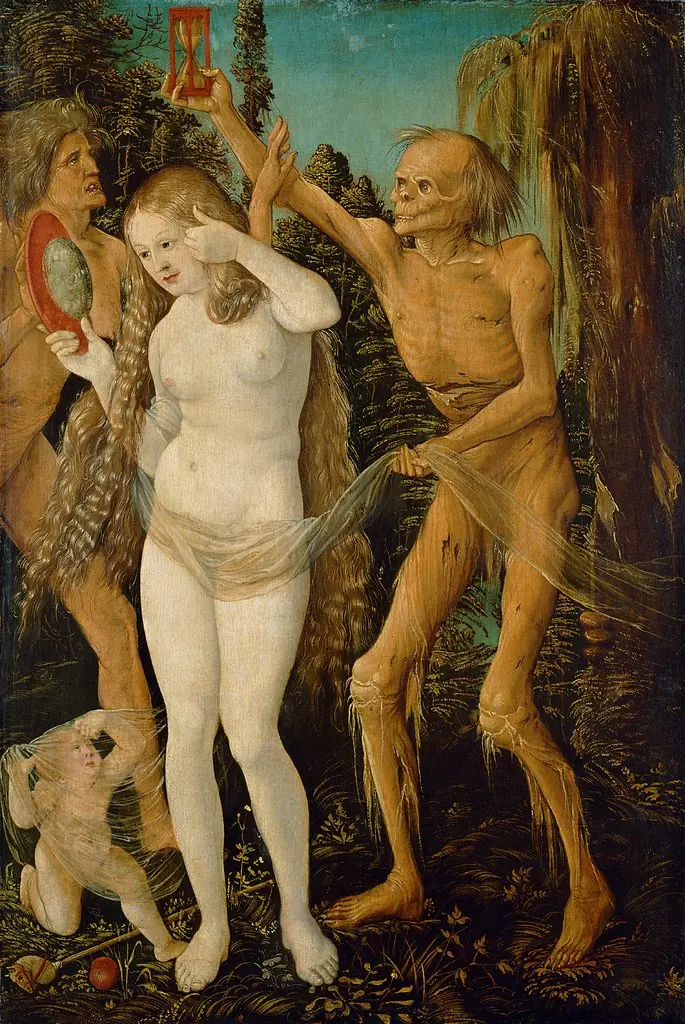
Yet this idealized vision is tempered by a serpent coiled around a laurel branch, a Christian symbol of Original Sin. The juxtaposition suggests that earthly pleasure and harmony, though attainable through beauty and art, remain fragile and subject to moral peril. The allegory thus contrasts the fleeting perfection of life’s harmonious moments with the inevitability of decay and death, forming a pendant to Baldung’s companion work, The Three Ages and Death.
Technique & Style
Executed in 1541, Harmony (The Three Graces) is an oil painting on a vertically oriented oak panel measuring 151 cm in height and 61 cm in width.
The composition presents three full-length female figures in a moonlit grove, their bodies rendered with smooth modeling and delicate transitions of tone that emphasize idealized anatomy and flowing drapery. The central figure reads from a music book while the flanking figures turn toward the right; beside them lie a viola da gamba on the ground and a lute held by the rightmost woman. Three putti accompany the scene: one seated in the foreground holds a musical score and a swan, evoking classical associations of music and love.
Behind the group, an olive tree entwined by a serpent appears beneath a laurel bush, the latter a Christian emblem of original sin.
Following conservation in 2022, the original palette was recovered from darkened varnish layers, restoring luminous color relationships across flesh, drapery, and foliage.
History & Provenance
The painting was created by Hans Baldung Grien between 1541 and 1544. It is a vertical-format oil on panel measuring 151 cm in height and 61 cm in width. The work was commissioned as a pair with The Three Ages and Death and originally formed a diptych.
The provenance begins with a Latin inscription on the reverse of the companion panel recording that the pair was a gift from Count Friedrich von Solms to Johann von Ligne, Duke of Brabant, in Frankfurt on 23 January 1547. Both works were later acquired by King Philip II of Spain. By 1814 they were recorded in the Royal Palace in Madrid, and subsequently transferred to the Museo del Prado.
Harmony (The Three Graces) is permanently held at the Museo del Prado in Madrid, where it was transferred from the Royal Palace in 1814. The work, an oil on panel dating to 1541–1544, was acquired by King Philip II after previously being a gift from Count Federico de Solms to John of Ligne in 1547. In 2022, the painting underwent restoration alongside its pendant, The Three Ages of Man and Death, to remove oxidized varnish layers.
While no specific inventory number is provided in the available records, the work remains a key part of the Prado's collection of mythological paintings by Hans Baldung Grien.
Context
Harmony (The Three Graces) is a 1541 oil painting on panel by Hans Baldung Grien, housed in the Museo del Prado in Madrid. The work forms a pendant with The Three Ages of Man and Death and was originally gifted by Count Federico de Solms to João de Ligne, Duke of Brabant, in Frankfurt on 23 January 1547. It entered the collection of Philip II of Spain, was displayed in the Royal Palace, and was transferred to the Prado in 1814.
A 2022 restoration revealed the painting’s original colors, which had been obscured by oxidized varnish for decades. The composition juxtaposes the vitality of the Three Graces, depicted in a near-naturalistic vertical format, with allegorical symbols of harmony, including musical scores, instruments, and a swan, while a serpent coiled around a laurel hints at original sin and the transience of earthly pleasure. In 2024, Rafael Zafra Molina proposed an alternative interpretation identifying the figures as the Fates rather than the Graces, emphasizing themes of mortality and moral contrast.
Overview
Created in 1541, Harmony (The Three Graces) is an oil painting by the German artist Hans Baldung Grien. Executed during the transition from the Renaissance to Mannerism, the work presents a mythological grouping of three female figures in a forested setting, surrounded by musical instruments and decorative objects.
Artist & collection
Artist
Hans Baldung (1484 or 1485 – September 1545), called Hans Baldung Grien, (being an early nickname, because of his predilection for the colour green), was a painter, printer, engraver, draftsman, and stained glass…

- Adam and Eve with Cain and Abel
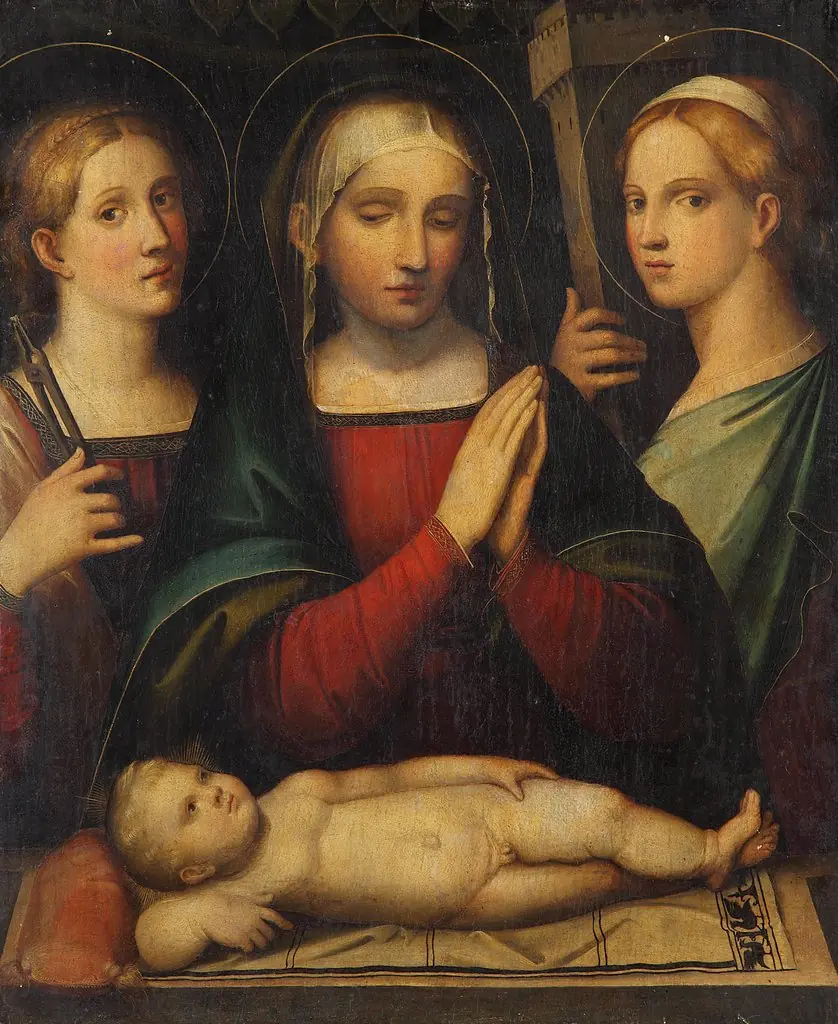 The Virgin Adoring the Child with Sts. Apollonia and Barbara
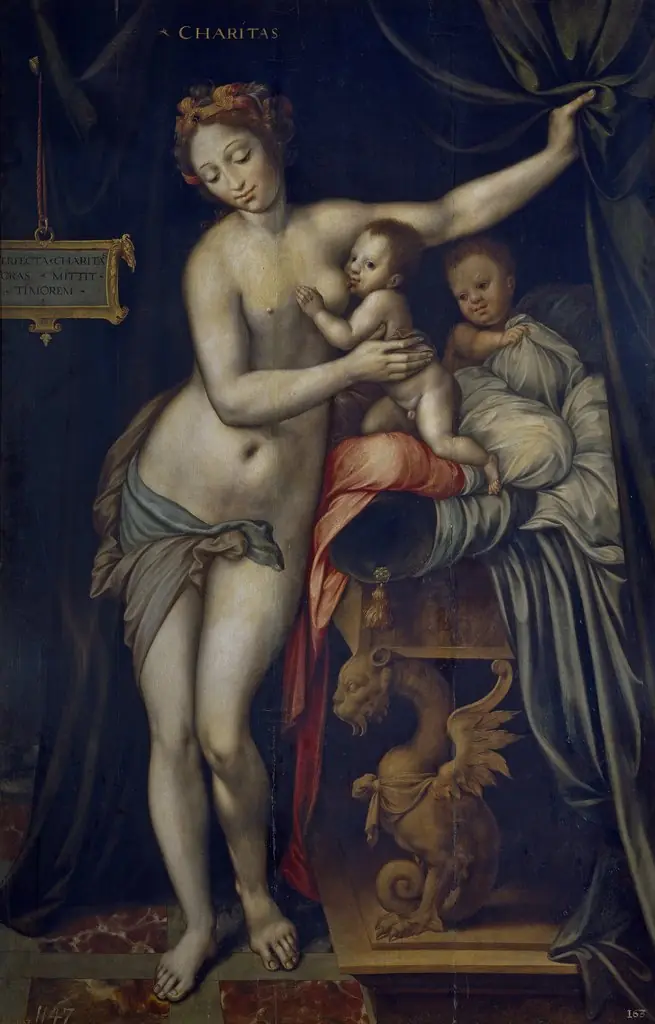 Charity
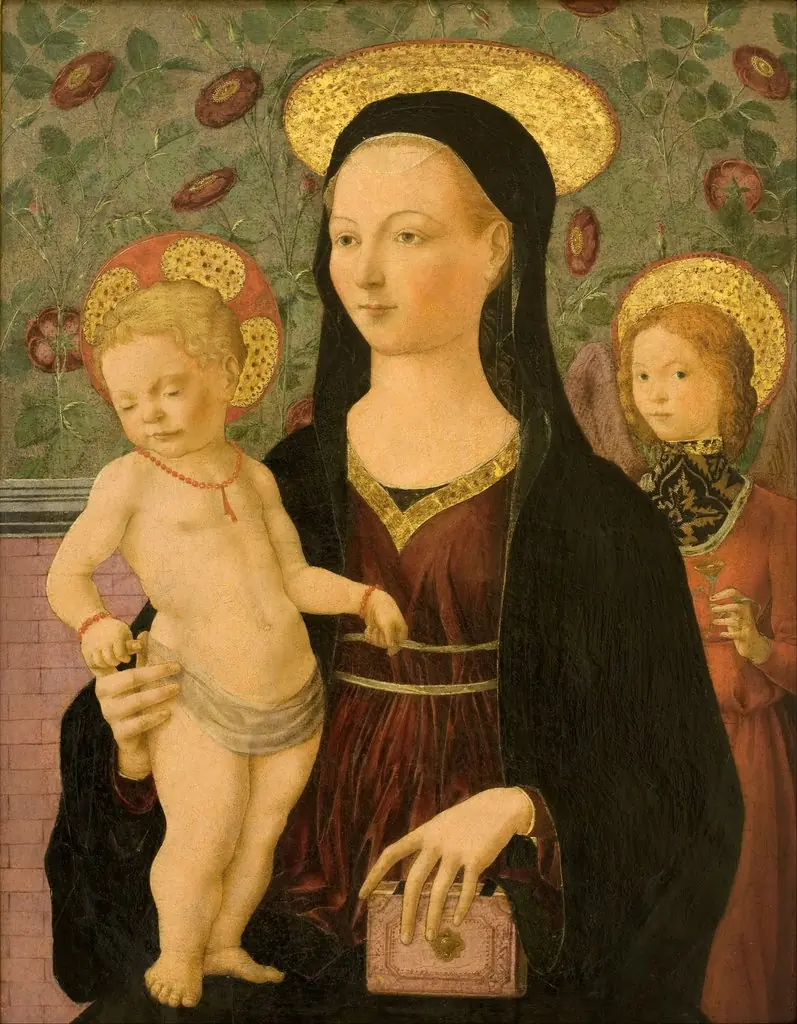 Virgin and Child with an Angel
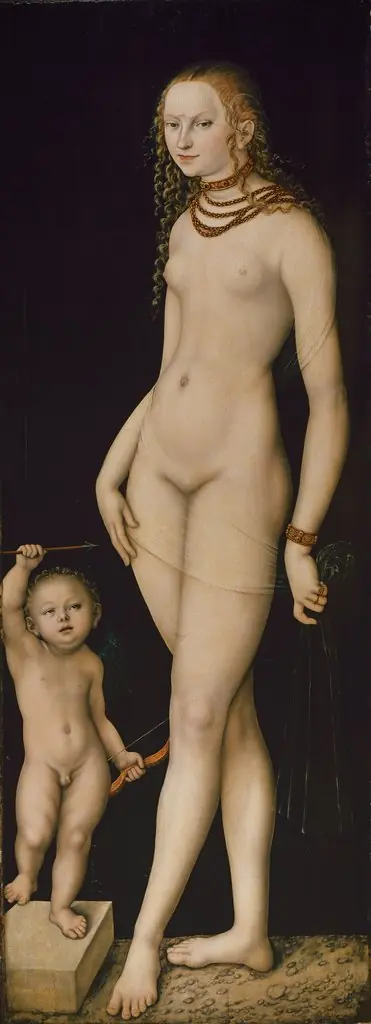 Venus and Cupid
 charity
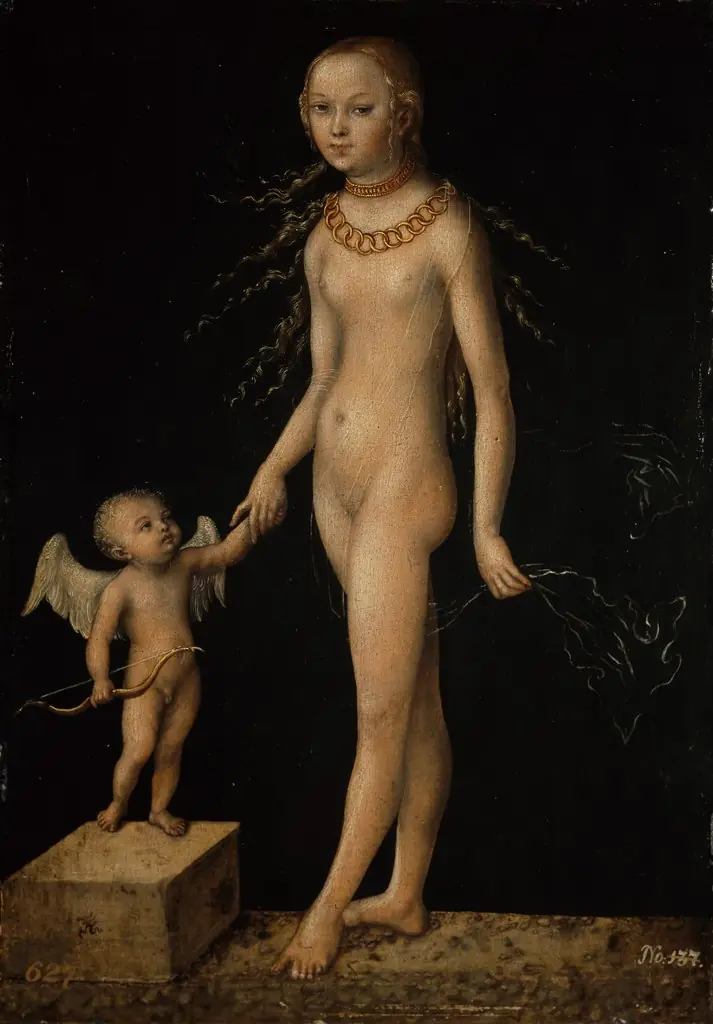 Venus and Cupid
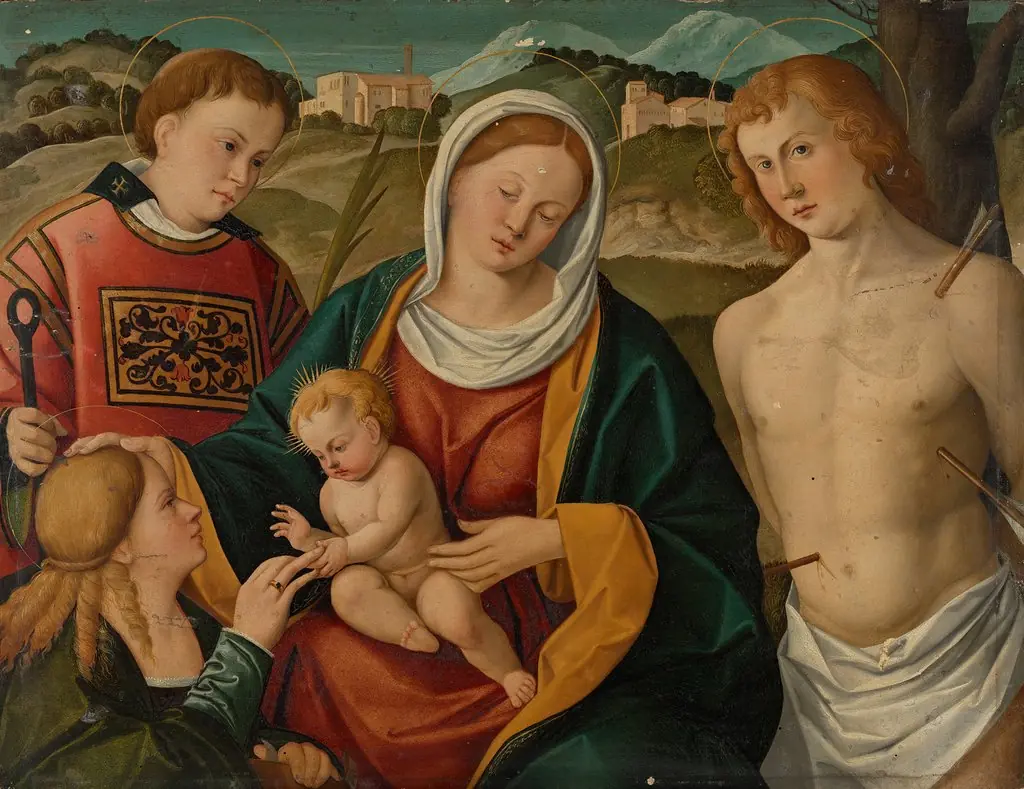 The Engagement of St. Catherine of Alexandria
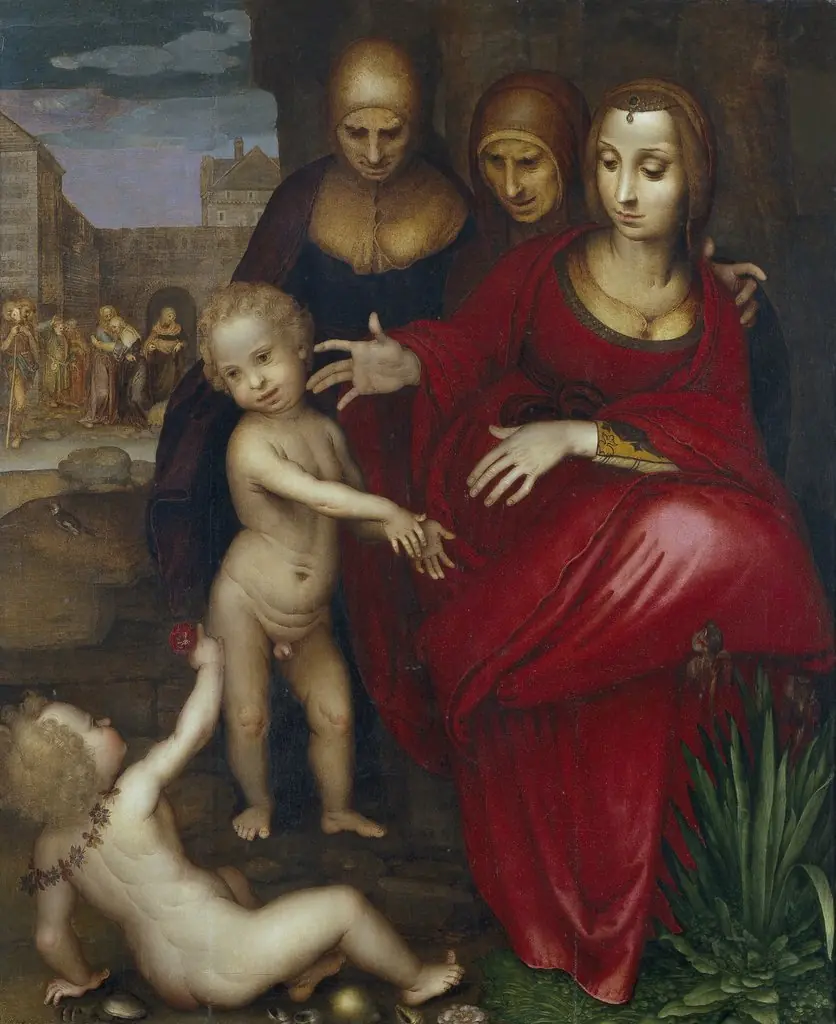 Saint Anne, the Virgin, Saint Elisabeth, Saint John and the Child Jesus
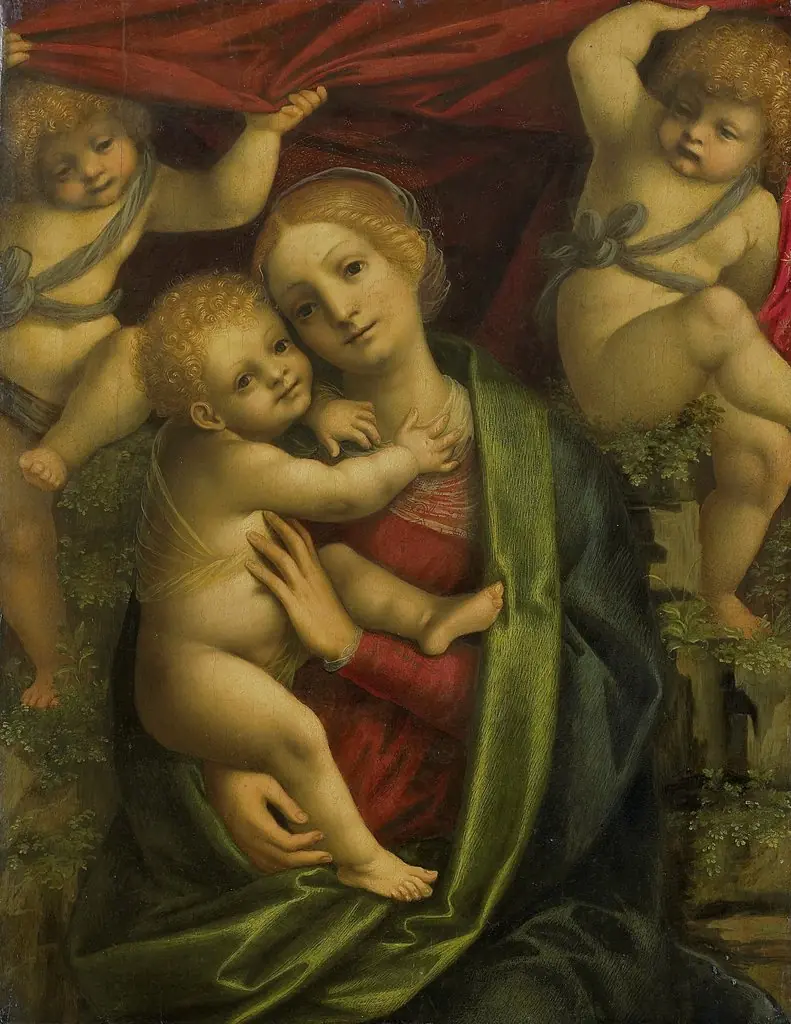 Virgin and Child
 The Holy Family
 Venus and Cupid