Artwork
The King of Cochin
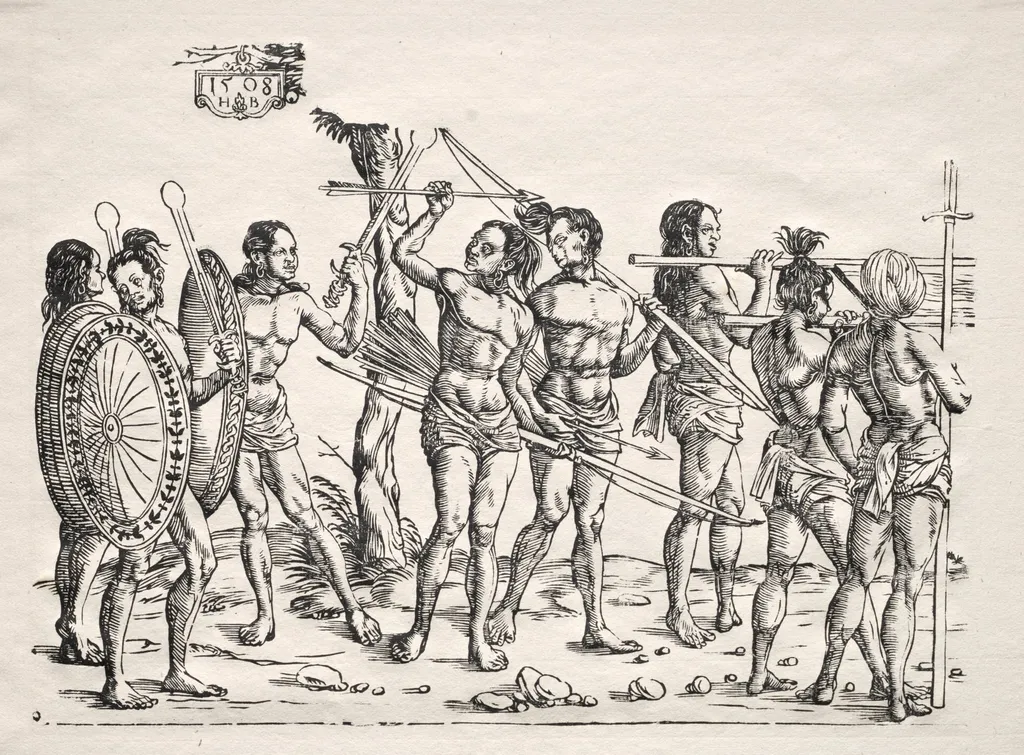
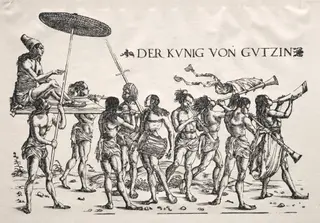
The King of Cochin is a print by the Renaissance artist Hans Burgkmair I. It dates from 1508 and is held in the collection of the Cleveland Museum of Art.
- Accession no.
- 1923.405
- Credit line
- Charles W. Harkness Endowment Fund
About this work
Overview
Created in 1508 by Hans Burgkmair, this black-and-white drawing depicts a group of figures believed to represent the King of Cochin and his attendants. Executed in ink and wash, the work is part of the collection at The Cleveland Museum of Art. Its composition captures a moment of ceremonial readiness, with figures arranged in a tight, dynamic cluster, suggesting both ritual and martial intent.
Subject & Meaning
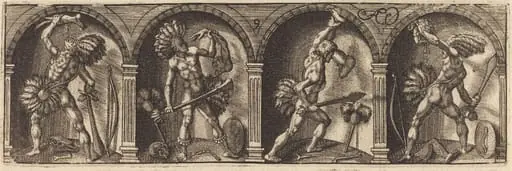
The figures are portrayed as armed men, shirtless and adorned with feathered headdresses, holding spears, bows, and round shields.
The figures are portrayed as armed men, shirtless and adorned with feathered headdresses, holding spears, bows, and round shields. One shield bears a radiating motif resembling a sun, possibly symbolizing authority or divine association. The scene likely reflects European interpretations of South Asian rulers, filtered through secondhand accounts rather than direct observation, blending curiosity with speculative representation.
Technique & Style
Burgkmair employed precise ink lines and subtle tonal washes to define muscular forms and intricate weapon details. The figures are rendered with rhythmic contours and minimal background, focusing attention on their postures and equipment. The style is linear and deliberate, characteristic of early 16th-century German printmaking, where clarity and symbolic emphasis outweigh naturalistic depth.
History & Provenance
The drawing was produced during Burgkmair’s engagement with European accounts of Asian cultures, likely influenced by traveler narratives and printed sources from Portuguese expeditions. It entered the Cleveland Museum of Art’s collection in the 20th century, preserved as part of a broader group of Renaissance works documenting encounters with non-European peoples.
Context
In the early 1500s, European artists increasingly encountered depictions of distant lands through trade and exploration. Burgkmair’s image reflects a period when accurate visual knowledge of Asia was scarce, leading to composite representations that fused observed details with mythic assumptions. Such works served both documentary and exoticizing functions within Northern Renaissance visual culture.
Legacy
This drawing contributes to a corpus of early modern European images that attempted to visualize foreign cultures, often through a lens of imagination. While not ethnographically precise, it remains a valuable artifact of how Renaissance artists processed global encounters, preserving the tension between observation and interpretation in the age of exploration.
Own this work as a print
Artist & collection

 Les divers pourtraicts et figures IX
 Marching Soldiers, in the Center a Standard Bearer
 Five Tilters on Foot
 Five Soldiers and a Turk on Horseback
 Battle of Naked Men and Peasants
 Taking of Bone
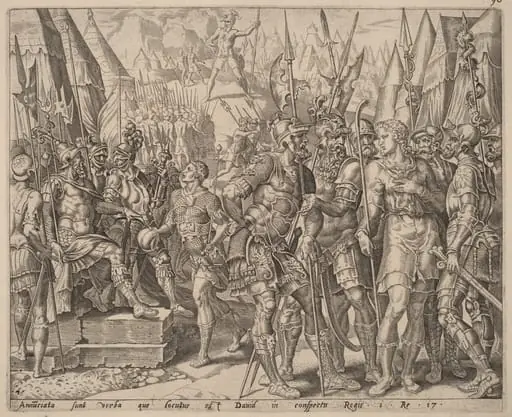 David's Brother Relating to Him Goliath's Challenge
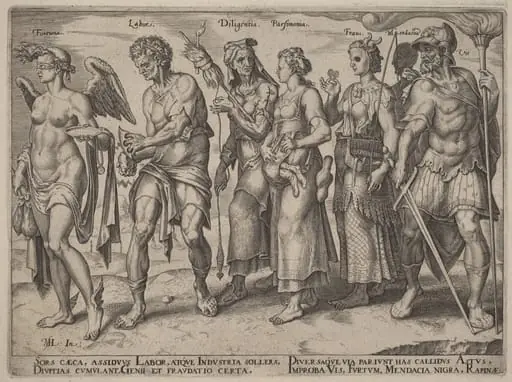 Honest and Dishonest Ways of Becoming Rich
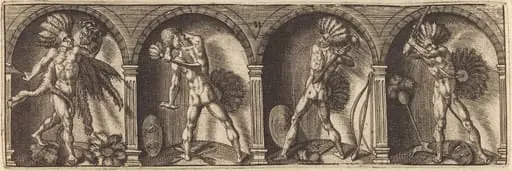 Les divers pourtraicts et figures XI
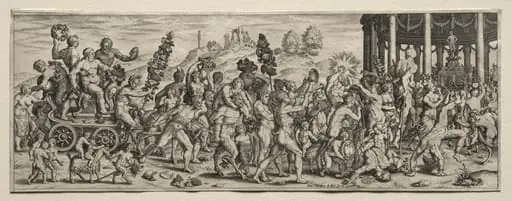 Triumph of Bacchus
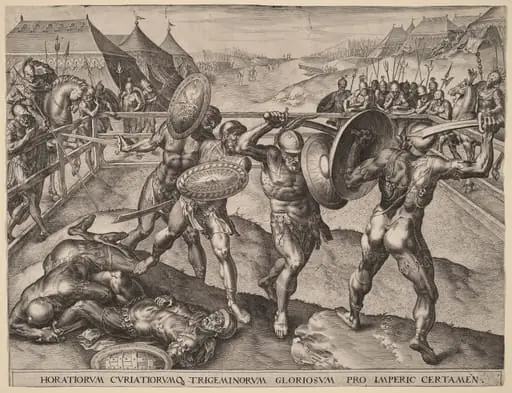 Battle of the Horatii and the Curiatii
- The King of Cochin