Artwork
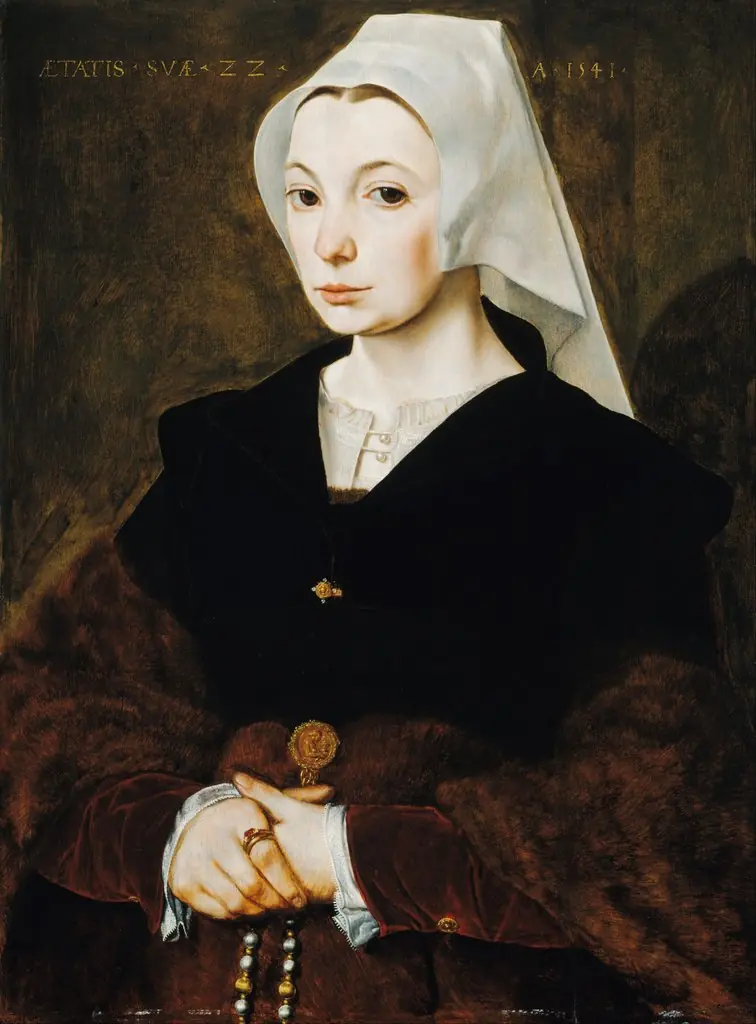
Portrait of a woman
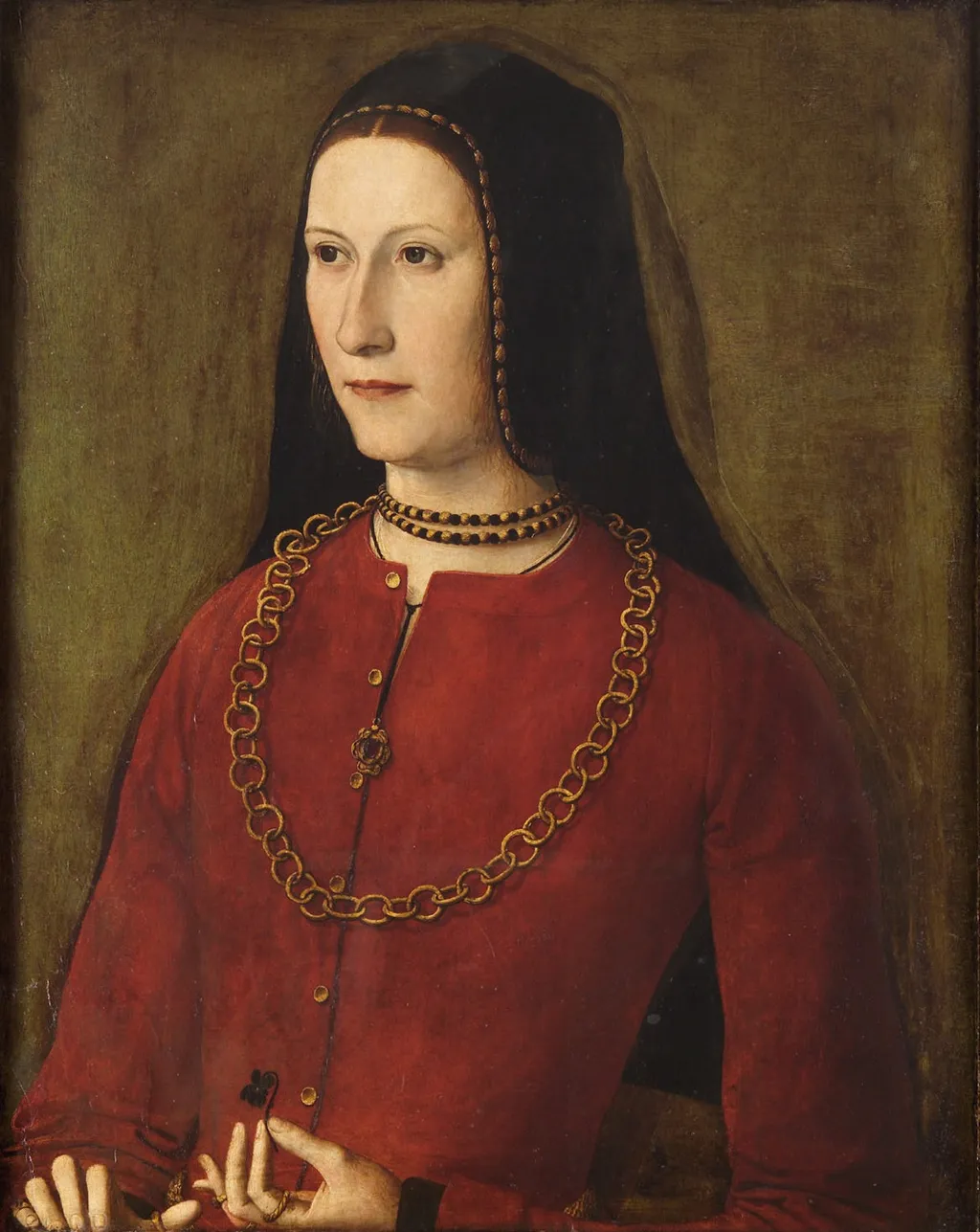
Portrait of a woman is an oil painting by the Northern Renaissance artist Unknown. It dates from 1500 and is held in the collection of the Kunsthistorisches Museum. This portrait painting depicts a woman set against a dark background, rendered in oil paint.
About this work
Subject & Meaning
Created in 1500, the piece belongs to the portrait genre and focuses entirely on the depiction of a female figure.
The work portrays a woman, identified as the main subject of this oil painting on panel. Created in 1500, the piece belongs to the portrait genre and focuses entirely on the depiction of a female figure. While the specific identity of the sitter is not detailed in the available records, the composition adheres to the conventions of portraiture by centering the individual as the primary visual element.
The attribution to a French artist suggests a regional context for the representation, yet the iconography remains defined by the singular presence of the woman without additional symbolic figures or narrative elements described in the sources.
Technique & Style
Portrait of a woman is executed in oil paint on a wooden panel, a standard support for early sixteenth-century European portraiture. The work measures 66 by 53 centimetres, a modest, intimate format suited to a single sitter. Stylistically, the piece belongs to the portrait genre, depicting a female subject in a manner consistent with French painting of around 1500.
No information regarding the handling of the brushwork, the condition of the panel, or further stylistic analysis is documented in the available sources.
Overview
This portrait painting depicts a woman set against a dark background, rendered in oil paint. Prominent visual elements include her deep red, gold-trimmed garment, black headscarf, necklace with a large pendant, and the subtle play of light on her face and hands.
Context
The use of chiaroscuro places the painting within artistic traditions that emphasize dramatic lighting to evoke emotion and depth, a technique popularized during the Renaissance and Baroque periods.
Legacy
While the painting's specific influence or legacy is not detailed here, the application of chiaroscuro contributes to its place within a broader artistic heritage that values the expressive potential of light and shadow.
Artist & collection









- Portrait of a Woman
 Portrait of a Woman
 Portrait of a woman
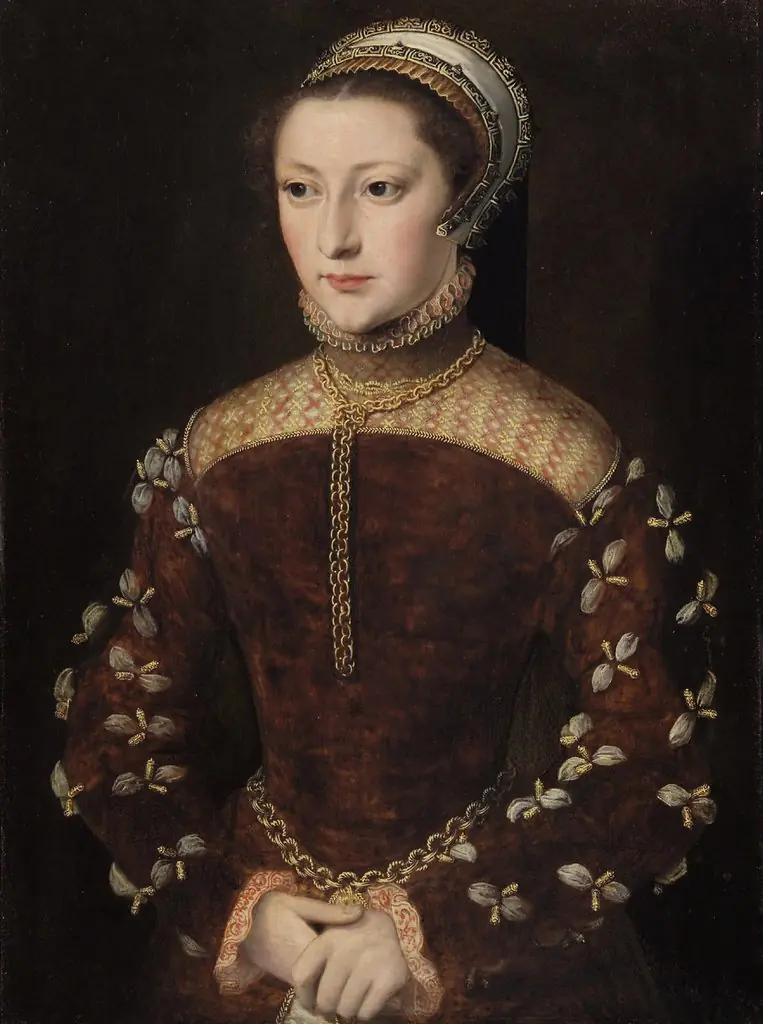 Weibliches Bildnis
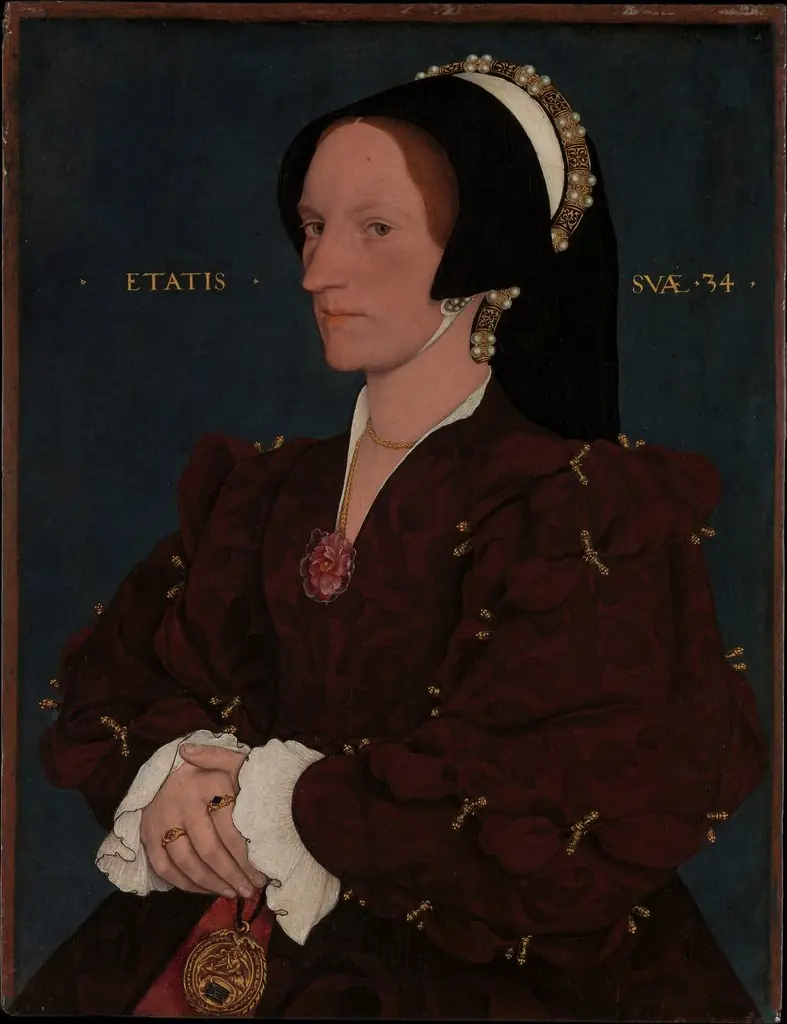 Lady Lee (Margaret Wyatt, born about 1509)
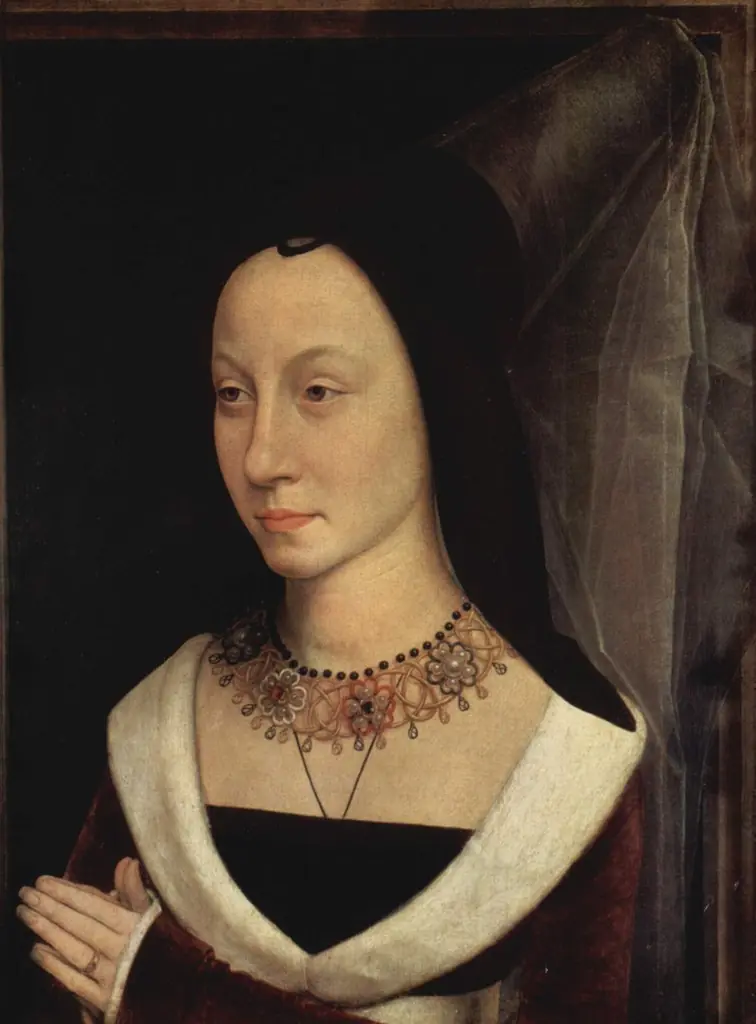 Portrait of Maria Portinari
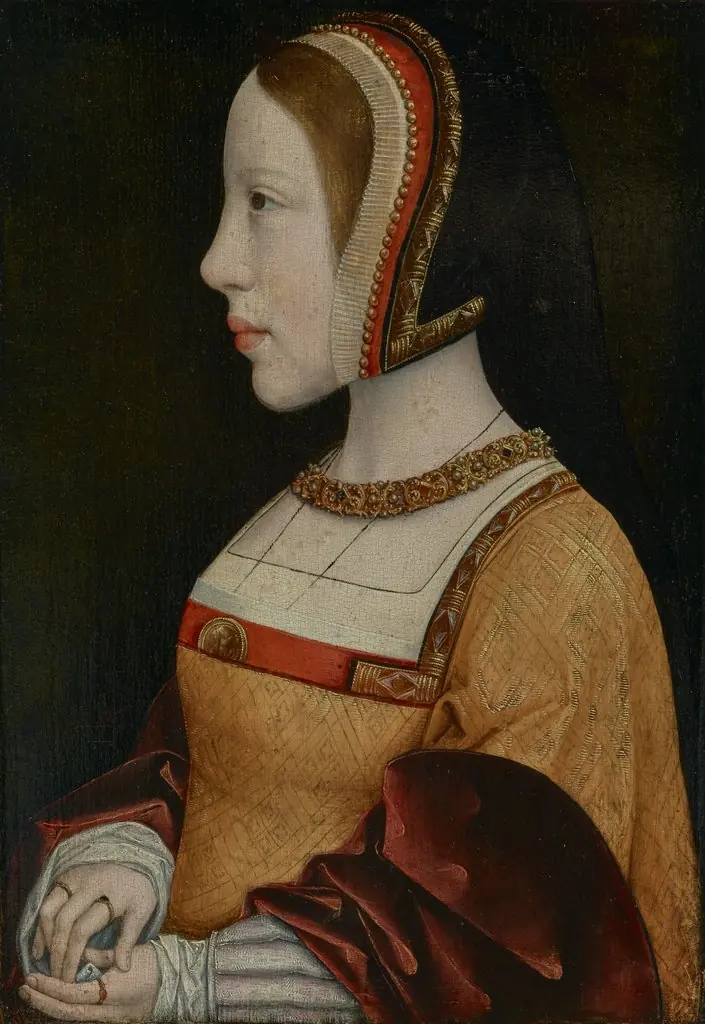 Portrait of Isabella of Austria (1501–1526)
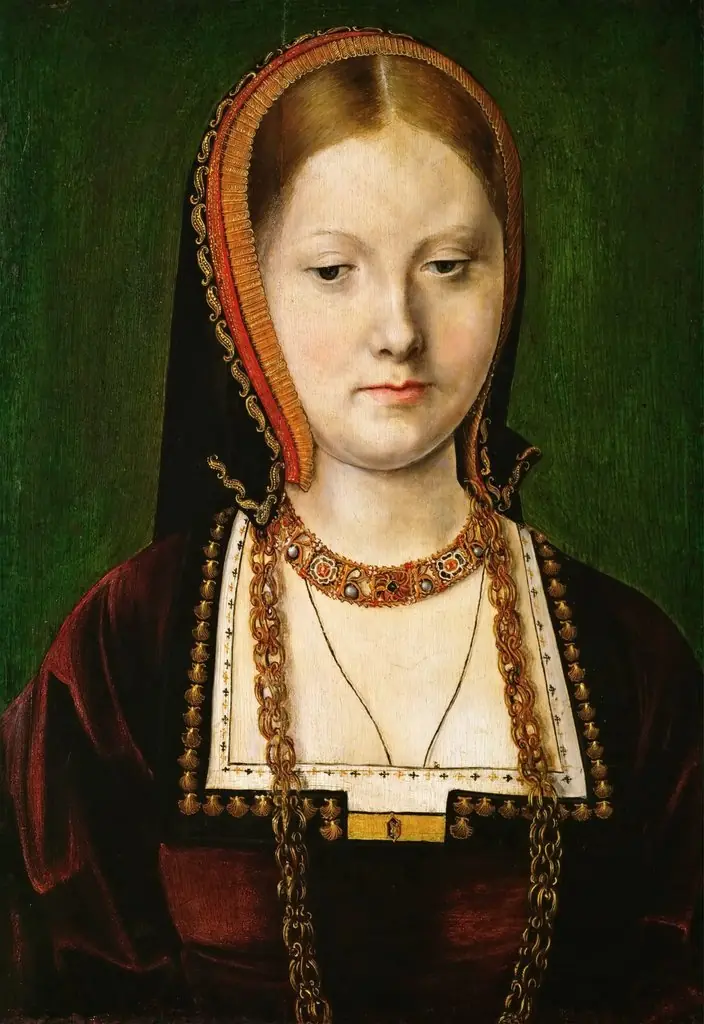 Mary Rose Tudor (1496-1533), Schwester Heinrichs VIII. von England (?)
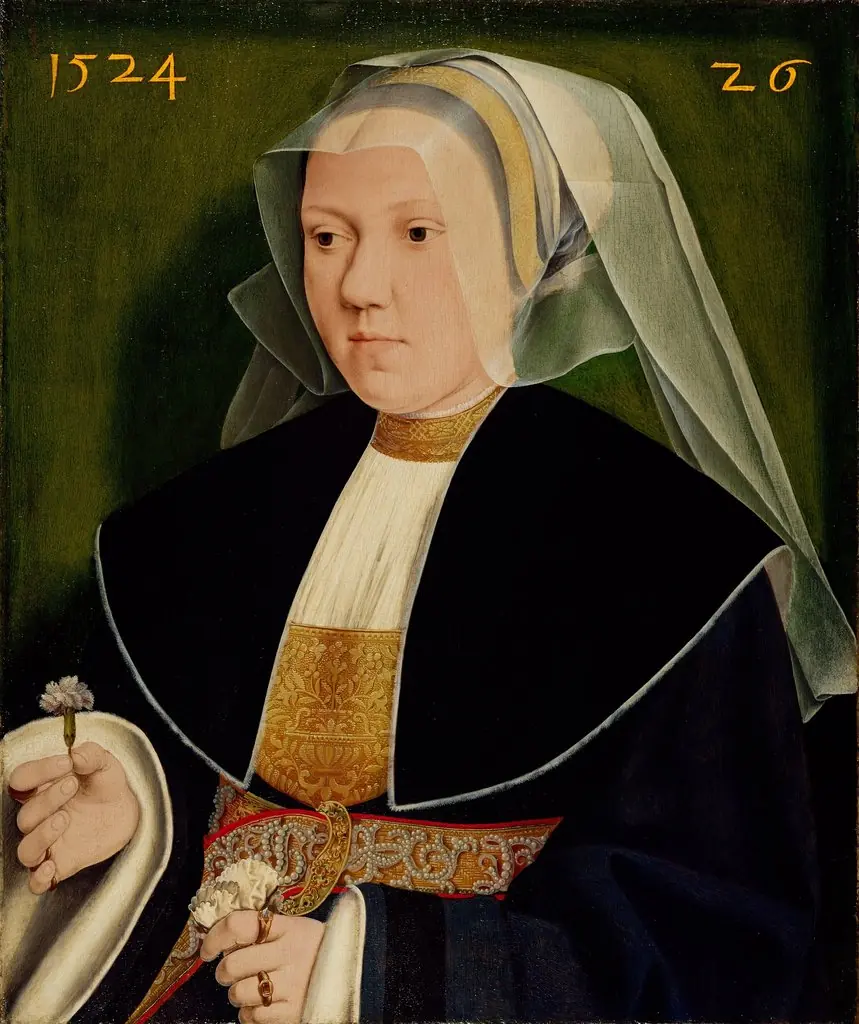 Portrait of Margaretha von Mochau, wife of Gerhard von Westerburg
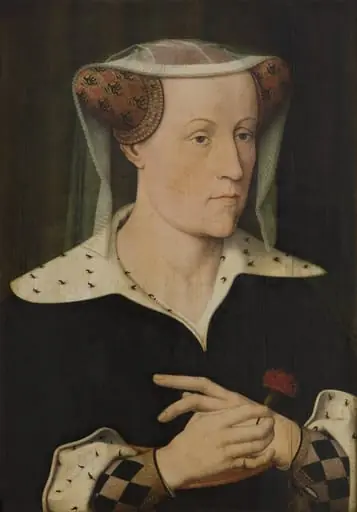 Jacoba of Bavaria, Countess of Holland and Zeeland
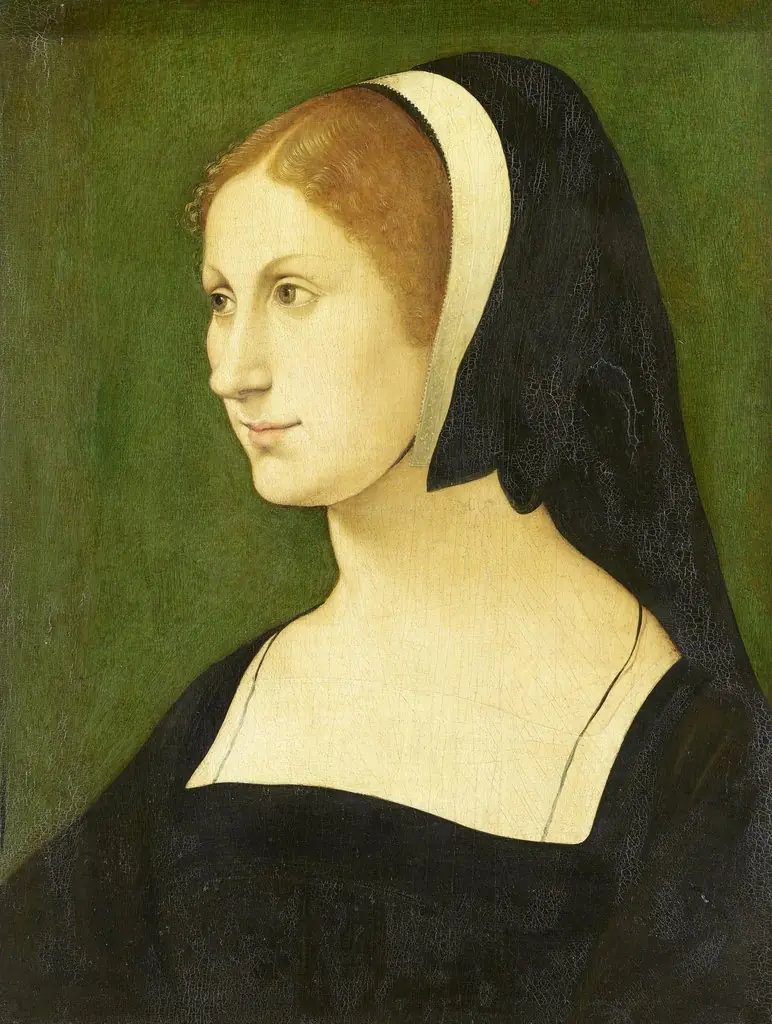 Bildnis einer jungen Frau
 Portrait of a young woman