Artwork
Grablegung Christi
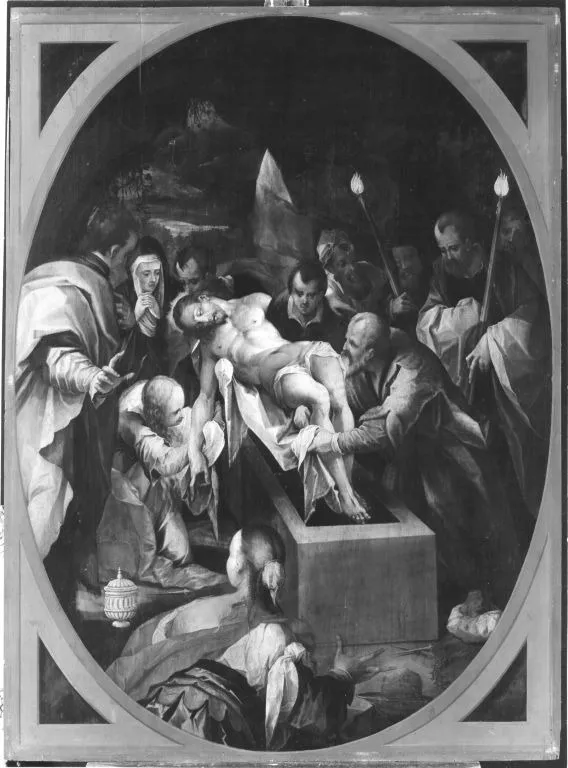
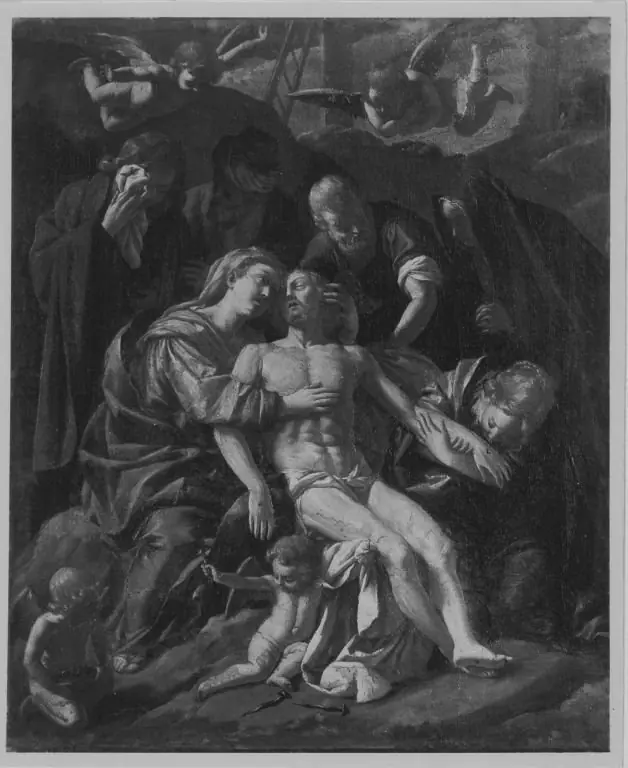
Grablegung Christi is an unspecified painting by the Mannerist artist Hans von Aachen. It dates from 1592 and is held in the collection of the Bavarian State Painting Collections.
About this work
Subject & Meaning
The composition emphasizes the solemn act of laying Christ’s body in the tomb, reflecting themes of sacrifice and redemption central to Christian iconography.
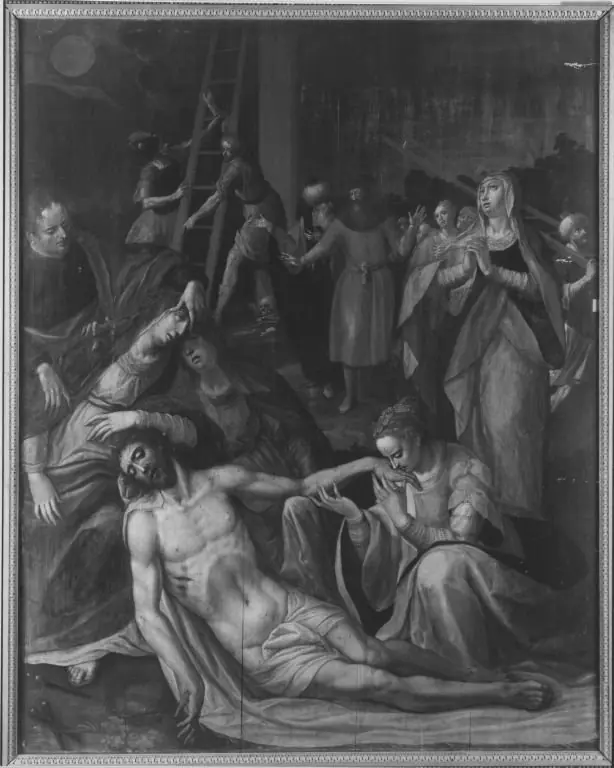
The painting shows the entombment of Jesus Christ, a scene drawn from the biblical narrative of his burial after the crucifixion. It belongs to the religious genre and was created by Hans von Aachen in 1584 for the Bavarian State Painting Collections, where it remains on display in the Alte Pinakothek. The composition emphasizes the solemn act of laying Christ’s body in the tomb, reflecting themes of sacrifice and redemption central to Christian iconography.
History & Provenance
The painting Grablegung Christi by Hans von Aachen is held within the collection of the Bavarian State Painting Collections. Specifically, the work resides at the Alte Pinakothek in Munich. Created in 1584, this religious panel depicting the entombment of Christ remains part of the institution's permanent holdings.
The provided sources do not list a specific inventory or accession number for the piece, nor do they document any past or future exhibition history.
Legacy
Hans von Aachen's Grablegung Christi exerted quiet influence on German Counter-Reformation religious painting through its devotional intensity and naturalistic rendering of Christ's entombment. The composition informed later funerary works in the Alpine region, particularly in its treatment of the dead Christ's limp posture and the grieving attendants' gestures. Its presence in the Bavarian State Painting Collections ensured continued scholarly attention to Aachen's role in transmitting Italian Mannerist techniques to Southern Germany, though the work never achieved the fame of his mythological pieces.
Overview
Hans von Aachen’s Grablegung Christi, executed in 1592, presents the biblical moment of Christ’s burial. The composition centers on a lifeless, unclothed figure lying on a modest slab, surrounded by attendants who support and observe him. The scene is set against a deep, shadowed backdrop, emphasizing the solemnity of the event and the painter’s command of dramatic narrative.
Technique & Style
Aachen employs a pronounced chiaroscuro, casting stark light on the central figure while the surrounding space recedes into darkness. This contrast renders the flesh with a sculptural quality, drawing attention to the face and hands. The elongated forms and intricate poses reflect the Northern Mannerist aesthetic, marked by elegance and artificiality beyond naturalistic representation.
Context
During the late 16th century, German artists like Aachen assimilated Italian Mannerist principles while retaining a distinct northern sensibility. Grablegung Christi illustrates this synthesis, combining elaborate composition with a focus on emotional intensity, situating the work within the broader currents of Counter‑Reformation art that sought to engage viewers through heightened drama.
Artist & collection
Artist
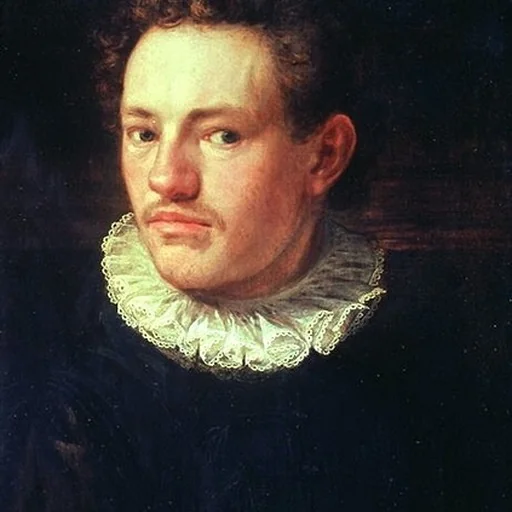
Hans von Aachen (1552 – 4 March 1615) was a German painter who was one of the leading representatives of Northern Mannerism.

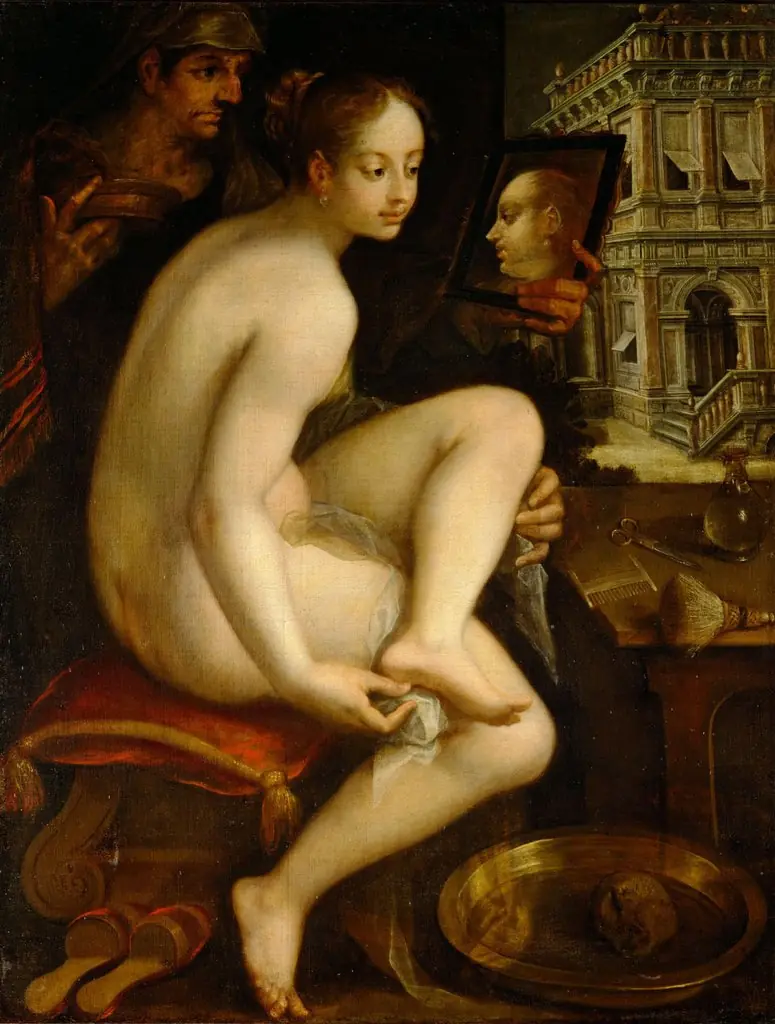
 Lamentation of Christ
 Lamentation of Christ
 Beschneidung Christi (zugeschrieben)
 Dornenkrönung Christi
 Lamentation of Christ (after Raphael)
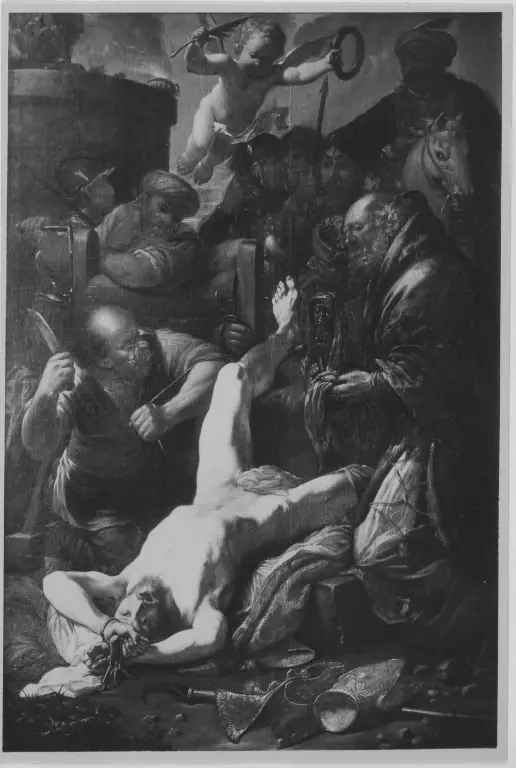 Martyrium des hl. Erasmus (zugeschrieben)
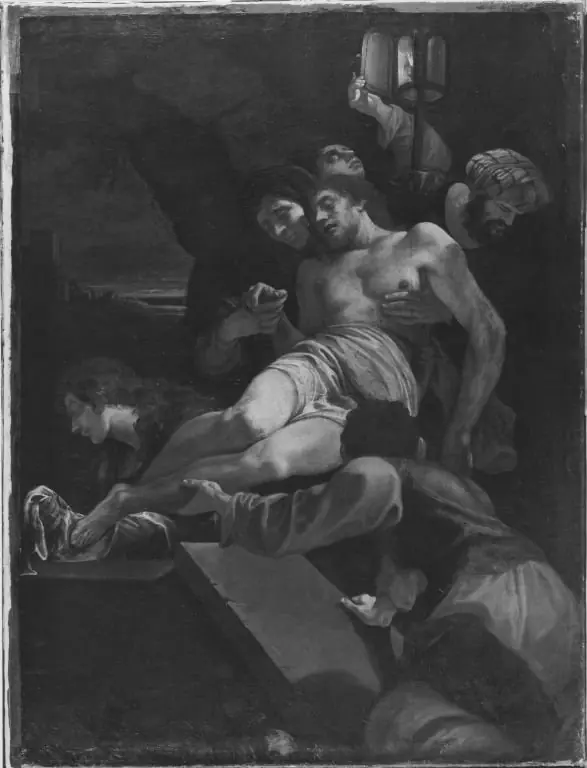
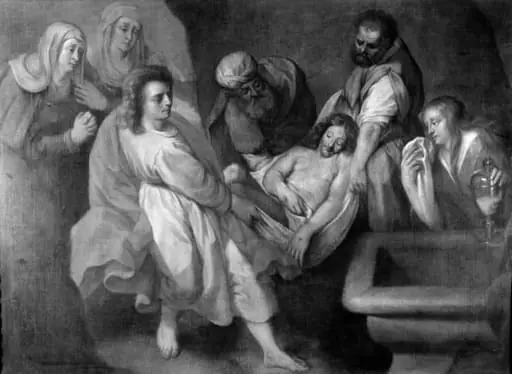 The Entombment
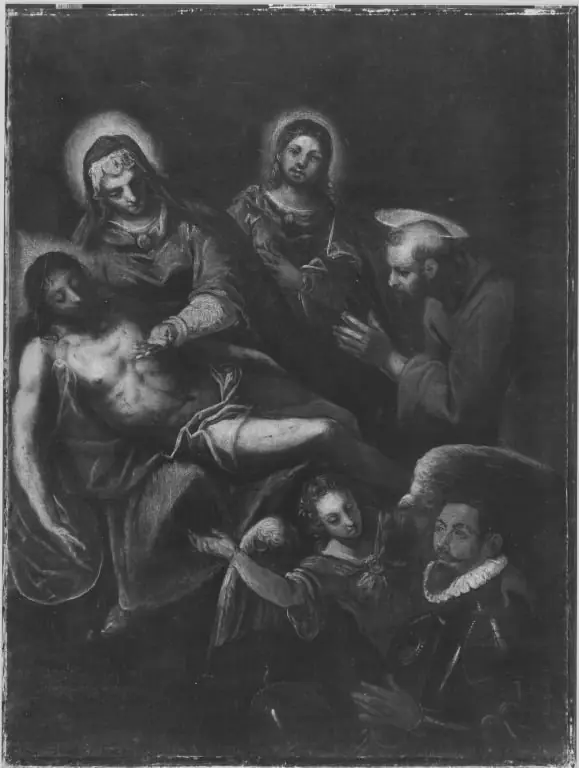 Beweinung Christi mit den hll. Johannes, Franziskus und einem Stifter (Werkstatt)
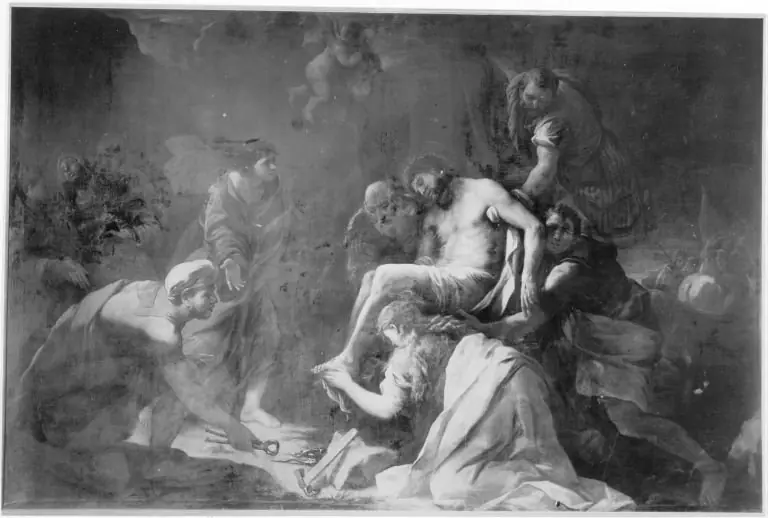 Christ brought down from the Cross
 Tod Mariae
 The Circumcision
- Grablegung Christi