Artwork
Bacchus, Venus and Cupid
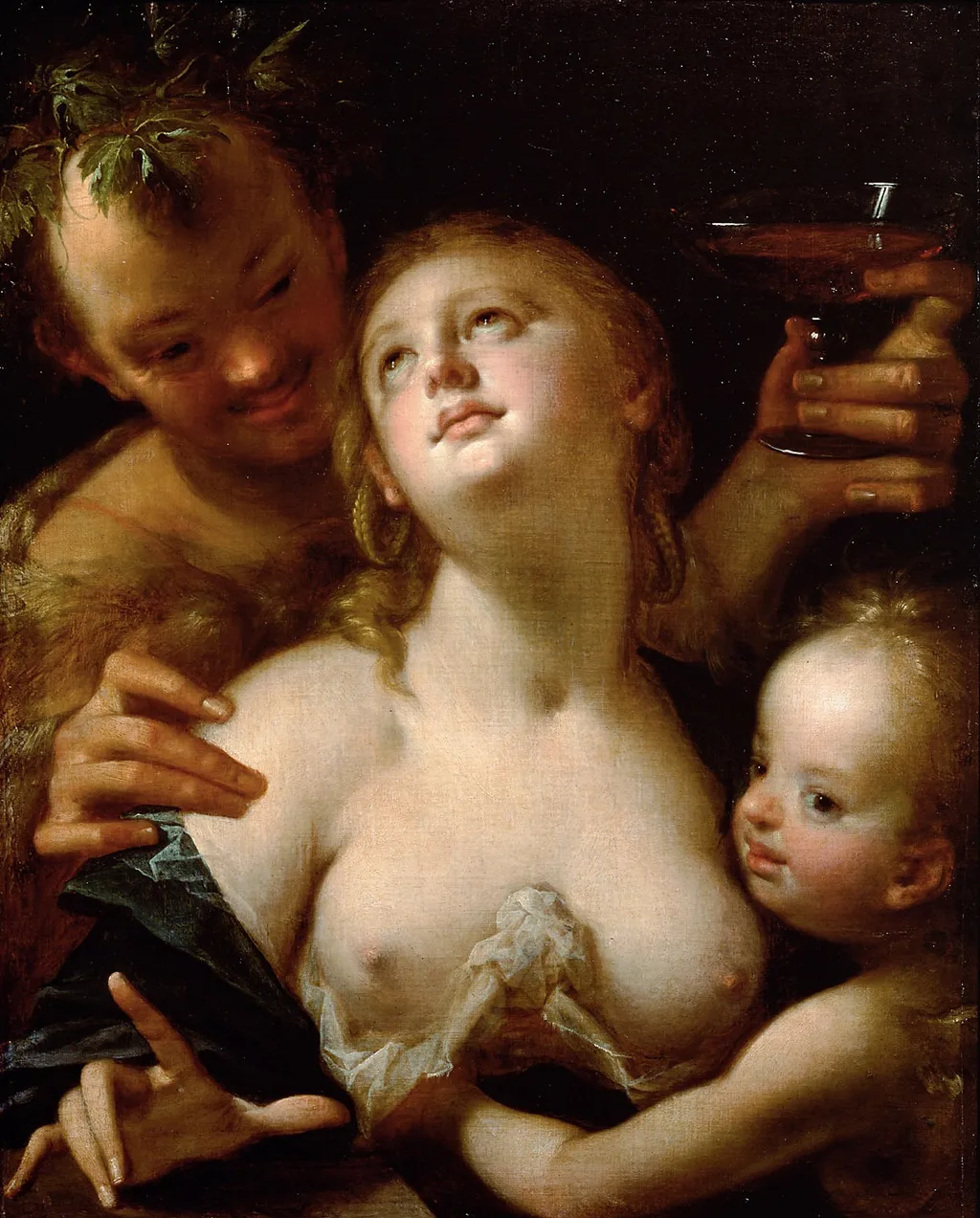
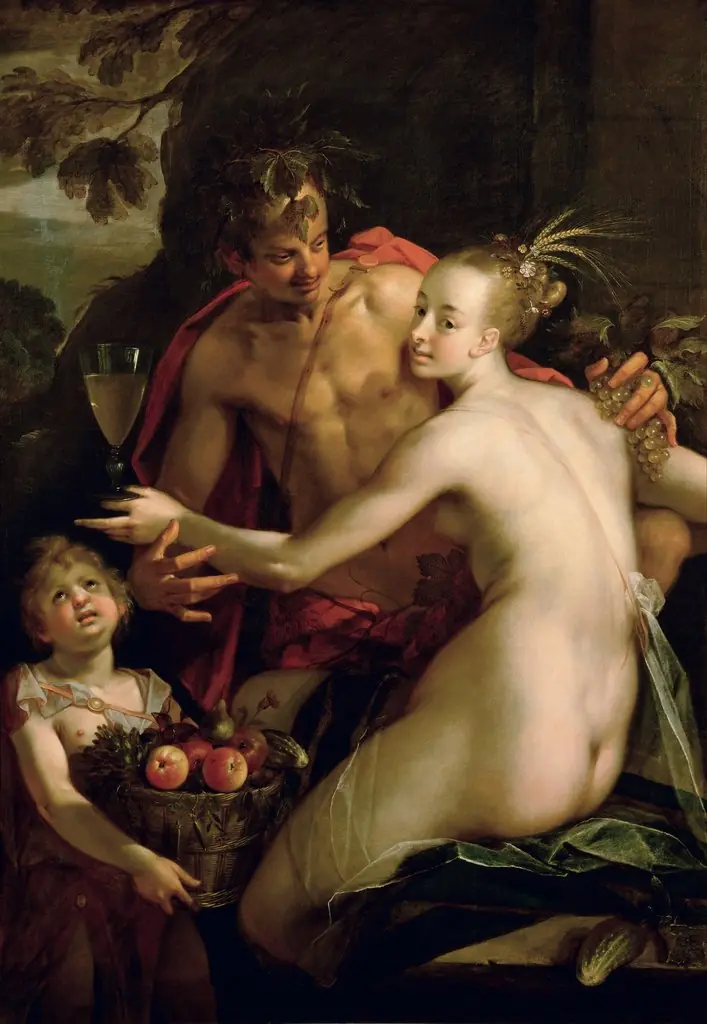
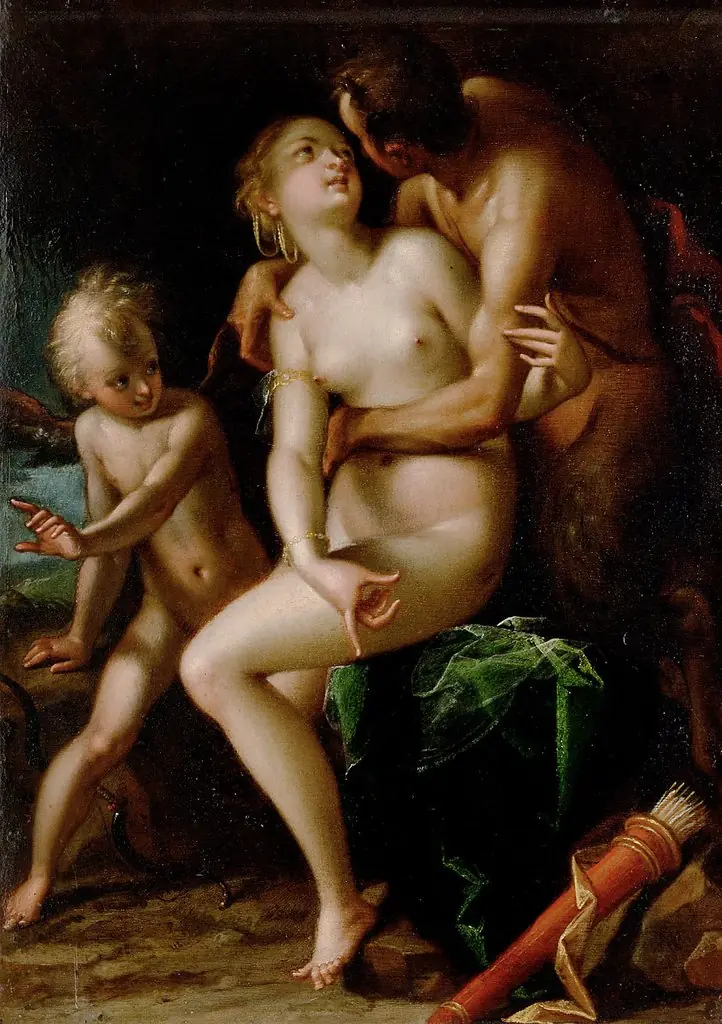
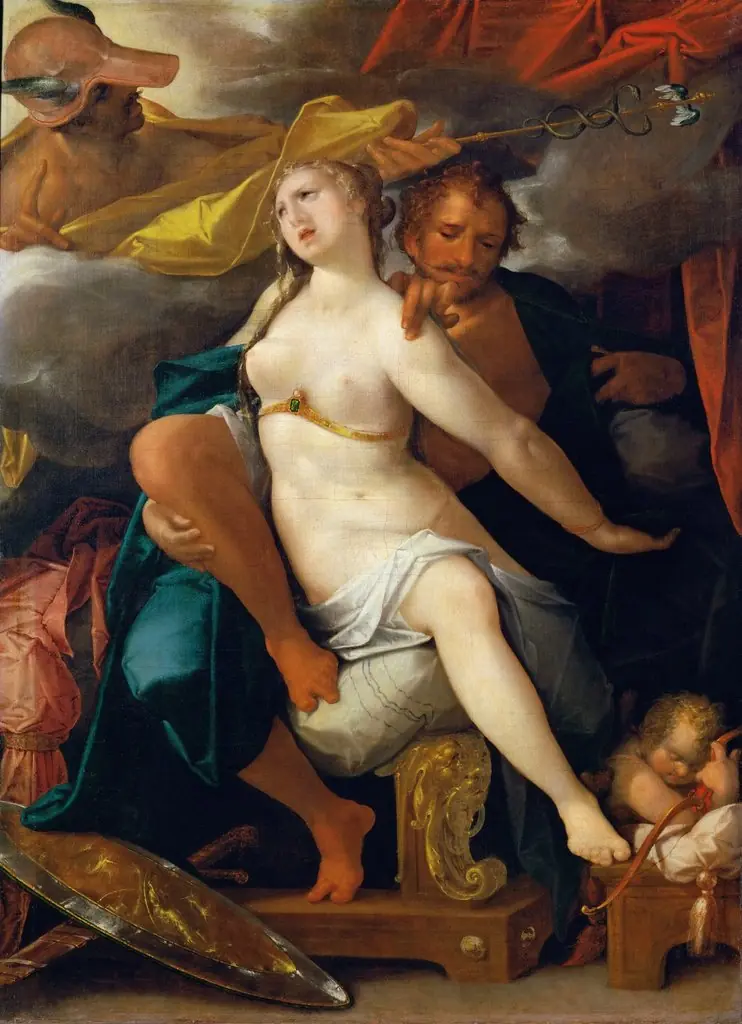
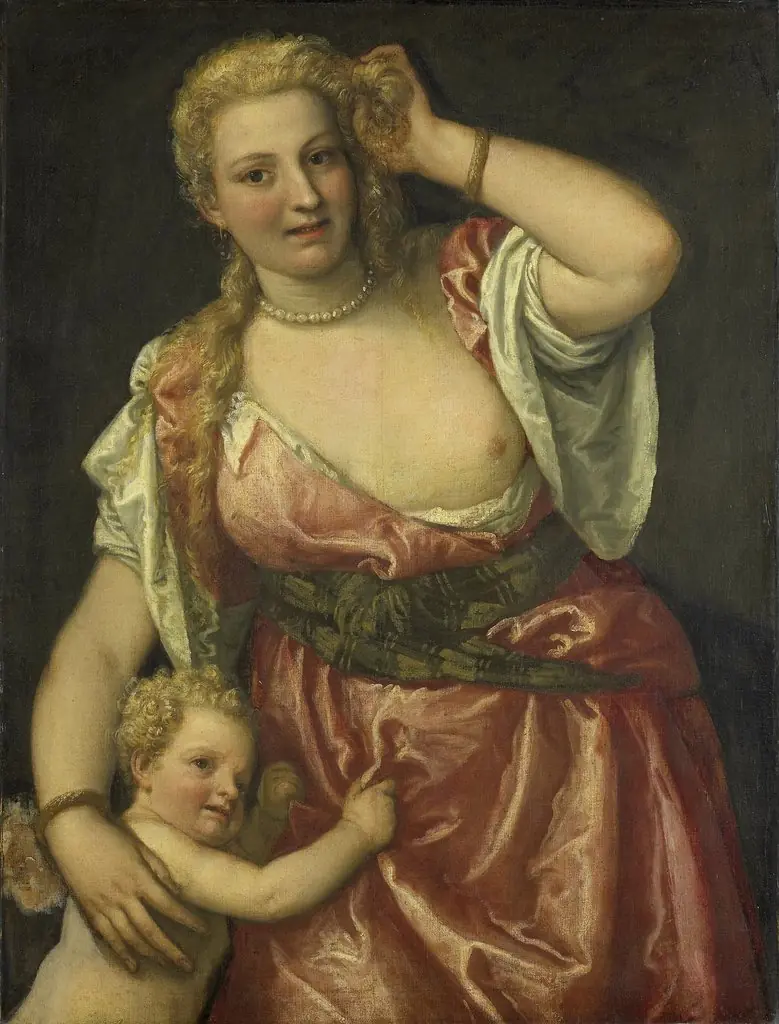
Bacchus, Venus and Cupid is a paint painting by the Mannerist artist Hans von Aachen. It dates from 1598 and is held in the collection of the Kunsthistorisches Museum. Created in 1598, this oil painting brings together the Roman deities Bacchus and Venus with the youthful Cupid.
About this work
Subject & Meaning
The grouping of these particular deities evokes the intertwined nature of wine, love, and erotic desire.
The painting depicts a mythological scene featuring three figures from classical Roman and Greek mythology: Bacchus (the Roman equivalent of Dionysus, the god of wine), Venus (the goddess of love and beauty), and Cupid (her son, the god of desire). The genre as a mythological painting situates it within the tradition of Renaissance and Mannerist artists who drew upon classical subjects to explore themes of love, pleasure, and sensuality. The grouping of these particular deities evokes the intertwined nature of wine, love, and erotic desire.
Cupid's presence alongside Venus and Bacchus reinforces the amorous and celebratory character of the scene, suggesting a symbolic union of earthly indulgence and divine passion typical of late sixteenth-century Northern European mythological imagery.
Technique & Style
Hans von Aachen executed Bacchus, Venus and Cupid in paint on a canvas support. The work measures 63 by 50 centimeters. As a mythological painting, the composition depicts the figures of Venus alongside Bacchus, also identified as Dionysus, and Cupid.
Stylistically, the artwork aligns with the late 16th-century Mannerist tradition, characterized by elegant figural handling and sophisticated mythological subject matter typical of von Aachen's oeuvre.
History & Provenance
Hans von Aachen created the mythological painting Bacchus, Venus and Cupid in 1595. Executed in oil on canvas, the work measures 63 cm in height and 50 cm in width. It currently resides in the collection of the Kunsthistorisches Museum. The painting depicts the figures of Bacchus, Venus, and Cupid within a mythological setting.
The painting is held by the Kunsthistorisches Museum, Vienna, where it is inventoried as inv. GG_1017. It has been exhibited at the museum in the context of its permanent holdings of Northern Renaissance paintings, including in the gallery displays dedicated to Hans von Aachen’s mythological works.
It was shown in the special exhibition “Hofkunst um 1600: Hans von Aachen und das allegorische Porträt” (Kunsthistorisches Museum, 2000).
Overview
Created in 1598, this oil painting brings together the Roman deities Bacchus and Venus with the youthful Cupid. Executed by Hans von Aachen, a prominent Northern Mannerist, the work is part of the Kunsthistorisches Museum’s collection. The composition centers on the three figures, arranged in a compact group that emphasizes their interaction and the sensual atmosphere of the scene.
Context
Hans von Aachen, active in the late sixteenth century, was a leading exponent of Northern Mannerism, a style that merged Italianate elegance with a heightened artificiality. His work often catered to the Habsburg court’s fascination with classical mythology, and this piece exemplifies the period’s preference for sophisticated, allegorical compositions that combined sensuality with intellectual references.
Own this work as a print
Artist & collection
Artist
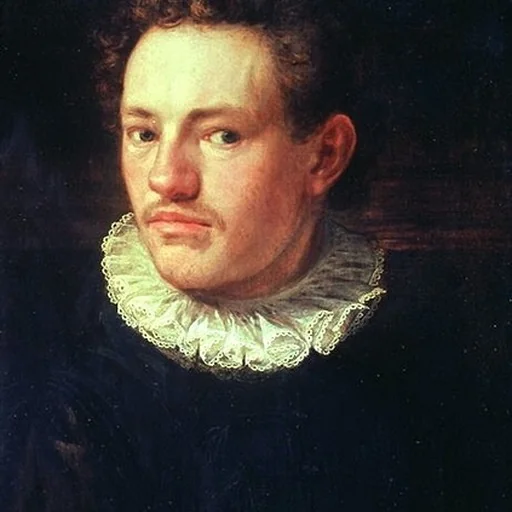
Hans von Aachen (1552 – 4 March 1615) was a German painter who was one of the leading representatives of Northern Mannerism.