Artwork
David and Bathsheba
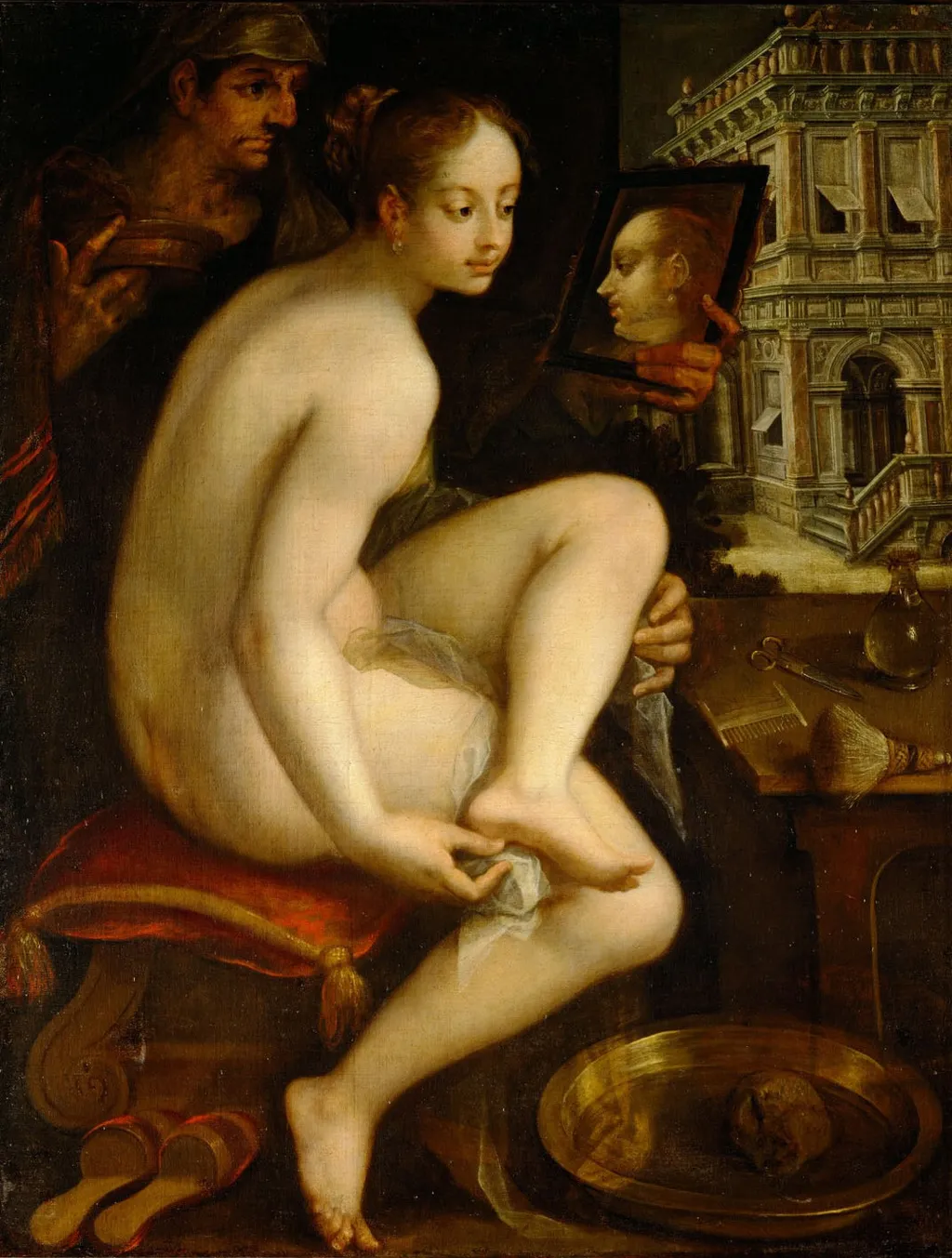
David and Bathsheba is an oil painting by the Mannerist artist Hans von Aachen. It dates from 1612 and is held in the collection of the Kunsthistorisches Museum.
About this work
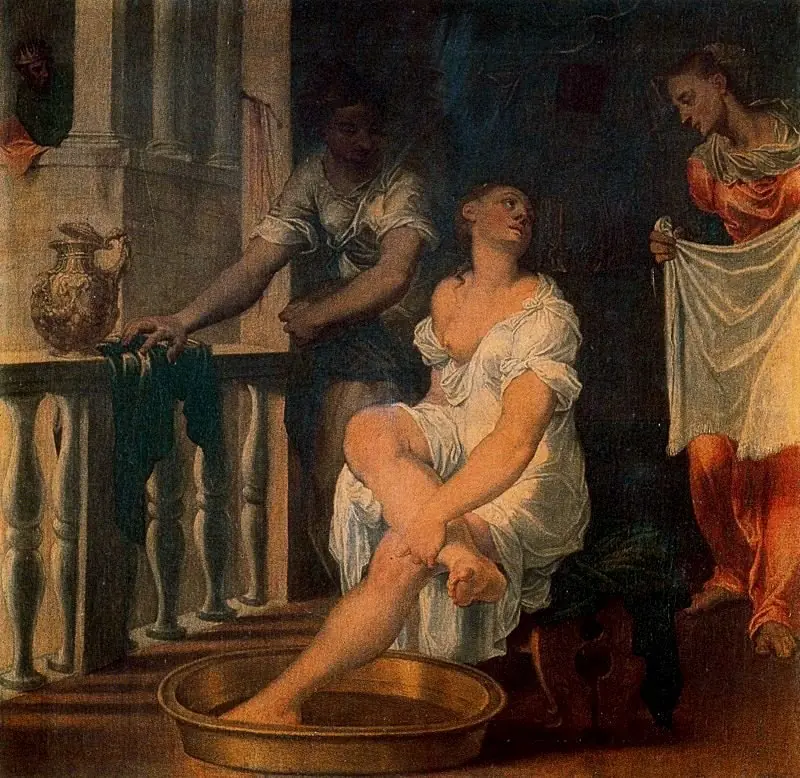
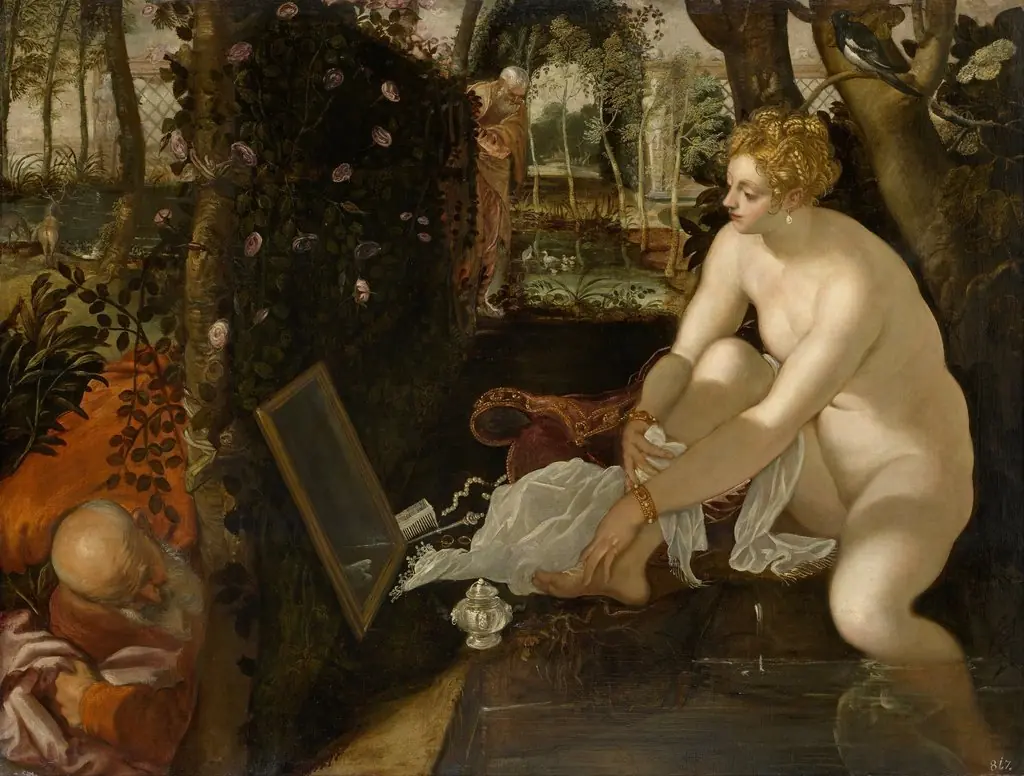
King David watches from a high balcony as Bathsheba dries her foot at her toilet, grooming tools scattered before her. A helmeted figure holds up a mirror, though the reflection cheats: Bathsheba faces right while her image looks left. Hans von Aachen painted this in Prague around 1612, under Emperor Matthias, his palette darkening after the death of his earlier patron, Rudolf II.
Subject & Meaning
Bathsheba is shown washing her feet (a pedicure) while seated on a cushion before a wash basin, her back turned to the viewer.
The painting depicts the biblical episode from 2 Samuel 11, where King David spies on Bathsheba bathing. Bathsheba is shown washing her feet (a pedicure) while seated on a cushion before a wash basin, her back turned to the viewer. A mirror on the wall provides a specular reflection, possibly of her face or the scene.
David appears as a clothed male figure, gazing upon her from within a palace interior. The nude presentation of Bathsheba contrasted with David's clothed state highlights themes of voyeurism and temptation. Iconographic elements such as the mirror (often symbolizing vanity or self-awareness) and the intimate setting reinforce the moralizing narrative of lust, sin, and the abuse of royal power characteristic of religious art of the period.
Technique & Style
Hans von Aachen executed David and Bathsheba in oil on canvas, a common support for Northern Mannerist works of the early 17th century. The painting, measuring 138 × 105 cm, displays meticulous handling of varied textures: the glossy specular reflection in the mirror contrasts with the soft modeling of Bathsheba’s nude body and the crisp folds of David’s clothing. Von Aachen’s brushwork captures intricate details such as the sole of Bathsheba’s foot, the intergluteal cleft, and the sheen of chestnut hair, revealing a refined technique.
The composition juxtaposes clothed male and naked female figures within a palace interior, employing a warm palette and careful lighting to articulate flesh, fabrics, and reflective surfaces. The overall style blends religious narrative with genre-like sensuality, characteristic of the artist’s courtly output.
History & Provenance
Hans von Aachen painted David and Bathsheba in 1612. The work entered the collection of the Kunsthistorisches Museum in Vienna, where it remains today. No further details regarding its commission or subsequent ownership chain are recorded in the available sources.
Overview
Hans von Aachen's "David and Bathsheba," painted around 1612–15, is an oil on canvas housed in the Kunsthistorisches Museum, Vienna. This work depicts the Old Testament narrative through the lens of Prague Mannerism, showcasing a blend of religious storytelling and idealized beauty. It was created during von Aachen's service to Emperor Matthias in Prague, following the death of his previous patron, Rudolf II.
Legacy
The painting has continued to resonate with artists centuries later. In 2023, during the "Naked Masters" exhibition at the Kunsthistorisches Museum, artist Georg Baselitz specifically highlighted "David and Bathsheba." He identified its distinctive vermilion sheen and unique asymmetrical structure as significant inspirations for his own artistic practice, demonstrating the work's enduring influence.
Artist & collection
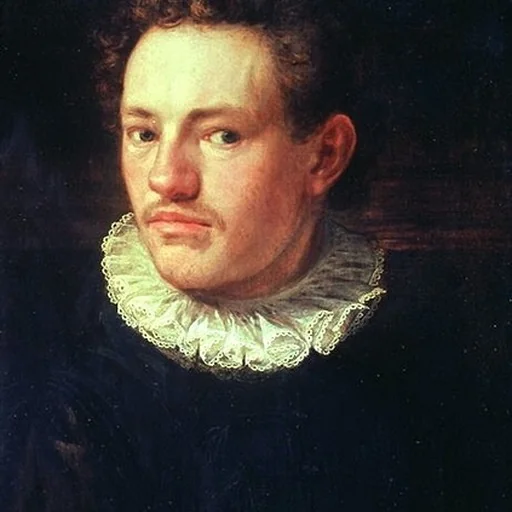
Artist
Hans von Aachen (1552 – 4 March 1615) was a German painter who was one of the leading representatives of Northern Mannerism.