Artwork
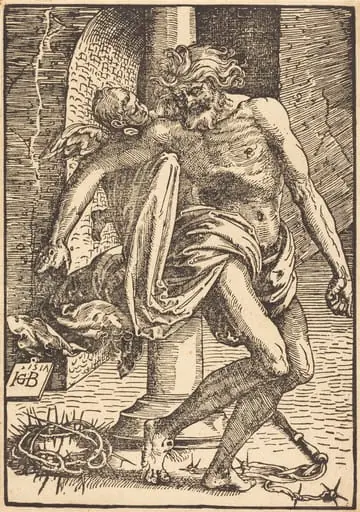
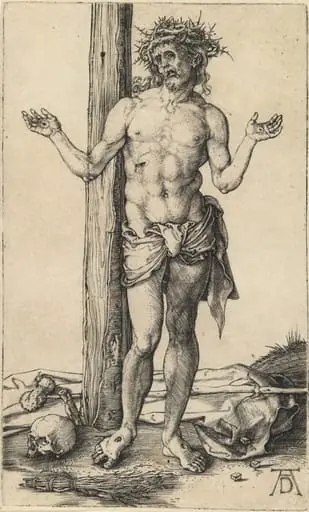
Man of Sorrows Seated on the Cross
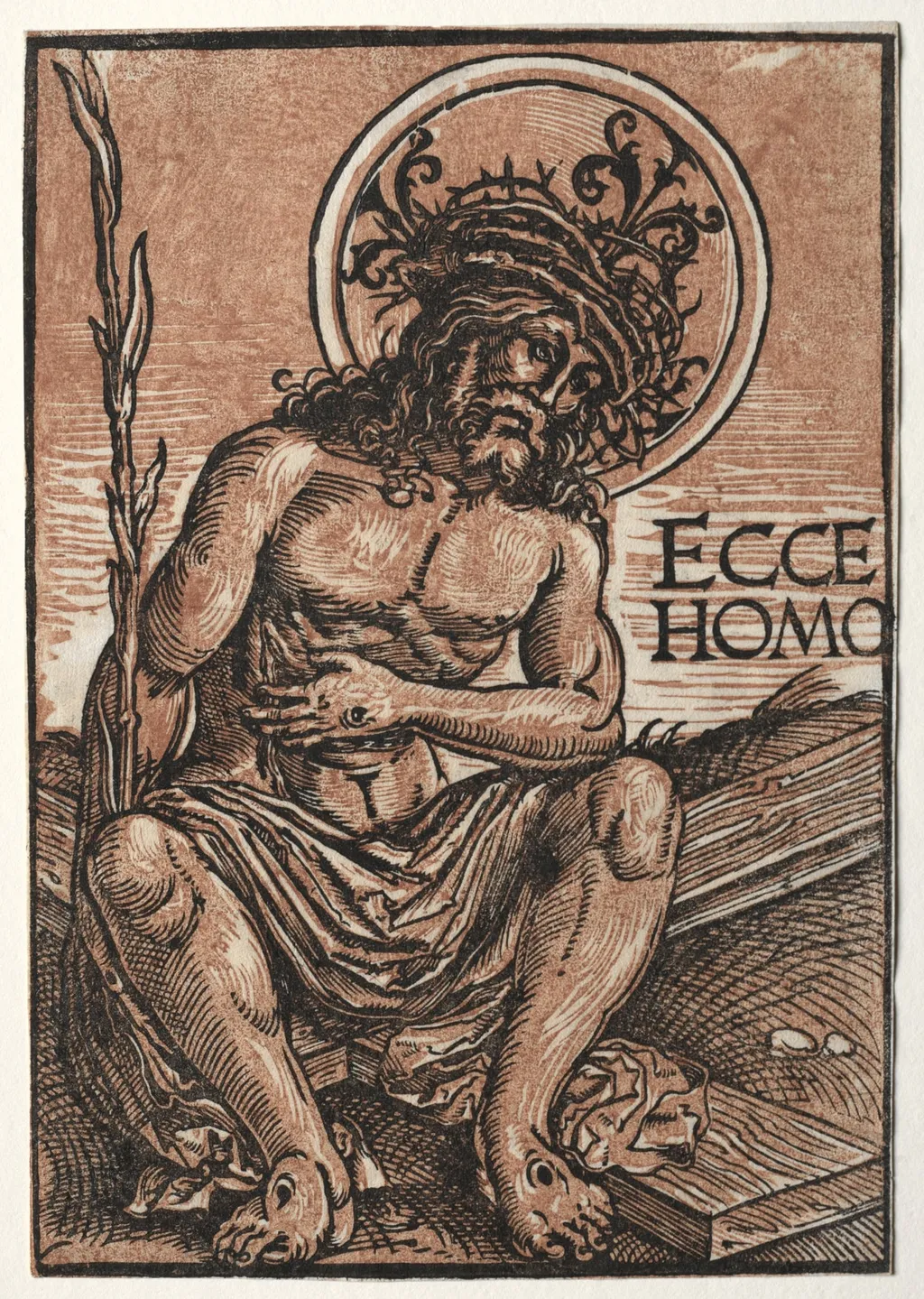
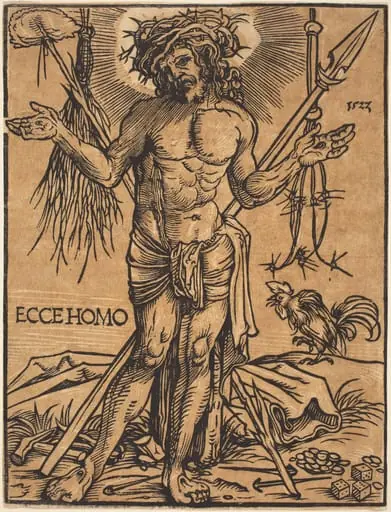
Man of Sorrows Seated on the Cross is a print by the Renaissance artist Hans Weiditz. It dates from 1522 and is held in the collection of the Cleveland Museum of Art.
- Accession no.
- 1952.126
- Credit line
- John L. Severance Fund
About this work
Overview
Created around 1522 by Hans Weiditz, this woodcut depicts the Man of Sorrows seated on the cross, a devotional image rooted in late medieval piety.
Created around 1522 by Hans Weiditz, this woodcut depicts the Man of Sorrows seated on the cross, a devotional image rooted in late medieval piety. The print is held in the collection of The Cleveland Museum of Art. Its stark composition and intense modeling reflect the Northern Renaissance emphasis on emotional realism and tactile detail, intended to provoke contemplation rather than ornamentation.
Subject & Meaning
The figure represents Christ after his condemnation, exhausted and crowned with thorns, his body slumped in resignation. The palm branch beside him alludes to his impending martyrdom and triumph over death. The Latin inscription 'Ecce Homo', 'Behold the Man', recalls Pontius Pilate’s words during Christ’s trial, inviting the viewer to witness suffering as a moment of spiritual revelation.
Technique & Style
Weiditz employed deep, incised lines in woodcut to model form through dramatic contrasts of light and shadow. The rough texture of the ground, the weight of the body, and the folds of skin are rendered with precise, deliberate carving. This use of chiaroscuro enhances the three-dimensionality of the figure, grounding the sacred subject in a tangible, physical space.
History & Provenance
The print was produced in the early 1520s, during a period of religious upheaval in Germany. Though its early ownership is undocumented, it entered the Cleveland Museum of Art’s collection as part of a broader acquisition of Northern Renaissance prints. Its survival in good condition reflects its continued use in private devotion before becoming a museum object.
Context
This image emerged amid growing lay devotion to Christ’s suffering, especially in regions influenced by the Reformation. While Catholic communities emphasized Christ’s agony as a path to mercy, Protestant audiences often viewed such images as aids to personal meditation. Weiditz’s work aligns with this introspective trend, stripping away grandeur to focus on human vulnerability.
Legacy
Weiditz’s woodcut contributed to a broader visual language of Christ’s suffering that persisted into the 17th century. Its emphasis on physical realism and emotional restraint influenced later devotional prints, particularly in German-speaking areas. Though not widely reproduced, it remains a significant example of how printmaking extended spiritual imagery beyond altarpieces into domestic settings.
Own this work as a print
Artist & collection

Artist
Hans Weiditz the Younger, Hans Weiditz der Jüngere, Hans Weiditz II, was a German Renaissance artist, also known as The Petrarch Master for his woodcuts illustrating Petrarch's De remediis utriusque fortunae, or…