Artwork
Caesarea Philippi (Banias)
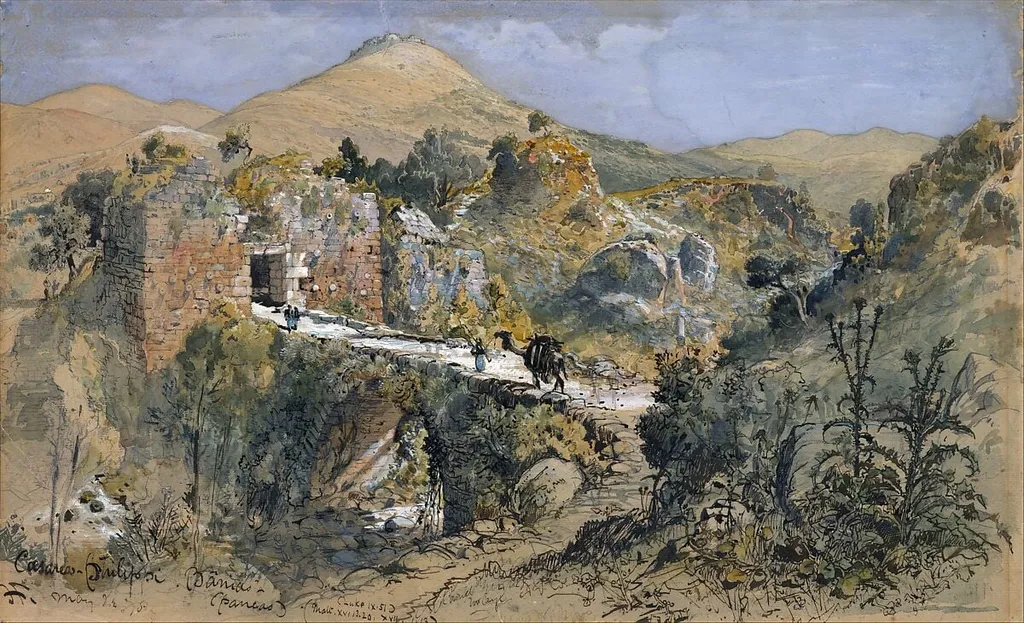
Caesarea Philippi (Banias) is a watercolor work on paper by the Romanticist artist Harry Fenn. It dates from 1878 and is held in the collection of the Metropolitan Museum of Art.
- Accession no.
- 1980.298
- Credit line
- Maria DeWitt Jesup and Morris K. Jesup Funds, 1980
About this work
Technique & Style
4 cm in width, and its handling of line and tonal wash creates a delicate yet defined landscape rendering.
Harry Fenn executed this view of Caesarea Philippi using watercolor, gouache, brown ink and graphite on light brown wove paper, a combination that yields a layered, atmospheric surface. The work measures 32.2 cm in height and 52.4 cm in width, and its handling of line and tonal wash creates a delicate yet defined landscape rendering. Subtle variations in pigment density and graphite underdrawing contribute to a nuanced formal quality, emphasizing texture and spatial depth within the composition.
The piece demonstrates a restrained yet expressive approach to medium, where washes of watercolor are modulated by precise ink contours and graphite shading, producing a softly rendered topography. This interplay of translucent layers and linear detail defines the stylistic character of the work, aligning it with 19th-century American landscape practices that favored meticulous observation and tonal gradation.
History & Provenance
Harry Fenn's watercolor Caesarea Philippi (Banias) is held in the collection of the Metropolitan Museum of Art in New York. The work is classified within The American Wing and is executed in watercolor, gouache, brown ink, and graphite on light brown wove paper. The painting measures 32.2 cm in height and 52.4 cm in width.
The provided sources do not contain specific accession numbers, inventory details, or a record of the work's exhibition history.
Overview
Harry Fenn’s 1878 work titled Caesarea Philippi (Banias) combines watercolor, gouche, brown ink and graphite on a light‑brown wove paper. The composition presents a solitary tree rising behind a weathered stone archway, set within a tranquil valley where two camels rest. The piece belongs to the American Wing collection.
Subject & Meaning
The scene captures a quiet moment in the historic landscape of Caesarea Philippi, emphasizing the coexistence of natural and architectural elements. The lone tree and the resting camels suggest a pause in travel, while the crumbling archway hints at the passage of time and the fading presence of ancient structures within the environment.
Context
Fenn was a leading American landscape illustrator between 1870 and 1895, known for detailed renderings of regions such as Palestine. Caesarea Philippi (Banias) exemplifies his method of combining artistic observation with geographic accuracy, a hallmark of the period’s travel illustration tradition.
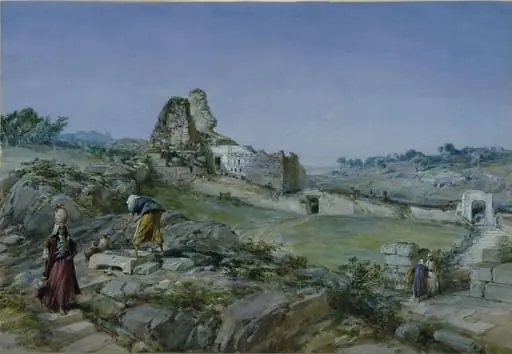
Artist & collection
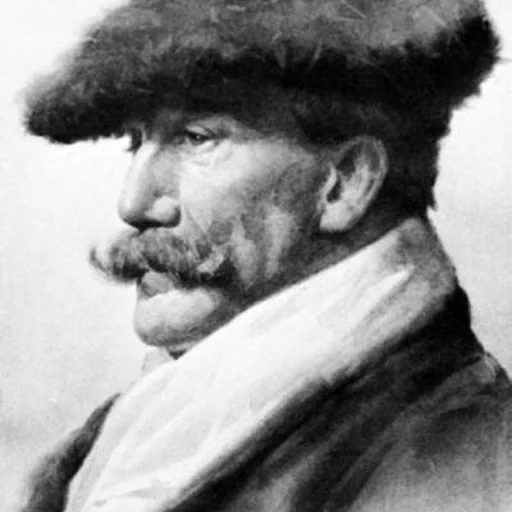
Artist
Harry Fenn (September 14, 1837 – April 22, 1911) was an English-born American illustrator, landscape painter, etcher, and wood engraver.

- Bethany, Palestine
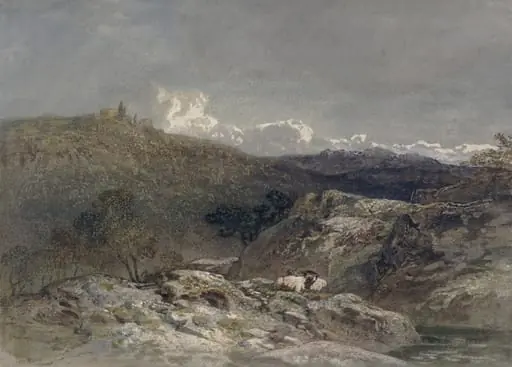 Mountainous landscape in 'Salvator Rosa's country'
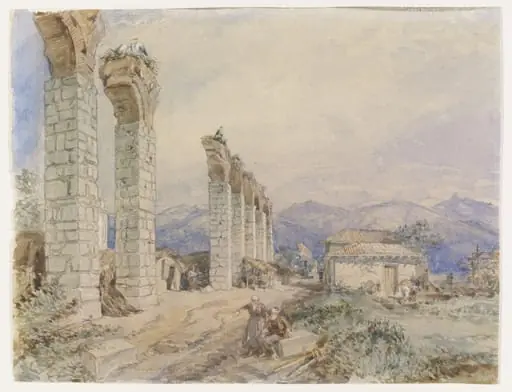 The Aqueduct - Ephesus
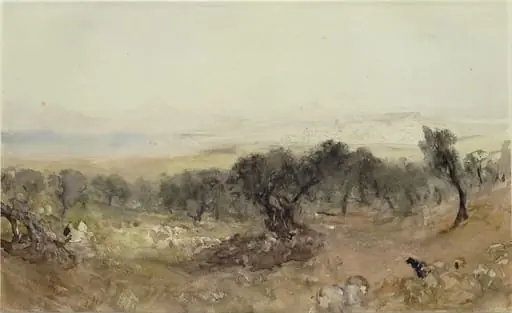 Tunis
Tunis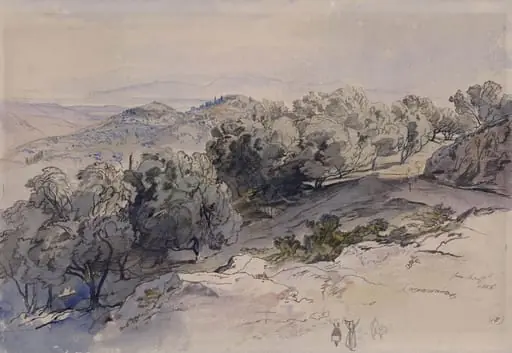 Choropiskopos, June 16th & 17th 1856
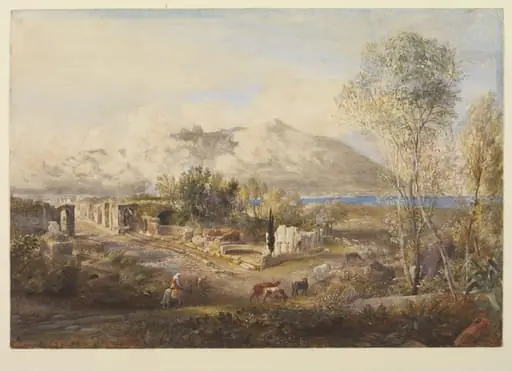 Street of the Tombs, Pompeii
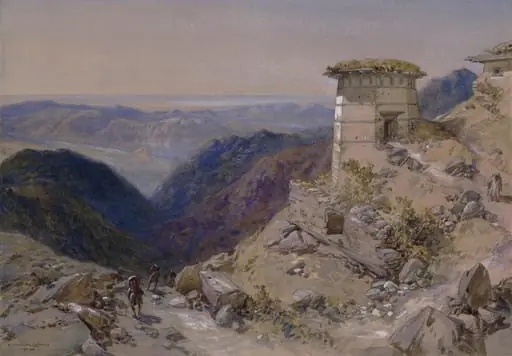 Pir Panjal Pass into Cashmere, 11,400 feet
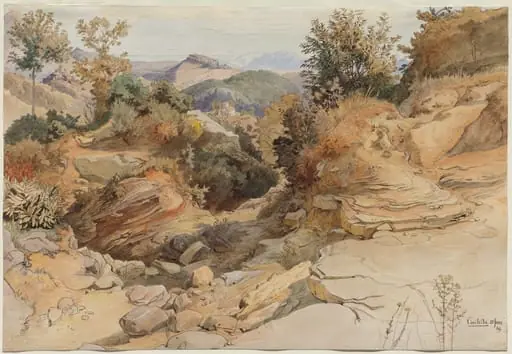 The Sabine Hills and Rocca Santo Stefano, Seen from Civitella
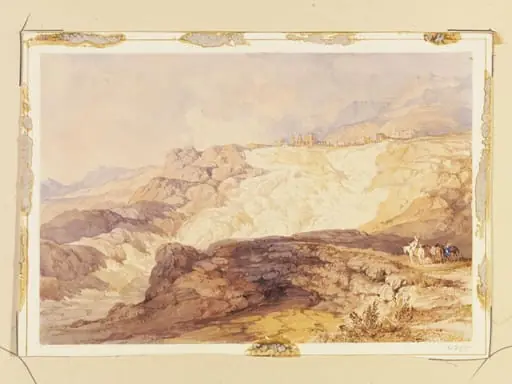 The Ruins of Hierapolis
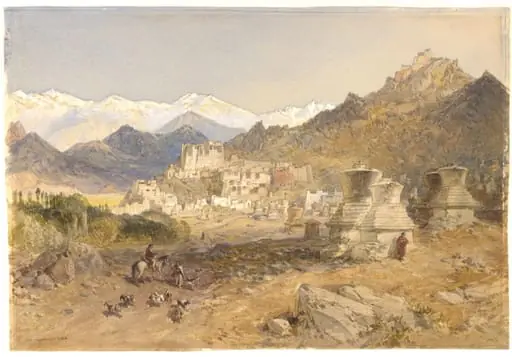 The Palace at Leh with stupas in the foreground
 Orte
Orte Corpo di Cava