Artwork
Cattleya Orchid and Three Hummingbirds
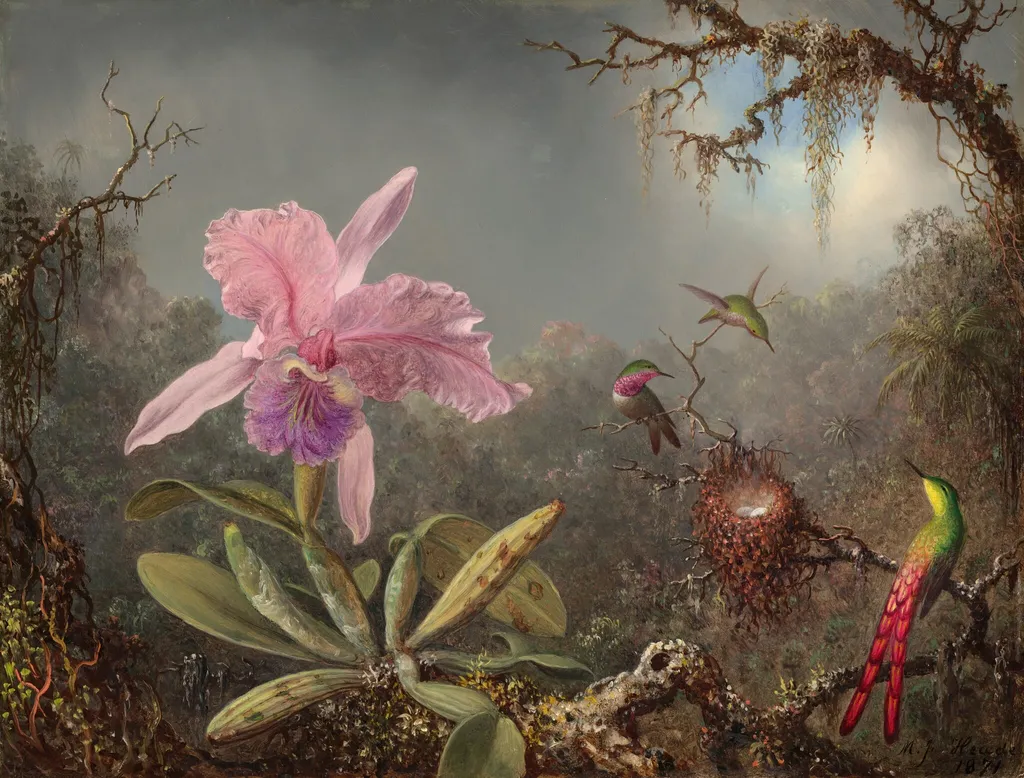
Cattleya Orchid and Three Hummingbirds is an oil painting by the American Impressionist artist Martin Johnson Heade. It dates from 1871 and is held in the collection of the National Gallery of Art.
- Inscription
- Inscribed:lower right: M. J. Heade / 1871
About this work
Subject & Meaning
The painting reflects Martin Johnson Heade's enduring fascination with Brazilian fauna and flora, stemming from his abandoned 1860s project, The Gems of Brazil.
Painted in 1871, this work presents a detailed tropical scene featuring a large pink Cattleya orchid with light-green stems dominating the left foreground. The composition includes dead branches covered in lichen, moss dripping from trees, and a blue-gray mist obscuring the distant jungle. On the right, three specific hummingbird species interact near a nest: two green-and-pink Brazilian Amethysts hover in flight, while a Sappho Comet, distinguished by its yellow neck and red tail feathers, perches nearby.
The painting reflects Martin Johnson Heade's enduring fascination with Brazilian fauna and flora, stemming from his abandoned 1860s project, The Gems of Brazil. Likely influenced by Charles Darwin and Frederic Edwin Church, the work combines precise ornithological observation with lush botanical detail to evoke an exotic, immersive environment rather than serving merely as a static still life.
Technique & Style
The painting is executed in oil on a wooden panel, a format documented in the work's provenance and confirmed by the National Gallery's records. Measuring approximately 34.8 cm in height and 45.6 cm in width (including frame 63.8 × 74.6 × 8.9 cm), the work depicts a lush tropical scene in which lichen-covered dead branches and trailing moss are rendered with fine brushwork, while a blue-gray mist softens the distant jungle. A large pink Cattleya orchid with light-green stems dominates the foreground, and two Brazilian Amethyst hummingbirds hover near a nest while a red-tailed Sappho Comet perches nearby. The composition combines meticulous detail with an atmospheric, almost photographic treatment of light and vegetation.
History & Provenance
Cattleya Orchid and Three Hummingbirds was painted by Martin Johnson Heade in 1871 in oil on wood (mahogany panel). The work emerged from Heade's sustained engagement with hummingbird imagery, which he had developed through the 1860s in connection with a planned deluxe book of Brazilian hummingbirds and the associated series of forty small pictures known as The Gems of Brazil; although that publication project was abandoned, he continued painting hummingbirds with orchids and jungle settings into the 1870s. The painting's documented ownership chain begins with a private collection, from which it was offered at auction by Adam A. Weschler & Son in Washington, D.C., on 23 May 1982 (lot 1316).
It subsequently passed through Hirschl & Adler Galleries in New York and was purchased on 14 October 1982 by the National Gallery of Art, where it remains held.
Legacy
The work is recognized as a representative piece of Martin Johnson Heade's hummingbird series, originally conceived for a projected book titled The Gems of Brazil. Its detailed naturalistic portrayal of a Cattleya orchid alongside three Brazilian hummingbirds reflects the artist's engagement with contemporary scientific interest in tropical flora. After being acquired by the National Gallery of Art in 1982, the painting has been displayed prominently, reinforcing Heade's reputation as a pioneer of American wildlife and botanical painting.
Overview
Martin Johnson Heade's 1871 oil painting, Cattleya Orchid and Three Hummingbirds, depicts a vibrant pink orchid with three small hummingbirds hovering nearby. Executed on a mahogany panel, this work exemplifies Heade's detailed approach to natural subjects. The artist's meticulous rendering captures the delicate interplay between flora and fauna, characteristic of his extensive series on these themes.
Context
Although Heade developed a strong affinity for tropical environments, his artistic process often involved working from preserved specimens rather than direct observation in the field. He produced over one hundred paintings featuring birds and flowers, frequently pairing hummingbirds with orchids. This practice allowed him to meticulously compose and render these subjects in his studio, creating idealized natural scenes.
Own this work as a print
Artist & collection

Artist
Martin Johnson Heade (August 11, 1819 – September 4, 1904) was an American painter known for his salt marsh landscapes, seascapes, and depictions of hummingbirds, often depicted with orchids, as well as lotus blossoms and other still lifes.

- Cattleya Orchid, Two Hummingbirds and a Beetle
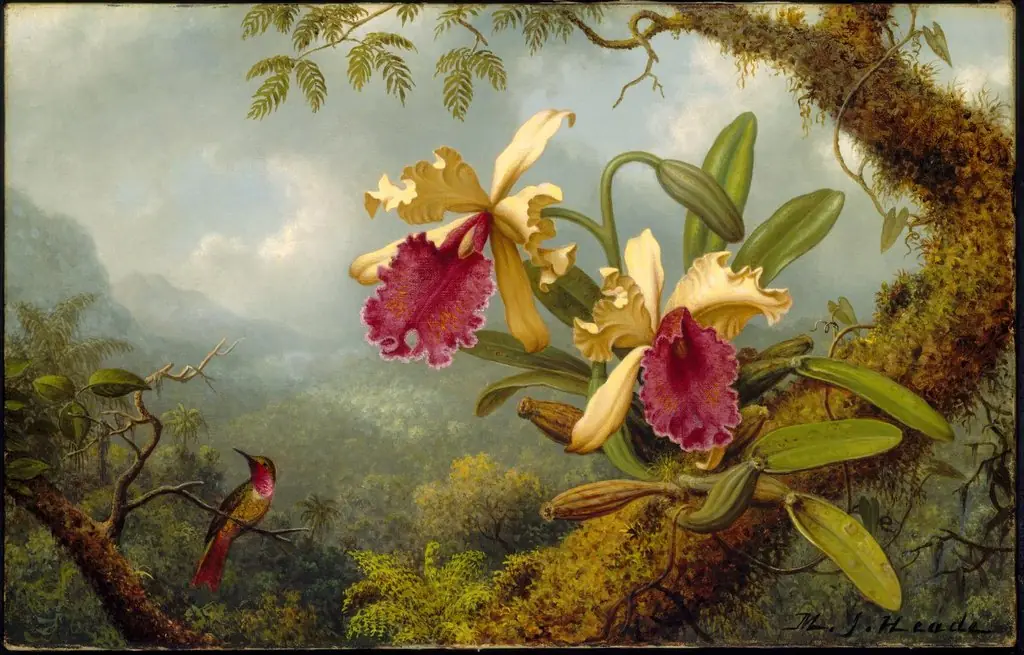 Orchids and Hummingbird
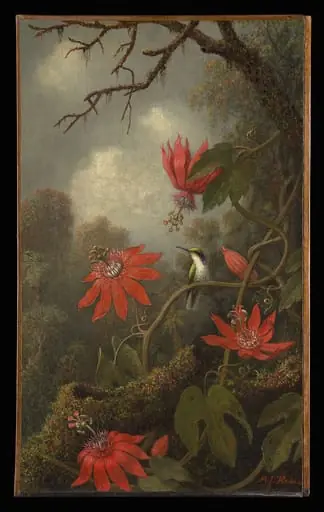
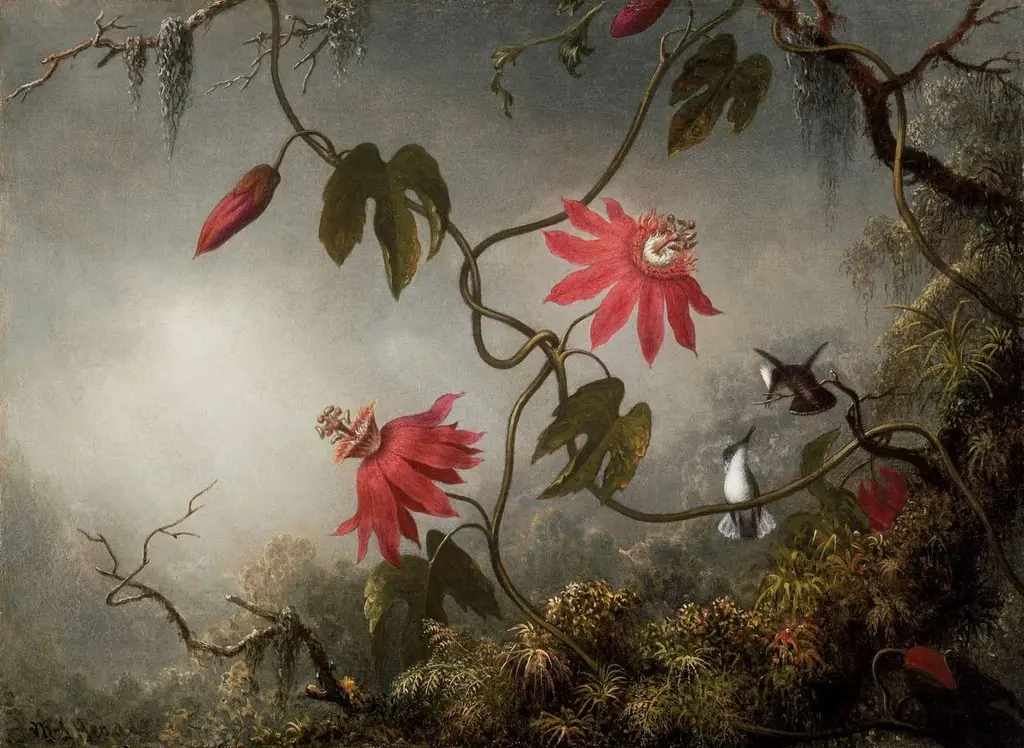 Passion Flowers and Hummingbirds
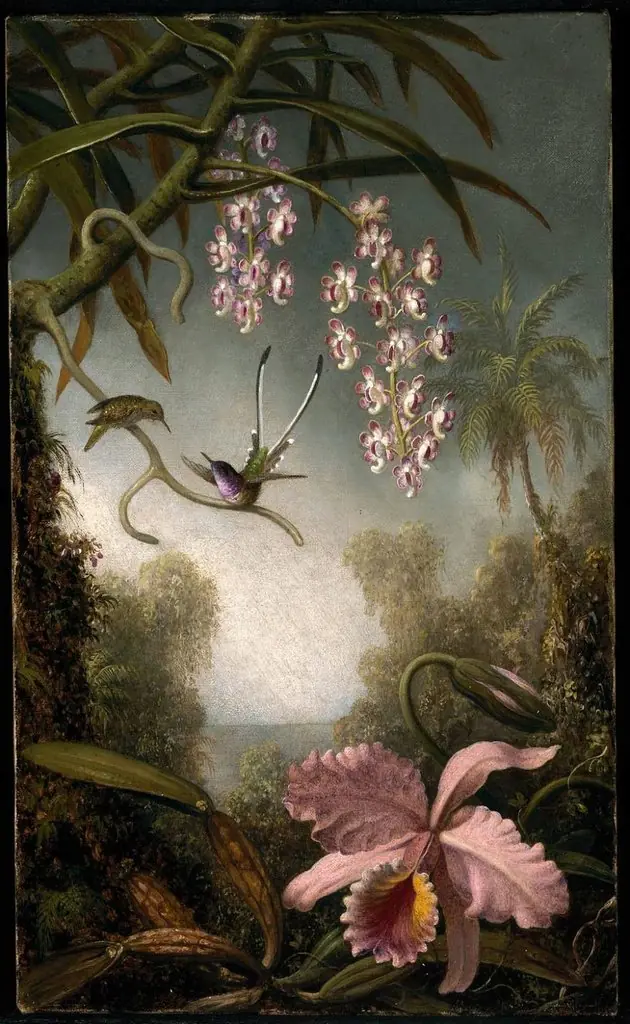 Orchids and Spray Orchids with Hummingbird
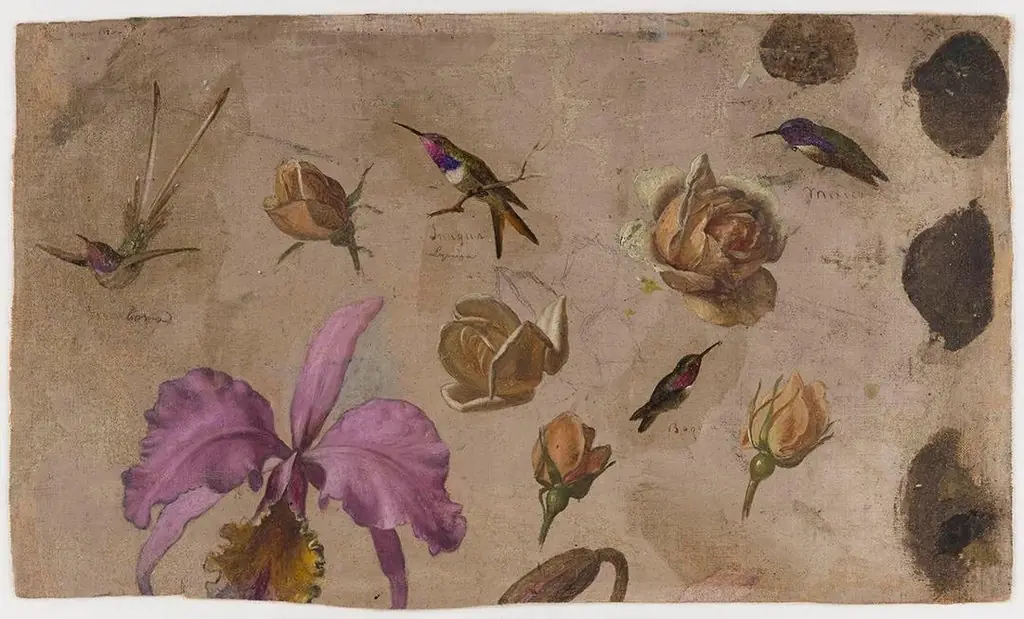 Study of Four Hummingbirds with Roses and an Orchid
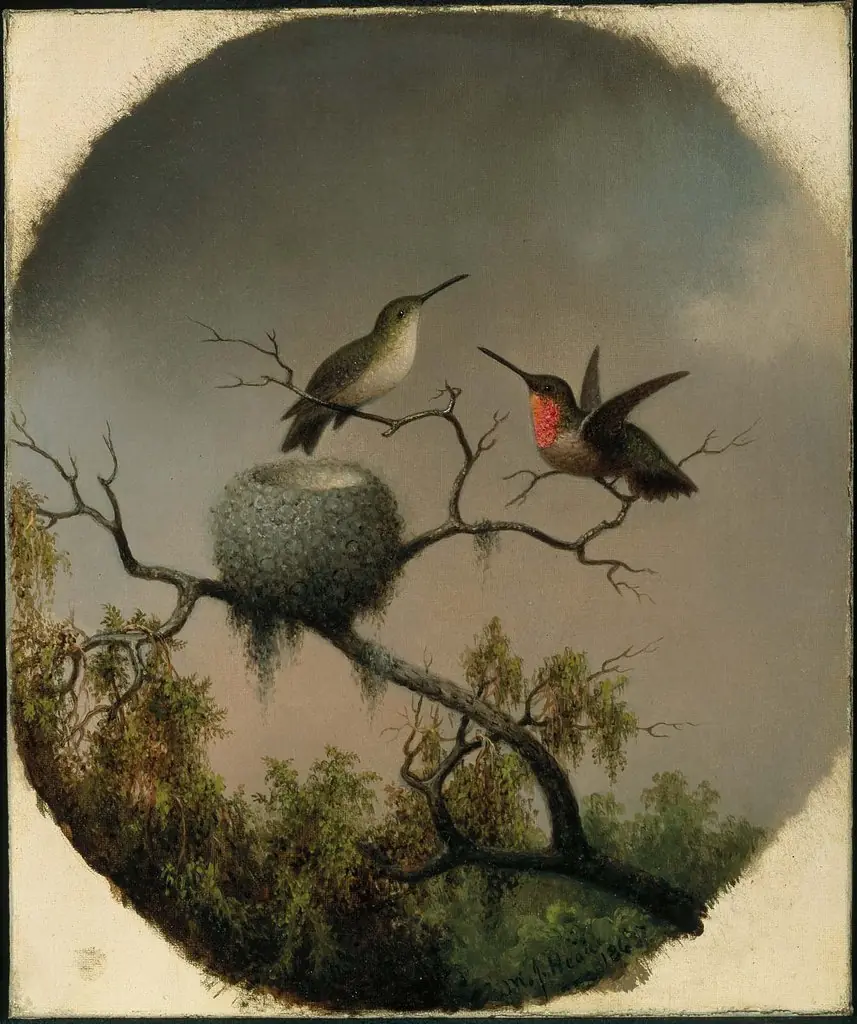 Hummingbirds with Nest
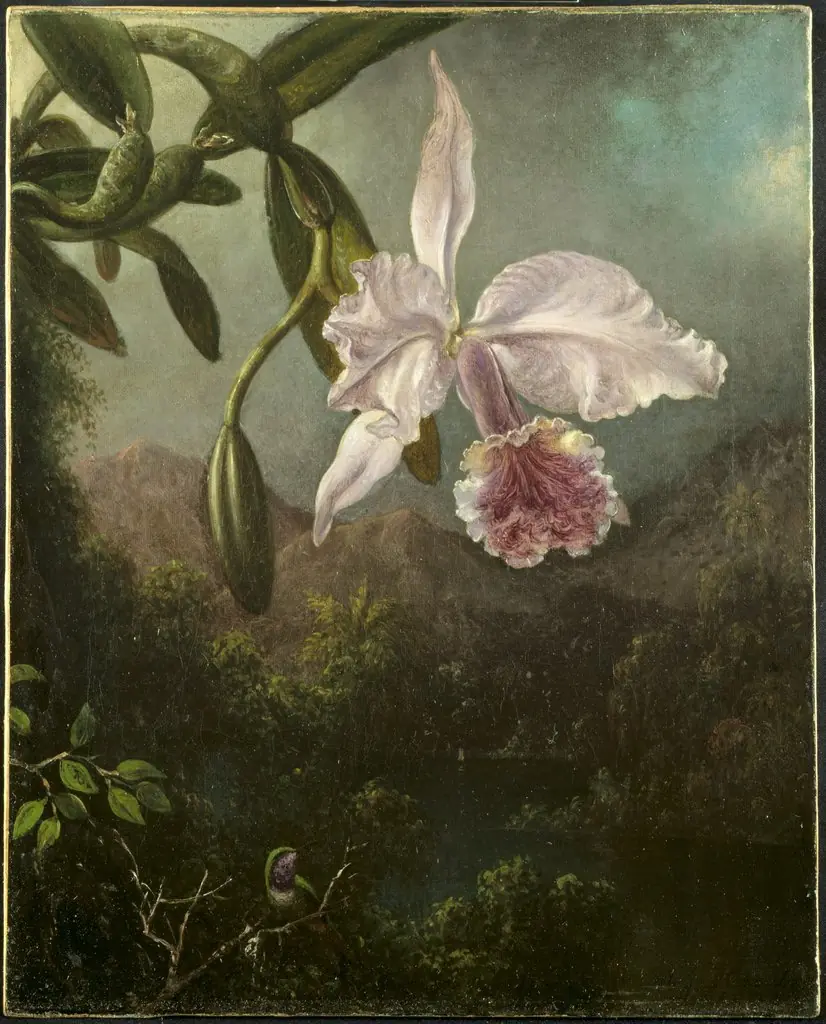 Orchid Blossoms
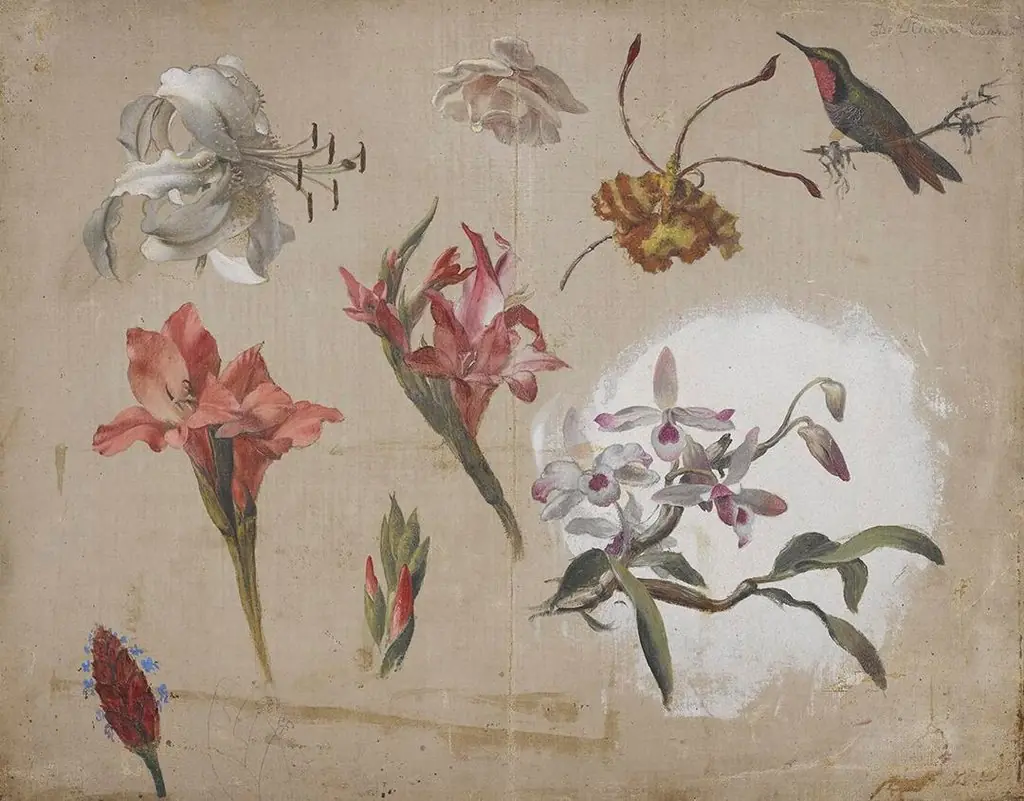 Study of Varied Flowers with a Hummingbird
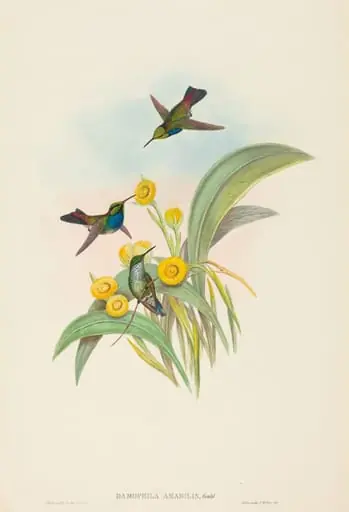 Damophila amabilis (Blue-breasted Hummingbird)
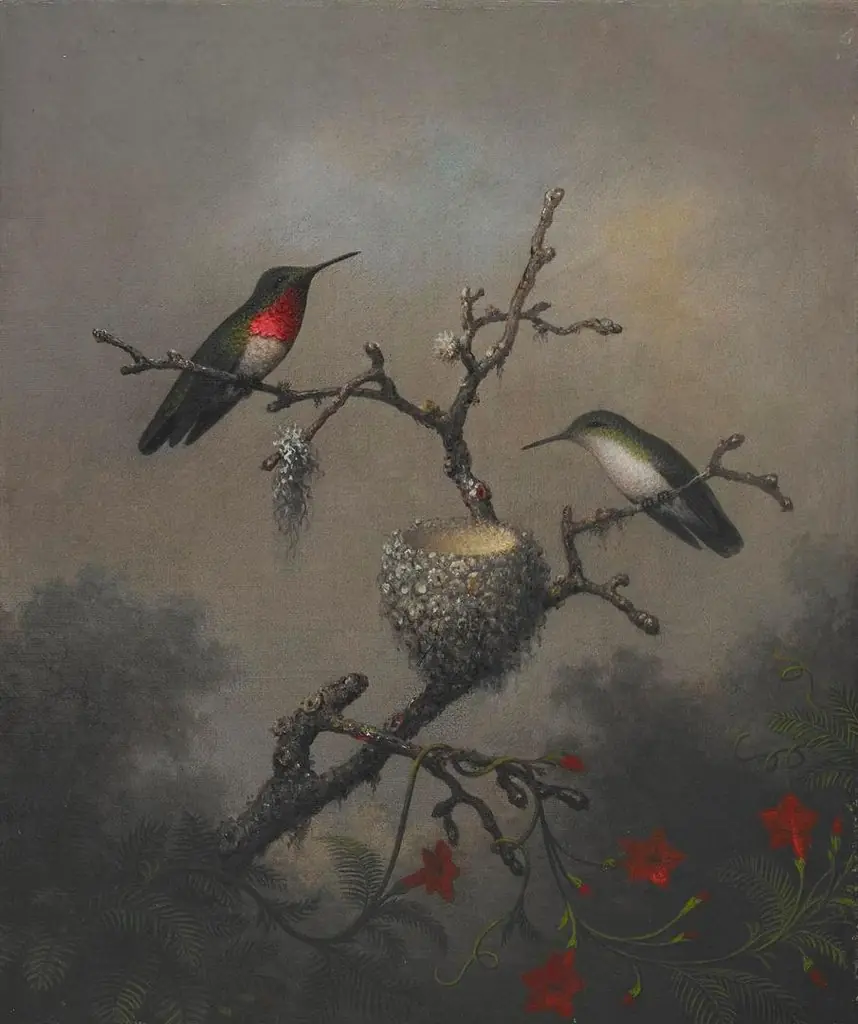 Ruby-throated Hummingbird