Artwork
Passion Flowers and Hummingbirds
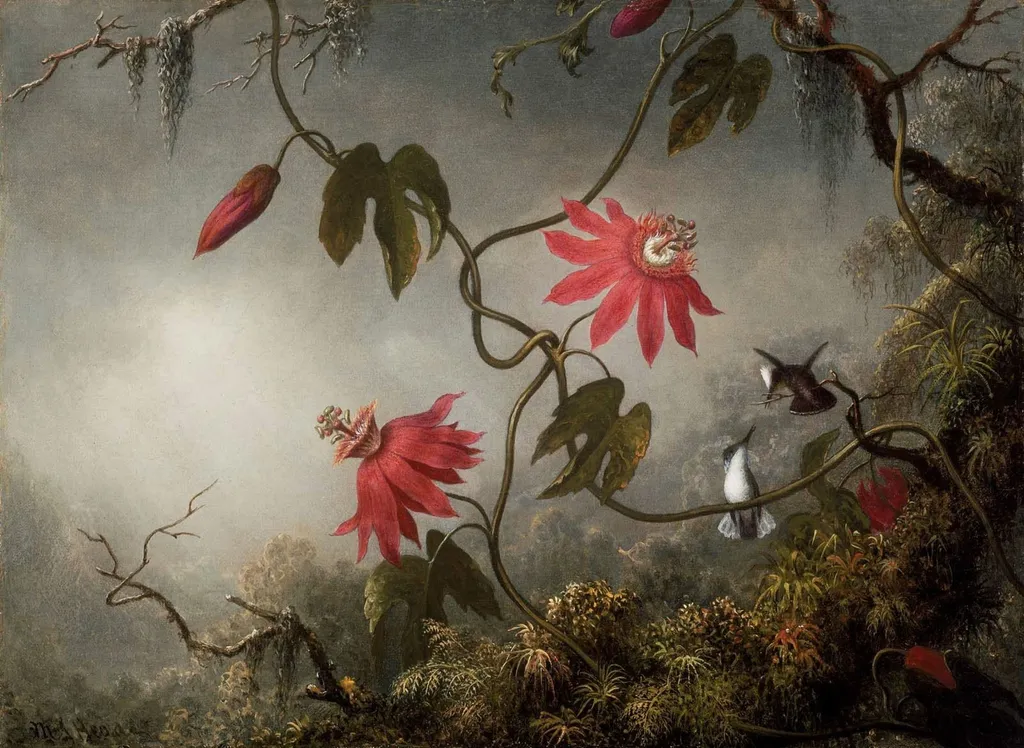
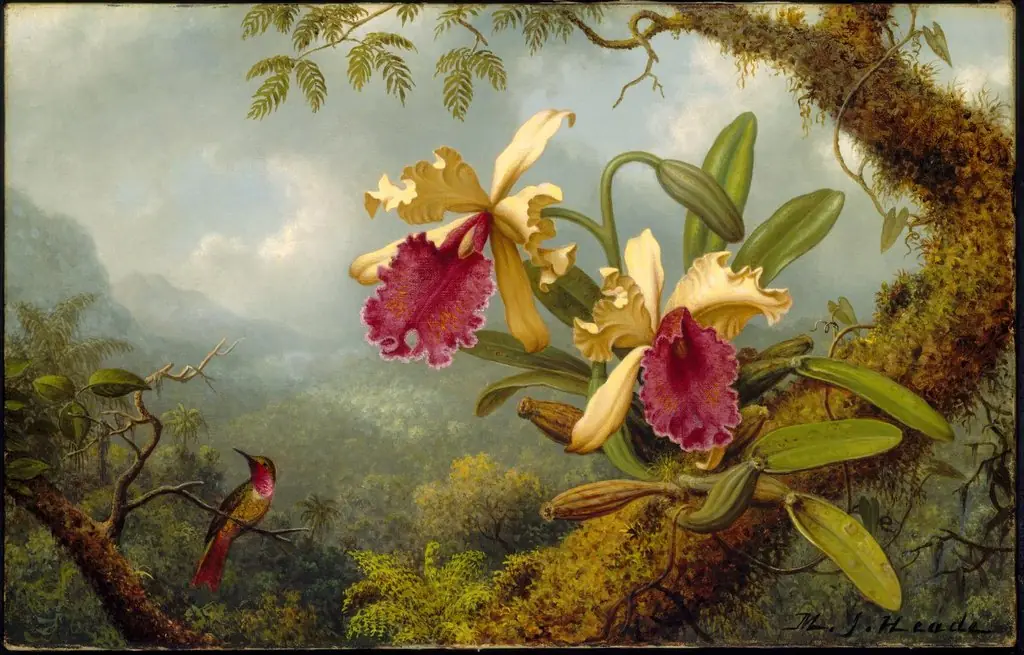
Passion Flowers and Hummingbirds is an oil painting by the American Impressionist artist Martin Johnson Heade. It dates from 1870 and is held in the collection of the Museum of Fine Arts Boston.
About this work
Subject & Meaning
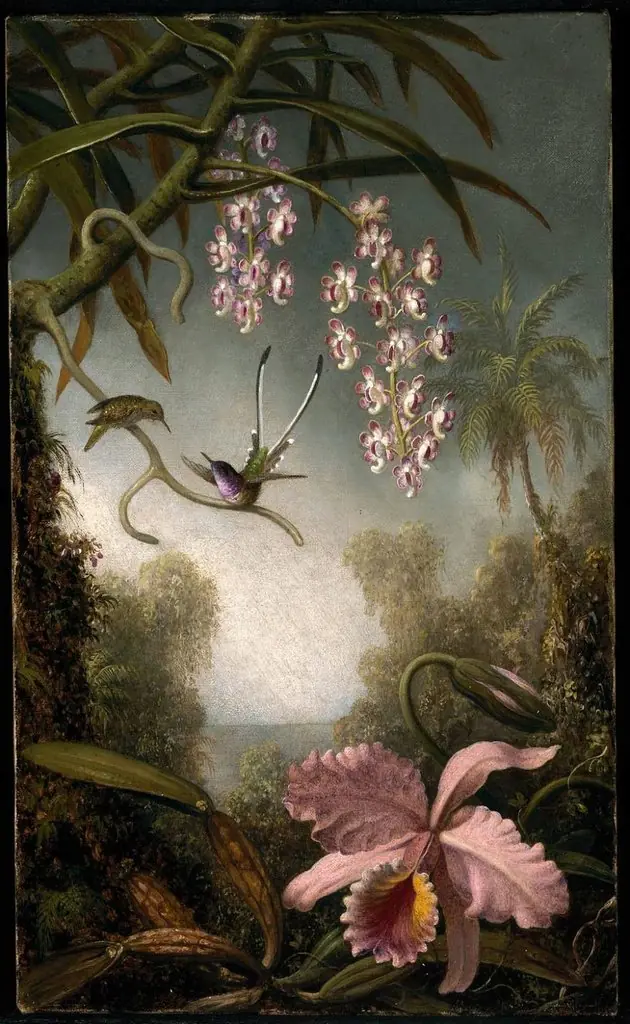
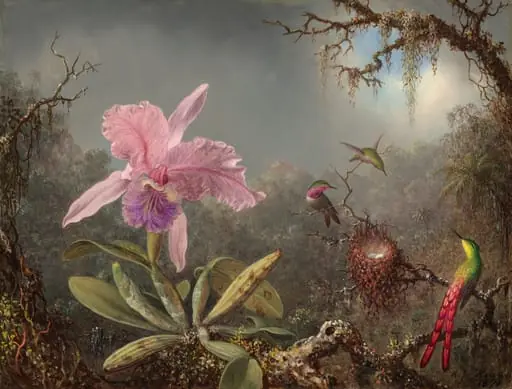
The painting depicts two passion flowers (Passiflora) entwined with tendrils against a dense, tropical setting, accompanied by two hummingbirds (Trochilidae) in mid‑flight. Heade’s composition emphasizes the intricate relationship between flora and fauna, capturing the fleeting motion of the birds while rendering the passion flower’s complex botanical structure in meticulous detail.
The passion flower held symbolic meanings in 19th‑century American art, often associated with Christian themes of the Passion of Christ due to the flower’s parts resembling instruments of the Crucifixion. The inclusion of hummingbirds, tiny, restless creatures, further evokes themes of transience and fleeting beauty, aligning with contemporary Victorian-era fascination with nature’s ephemeral qualities.
Technique & Style
Classified as a floral painting, the composition depicts a jungle scene featuring Passiflora flowers and Trochilidae (hummingbirds).
Martin Johnson Heade's Passion Flowers and Hummingbirds (1870) is an oil painting executed on canvas. The work measures approximately 39.37 cm in height and 54.93 cm in width. Classified as a floral painting, the composition depicts a jungle scene featuring Passiflora flowers and Trochilidae (hummingbirds).
The medium of oil paint allows for the detailed rendering of these natural subjects within the specified dimensions.
History & Provenance
The work Passion Flowers and Hummingbirds was created by Martin Johnson Heade in 1870 as an oil painting on canvas. It entered the collection of the Museum of Fine Arts Boston, where it remains on display. The painting was executed during Heade’s mature period, reflecting his fascination with tropical flora and pollinators.
Overview
Created in 1870, this oil painting by American artist Martin Johnson Heade depicts a cluster of vivid red passion‑flower blossoms entwined on a slender vine, set against a muted, mist‑filled backdrop. Two hummingbirds, one green‑black and the other white‑black, hover near the blooms, their wings caught in a fleeting pause that contrasts with the stillness of the surrounding foliage.
Context
During the late nineteenth century, Heade turned away from the dominant landscape traditions of his peers, exploring exotic flora and fauna that were gaining popularity in American art circles. His fascination with hummingbirds and tropical plants aligned with contemporary scientific interest in New World species, situating the work within broader cultural currents of naturalism and exploration.
Own this work as a print
Artist & collection

Artist
Martin Johnson Heade (August 11, 1819 – September 4, 1904) was an American painter known for his salt marsh landscapes, seascapes, and depictions of hummingbirds, often depicted with orchids, as well as lotus blossoms and other still lifes.