Artwork
Untitled
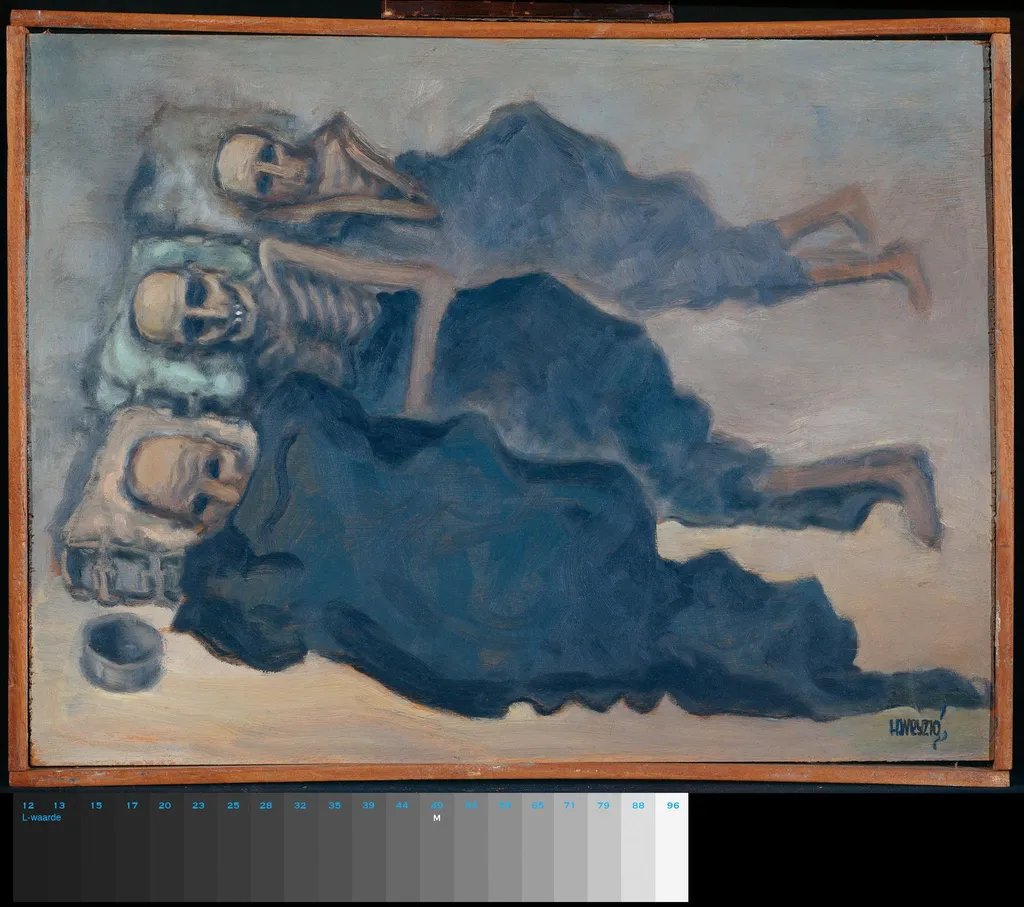
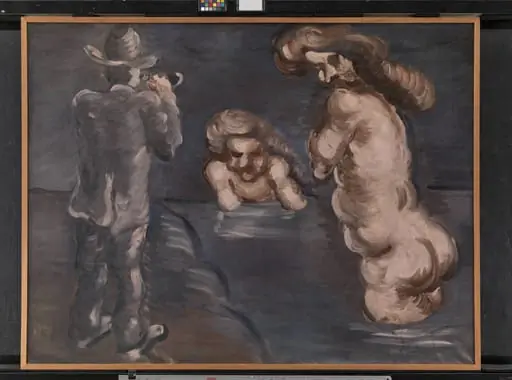
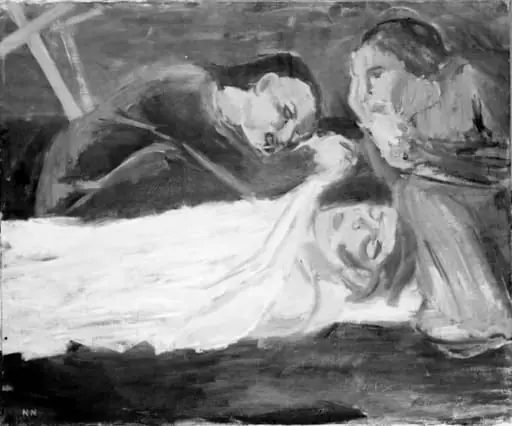
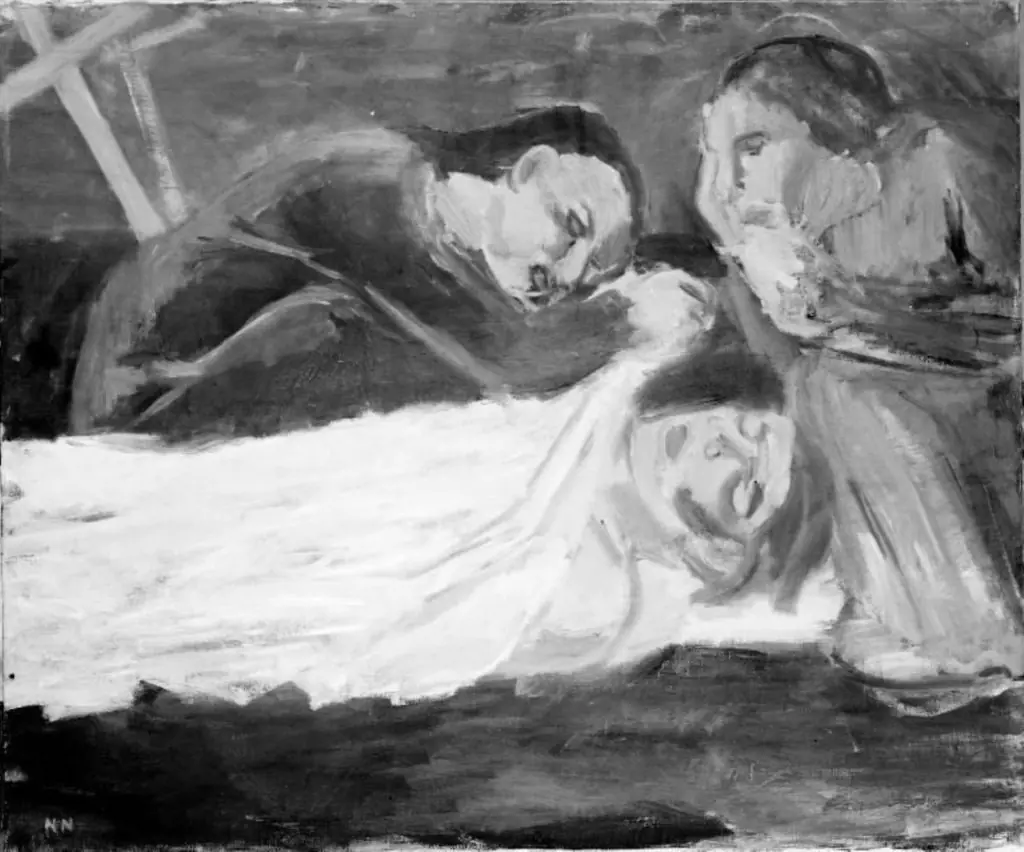
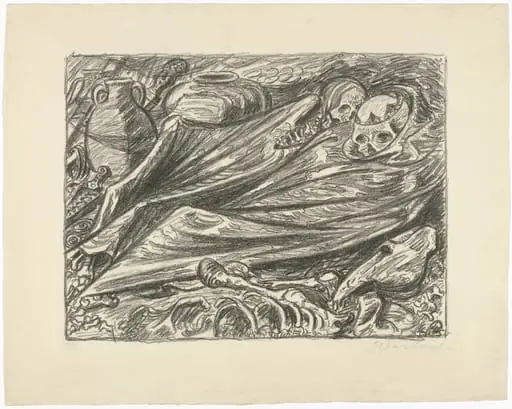
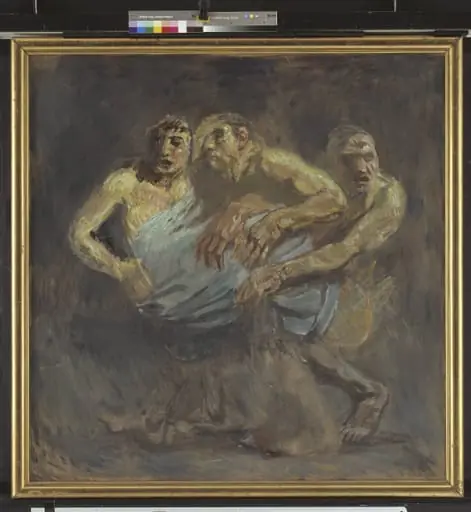
Untitled is an unspecified painting by the Art Brut artist Henk Weijzig. It dates from 1948 and is held in the collection of the Rijksmuseum.
About this work
Overview
A solitary painting from the immediate postwar period depicts a group of emaciated prisoners lying on the ground in a Japanese detention camp on Java.
A solitary painting from the immediate postwar period depicts a group of emaciated prisoners lying on the ground in a Japanese detention camp on Java. Created under dire conditions, the work was produced without formal materials, using whatever scraps were available. Its survival, hidden within the camp’s structure, suggests it was preserved as a silent testimony, not for display but for remembrance.
Subject & Meaning
The figures are rendered with stark simplicity: hollowed torsos, protruding ribs, and limp limbs convey extreme physical depletion. There is no narrative action, only stillness and exhaustion. The absence of identifiers, names, uniforms, or context, transforms the scene into a universal image of suffering, stripping away individuality to emphasize collective endurance under dehumanizing conditions.
Technique & Style
The painting employs a restrained palette and loose, urgent brushwork, likely using diluted pigments from limited supplies. Forms are suggested rather than detailed, with emphasis on contour and shadow to evoke volume beneath skin. The composition is horizontal and unadorned, mirroring the prisoners’ helplessness and the barrenness of their environment.
History & Provenance
Made in the Changi prison camp on Java shortly after Japan’s surrender, the work was concealed within the camp’s architecture, possibly to avoid destruction or confiscation. Its creator remains unidentified, likely one of the Allied prisoners held there. It resurfaced decades later, having survived neglect and the passage of time, now held in a public collection.
Context
The painting emerged from a system of forced labor and starvation in Japanese-run camps across Southeast Asia. Art-making under such conditions was rare and dangerous; materials were scarce, and expression could invite punishment. This work stands as an exception, created not for propaganda or morale, but as a quiet, unvarnished record of survival.
Legacy
As one of few surviving visual records made by prisoners in these camps, the painting offers a direct, unmediated view of wartime suffering. It contributes to historical memory not through grandeur but through restraint, inviting reflection on the limits of human endurance and the quiet persistence of documentation under oppression.
Artist & collection