Artwork
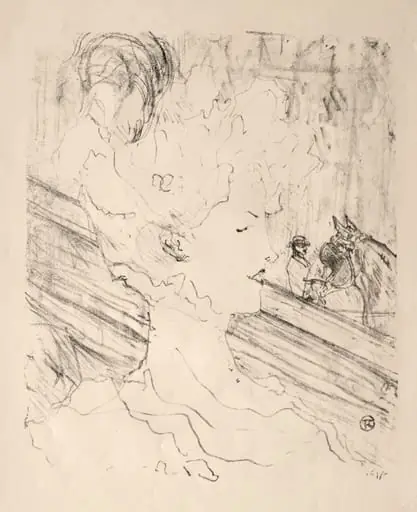
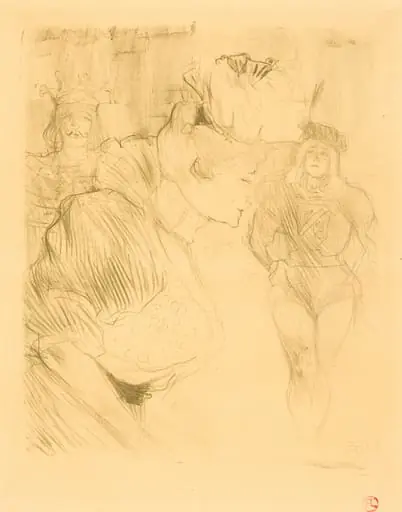
Entrée de Brasseur, dans Chilpéric
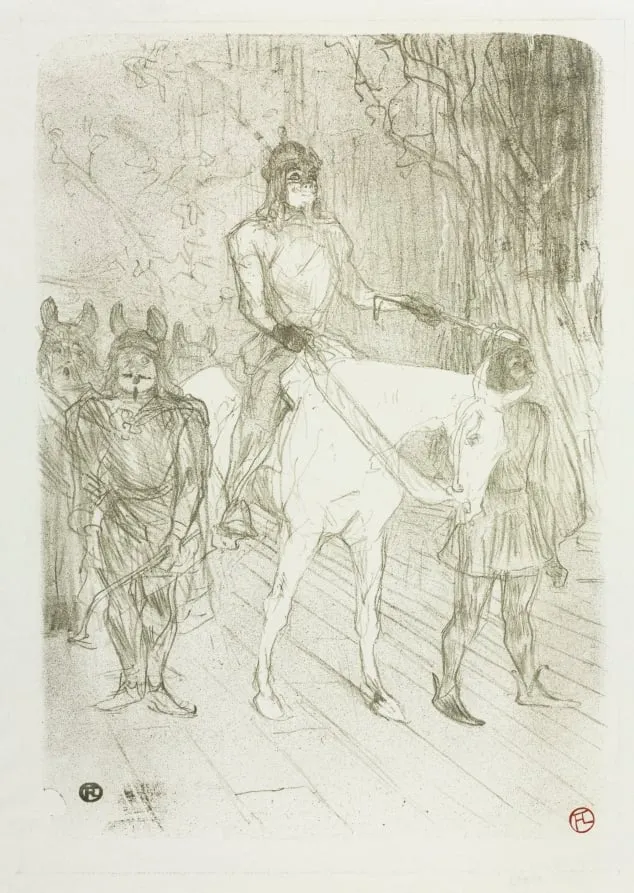
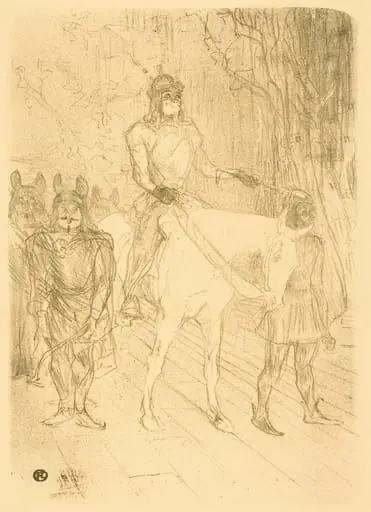
Entrée de Brasseur, dans Chilpéric is a print by the Impressionist artist Henri de Toulouse-Lautrec. It dates from 1895 and is held in the collection of the Cleveland Museum of Art.
- Accession no.
- 1962.110
- Credit line
- Gift of The Print Club of Cleveland
About this work
Overview
Created in 1895, this lithograph by Henri de Toulouse-Lautrec captures a moment from the operetta Chilpéric, composed by Hervé.
Created in 1895, this lithograph by Henri de Toulouse-Lautrec captures a moment from the operetta Chilpéric, composed by Hervé. It illustrates the entrance of the character Brasseur, a comedic figure on horseback, amid a theatrical ensemble. Toulouse-Lautrec, known for his intimate portrayals of Parisian entertainment, translated live performance into printed form, emphasizing motion and character over realism.
The work reflects his deep involvement in the city’s cabaret and stage culture during the fin de siècle.
Subject & Meaning
The scene centers on Brasseur, a flamboyant character in costume, mounted on a white horse, flanked by two performers in animal suits and a fourth figure. The exaggerated costumes and theatrical staging underscore the operetta’s satirical tone. Toulouse-Lautrec, drawn to the absurd and the marginalized, uses this moment to highlight the performative nature of identity in Parisian nightlife.
The image is less a record of the play and more a study of spectacle and social role-playing.
Technique & Style
Toulouse-Lautrec employed lithography to achieve bold, fluid lines and vivid, flat areas of color. His brushwork is energetic, with simplified forms and strong contrasts that mimic the immediacy of stage lighting. Background elements like the tree trunk are rendered with minimal detail, directing focus to the figures.
The composition is dynamic, with diagonal lines and overlapping bodies enhancing the sense of movement, characteristic of his graphic approach to capturing fleeting moments.
History & Provenance
The print was produced as part of a series commissioned to promote the 1895 revival of Hervé’s Chilpéric at the Théâtre des Variétés in Paris. Toulouse-Lautrec was invited to create promotional materials, resulting in several lithographs of key scenes. This particular image was distributed to the public and likely displayed in theater lobbies.
Its survival in museum collections today reflects its role as both advertising and artistic documentation of a transient cultural moment.
Context
In 1890s Paris, operettas like Chilpéric blended satire, music, and spectacle, appealing to a broad public. Toulouse-Lautrec, an outsider due to his physical condition and aristocratic background, found affinity in these spaces where social norms were suspended. His prints captured the energy of venues often dismissed as vulgar, elevating them through keen observation. This work sits within a broader movement that blurred lines between high art and popular entertainment.
Legacy
Toulouse-Lautrec’s theatrical prints helped redefine lithography as a medium for modern expression, influencing later illustrators and graphic designers. His ability to distill performance into graphic form set a precedent for capturing ephemeral culture. While Entrée de Brasseur was originally promotional, it endures as a document of how art could engage with popular theater, not as mere illustration, but as a critical, stylistic commentary on spectacle itself.
Artist & collection
Artist
Comte Henri Marie Raymond de Toulouse-Lautrec-Montfa (24 November 1864 – 9 September 1901), known as Toulouse-Lautrec (French: ), was a French painter, printmaker, draughtsman, caricaturist, and illustrator.

 And Another Angel Came Out of the Temple which is in Heaven, and He also Having a Sharp Sickle
 Emilienne d'Alençon
 Untitled
 Untitled
 Study for a Scene from "Carnaval"
 Untitled
 Bareback Rider
 Twilight of the Gods, Act III: Sigfried and the Rhine Maidens
 Bird Men
 Lender Bowing (Lender saluant)
 Untitled
- Entrance of Brasseur in "Chilperic" (Entrée de Brasseur dans "Chilpéric")