Artwork
Émilie
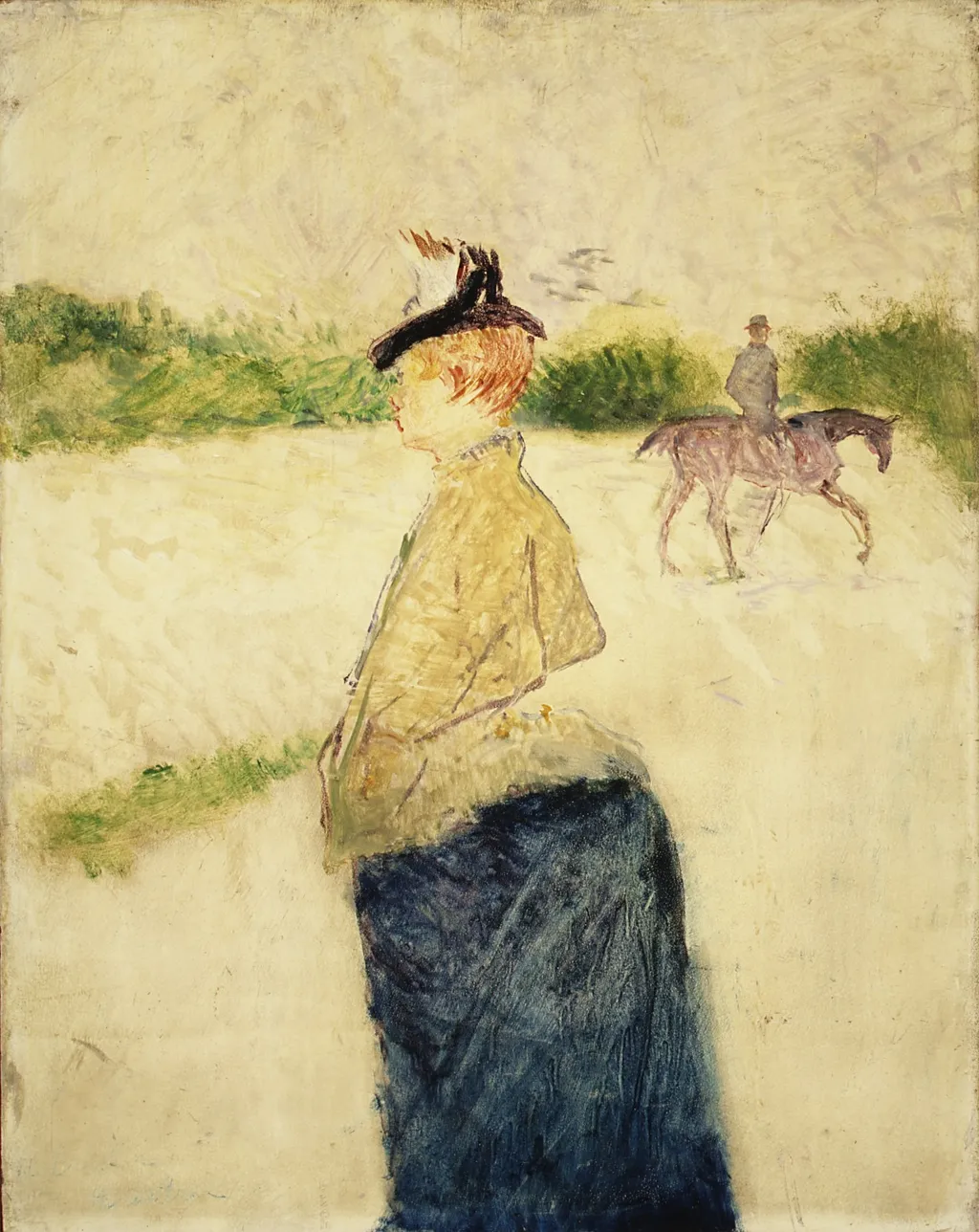
Émilie is an oil painting by the Post-Impressionist artist Henri de Toulouse-Lautrec. It dates from 1896 and is held in the collection of the Metropolitan Museum of Art.
About this work
Subject & Meaning
While the title identifies the subject as Émilie, the visual content centers on the interaction between the female rider and the male figure alongside her.
The painting depicts a woman engaged in equestrianism, accompanied by a man. Created by Henri de Toulouse-Lautrec in 1896, the work captures a riding scene, focusing on the figures within that context. While the title identifies the subject as Émilie, the visual content centers on the interaction between the female rider and the male figure alongside her.
The composition highlights horse riding as its primary narrative element, presenting the subjects in a moment defined by this shared pursuit, rendered in oil on panel.
Technique & Style
Émilie is an oil painting on a wooden panel, created in 1896 by Henri de Toulouse-Lautrec. The work, classified as a painting, was executed in oil paint and is housed in the Metropolitan Museum of Art. Its support is a panel, and the composition depicts a woman in an equestrian scene alongside a man, reflecting the artist's interest in contemporary Parisian subjects. Stylistically, the image combines clear linear outlines with a flattened spatial arrangement characteristic of Lautrec's approach.
History & Provenance
Created in 1896, the oil painting Émilie was executed by the French artist Henri de Toulouse-Lautrec on a panel support measuring 41.3 by 32.4 centimeters. Specific details regarding the original commission or the identity of the sitter are not provided in the available records. The work is held in the Metropolitan Museum of Art in New York as part of the museum's permanent collection.
No accession number or exhibition record is cited in the available sources, so the provenance is documented only through its inclusion in the museum's catalogue.
Overview
Henri de Toulouse-Lautrec’s 1896 oil on canvas, Émilie, captures a moment of equestrian activity. This painting exemplifies the Post-Impressionist period through its depiction of a man and woman in an outdoor setting. The work offers a glimpse into social life, a recurring theme in Lautrec's oeuvre, rendered with a distinctive approach to form and color.
Context
Born into an aristocratic French family in 1864, Henri de Toulouse-Lautrec's early life was marked by physical challenges that influenced his unique artistic viewpoint. His work often drew from his deep engagement with Parisian social life, particularly the vibrant nightlife and the lives of marginalized individuals. This personal context informed his choice to portray candid scenes of human interaction, whether in public spaces or more intimate settings.
Own this work as a print
Artist & collection
Artist
Comte Henri Marie Raymond de Toulouse-Lautrec-Montfa (24 November 1864 – 9 September 1901), known as Toulouse-Lautrec (French: ), was a French painter, printmaker, draughtsman, caricaturist, and illustrator.

- Stehende Dame zwischen Blumen
 La Place Clichy
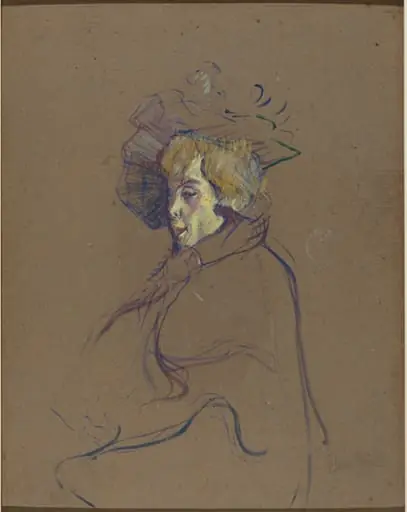 Jane Avril
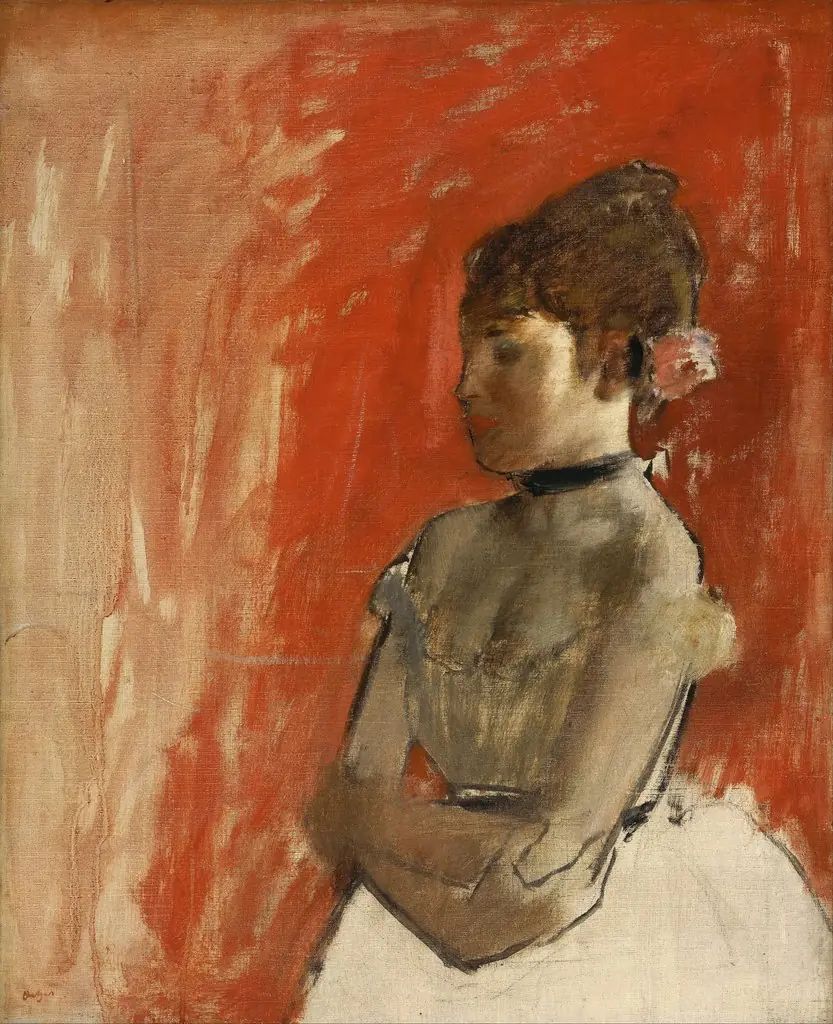 Ballet Dancer with Arms Crossed
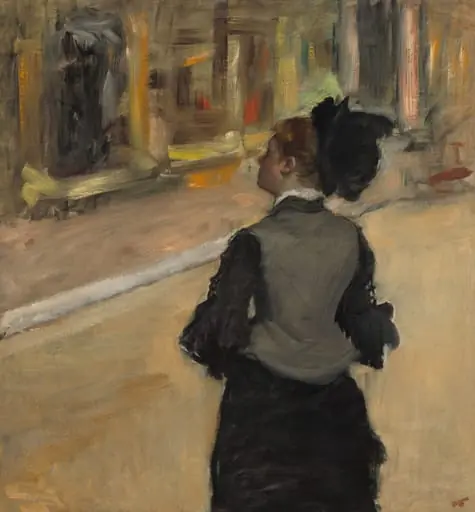 Woman Viewed from Behind (Visit to a Museum)
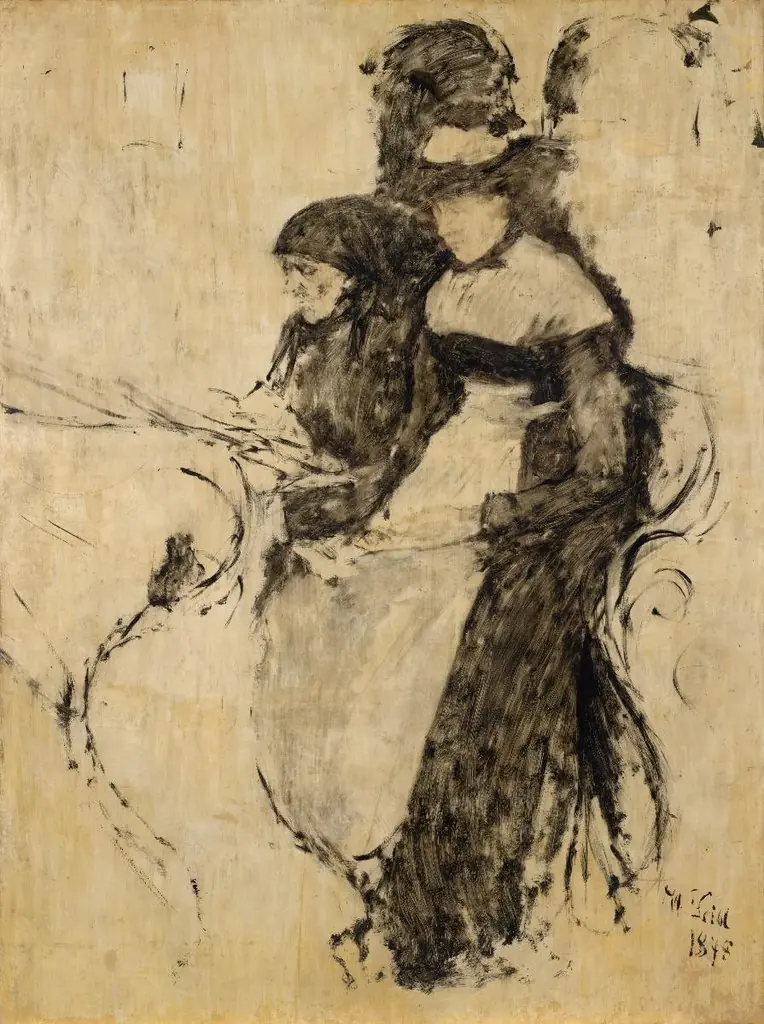 Zwei Frauen in der Kirche
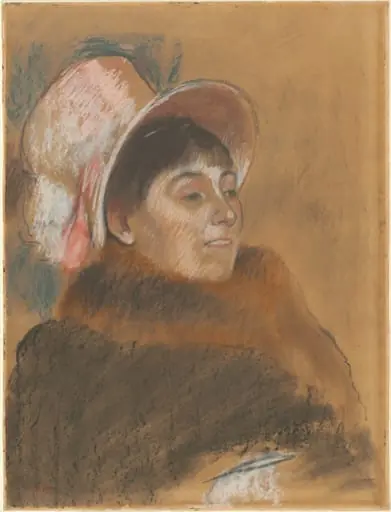 Madame Dietz-Monnin
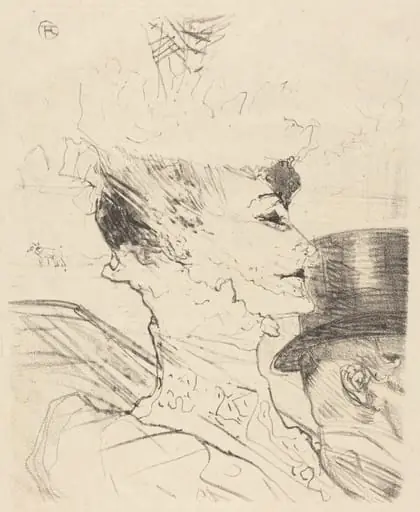 Yvette Guilbert?
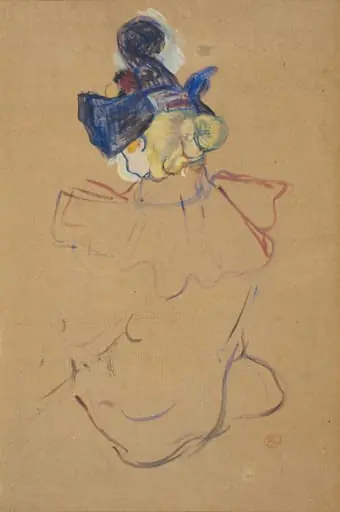 Seated Woman from Behind - Study for "Au Moulin Rouge"
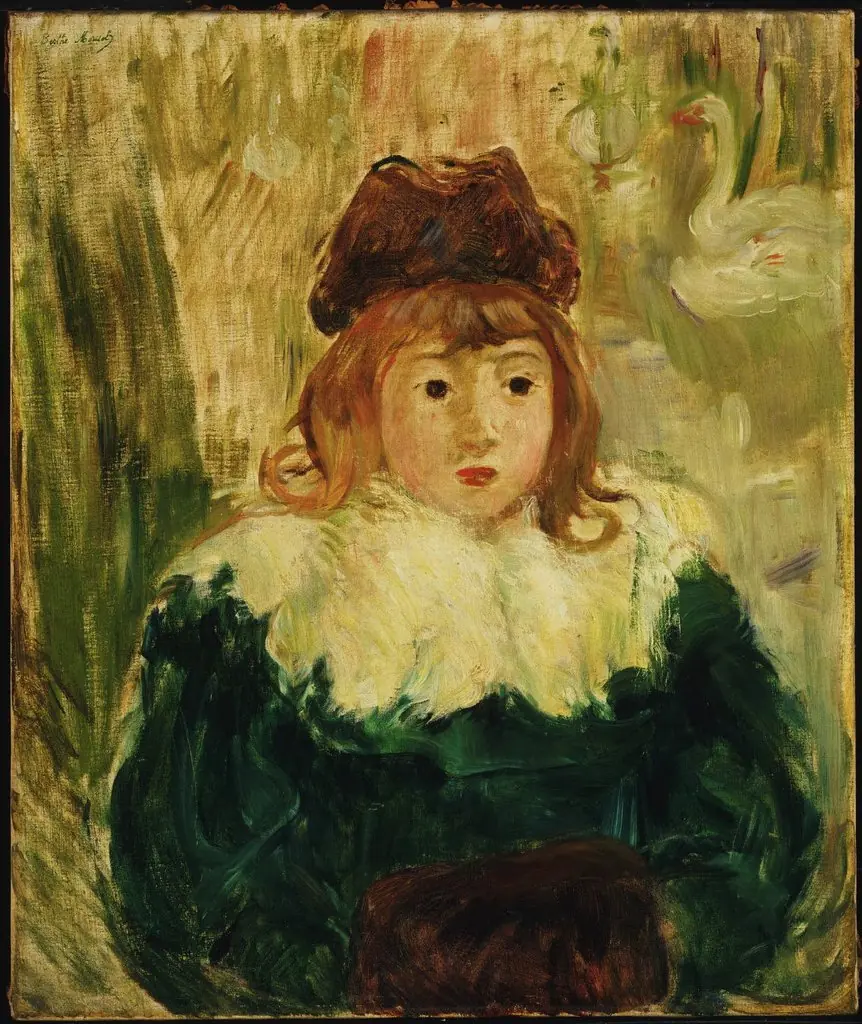 Portrait of a Child
 Vihreähiuksinen tyttö
 Childhood Memory. Outside the Gate