Artwork
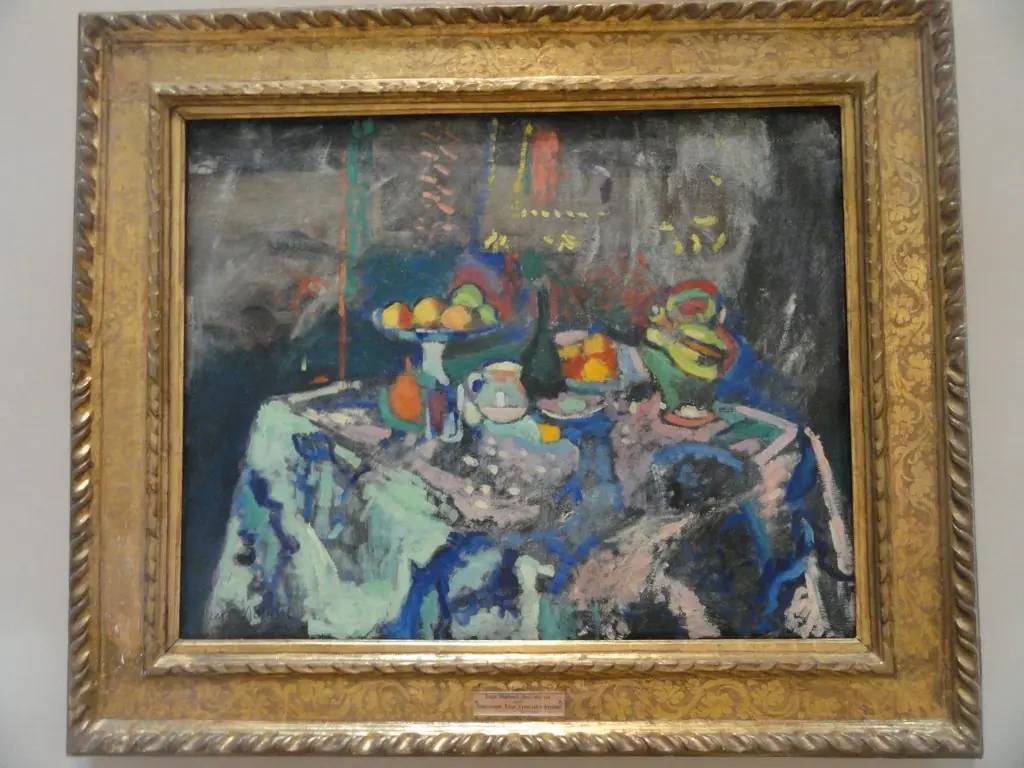
Seville Still Life
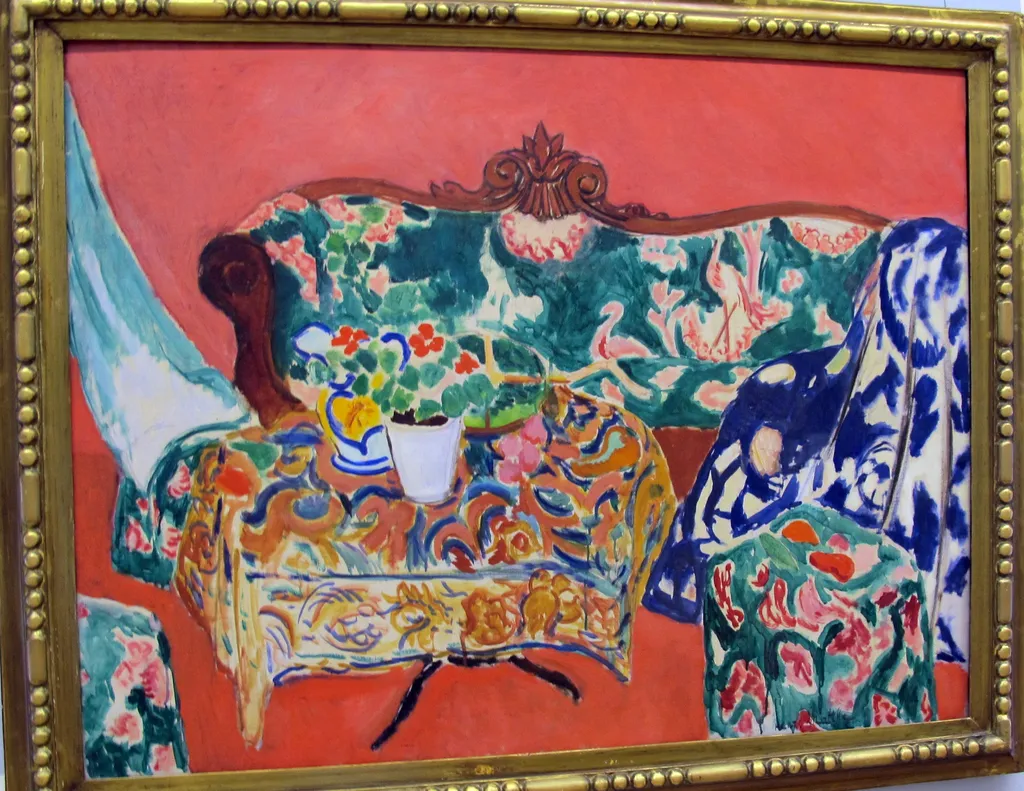
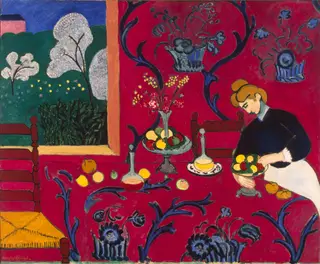
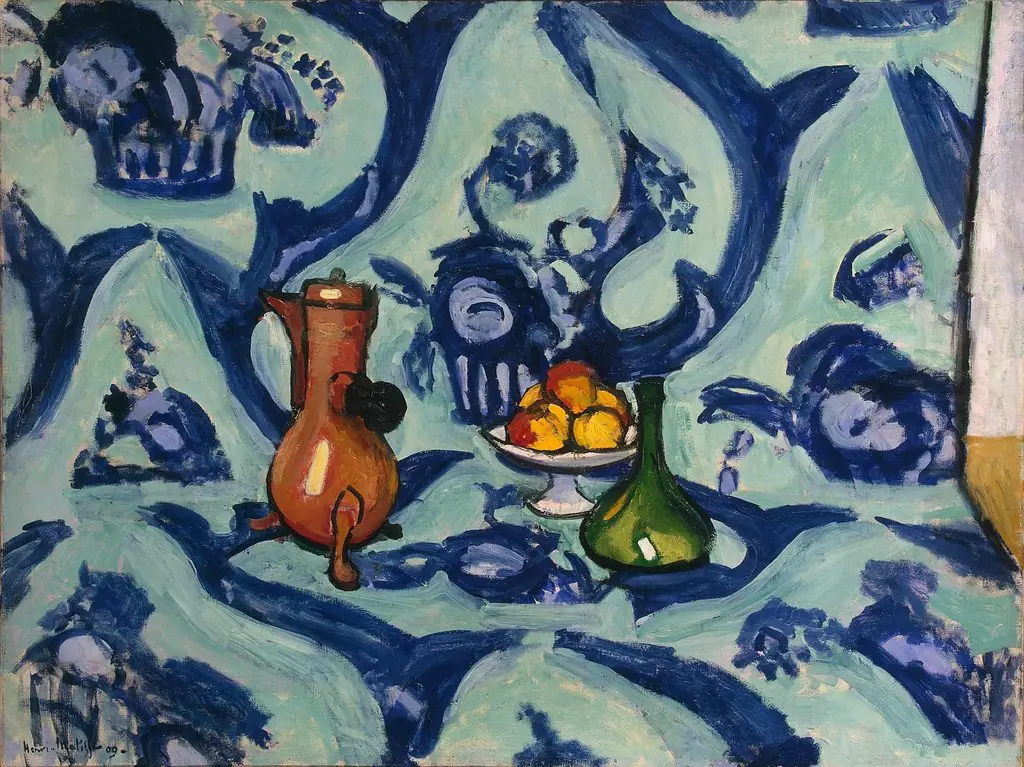
Seville Still Life is an oil painting by the Fauvist artist Henri Matisse. It dates from 1910 and is held in the collection of the Hermitage Museum.
About this work
Subject & Meaning
The painting presents a modest arrangement of domestic furnishings, a couch and a table, imbuing the scene with a quiet, domestic symbolism that reflects the everyday interior spaces of early 20th‑century French bourgeois life. Matisse’s choice of simple furniture and muted objects serves as a visual metaphor for stability and comfort, while the composition’s balanced geometry underscores a contemplative stillness that invites viewers to consider the subtle narratives hidden within ordinary household items.
Technique & Style
The painting is an oil on canvas work measuring 90 cm in height and 117 cm in width, depicting a couch and a table within a still life composition.
The painting is an oil on canvas work measuring 90 cm in height and 117 cm in width, depicting a couch and a table within a still life composition. It was created in France in 1910 and originally belonged to Sergei Shchukin before entering the collection of the Hermitage Museum. The piece exemplifies Matisse's approach to still life through its arrangement of domestic furnishings rendered in oil paint.
History & Provenance
Seville Still Life was created by Henri Matisse in 1910 in France, executed in oil paint on canvas. The painting was once owned by the Russian collector Sergei Shchukin before entering the holdings of the Hermitage Museum, where it is currently held. The work measures 90 by 117 centimeters and is classified as a still life depicting a couch and table.
Henri Matisse's Seville Still Life, painted in 1910, is currently held in the collection of the Hermitage Museum in Saint Petersburg. The work was originally owned by the collector Sergei Shchukin before entering the museum's holdings. While the painting is documented as part of the Hermitage's permanent collection, the provided sources do not list a specific inventory or accession number for the piece. Additionally, the available records do not contain information regarding a specific exhibition history for this artwork.
Legacy
Henri Matisse's Seville Still Life (1910) entered the collection of Russian textile magnate Sergei Shchukin, whose avant-garde holdings helped disseminate Matisse's decorative innovations among early‑20th‑century Russian collectors. The work's compositional balance and vivid coloration influenced subsequent Russian still‑life painters who adopted similar flattened spatial arrangements and patterned surfaces. After Shchukin's nationalization of his collection, the painting entered the Hermitage Museum, where it remains on public view and continues to be referenced in scholarly discussions of Matisse's role in shaping modern still‑life aesthetics.
Overview
Created in 1910, Henri Matisso’s Seville Still Life is an oil painting that belongs to the Fauvist period of his career. The work is part of the collection of the State Hermitage Museum, where it is displayed among other early‑twentieth‑century pieces.
Context
Seville Still Life emerges at a time when Matisse and his contemporaries were redefining color’s role in painting. The work’s bold palette and simplified forms align with the broader Fauvist aim to convey emotional intensity rather than precise realism, marking a shift in European visual culture.
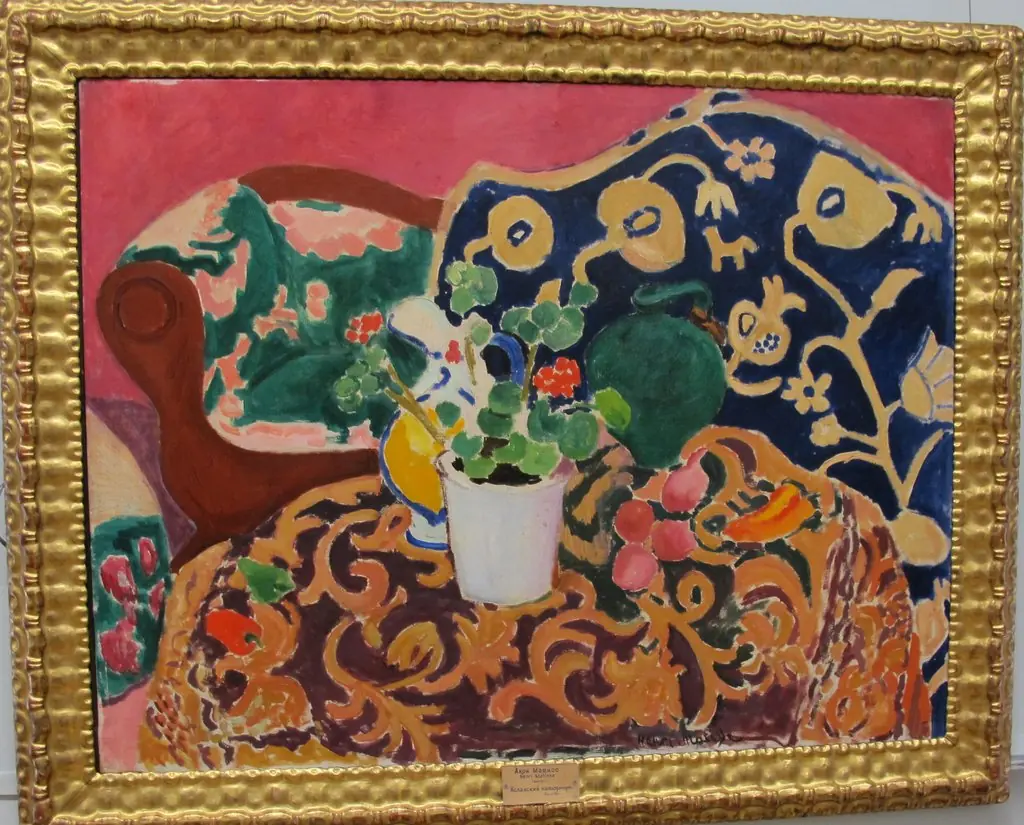
Artist & collection
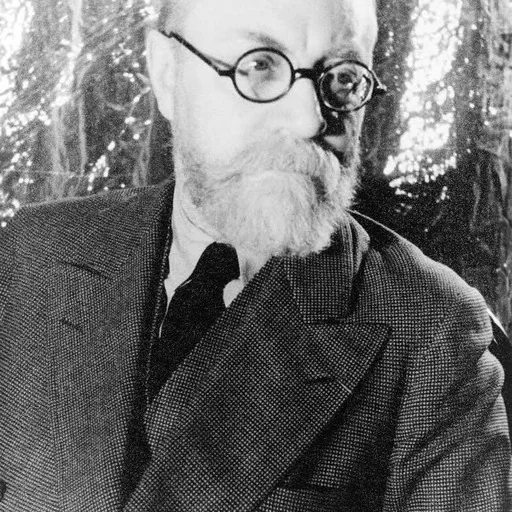
Artist
Henri Émile Benoît Matisse (French:; 31 December 1869 – 3 November 1954) was a French visual artist, known for both his use of colour and his fluid and original draughtsmanship.