Artwork
The Moorish Screen
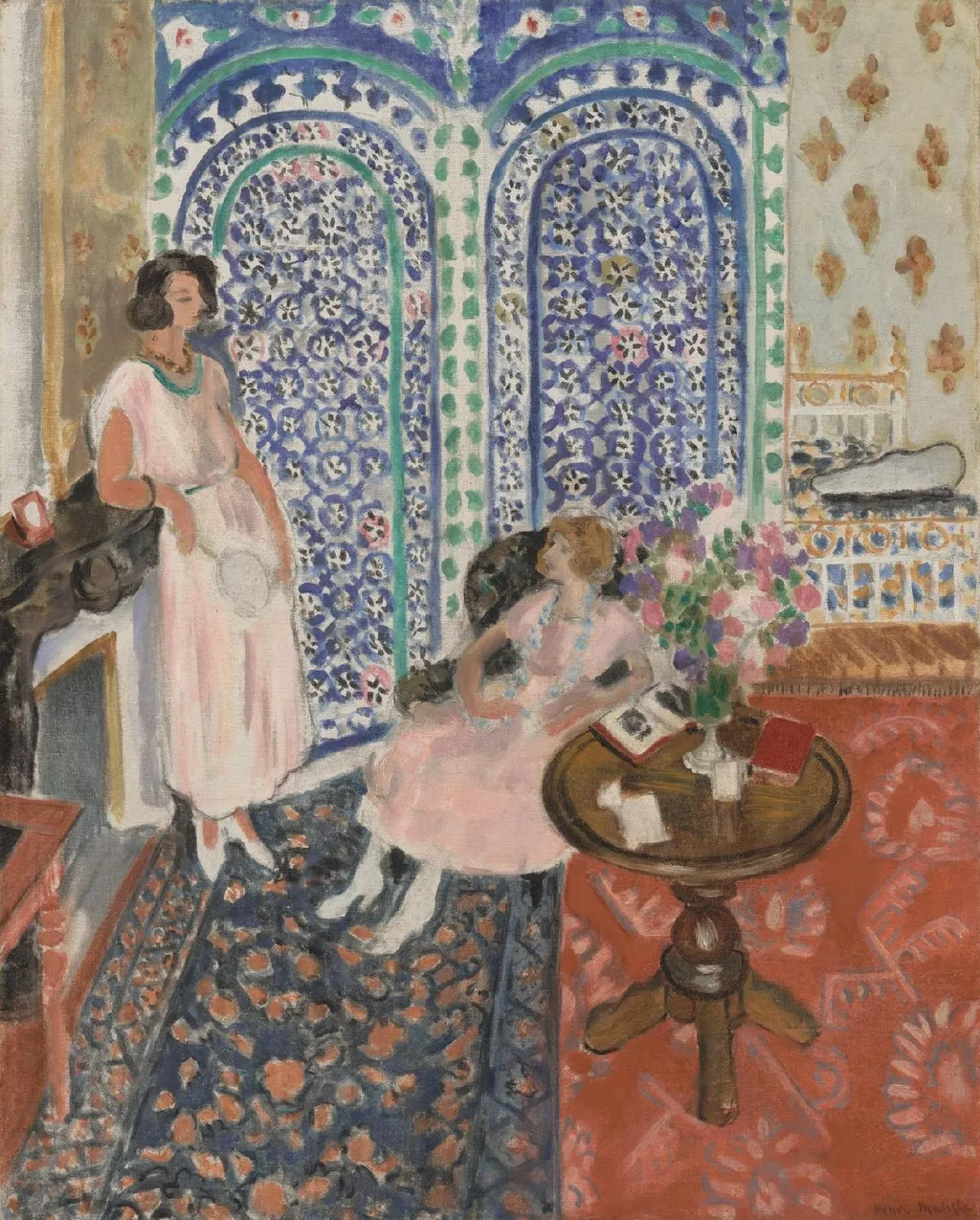
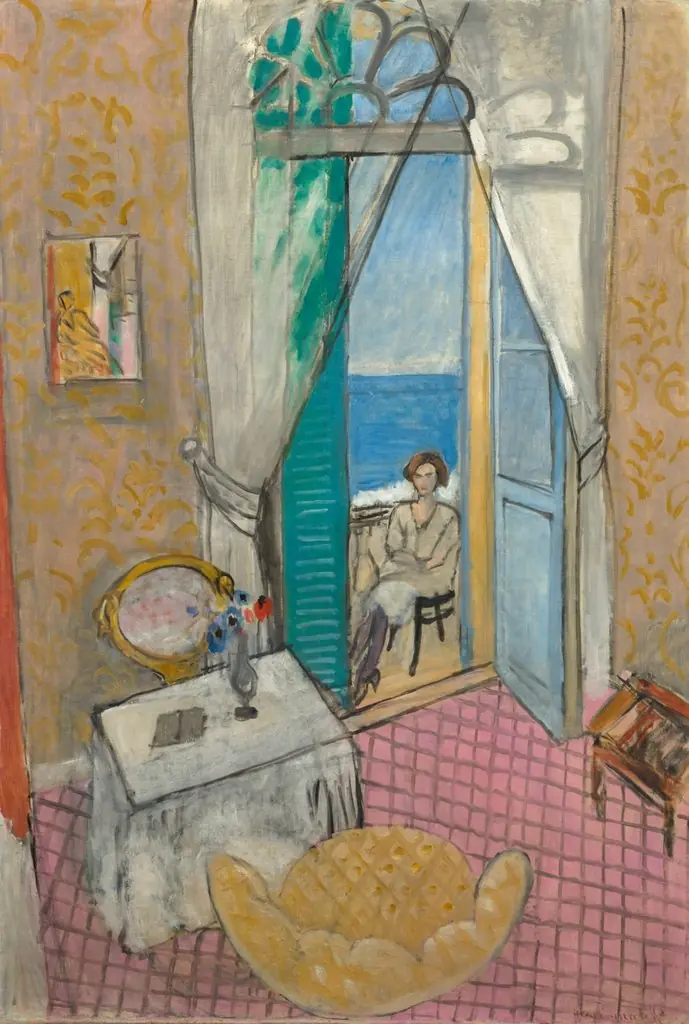
The Moorish Screen is an oil painting by Henri Matisse. It dates from 1921 and is held in the collection of the Philadelphia Museum of Art.
About this work
Overview
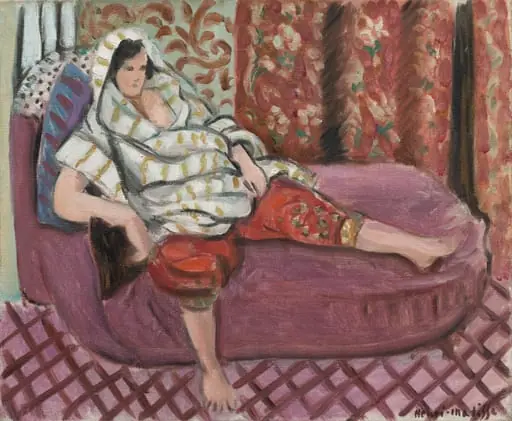
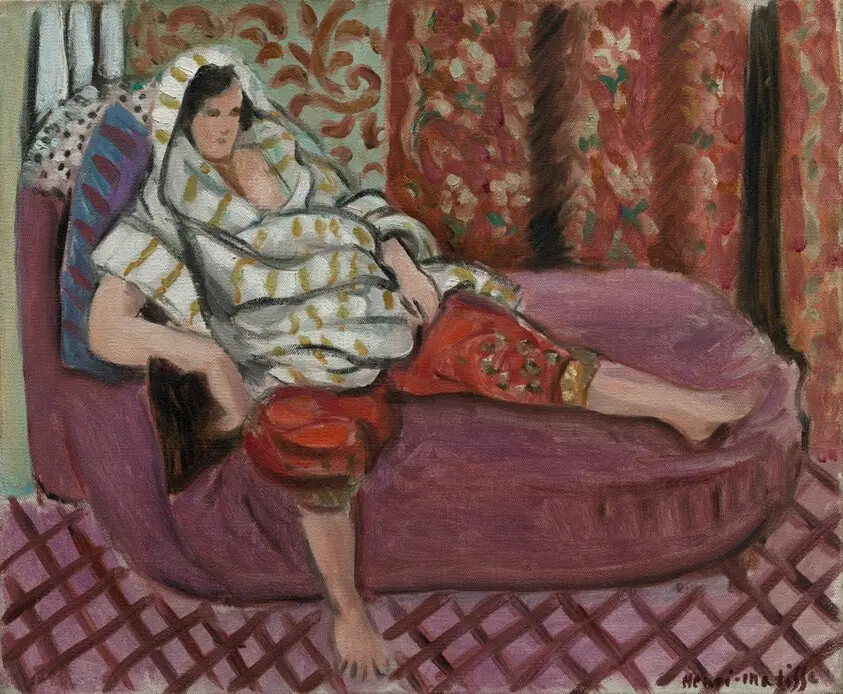
Created in 1921, Henri Matisse’s oil painting titled The Moorish Screen presents an interior scene that balances decorative detail with a quiet domestic narrative. The work is part of the Philadelphia Museum of Art’s collection and exemplifies the artist’s ongoing exploration of color, pattern, and spatial composition during the early post‑war period.
Subject & Meaning
The composition features two women within a richly appointed room. One figure stands beside a fireplace, while the other is seated on a chair surrounded by flowers and an open book. A large, ornately patterned screen with blue‑and‑white motifs dominates the background, lending the setting an air of refined elegance and hinting at the influence of Moorish decorative arts.
Technique & Style
Matisse employs a bold palette and flattened geometric forms, characteristic of his modernist approach. The painting’s surface reveals a layered glazing technique that intensifies the luminous blues and warm earth tones, while the crisp outlines of the figures and furnishings underscore his distinctive drawing style.
History & Provenance
After its completion, The Moorish Screen entered the market and was eventually acquired by the Philadelphia Museum of Art, where it remains on view. The work reflects Matisse’s position among early‑20th‑century innovators, alongside contemporaries such as Pablo Picasso, who were reshaping the conventions of painting and sculpture.
Artist & collection

Artist
Henri Émile Benoît Matisse (French:; 31 December 1869 – 3 November 1954) was a French visual artist, known for both his use of colour and his fluid and original draughtsmanship.