Artwork
Almée
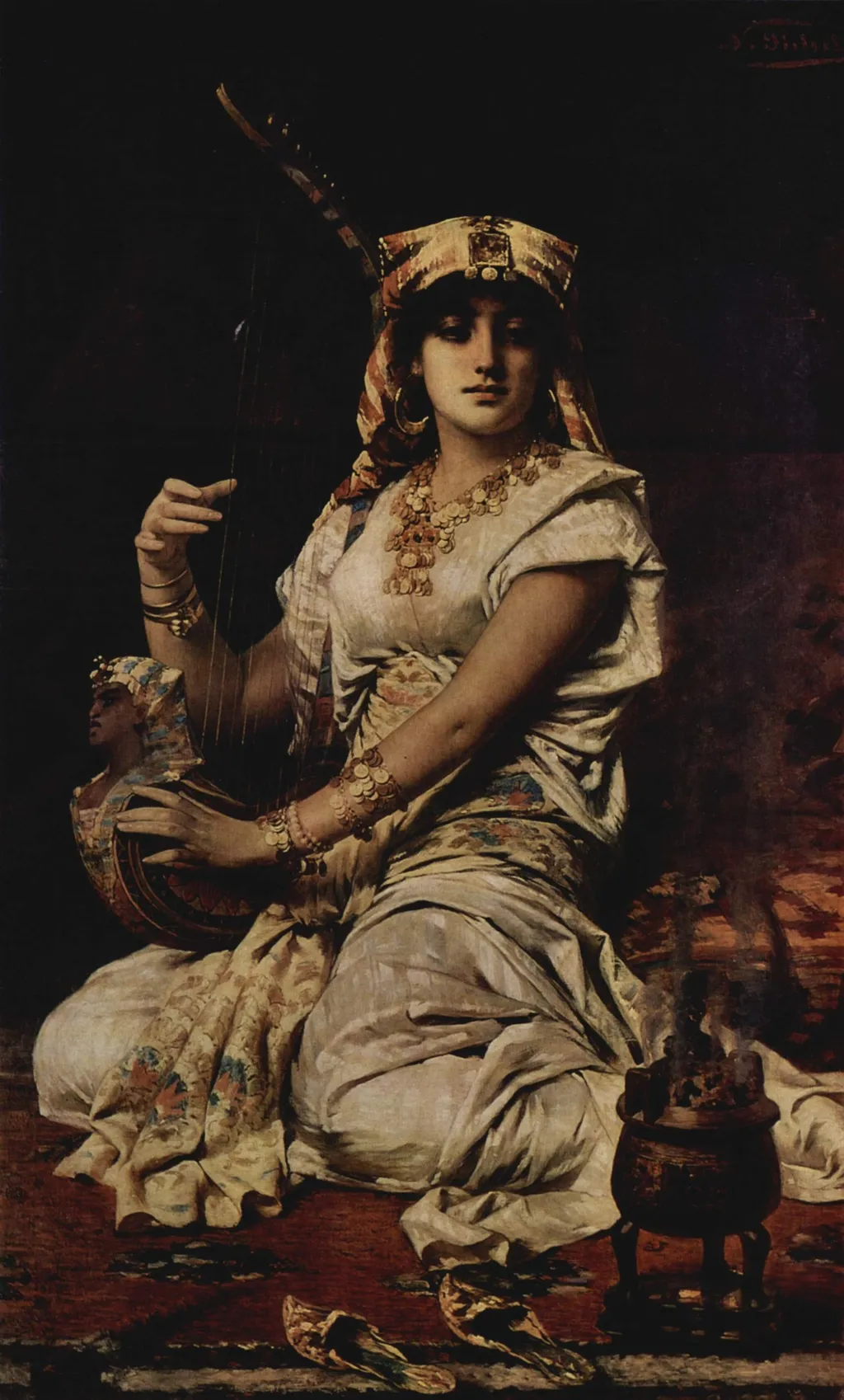
Almée is an oil painting by the Orientalist artist Nathaniel Sichel. It dates from 1500 and is held in the collection of the Hermitage Museum.
About this work
Subject & Meaning
The composition therefore functions symbolically as an emblem of the imagined sensuality and mystique of the Oriental world, rather than a realistic portrait.
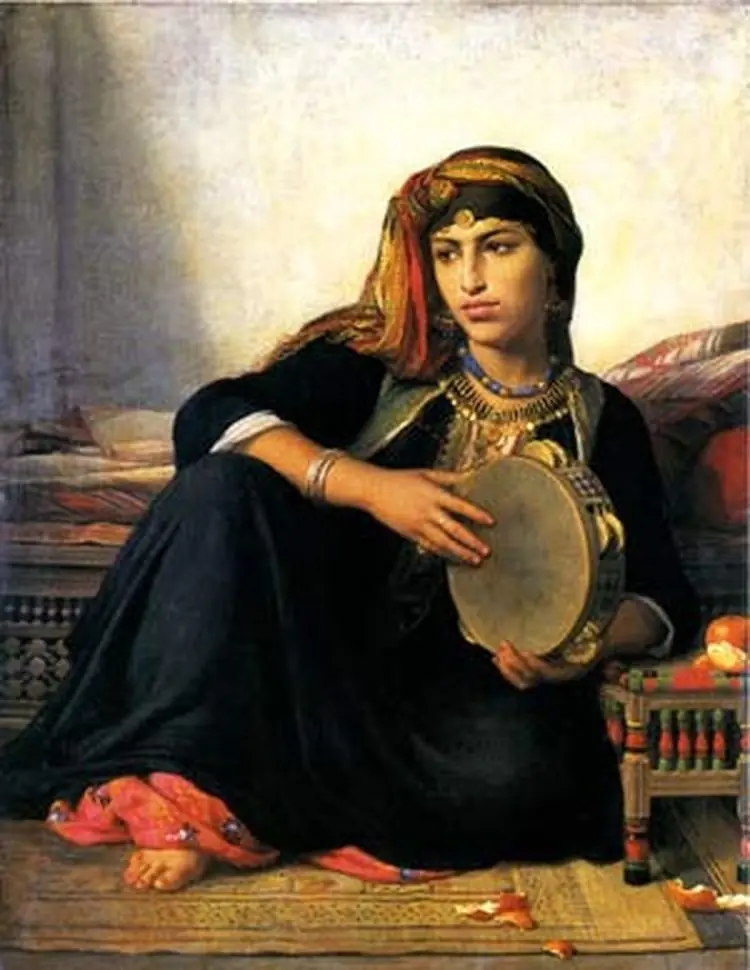
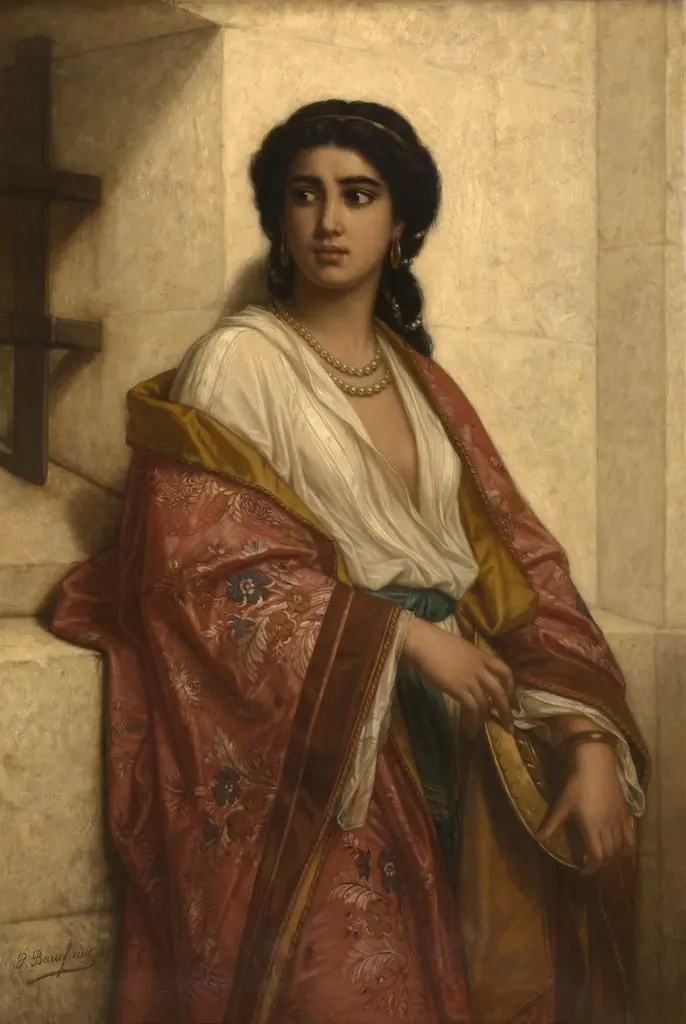
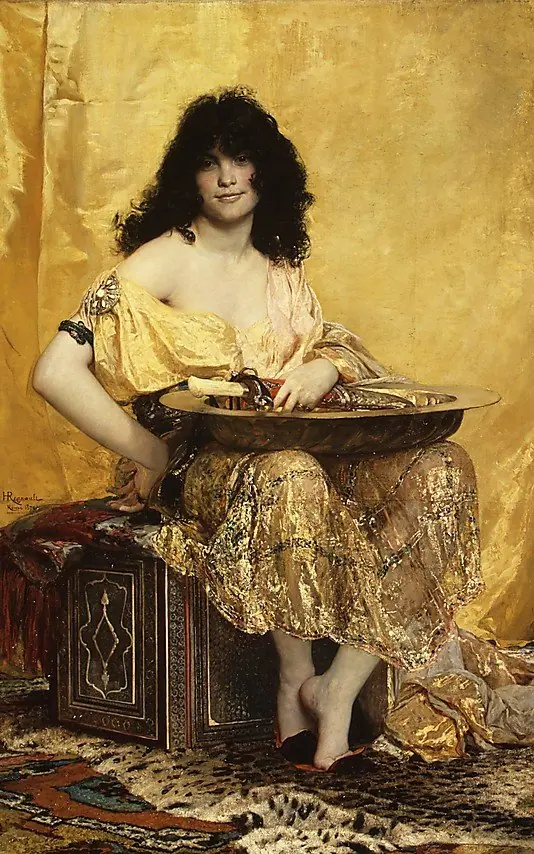
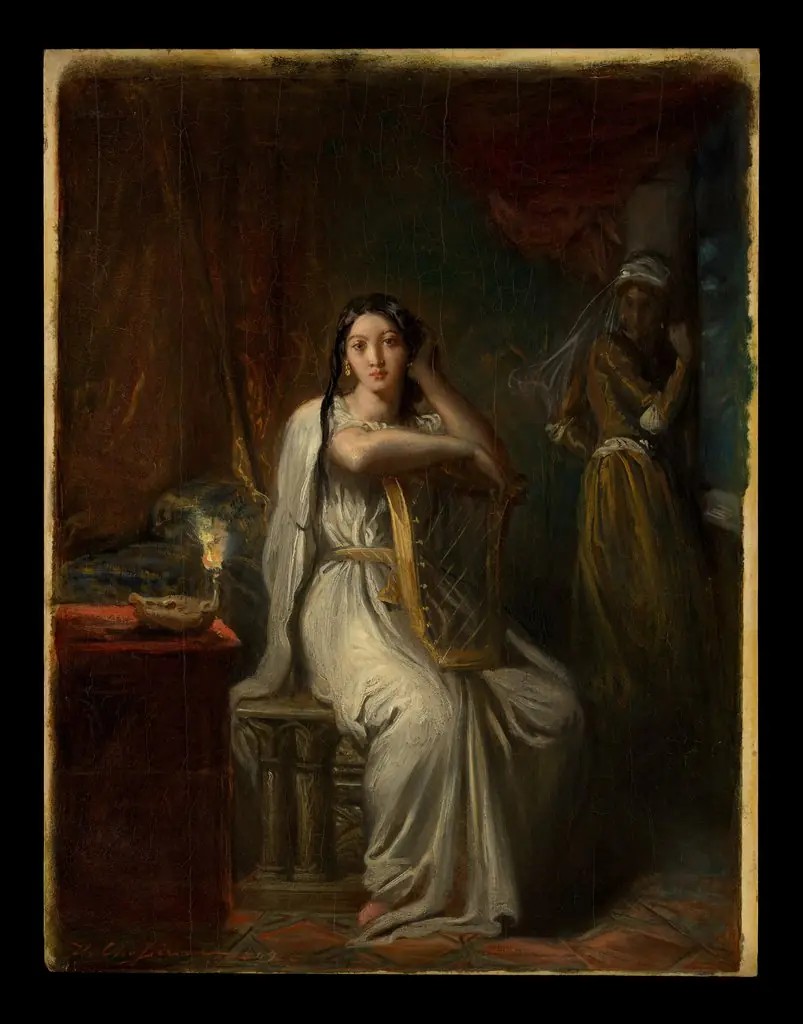
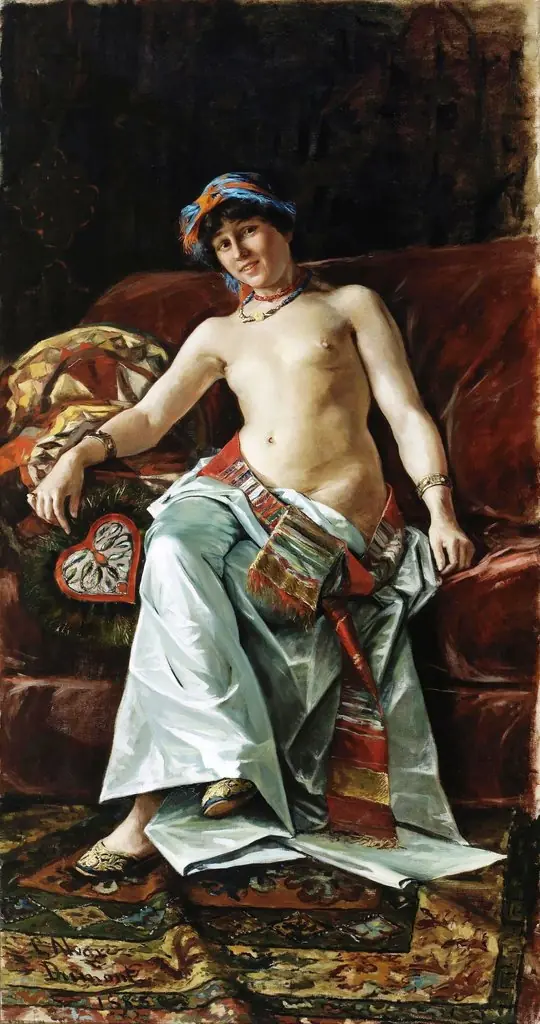
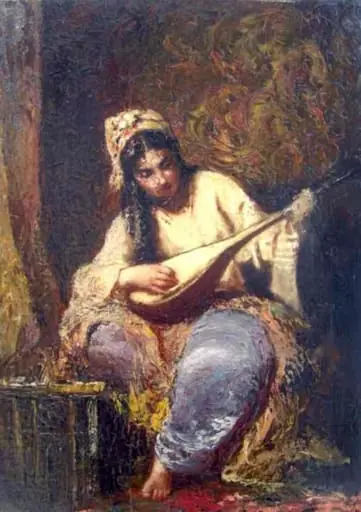
The painting portrays a young woman identified as an Almeh, a court entertainer associated with Ottoman culture. She is rendered with black hair, a single earring, a bracelet, and holds a harp while a brasero and draped fabrics appear in the background, all details noted in the catalog entry. These attributes, together with the work’s classification as an Orientalist portrait, signal a European fascination with exoticized Eastern femininity.
The composition therefore functions symbolically as an emblem of the imagined sensuality and mystique of the Oriental world, rather than a realistic portrait.
Technique & Style
Executed in oil paint on canvas, this portrait measures 153 cm in height and 93 cm in width. The work exemplifies the Orientalist movement through its depiction of an Almeh, characterized by specific formal elements such as flowing drapery and the inclusion of a harp and brasero. The subject is rendered with distinct features, including black hair and jewelry like earrings and bracelets, which contribute to the painting's detailed stylistic approach.
These material and compositional choices anchor the piece within the genre of portraiture while highlighting the artist's focus on exoticized domestic scenes.
History & Provenance
Almée is an oil‑on‑canvas portrait painted by Nathaniel Sichel around 1500. The painting measures 153 × 93 cm and portrays a woman identified as an Almeh, adorned with a black braid, earring, harp, and bracelet. Its subject reflects the Orientalist fascination with Middle‑Eastern performers in early‑modern art.
The work was created in the early 16th century and subsequently entered the Hermitage Museum’s collection, where it remains on display. No documentary record of its original commission survives, but the painting’s provenance is documented through its acquisition by the museum.
The painting Almée by Nathaniel Sichel is held in the collection of the State Hermitage Museum in Saint Petersburg, Russia.
It is inventoried under accession number ЭРЖ-1500-1. The work was included in the museum’s permanent Orientalist galleries, where it has been displayed since at least the mid-20th century.
Overview
Nathaniel Sichel's oil painting, Almée, is a portrait housed at the State Hermitage Museum. Created as part of the Orientalism movement, the artwork depicts a woman in a stylized Eastern setting. The central figure, often identified as an "Almeh" or female entertainer, is shown poised with a musical instrument, embodying a romanticized vision of the Middle East prevalent in 19th-century European art.
Context
The artwork is a product of the Orientalism movement, a significant trend in European art during the 19th century. This movement involved artists creating depictions of North Africa and the Middle East, often romanticizing or exoticizing their subjects. Sichel's portrayal of the Almeh aligns with this artistic tradition, presenting a specific Western interpretation of an Eastern entertainer rather than an authentic cultural representation.
Own this work as a print
Artist & collection