Artwork
Bodmer und Füssli vor der Büste Homers
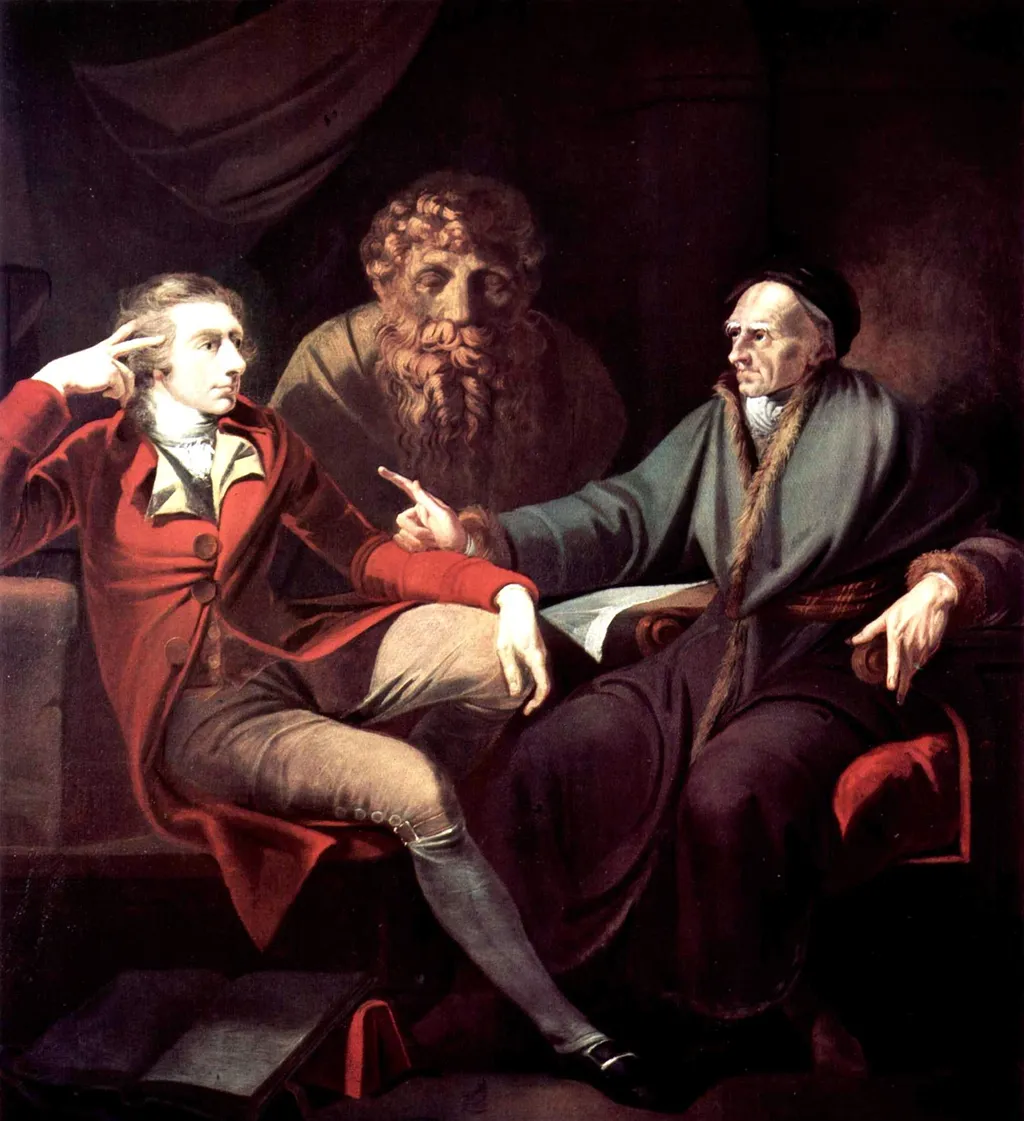
Bodmer und Füssli vor der Büste Homers is an oil painting by the Neoclassicist artist Henry Fuseli. It dates from 1790 and is held in the collection of the Kunsthaus Zürich.
About this work
Overview
The work is held by the Kunsthaus Zürich, where it entered the collection and remains today.
Bodmer und Füssli vor der Büste Homers (Bodmer and Füssli before the Bust of Homer) is an oil on canvas painted by the Swiss artist Henry Fuseli between 1778 and 1780. Measuring 163 by 150 centimetres, this double portrait, which also functions as a self-portrait and genre scene, depicts the young Fuseli alongside his former teacher Johann Jakob Bodmer in contemplative dialogue before an imposing sculptural bust. The work is held by the Kunsthaus Zürich, where it entered the collection and remains today. Painted during a pivotal period in Fuseli's early development, the canvas bridges the artist's intellectual apprenticeship and his emerging poetic vocation, offering a rare documented image of the relationship between pupil and mentor that shaped Fuseli's trajectory toward Romanticism.
Subject & Meaning
The painting presents two seated male figures flanking a large bearded bust set against a dark background. On the left, Fuseli himself wears a bright red coat with light breeches and dark stockings, legs crossed, right hand touching his temple in a gesture of thought. On the right, the elder Bodmer is clad in a fur-trimmed blue-gray robe over dark garments and a black cap, his right hand extended over an open book upon his lap. The bust between them has traditionally been identified as Homer, characterised by closed eyes and a long beard, and its presence may connect to Bodmer's recent translation of the Odyssey into German. Some scholars have alternatively proposed Plato, which would underscore the pedagogical character of the scene. The sculpture's disproportionate scale, its head larger than those of the living men, serves to monumentalise literary and philosophical tradition. Bodmer converses with animated hand gestures, yet Fuseli does not meet his gaze nor look at the bust; instead his eyes are lost in distant absorption, suggesting interior creative vision rather than direct dialogue. A book lies on the floor near Fuseli's feet, reinforcing the atmosphere of studious reflection. The dark draped curtain in the upper left further frames this as an intimate, cerebral chamber.
Technique & Style
Executed in oil on canvas, the painting displays the smooth, polished brushwork characteristic of Fuseli's early manner, with careful modelling of fabrics and flesh. The palette is dominated by deep reds, browns, and muted blues set against a nearly black background. Strong chiaroscuro illuminates the faces, hands, and marble bust while plunging the surroundings into shadow, creating dramatic focus on the human and sculptural elements. This handling of light demonstrates Fuseli's command of Baroque-derived techniques even as the psychological intensity and the dreamlike withdrawal of the artist's own figure anticipate his later Romantic preoccupations. The surface condition and precise conservation status are not documented in the available sources, though the visual record indicates a well-preserved work with subtle tonal gradations.
History & Provenance
The painting was created between 1778 and 1780, during Fuseli's return to Zurich after formative years in London and before his definitive move to Rome in 1779. It captures a moment of intellectual retrospect, painted when the artist was in his late thirties and already distanced from Bodmer's direct tutelage favoured decades earlier at the Collegium Carolinum in Zurich. The work is now in the collection of the Kunsthaus Zürich, having been accessioned to the museum where it remains on public view. The French and Italian Wikipedia entries both cite the standard Fuseli literature, including Peter Tomory's The Life and Art of Henry Fuseli (1972, catalogue number 7, page 50) and Gert Schiff's Johann Heinrich Füssli 1741-1825 catalogue raisonné (1973, number 366, page 81), which confirm its place in the scholarly record. Exhibition history beyond its permanent installation at the Kunsthaus is not specified in the provided sources.
Context
Fuseli's portrayal of himself with Bodmer before the bust of Homer (or Plato) situates the work at the intersection of several traditions: the double portrait, the artist's self-portrait, the genre scene of philosophical conversation, and the homage to classical antiquity. Bodmer had been a decisive intellectual influence on the young Fuseli, introducing him to Milton, Shakespeare, and the critical reassessment of Homer that animated eighteenth-century German letters. The painting has been interpreted as an autoritratto come filosofo, a self-portrait in the guise of philosopher, signalling Fuseli's aspiration to unite visual art with poetic and intellectual ambition. Scholarly attention, including Orietta Rossi Pinelli's 1997 monograph, has emphasised how the work constitutes a link between the painter's intellectual initiation and the poetic path he subsequently chose. The alternative identification of the bust as Plato, noted in Italian and Spanish scholarship, reflects ongoing debate about whether the painting prioritises literary tradition (Homer) or philosophical pedagogy (Plato).
Legacy
While not among Fuseli's most widely reproduced works, Bodmer und Füssli vor der Büste Homers holds significance as a document of the artist's self-fashioning and of a key relationship in Swiss-German cultural history. It offers insight into how Fuseli wished to be seen: not merely as a painter but as a thinker in dialogue with the grand traditions of epic poetry and philosophy. The painting's afterlife has been primarily scholarly rather than popular, serving art historians as evidence of Fuseli's early style and his intellectual formation before the mature Romantic works for which he became famous, such as The Nightmare (1781). Its residence in the Kunsthaus Zürich ensures continued visibility within the institutional framework of Swiss national heritage, though its influence on subsequent artists or presence in broader cultural memory remains modest compared to Fuseli's more dramatic compositions.
Own this work as a print
Artist & collection
Artist
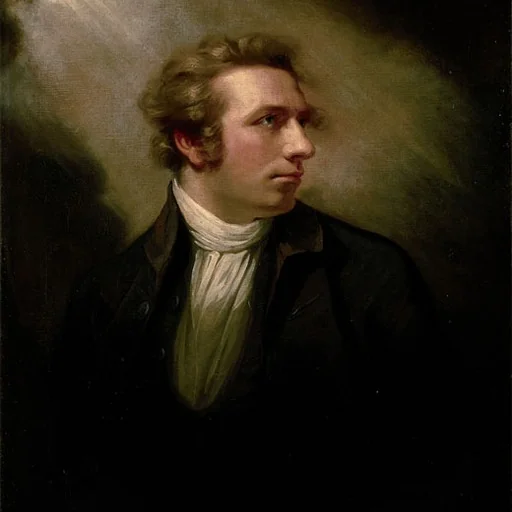
Henry Fuseli was a Swiss painter, draughtsman, and writer on art who spent much of his career in Britain.

- H Beard Print Collection
 Le glouton
 Hekserie eller blind Alarm, V. akt, 1. scene
 Habits des nobles (Dress of the Noblemen)
 Jean-Baptiste-François Durey de Meinières
 H Beard Print Collection
 Portrait of a Man
 Patrick Henry Delivering His Celebrated Speech in the House of Burgesses, Virginia
 Hekserie eller blind Alarm, V. akt, 1. scene
 Christian VII Uniting the Ducal with the Royal Part of Holstein in 1773
 Portrait de famille
 Le glouton