Artwork
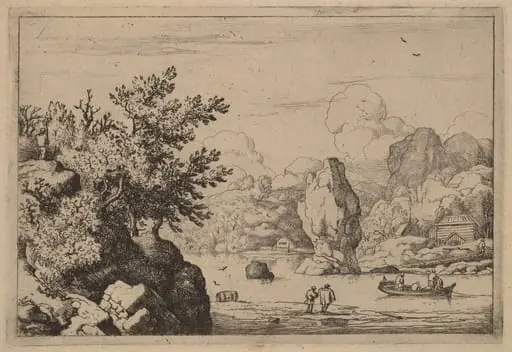
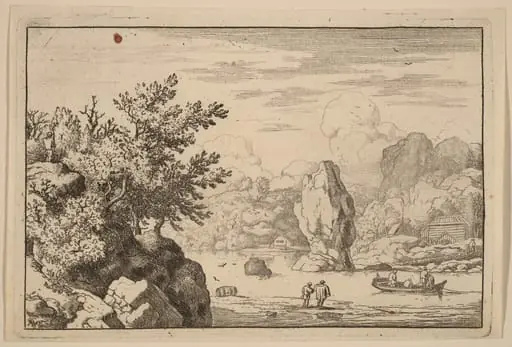
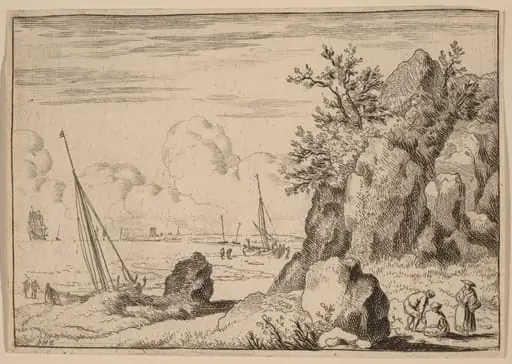
Two Boats moored under a rock
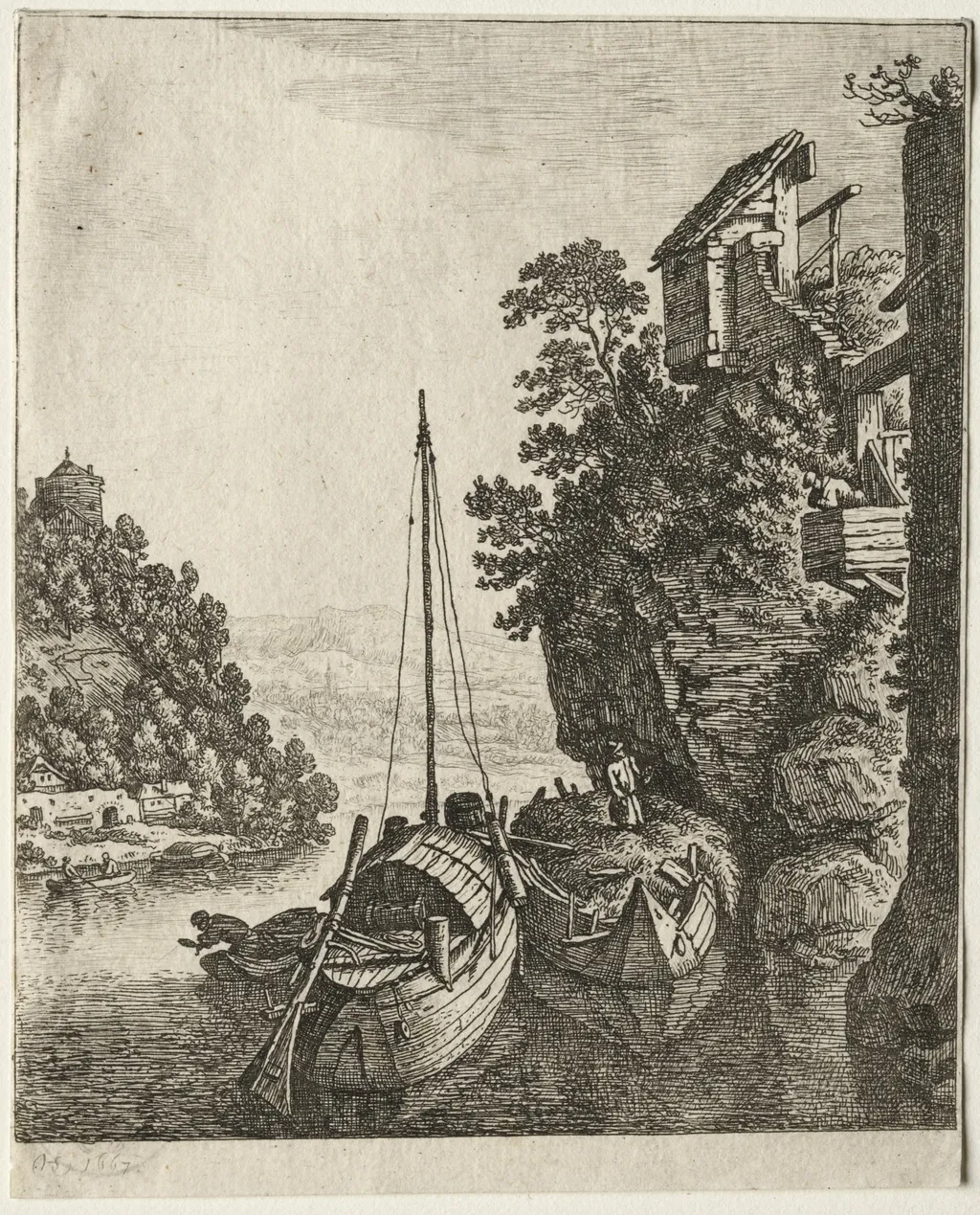
Two Boats moored under a rock is a print by the Baroque artist Herman Saftleven. It dates from 1667 and is held in the collection of the Cleveland Museum of Art.
- Accession no.
- 1943.618
- Credit line
- Mr. and Mrs. Lewis B. Williams Collection
About this work
Overview
Executed with precise engraving, the work belongs to a tradition of Dutch landscape prints that favor subtle observation over dramatic effect.
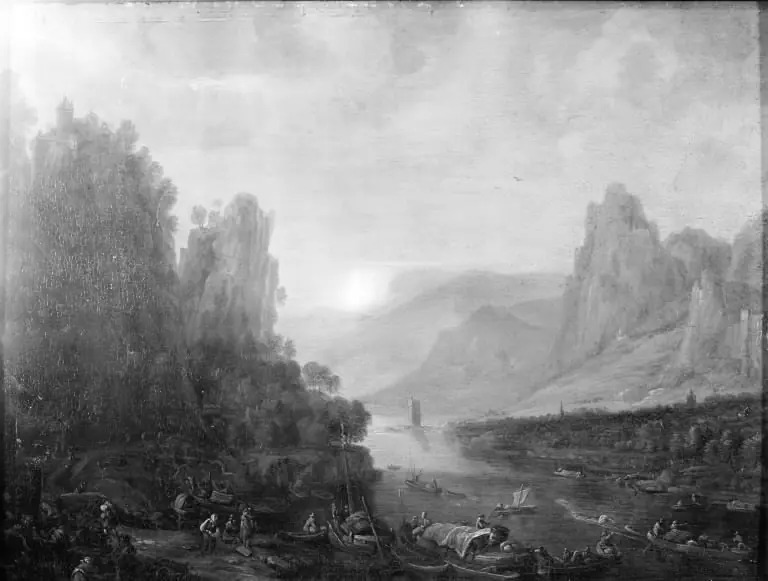
Created in 1667 by Herman Saftleven, this black-and-white print depicts two small boats anchored near a rugged shoreline. The composition is restrained and quiet, emphasizing stillness over action. Executed with precise engraving, the work belongs to a tradition of Dutch landscape prints that favor subtle observation over dramatic effect. It is currently held in the collection of The Cleveland Museum of Art.
Subject & Meaning
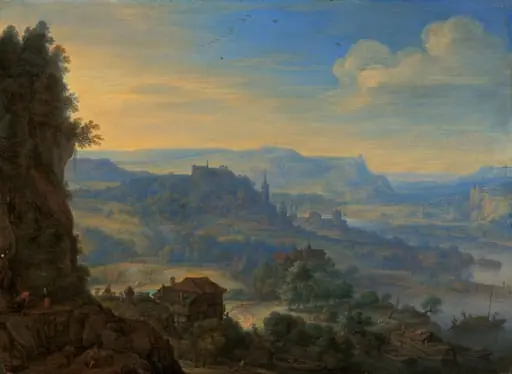
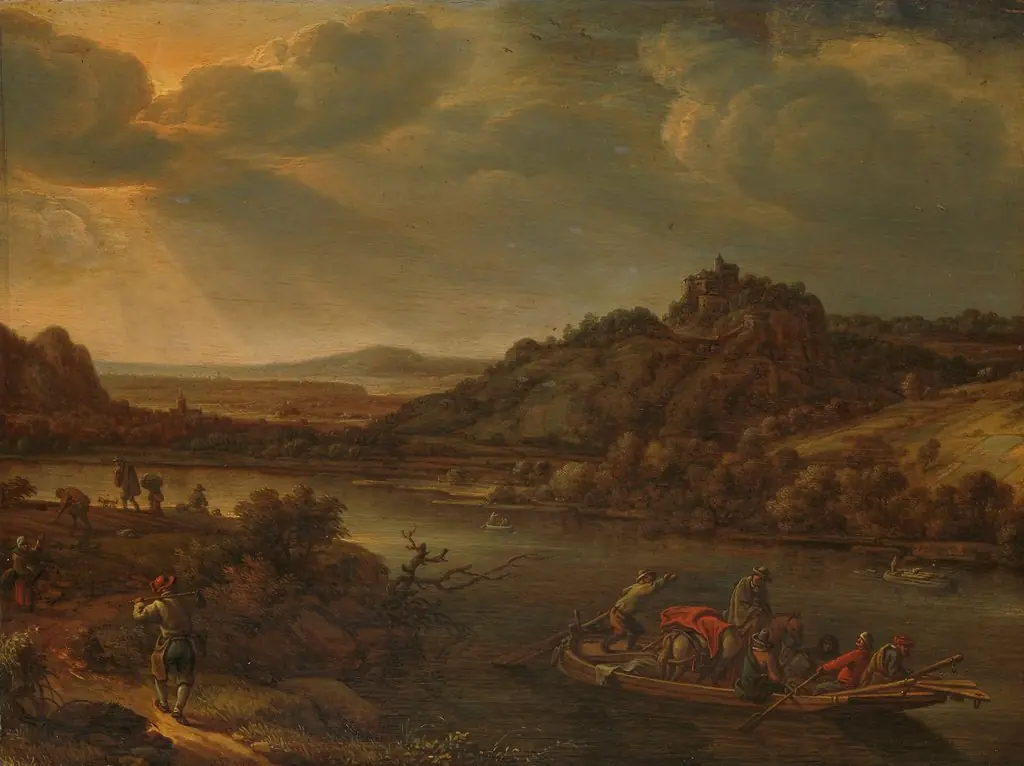
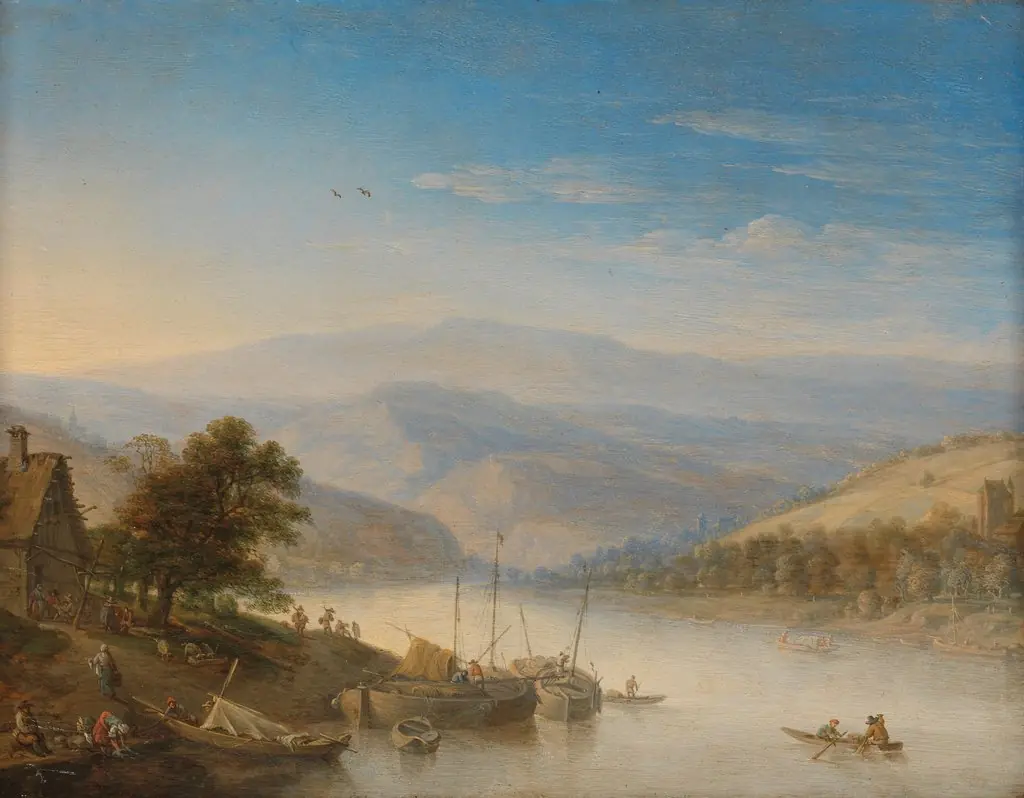
The scene presents two moored vessels, one occupied by a solitary figure, the other empty, nestled beneath a steep rock face. A distant hillside holds modest dwellings and scattered trees, suggesting a quiet coastal hamlet. The absence of movement or narrative tension invites contemplation, reflecting a Dutch sensibility that finds dignity in everyday solitude and the rhythms of labor and rest.
Technique & Style
Saftleven employed fine, controlled engraving lines to define form and texture. Light and shadow are carefully modulated to model the rocks, hulls, and terrain, creating a sense of volume without color. The use of chiaroscuro enhances spatial depth, guiding the viewer’s eye from the foreground boats to the receding hills. The precision of the lines underscores a meticulous, almost meditative approach to rendering the natural world.
History & Provenance
The print was made in 1667 during Saftleven’s mature period, when he focused on landscape subjects with a quiet, observational tone. It entered The Cleveland Museum of Art’s collection through documented acquisition, though its earlier ownership history remains largely unrecorded. As a work on paper, its survival reflects careful preservation, typical of Dutch prints valued for their technical refinement rather than public fame.
Context
In mid-17th-century Holland, landscape prints flourished as affordable art for middle-class homes. Saftleven’s work aligns with a broader trend favoring serene, unidealized views of the Dutch countryside and waterways. Unlike grand historical scenes, his prints celebrate the ordinary, moored boats, modest architecture, and calm waters, mirroring the cultural preference for understated realism and domestic tranquility.
Legacy
Though not widely reproduced or celebrated in popular memory, Saftleven’s print exemplifies the quiet sophistication of Dutch graphic art. Its influence lies in its restraint and technical discipline, contributing to a lineage of landscape prints that prioritize atmosphere over spectacle. It remains a reference point for scholars studying the evolution of printmaking in the Dutch Golden Age.
Own this work as a print
Artist & collection

Artist
Dutch painter Herman Saftleven specialized in river and landscape scenes during the 1600s.