Artwork
River Landscape
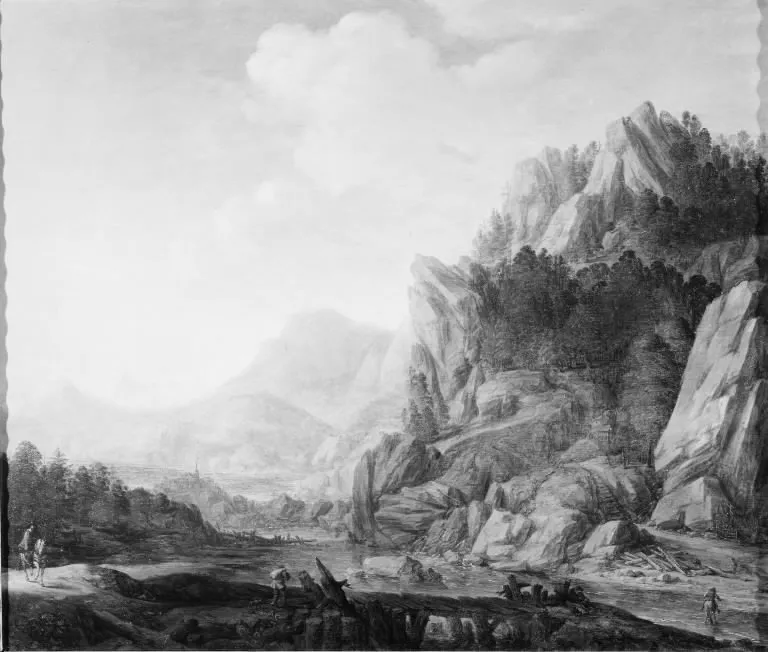
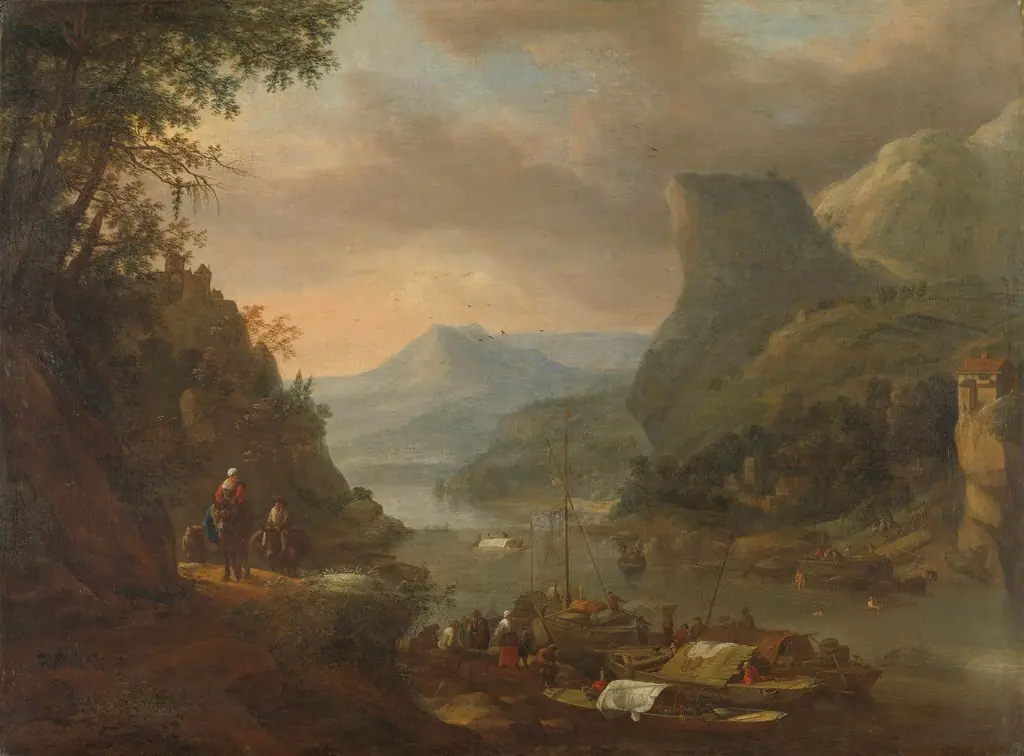
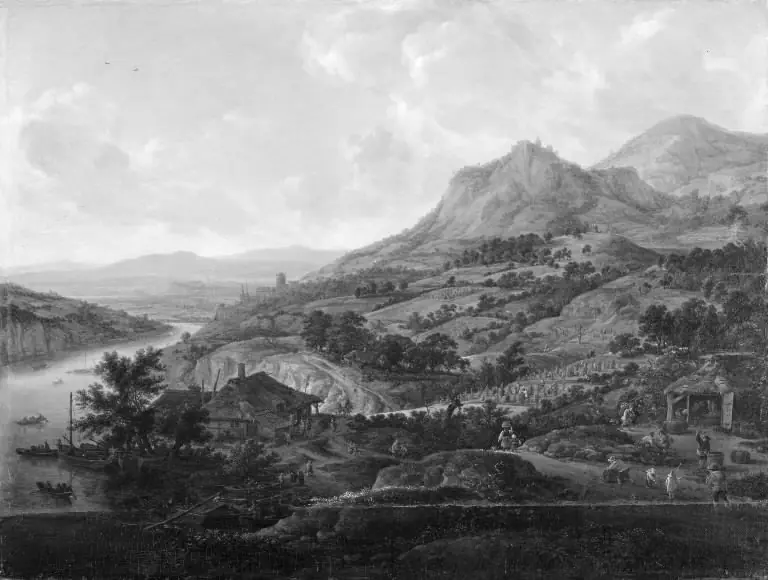
River Landscape is an unspecified painting by the Dutch Golden Age artist Herman Saftleven. It dates from 1649 and is held in the collection of the Statens Museum for Kunst.
About this work
Overview
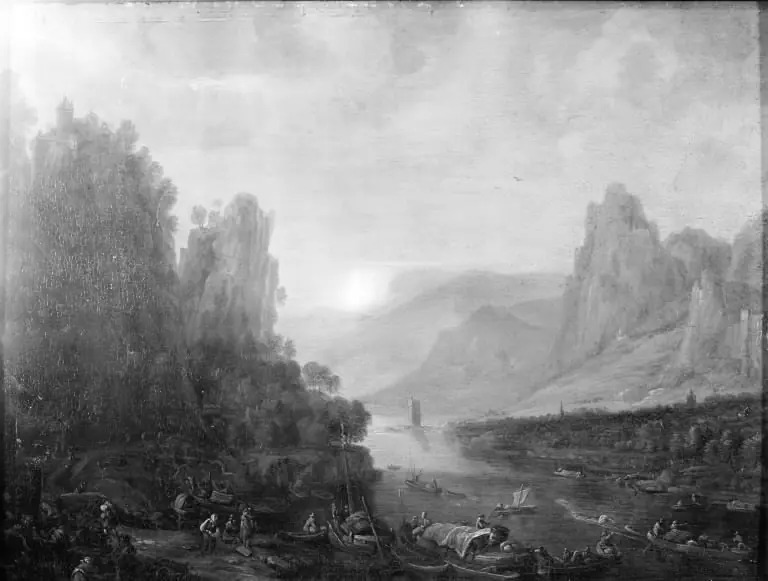
Executed in grisaille tones, the work measures 470 by 610 millimeters and is held in the collection of the Statens Museum for Kunst in Copenhagen.
River Landscape is a 1649 landscape painting by the Dutch Golden Age artist Herman Saftleven II. Executed in grisaille tones, the work measures 470 by 610 millimeters and is held in the collection of the Statens Museum for Kunst in Copenhagen. The painting exemplifies Saftleven's early engagement with landscape, a genre to which he would devote the majority of his long career, producing nearly 120 known works. While Saftleven is best known for his later, coloristic Rhineland panoramas, this 1649 painting offers insight into his formative approach to the genre during a pivotal period of Dutch landscape painting.
Subject & Meaning
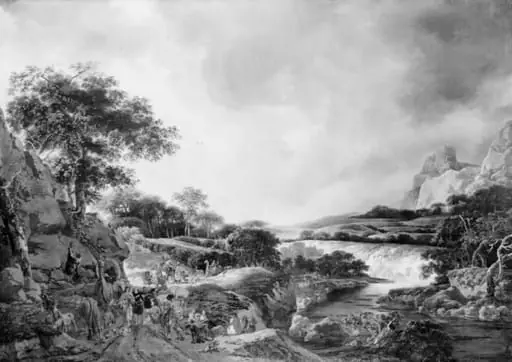
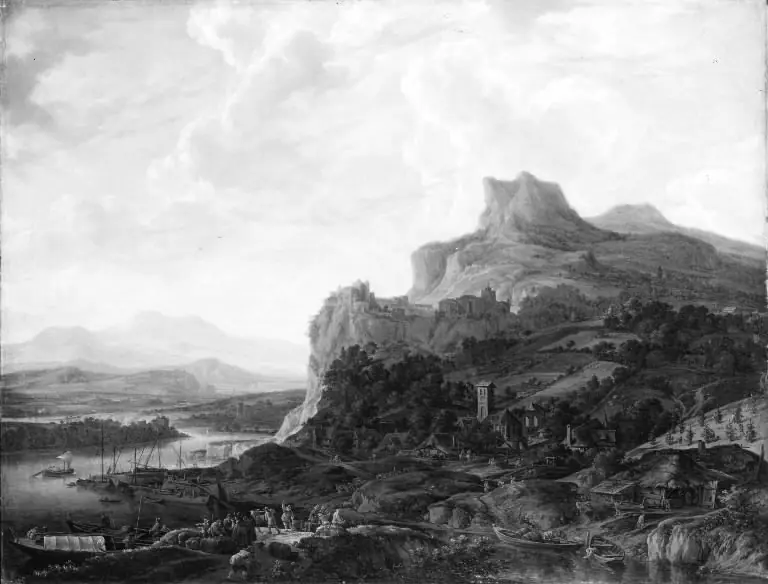
The painting presents a vast river valley viewed from an elevated vantage point. On the right, steep rocky cliffs rise dramatically, textured with scrubby vegetation and patches of trees, while the left side opens onto a distant valley where faint mountains dissolve into atmospheric haze. A winding river occupies the center, where small figures engage in various activities: some fish or work near the water's edge, while others walk along a path. In the foreground left, two figures accompany a horse, and fallen logs and rough wooden structures dot the riverbank. The restrained grisaille palette and the positioning of the viewer above the scene recall the worldview landscapes of Pieter Brueghel the Elder, suggesting a meditation on humanity's place within the natural order. The figures' humble occupations, fishing and foraging, align with contemporary Dutch interest in the dignified portrayal of everyday labor.
Technique & Style
The work is executed in a restrained grisaille palette with subtle gradations from deep charcoal to pale gray. Light enters from the left, illuminating the cliff faces and creating soft shadows in the crevices. The brushwork varies from precise detailing in the rocks to smoother, more diffuse handling in the sky and distant hills, demonstrating Saftleven's control of atmospheric perspective. The overall finish is polished, with careful attention to geological texture. This grisaille technique, unusual for a finished painting of this scale, may reflect the influence of draftsmanship on Saftleven's practice or a deliberate choice to emulate the tonal landscapes of earlier Netherlandish tradition. The handling anticipates the meticulous foreground detail and atmospheric recession that would characterize his mature works, though those later paintings would employ full color.
History & Provenance
The painting is dated 1649, a year after the conclusion of the Thirty Years' War. This was a significant moment in Saftleven's career: following the end of hostilities, he journeyed along the Rhine River, a trip that would inspire many of his finest later works. The work is now in the collection of the Statens Museum for Kunst, though the specific circumstances of its acquisition and earlier provenance are not documented in the available sources. The painting's presence in a major Danish national collection suggests it entered the museum's holdings through one of the institutional acquisitions that built the Statens Museum for Kunst's Dutch and Flemish painting collection in the nineteenth and early twentieth centuries.
Context
Herman Saftleven II was born in Rotterdam in 1609, likely trained with his father, and moved to Utrecht in 1632, where he remained for the rest of his life. He became a member of Utrecht's painters' guild in 1654 and purchased citizenship in 1659. Initially painting genre scenes of peasant life, he turned to landscapes and established himself as one of the most original landscapists of the Dutch Golden Age. His poetic depictions of the Rhineland earned him the praise of contemporaries including the poet Joost van den Vondel, who described him as the 'geachten Rijnstroomschilder' ('esteemed Rhine river painter'). The 1649 date of this painting places it at the threshold of his Rhineland journeys, before he had fully developed the fanciful panoramas for which he became famous. Scholarly literature on Saftleven includes Wolfgang Schulz's 1982 monograph, Herman Saftleven, 1609-1685: Leben und Werke, which remains fundamental to understanding his oeuvre.
Legacy
While Saftleven's reputation rests primarily on his mature, coloristic Rhineland panoramas of the 1650s-1670s, the 1649 River Landscape demonstrates the foundations of his approach to the genre. His influence can be traced in the continued Dutch interest in topographically inspired yet imaginatively composed river valleys. Works such as the 1670 Imaginary River Landscape, now at the National Gallery of Art in Washington, show the fully developed style that grew from such early experiments: elevated viewpoints, meticulous foreground detail dissolving into atmospheric distance, and the integration of human activity within expansive natural settings. Saftleven's landscapes, including this early grisaille work, contributed to the establishment of the Rhine landscape as a distinctive subgenre of Dutch Golden Age painting, one that balanced observed natural detail with compositional artifice to create works that appealed to collectors across Europe.
Artist & collection

Artist
Dutch painter Herman Saftleven specialized in river and landscape scenes during the 1600s.