Artwork
“At leisure in a lakeside grove in autumn”
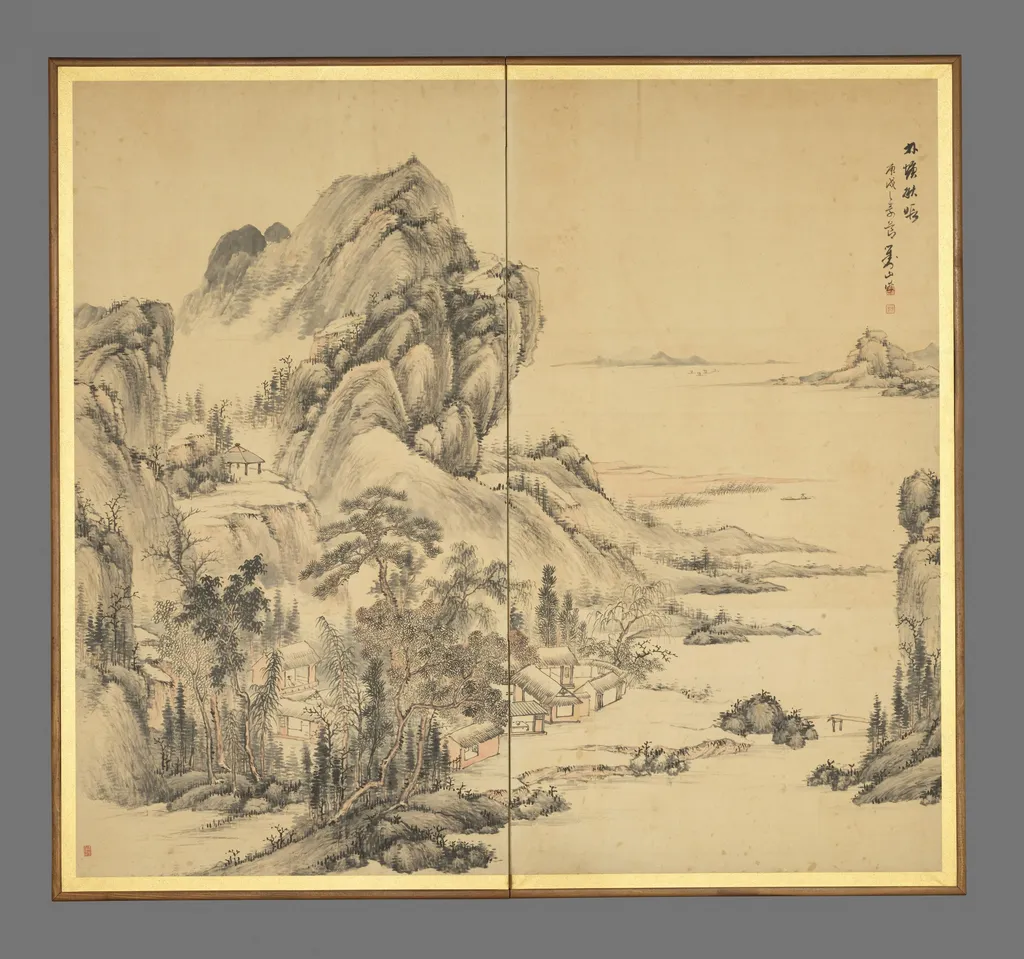
“At leisure in a lakeside grove in autumn” is an unspecified painting by the Nanga artist Hine Taizan. It dates from 1850 and is held in the collection of the Metropolitan Museum of Art.
About this work
Overview
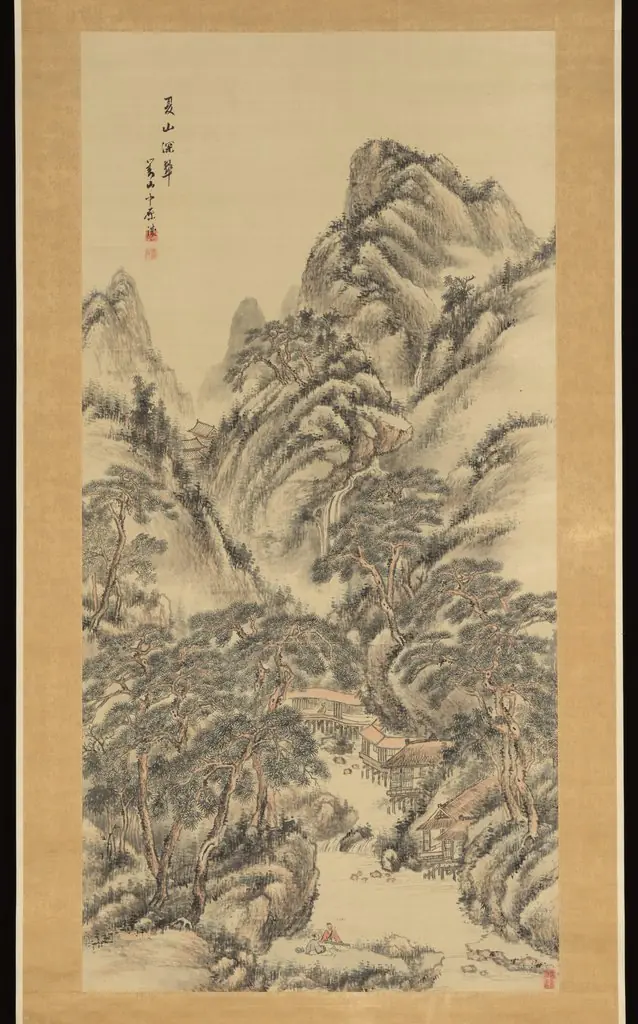
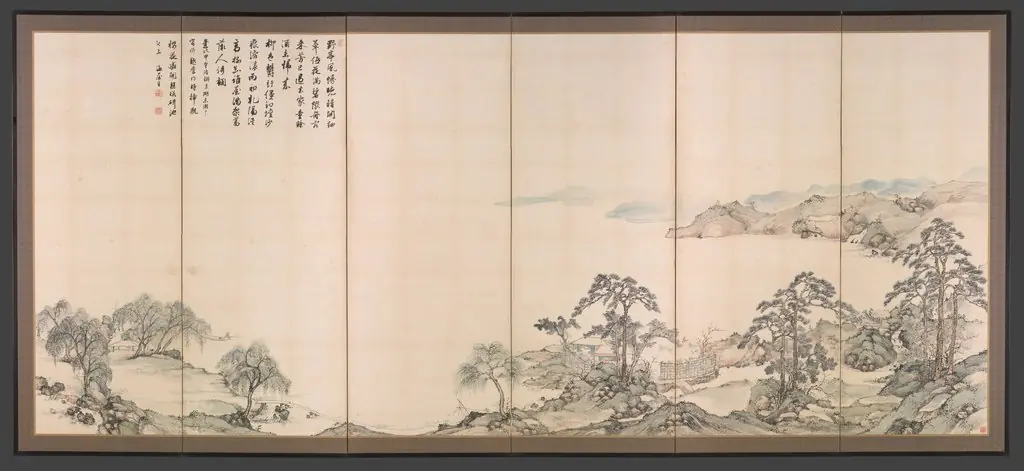
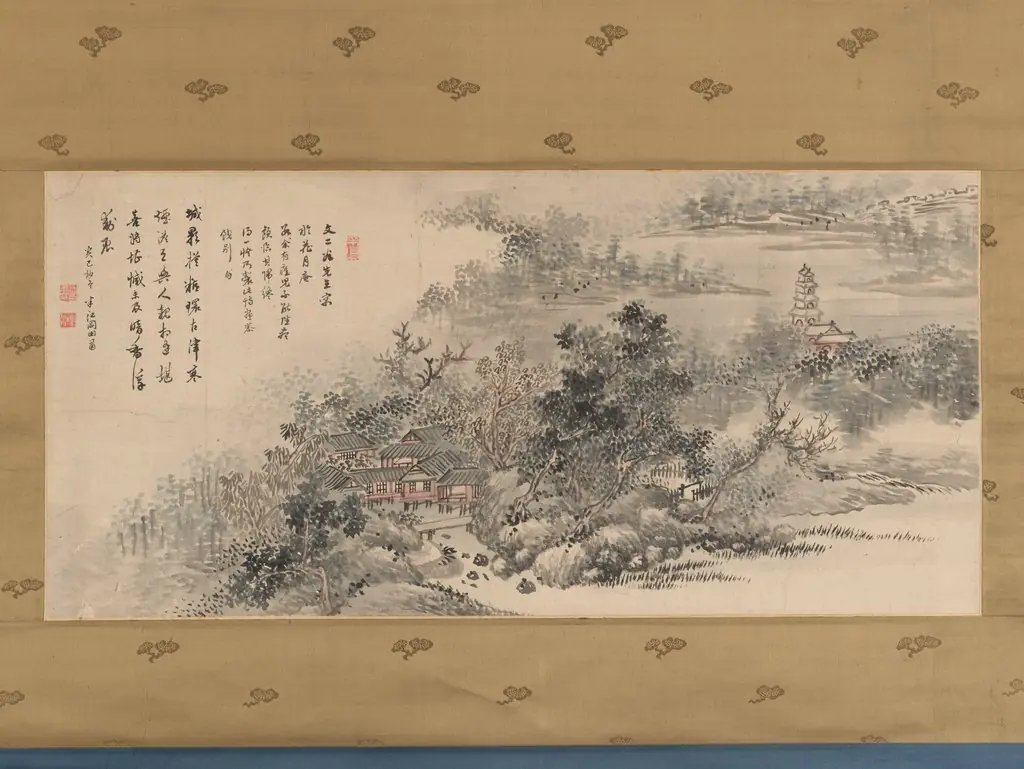
Painted around 1850 by Hine Taizan, this work depicts a quiet autumnal landscape beside a still lake. Executed in ink and color on silk, it reflects the conventions of Japanese literati painting. The scene is composed with deliberate stillness, emphasizing harmony between human habitation and the natural environment. It is part of the collection at The Metropolitan Museum of Art.
Subject & Meaning
The painting portrays a secluded grove of autumn trees near modest dwellings, suggesting a retreat from worldly concerns. The mist-laced lake and distant mountain evoke transience, a theme central to Japanese aesthetics. No figures are present, yet the quiet architecture implies contemplative leisure. The season’s decay is rendered not as loss, but as a moment of calm reflection.
Technique & Style
Autumn foliage is rendered with varied greens, ochres, and russets, applied with controlled brushwork rather than bold strokes.
Hine Taizan employed fine ink outlines and layered washes to suggest depth and texture. Autumn foliage is rendered with varied greens, ochres, and russets, applied with controlled brushwork rather than bold strokes. The water’s surface is subtly indicated by faint ripples, while atmospheric perspective is achieved through graded mist. The style aligns with literati traditions, prioritizing expressive brushwork over detailed realism.
History & Provenance
The painting entered The Metropolitan Museum of Art’s collection in the 20th century, though its earlier ownership remains undocumented. It was likely created during Hine Taizan’s mature period, when he was active in Kyoto’s scholarly painting circles. No records of exhibition or commission survive, suggesting it may have been made for private contemplation rather than public display.
Context
Created during the late Edo period, the work reflects the enduring influence of Chinese literati ideals among Japanese artists. While urban centers grew, many painters turned to nature as a subject of moral and aesthetic refuge. Hine Taizan’s approach aligns with contemporaries who valued simplicity, seasonal awareness, and the quiet dignity of rural life over courtly grandeur.
Legacy
Though not widely reproduced, the painting exemplifies the quiet elegance of 19th-century Japanese literati art. It contributes to the understanding of how nature was interpreted as a vessel for introspection during a time of social change. Its preservation in a major Western institution underscores its role in bridging cross-cultural appreciation for East Asian landscape traditions.
Own this work as a print
Artist & collection

- 明仇英秋江待渡 軸
 Lake Biwa in Four Seasons
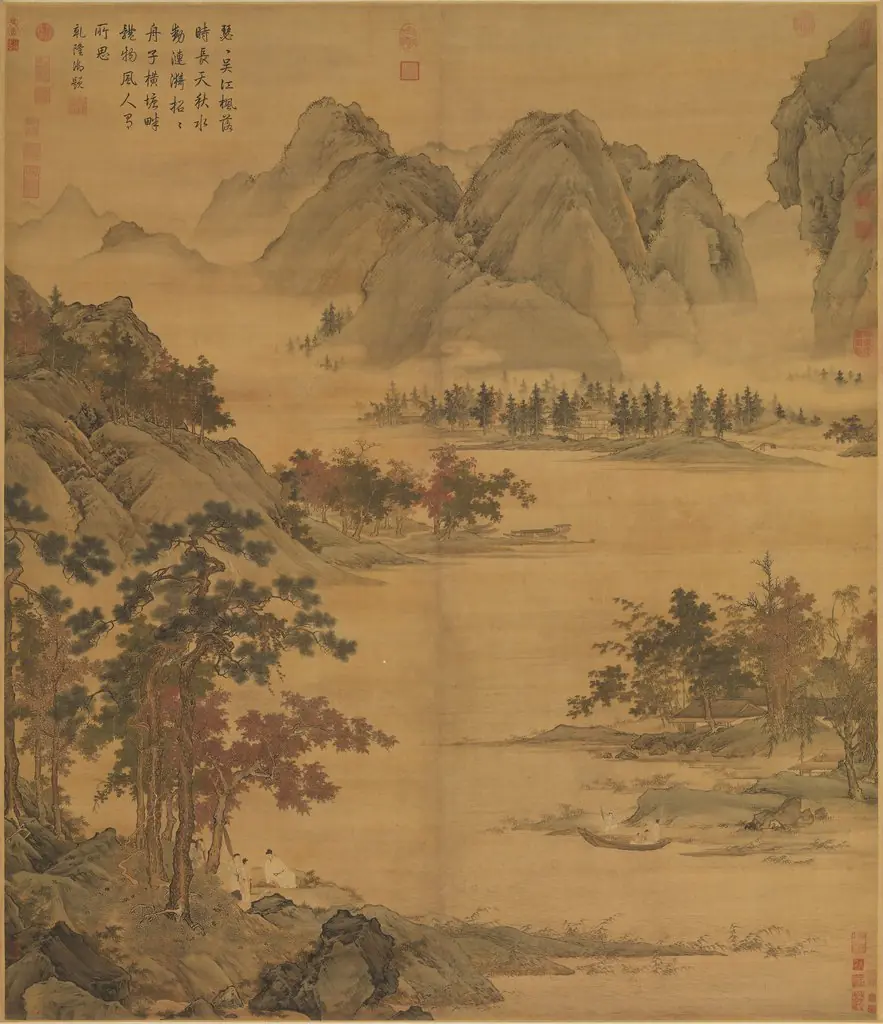 Waiting for the Ferry on an Autumn River
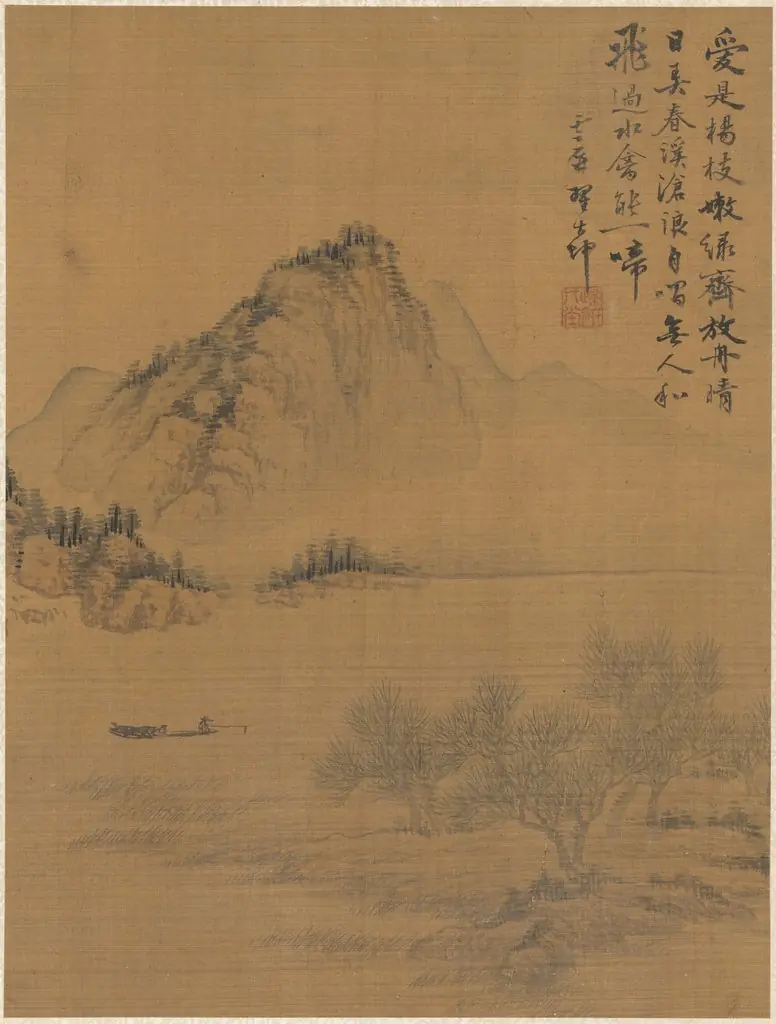 Landscape
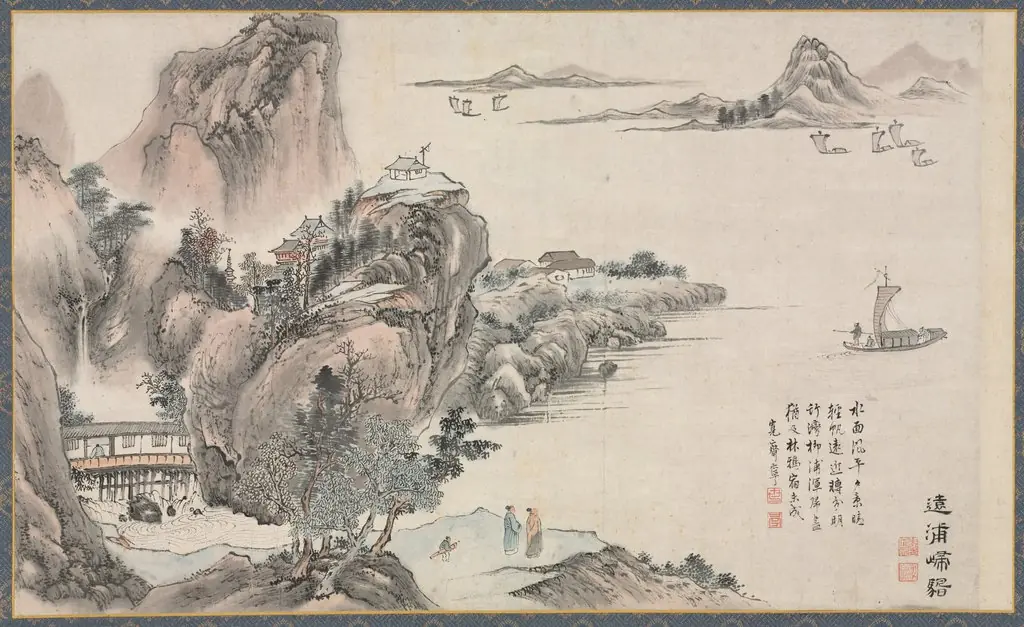 Returning Sails off a Distant Shores, from Eight Views of Xiao-Xiang
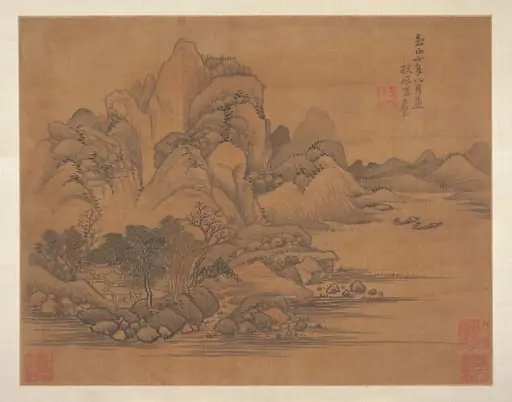 Untitled
 Farewell Gift to Tani Bunji
 Landscape with Streams and Mountains
 Landscape in the Style of Ching Hao
 Landscape
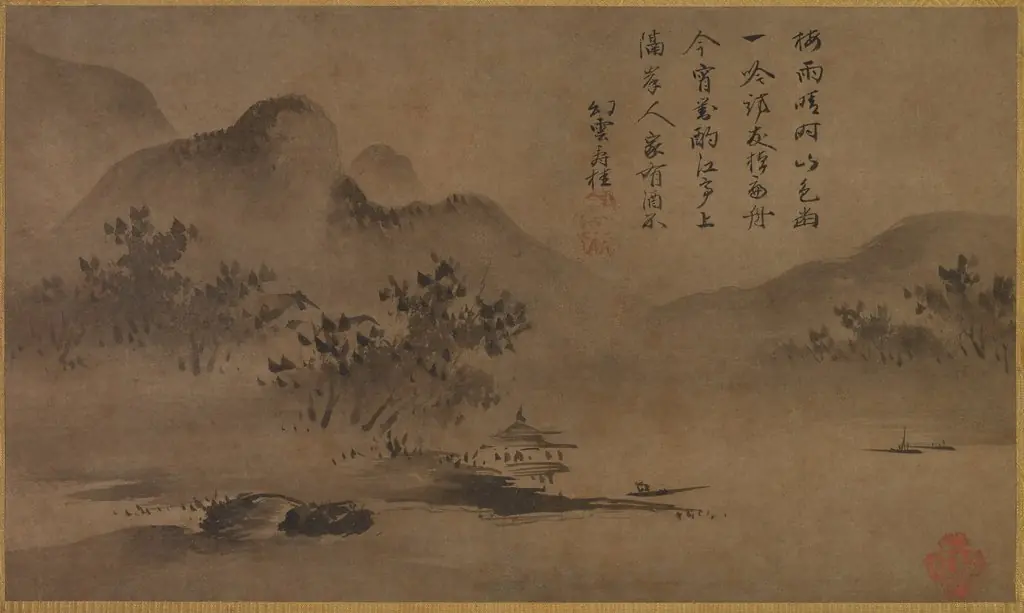 Landscape
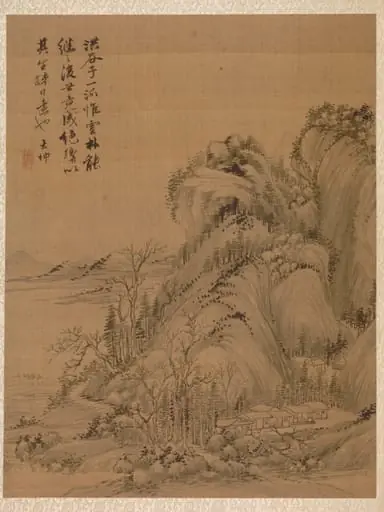 Landscape in the Style of Ching Hao