Artwork
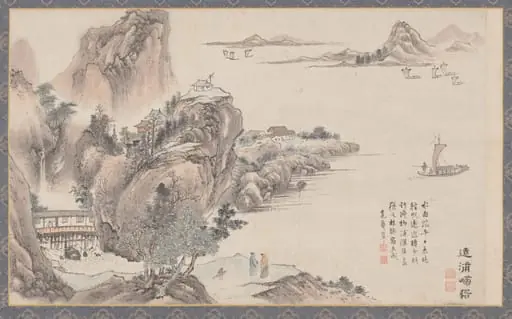
Returning Sails off a Distant Shores, from Eight Views of Xiao-Xiang
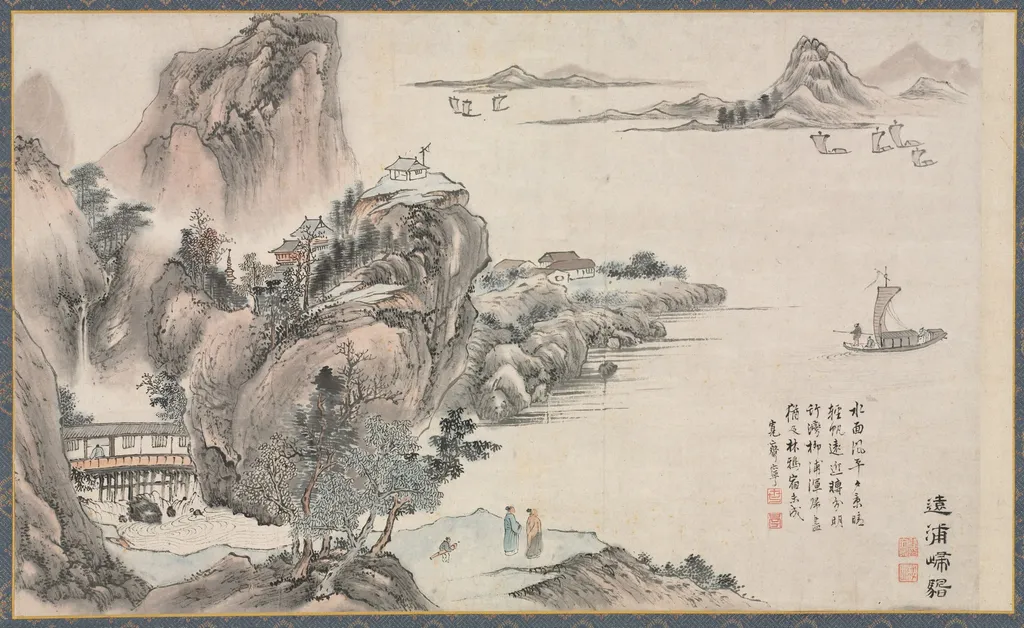
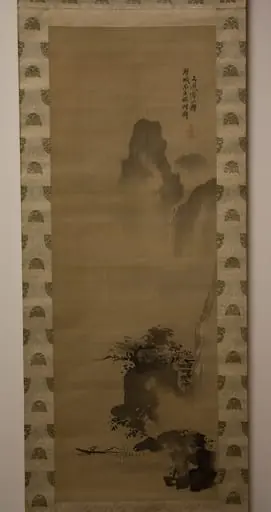
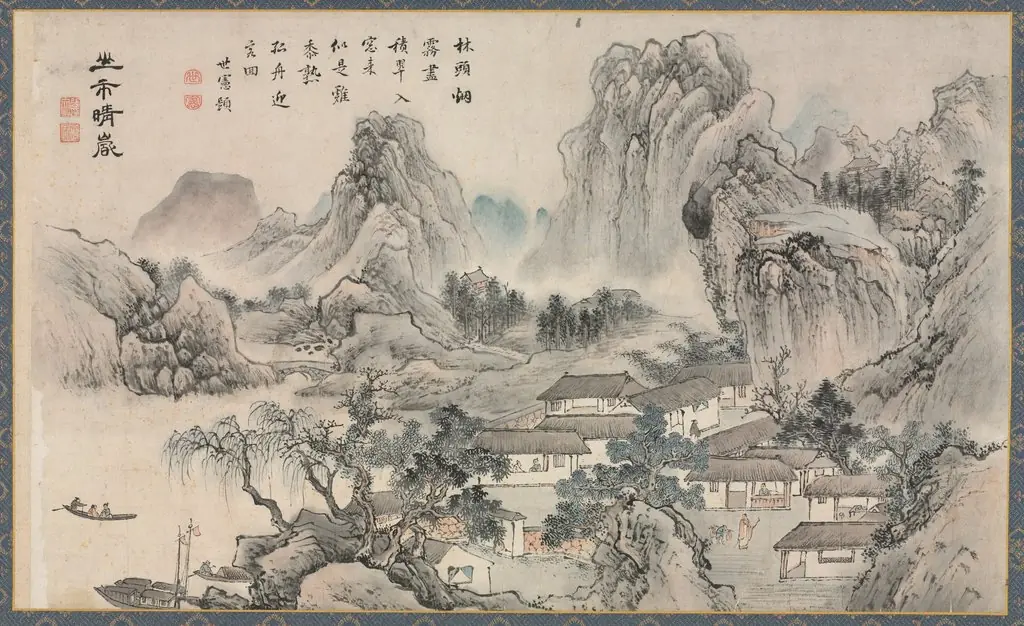
Returning Sails off a Distant Shores, from Eight Views of Xiao-Xiang is an unspecified painting by the Ukiyo-e artist Tani Bunchō. It dates from 1794 and is held in the collection of the Cleveland Museum of Art.
About this work
Subject & Meaning
The inclusion of vessels against a backdrop of rugged terrain and foliage serves as the primary symbolic vehicle for conveying the narrative of journey's end.
Created in 1794 by the Japanese artist Tani Bunchō, this painting illustrates a specific scene from the traditional Eight Views of Xiao-Xiang series. The composition depicts a landscape featuring mountains and trees, with boats navigating the waters near distant shores. These visual elements collectively represent the theme of returning sails, a motif often associated with travel and homecoming within East Asian artistic traditions.
As part of the broader Eight Views cycle, the work engages with established iconography that pairs natural scenery with human activity to evoke specific atmospheric and emotional responses. The inclusion of vessels against a backdrop of rugged terrain and foliage serves as the primary symbolic vehicle for conveying the narrative of journey's end.
History & Provenance
Created in 1794 in Japan, Returning Sails off a Distant Shores is a painting by the Japanese artist Tani Bunchō (1763–1841). The work forms part of the Eight Views of Xiao-Xiang series. While specific details regarding its original commission or early ownership chain are not provided in the available records, the painting is currently held in the collection of the Cleveland Museum of Art under accession number 1980.188.3, indicating its formal entry into the museum's holdings in 1980.
The work depicts a landscape featuring boats, mountains, and trees, consistent with the traditional themes associated with the Eight Views genre.
Overview
Returning Sails off a Distant Shores, from Eight Views of Xiao-Xiang is a 1794 landscape painting by the Japanese artist Tani Bunchō. The work is part of a series interpreting the canonical Eight Views of Xiao-Xiang, a set of poetic landscape themes originating in Chinese art that were frequently adapted by Japanese painters. In this composition, Bunchō depicts a tranquil expanse of water where small vessels with furled sails navigate near the shore, set against a backdrop of distant, softly rendered mountains.
The foreground features sparse vegetation and rocky outcrops, establishing a sense of depth and atmospheric perspective. Executed during the late Edo period, the painting reflects Bunchō's engagement with the Nanga (Southern School) style, which prioritized literati ideals and expressive brushwork over strict realism. The piece demonstrates the artist's ability to synthesize Chinese aesthetic traditions with Japanese sensibilities, creating a mood of quiet contemplation.
As one of the Eight Views, it specifically captures the moment of boats returning from a journey, a motif symbolizing homecoming and the cyclical nature of life. This work stands as a significant example of Bunchō's mature landscape painting, showcasing his technical skill in ink and color washes to evoke the serene beauty of the natural world.
Technique & Style
Bunchō employs soft colors and delicate brushstrokes to create an overarching sense of tranquility. The artist skillfully renders the play of light on the water's surface, where subtle ripples contribute to an illusion of depth and gentle movement. This approach enhances the serene atmosphere, allowing the viewer to perceive the shimmering quality of the lake and the quiet glide of the boat, characteristic of refined East Asian landscape painting traditions.
Context
This painting is one component of Tani Bunchō's Eight Views of Xiao-Xiang series, a traditional subject with origins in Chinese art. Such series typically depict specific scenic locations in the Xiao and Xiang river regions, with each view capturing a distinct mood or time of day. Bunchō's interpretation contributes to this long-standing artistic tradition, offering his unique perspective on these celebrated themes within the Japanese artistic context of the late 18th century.
Own this work as a print
Artist & collection