Artwork
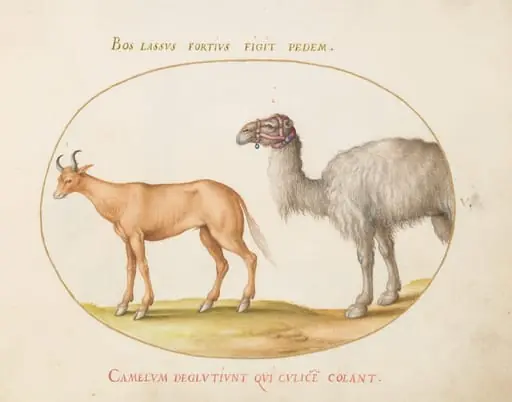
Plate 3: Camel, Ibex, and Goat
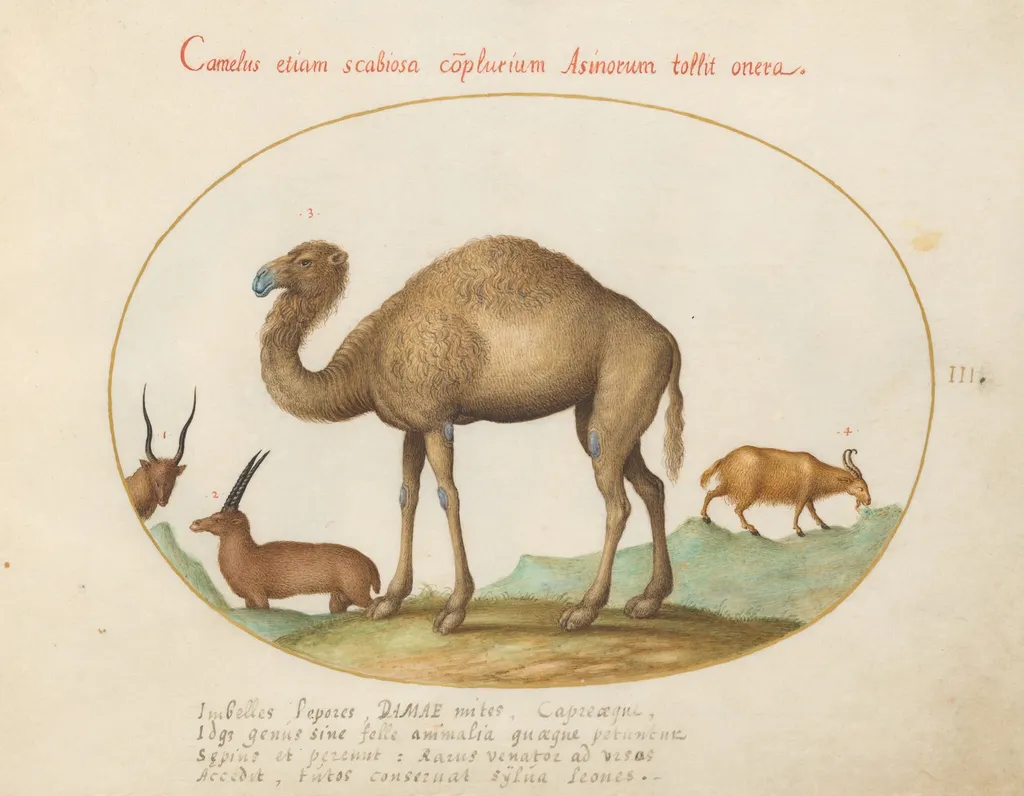
Plate 3: Camel, Ibex, and Goat is a gouache drawing by the Renaissance artist Joris Hoefnagel. It dates from 1594 and is held in the collection of the National Gallery of Art.
- Inscription
- Inscribed:upper center in red ink: Camelus etiam scabiosa co[m/n]plurium Asinorum tollit onera.; center right in (gold?): III.; animals in image numbered .1., .2., .3., and .4., in red ink; lower center in black/brown ink: Imbelles lepores, DAMAE mites, Capreaeque, / Idq[ue] genus sine felle animalia quaeque petuntur / S[a]epius et pereunt: Rarus venator ad ursas / Accedit, tutos conservat sylva leones. Facing page: upper center in (gold?): Dente timetur Aper, defendunt cornua Cernum / Imbelles Damae, quid nisi praeda sumus?; lower center in brown ink: Illuxerunt fulgura eius orbi TERRAE: vidit et com[m]ota / est TERRA.ps:96: (“His lightnings have shown forth to the world; the earth saw and trembled.” Psalms 96:4) (Latin Vulgate Bible)
About this work
Overview
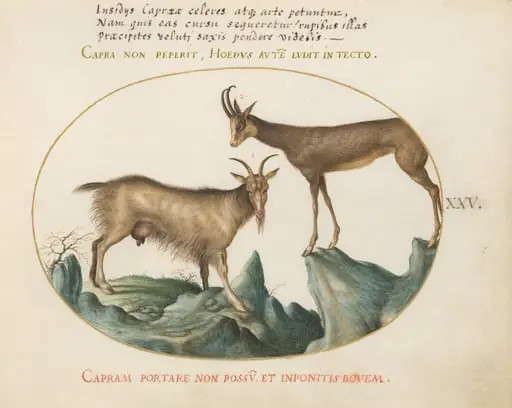
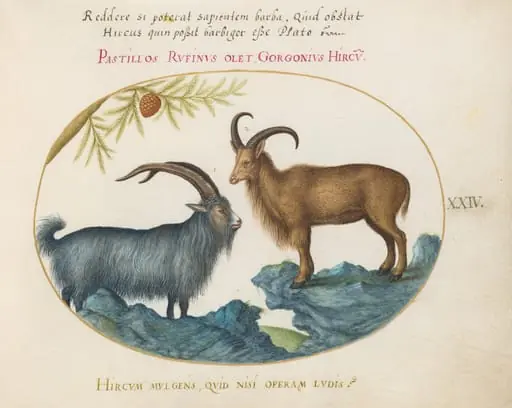
Created circa 1594, Plate 3: Camel, Ibex, and Goat is a small-scale work by Flemish artist Joris Hoefnagel. Executed in watercolor and gold paint on parchment, the composition presents a camel flanked by an ibex and a goat, all rendered with meticulous naturalistic detail against a modestly colored landscape enclosed within a golden circular frame.
Subject & Meaning
The central camel, distinguished by its pronounced hump and finely drawn eyelashes, dominates the scene, while the ibex and goat occupy the surrounding space, their horns and postures contrasting the camel’s stature. The grouping reflects Hoefnagel’s interest in cataloguing exotic and familiar fauna, offering a visual study rather than an allegorical narrative.
Technique & Style
Hoefnagel employs transparent watercolor washes to model the animals’ bodies, accentuated by delicate gold leaf highlights that outline forms and suggest a luminous surface. The parchment substrate provides a warm, textured ground, and the restrained green‑brown landscape serves as a neutral backdrop, allowing the precise line work and subtle shading to convey anatomical accuracy.
History & Provenance
As one of the final examples of manuscript illumination, the piece illustrates Hoefnagel’s transition from traditional book decoration to independent natural history illustration. It likely formed part of a larger codex of animal studies, though its exact original ownership remains undocumented; the work now resides in a public collection dedicated to early modern European drawings.
Context
Hoefnagel’s oeuvre bridges the scientific curiosity of the late Renaissance with the decorative sensibilities of northern European still‑life painting. His detailed animal renderings contributed to the burgeoning interest in flora and fauna that would later define the Dutch and Flemish still‑life tradition, positioning him as a key figure in the shift toward observational art.
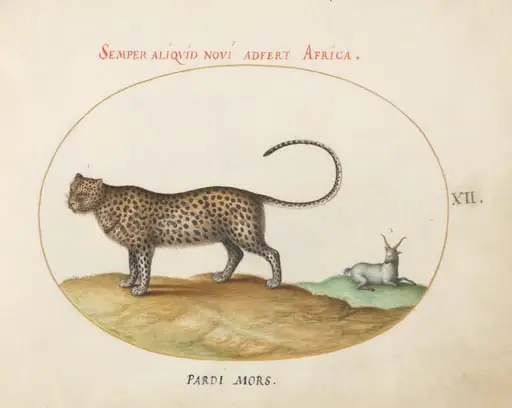
Own this work as a print
Artist & collection

Artist
Joris Hoefnagel or Georg Hoefnagel (1542 – 24 July 1601) was a Flemish painter, printmaker, miniaturist, draftsman and merchant.

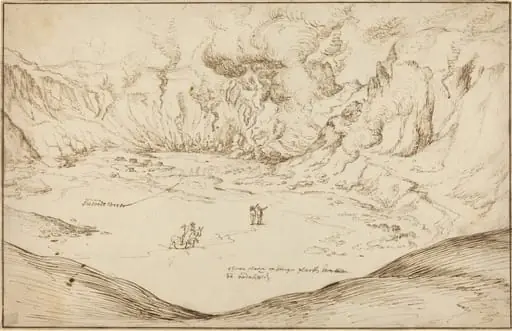 Forum Vulcani: The Hot Springs at Pozzuoli
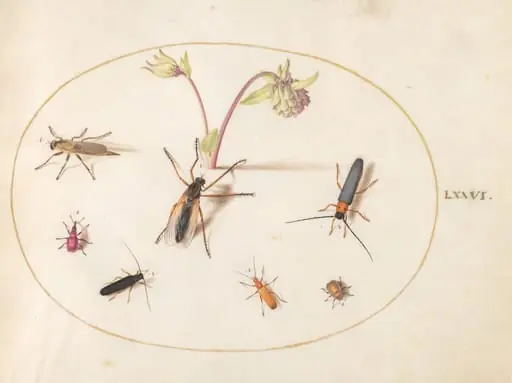 Plate 76: Insects with a Pink and Cream Columbine
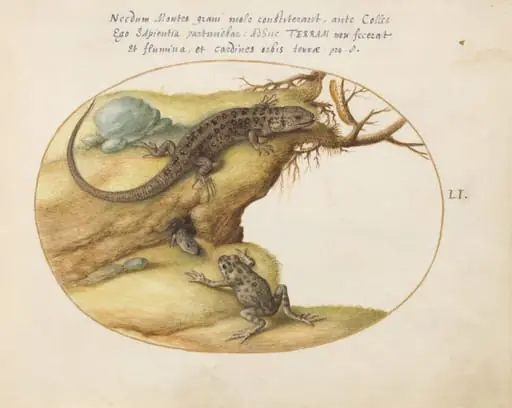 Plate 51: Two Sand Lizards, a Common Parsley Frog(?), and a Caterpillar
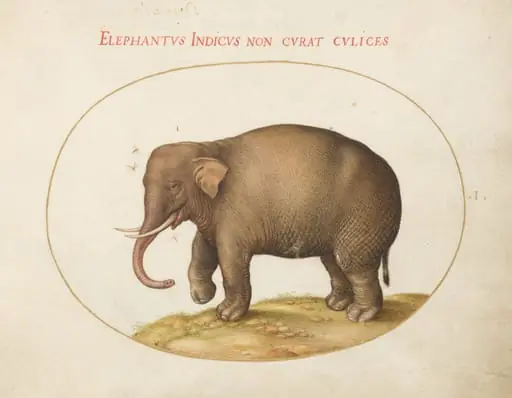 Plate 1: Elephant with Insects
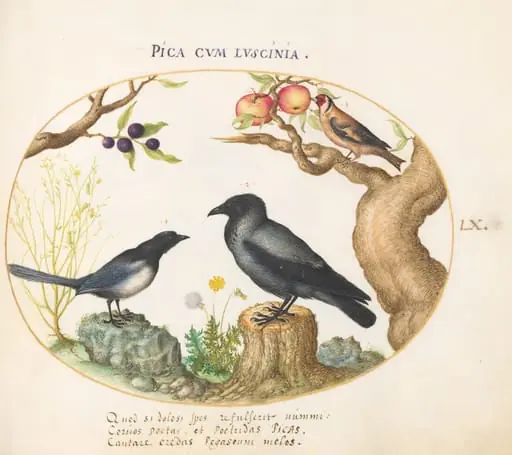 Plate 60: Magpie, Crow, and Goldfinch
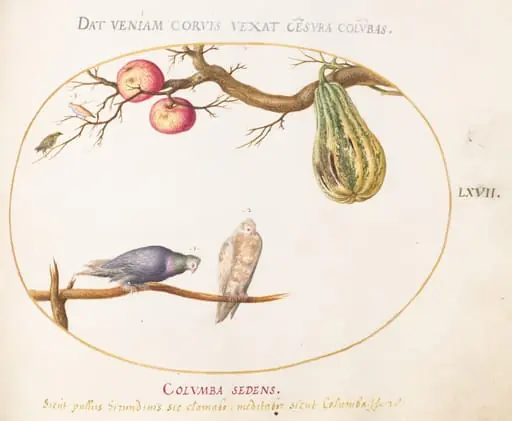 Plate 67: Two Doves beneath a Gourd and Apples
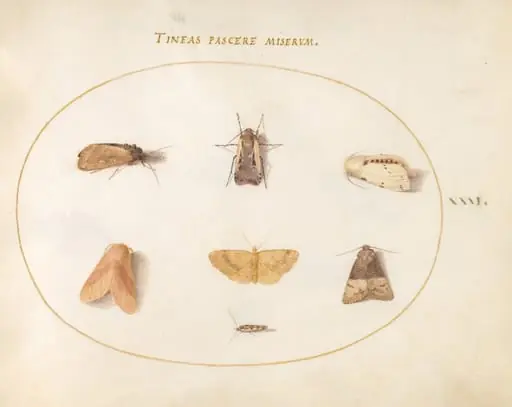 Plate 31: Seven Moths
 Plate 21: Swamp Hen and Woodcock with a Streaked Rosefinch, a Finch, and Oak Galls