Artwork
Plate 37: Three Waterfowl with Two Nightingales(?) Perched in Citrus Trees
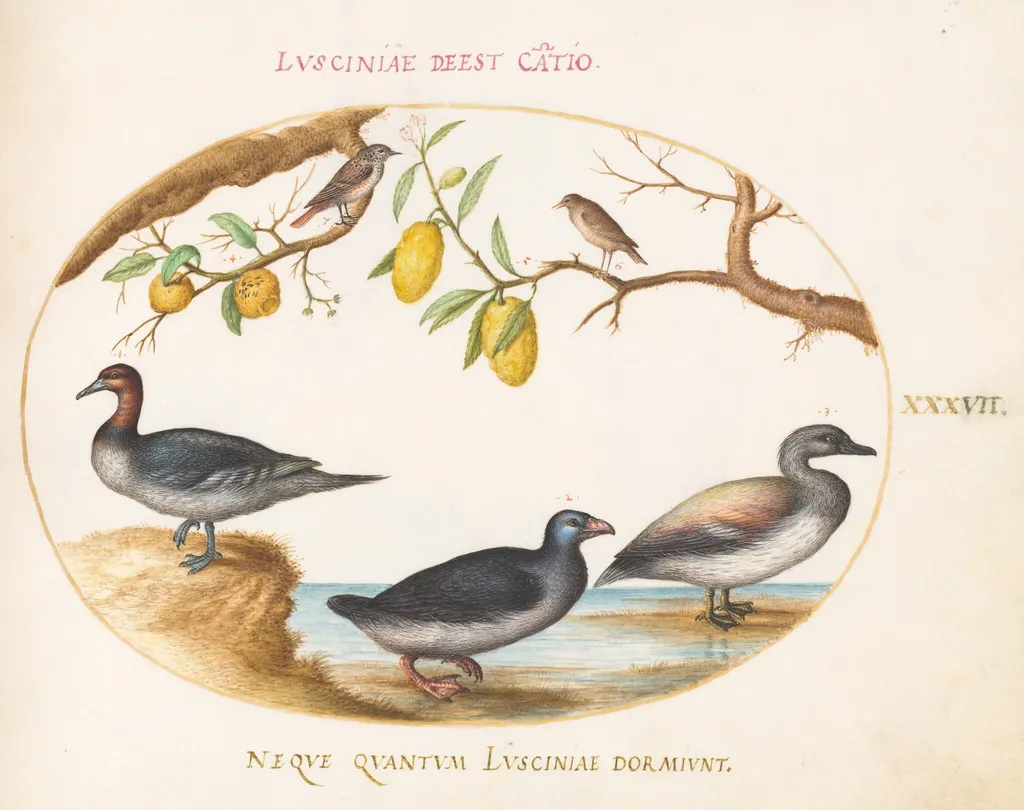
Plate 37: Three Waterfowl with Two Nightingales(?) Perched in Citrus Trees is a gouache drawing by the Renaissance artist Joris Hoefnagel. It dates from 1594 and is held in the collection of the National Gallery of Art.
- Inscription
- Inscribed:Upper center in red/violet ink: LVSCINIAE DEEST CA[N]TIO.; center right in (gold?): XXXVII.; birds in image numbered .1., .2., .3., .6., and .7., in red ink; fruit on trees in image numbered .4. and .5., in red ink; lower center in (gold?): NEQVE QVANTVM LVSCINIAE DORMIVNT. Facing page: Upper center in black ink: Flet Phylomela nefas Incesti Tereos: et quae / muta puella fuit, garrula fertur avis.; lower center in black ink: Dulcis amica veni, noctis solatia praestans: / Inter aves etinem, nulla tui similis. / Tu Phylomela potes, vocum discrimina mille, / Mille potes varios ipsa referre modos.
About this work
Overview
Created circa 1594, this small watercolor on parchment combines delicate pigment with gold leaf, a technique typical of manuscript illumination. The composition presents three waterfowl and two diminutive birds set among a citrus‑laden branch, rendered with a precise, observational quality that reflects the artist’s scientific interest in natural subjects.
Subject & Meaning
The central figures are three ducks of varying plumage, one dark, one reddish‑headed, and one predominantly gray, arranged near water, while two tiny birds occupy a branch heavy with yellow citrus fruit. Latin inscriptions framing the image suggest an allegorical reference to nightingales, though the depicted birds differ in appearance, hinting at a symbolic rather than literal reading.
Technique & Style
Hoefnagel employed fine watercolor washes layered with translucent glazes, building colour through successive applications. Gold paint accents the foliage and fruit, lending a luminous quality reminiscent of illuminated manuscripts. The rendering balances meticulous anatomical detail with a stylised, almost diagrammatic approach characteristic of northern European still‑life developments.
History & Provenance
The work belongs to Joris Hoefnagel, a Flemish painter and draftsman noted for his contributions to natural history illustration and topographical drawing. Produced during his mature period, the piece exemplifies his transition from manuscript illumination to independent watercolor studies, a shift that influenced later still‑life painters in the Low Countries.
Context
At the close of the sixteenth century, interest in cataloguing flora and fauna grew among scholars and collectors. Hoefnagel’s watercolors, including this plate, responded to that curiosity, merging artistic skill with empirical observation. The inclusion of citrus, a luxury fruit in Europe, reflects contemporary trade routes and the status of exotic plants in elite collections.
Own this work as a print
Artist & collection

Artist
Joris Hoefnagel or Georg Hoefnagel (1542 – 24 July 1601) was a Flemish painter, printmaker, miniaturist, draftsman and merchant.

 Forum Vulcani: The Hot Springs at Pozzuoli
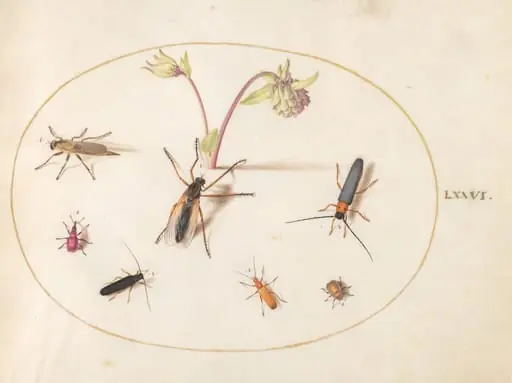 Plate 76: Insects with a Pink and Cream Columbine
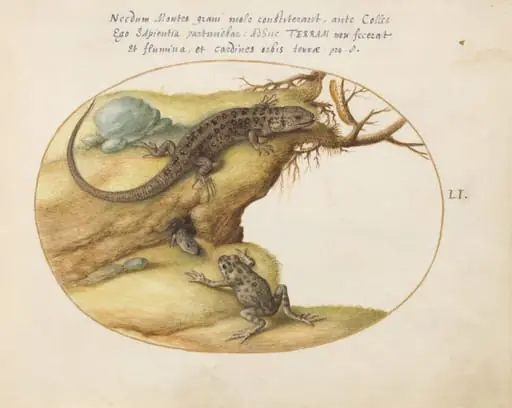 Plate 51: Two Sand Lizards, a Common Parsley Frog(?), and a Caterpillar
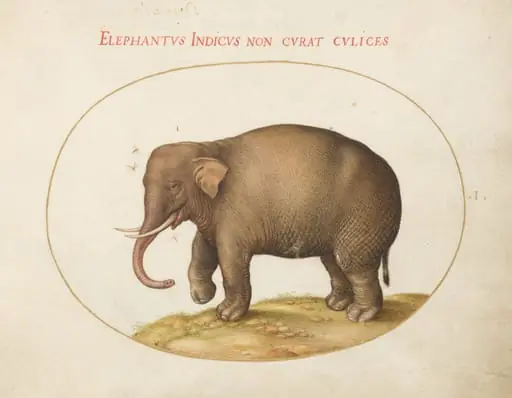 Plate 1: Elephant with Insects
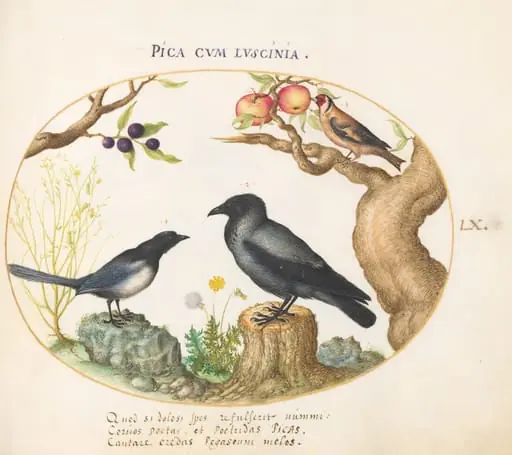 Plate 60: Magpie, Crow, and Goldfinch
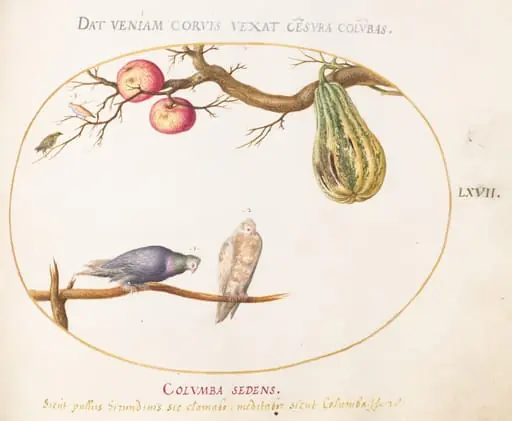 Plate 67: Two Doves beneath a Gourd and Apples
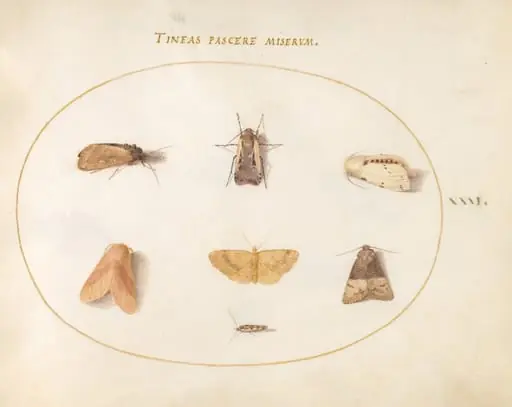 Plate 31: Seven Moths
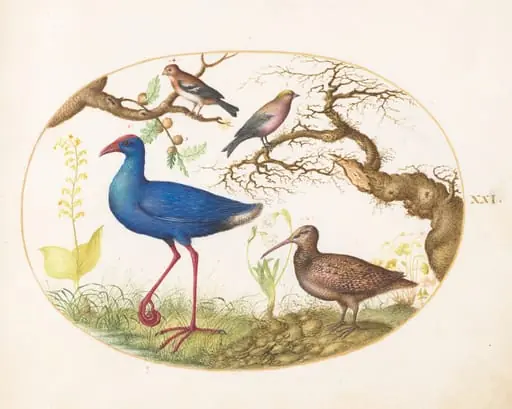 Plate 21: Swamp Hen and Woodcock with a Streaked Rosefinch, a Finch, and Oak Galls
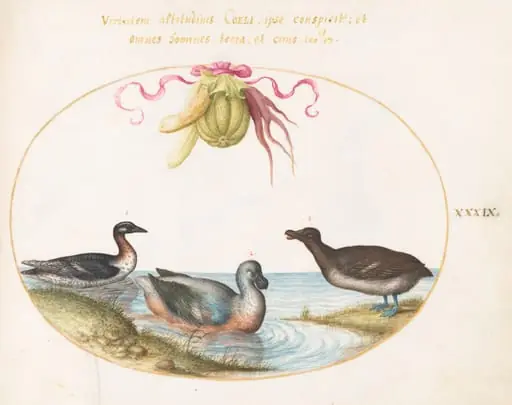
- Plate 39: A Scaup with Two Other Waterfowl beneath a Garland of Produce
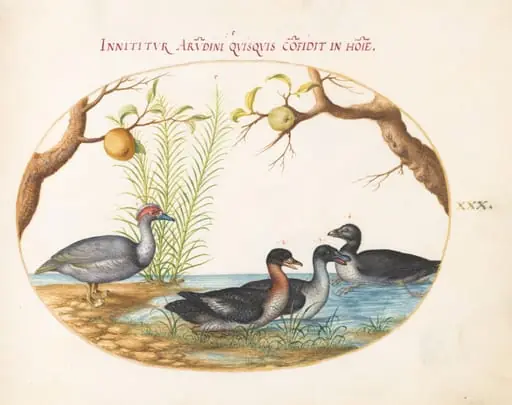 Plate 30: A Muscovy(?) Duck, a Four-Legged Duck, and Two Other Birds
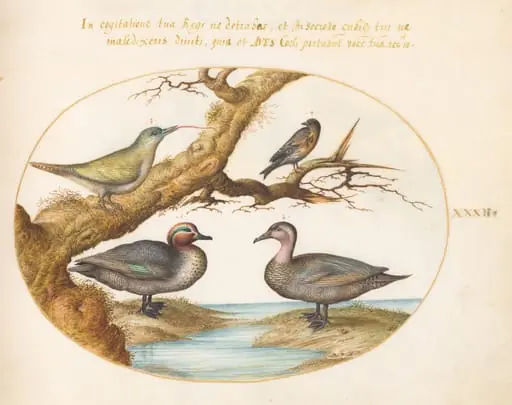 Plate 32: A Green-Winged Teal, a Juvenile Green Woodpecker, and Two Other Birds
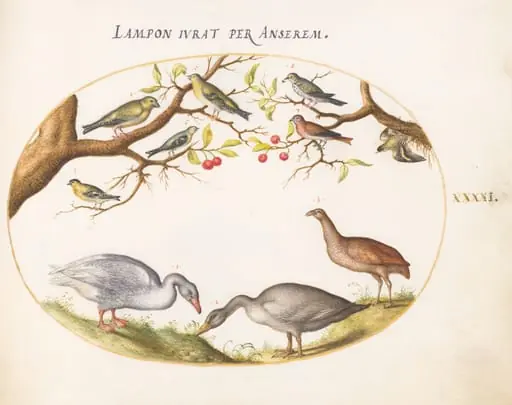 Plate 41: Two Gray Geese with Songbirds in a Cherry Tree
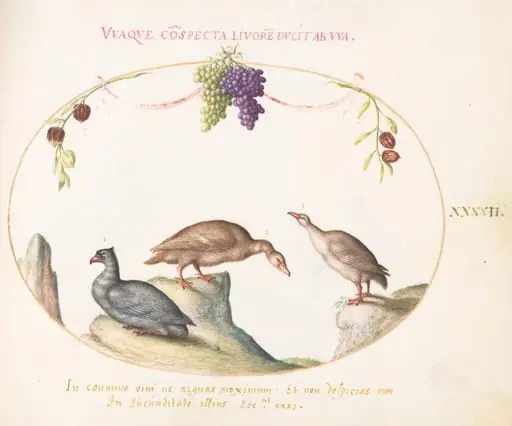 Plate 42: Two Gray Geese with a Third Bird and Hanging Grapes
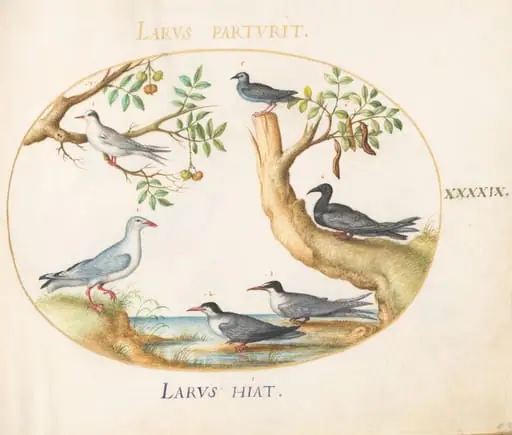 Plate 49: Gulls with a Carob Tree and a Pistachio Tree(?)
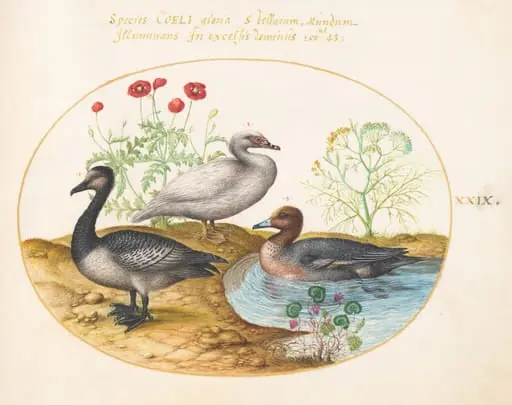 Plate 29: Geese with Poppies and a Cyclamen
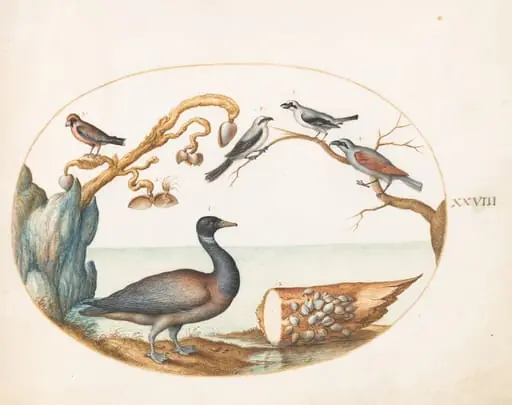 Plate 28: Barnacle Goose with Shrikes and Other Birds
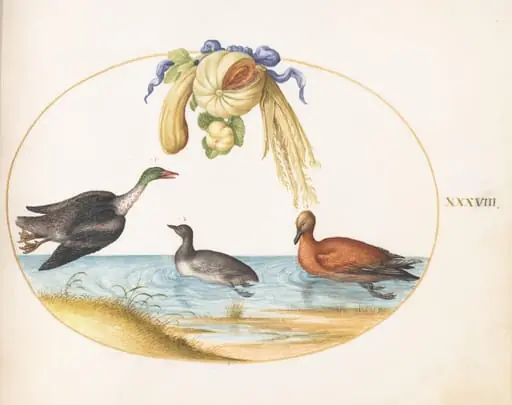 Plate 38: Merganser with Two Other Waterfowl and a Garland of Melons and Gourds