Artwork
Plate 30: A Muscovy(?) Duck, a Four-Legged Duck, and Two Other Birds
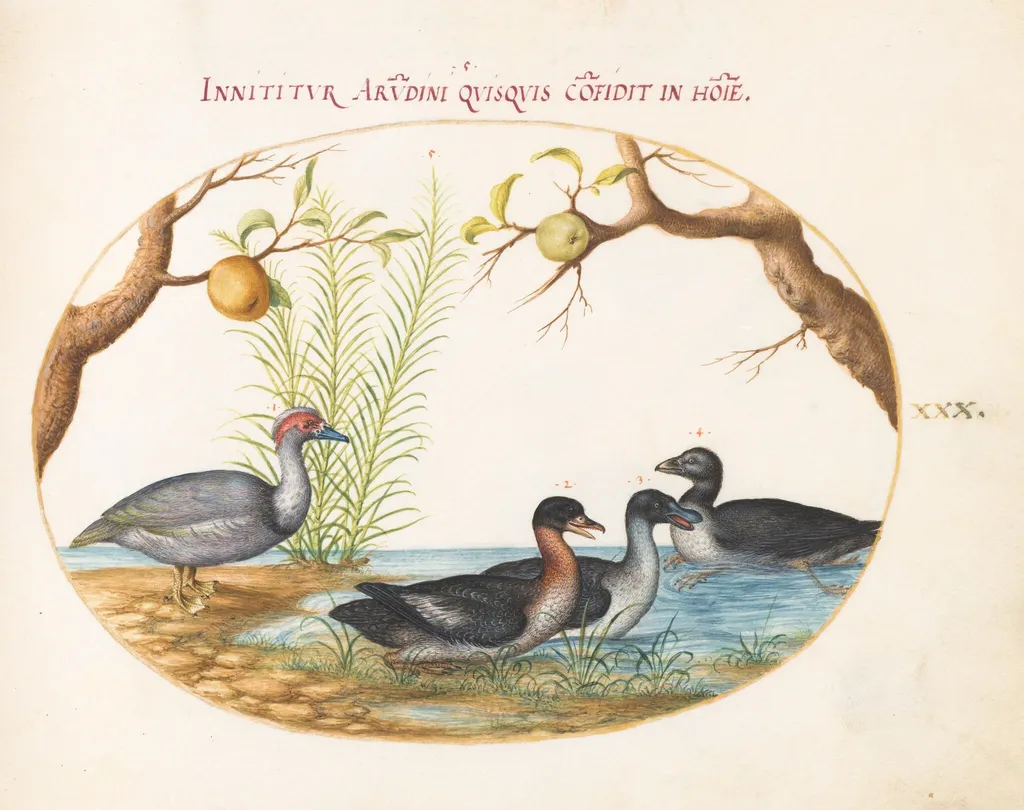
Plate 30: A Muscovy(?) Duck, a Four-Legged Duck, and Two Other Birds is a gouache drawing by the Renaissance artist Joris Hoefnagel. It dates from 1594 and is held in the collection of the National Gallery of Art.
- Inscription
- Inscribed:Upper center in red/violet ink: .5. / INNITITVR ARV[N]DINI QVISQVIS CO[N]FIDIT IN HO[M]I[N]E.; center right in (gold?): XXX.; birds in image numbered .1., .2., .3., and .4., in red ink; plant in center of image numbered .5., in red ink Facing page: Upper center in black ink: Panca licet portes argenti vascula puri / Nocte iter Ingressus, gladium contumq[ue] timebis, / Et motae ad lunam trepidabis ARVNDINIS umbram. / Cantabit vacuus coram latrone viator.; lower center in gold: CALAMVM quassum non conteret; et linu[m] fumigans no[n] / extinguet, In Veritate educet Iudicium. Isa: 42. (“The bruised reed he shall not break, and smoking flax he shall not quench: he shall bring forth judgment unto truth.” Isaiah 42:3) (Latin Vulgate Bible)
About this work
Overview
Created circa 1594, this small-scale work by Flemish artist Joris Hoefnagel combines watercolor and gold on parchment. It presents four avian subjects arranged within a circular border, each rendered with careful observation of plumage and posture. The composition rests on a muted beige ground punctuated by modest green foliage, giving the piece a restrained, elegant quality.
Subject & Meaning
The central figures include a bird identified as a Muscovy duck, an unusual four‑legged duck, and two additional waterfowl. Their varied stances, some perched, others swimming, highlight differences in anatomy and behavior, suggesting Hoefnagel’s intent to document the diversity of bird forms rather than convey narrative symbolism.
Technique & Style
Hoefnagel employs transparent watercolor washes to model feather texture, while fine gold accents outline details and enhance the decorative frame. The delicate brushwork and precise line work reflect the influence of manuscript illumination, a medium in which the artist was highly skilled, and anticipate later northern European still‑life conventions.
History & Provenance
The drawing belongs to a series of natural‑history plates produced by Hoefnagel in the late sixteenth century, a period when he was active in both courtly and scholarly circles. Though the original collection is not fully documented, the work has survived in a private manuscript portfolio that passed through several European hands before entering a museum collection in the twentieth century.
Context
At the time of its creation, detailed studies of flora and fauna were gaining popularity among aristocratic patrons interested in scientific observation. Hoefnagel’s work aligns with this trend, bridging artistic representation and emerging naturalist inquiry, and contributes to the broader development of illustrated encyclopedic projects in the Low Countries.
Own this work as a print
Artist & collection

Artist
Joris Hoefnagel or Georg Hoefnagel (1542 – 24 July 1601) was a Flemish painter, printmaker, miniaturist, draftsman and merchant.

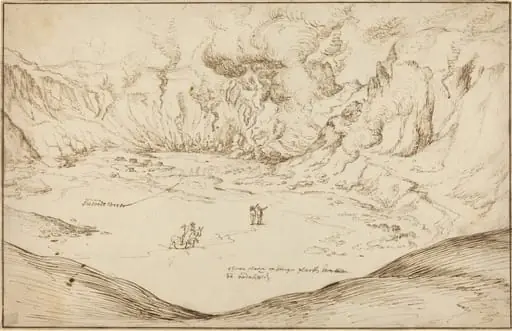 Forum Vulcani: The Hot Springs at Pozzuoli
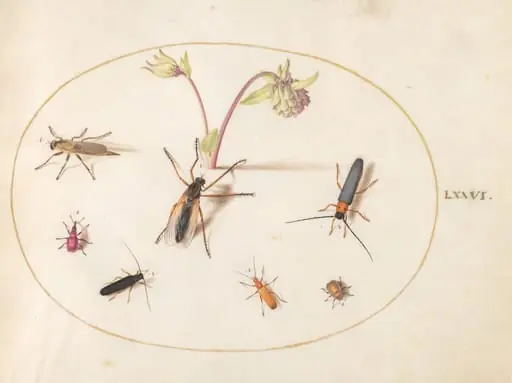 Plate 76: Insects with a Pink and Cream Columbine
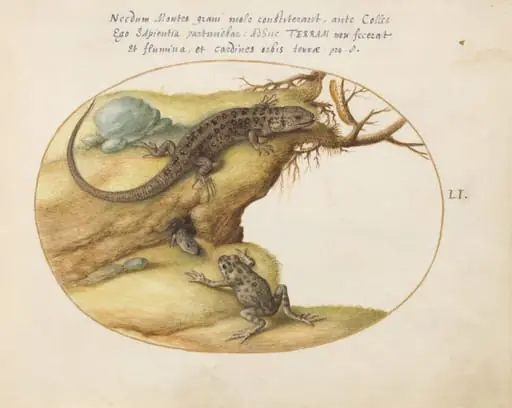 Plate 51: Two Sand Lizards, a Common Parsley Frog(?), and a Caterpillar
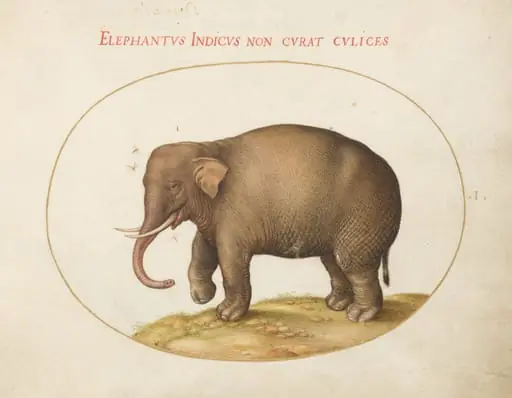 Plate 1: Elephant with Insects
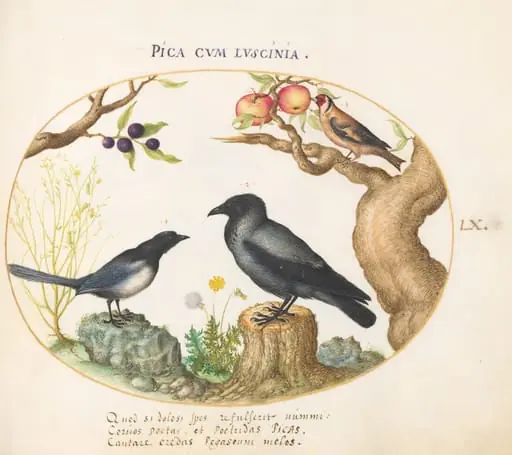 Plate 60: Magpie, Crow, and Goldfinch
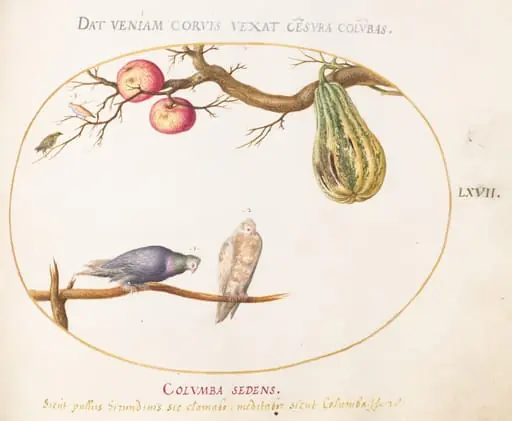 Plate 67: Two Doves beneath a Gourd and Apples
 Plate 31: Seven Moths
 Plate 21: Swamp Hen and Woodcock with a Streaked Rosefinch, a Finch, and Oak Galls
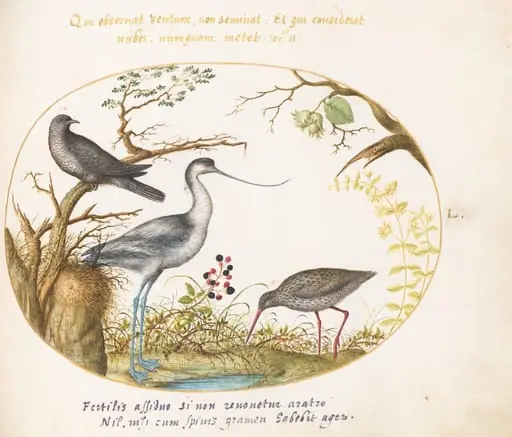
- Plate 50: An Avocet with Two Other Birds
 Plate 28: Barnacle Goose with Shrikes and Other Birds
 Plate 31: Duck, Merganser, and Three Goldfinches
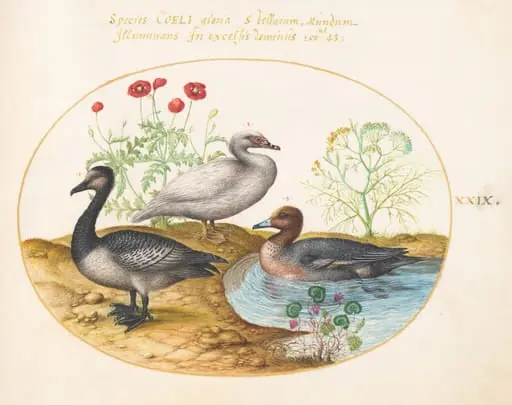 Plate 29: Geese with Poppies and a Cyclamen
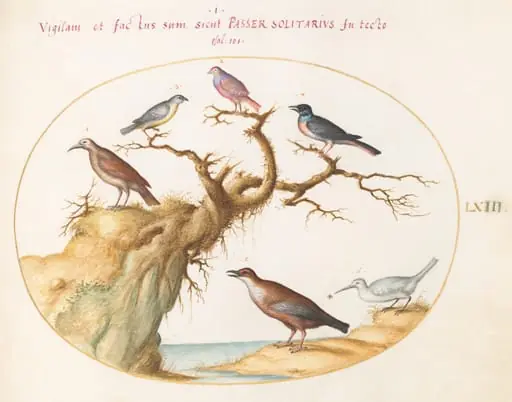 Plate 63: Six Small Birds, Including a Bluethroat and a Cuckoo(?)
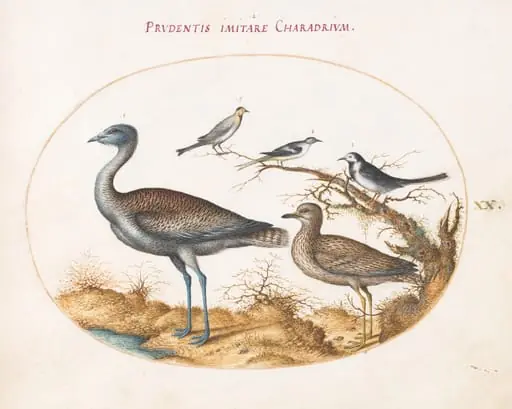 Plate 20: A Plover with Four Other Birds
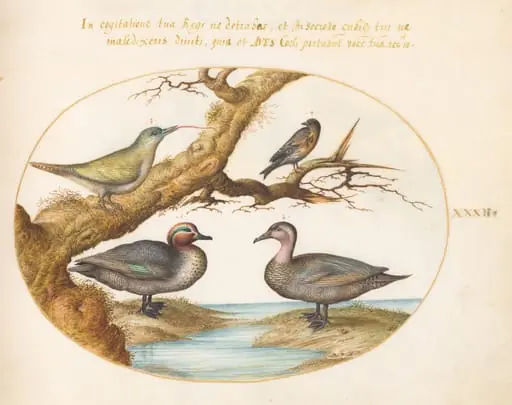 Plate 32: A Green-Winged Teal, a Juvenile Green Woodpecker, and Two Other Birds
 Plate 6: Four Birds of Prey, Including a Sparrowhawk(?)
 Plate 47: Shore Birds with a Perching Bird
 Plate 36: Red-Breasted Merganser, Shoveler, and Mallard, and Duck with Artichokes
 Plate 37: Three Waterfowl with Two Nightingales(?) Perched in Citrus Trees