Artwork
Plate 4: Llama and Moose
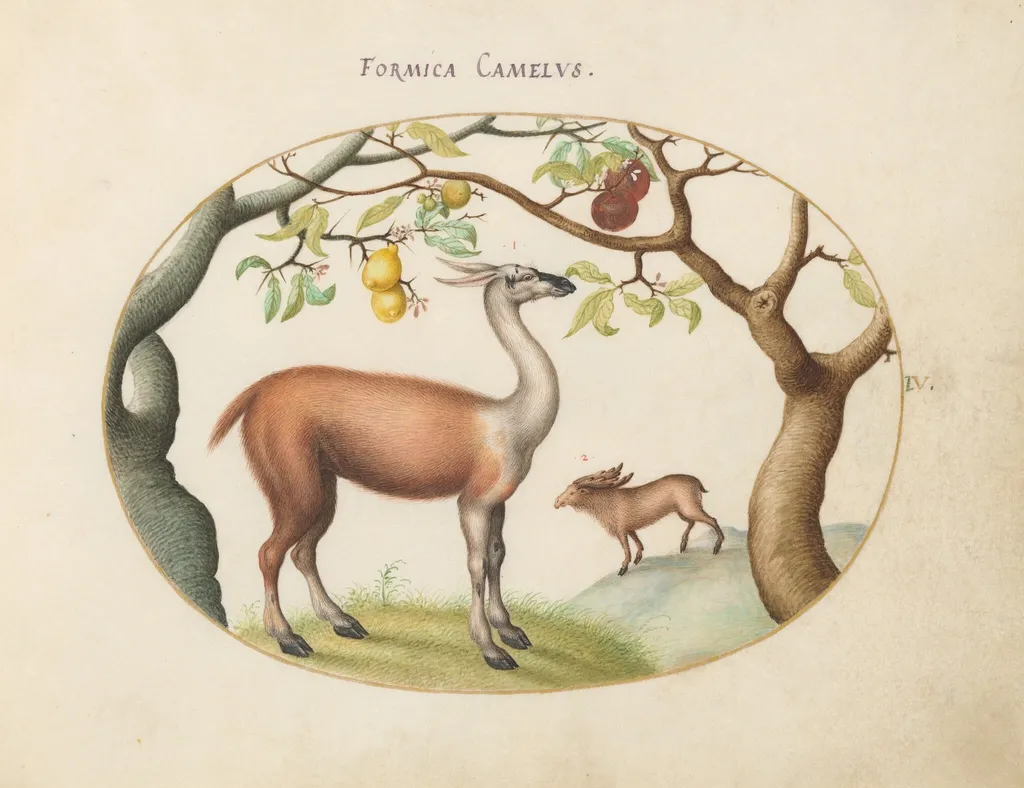
Plate 4: Llama and Moose is a gouache drawing by the Renaissance artist Joris Hoefnagel. It dates from 1594 and is held in the collection of the National Gallery of Art.
- Inscription
- Inscribed:upper center in black ink: FORMICA CAMELVS.; right center in gold: IV.; animals in image numbered .1. and .2., in red ink. Facing page: upper center in brown ink: Redditur Arboribus, florens revirentibus aetas: / Ergo non Homini, quod fuit ante redit.;lower center in brown ink: MALA AVREA in lectis argenteis: qui loquitur / Verbum in tempore suo.pro:25. (“To speak a word in due time is like apples of gold on beds of silver.” Proverbs 25:11) (Latin Vulgate Bible)
About this work
Overview
Created circa 1594, Plate 4: Llama and Moose is a watercolor and gold paint drawing on parchment attributed to Joris Hoefnagel, a versatile Flemish artist.
Subject & Meaning
The piece depicts a llama and a moose, exemplifying Hoefnagel's focus on natural history illustrations, characteristic of his detailed approach to rendering the natural world.
Technique & Style
Executed in watercolor and gold paint on parchment, the work showcases Hoefnagel's skill as one of the last prominent manuscript illuminators, blending detailed naturalism with the luxury of gold accents.
History & Provenance
While specific provenance details for Plate 4 are not provided, its creation around 1594 situates it within Hoefnagel's later output, contributing to the evolution of northern European topographical and floral still-life art.
Context
Plate 4: Llama and Moose reflects the late 16th-century manuscript illumination tradition, with Hoefnagel's natural history themes and meticulous style influencing the development of topographical drawing in northern Europe.
Own this work as a print
Artist & collection

Artist
Joris Hoefnagel or Georg Hoefnagel (1542 – 24 July 1601) was a Flemish painter, printmaker, miniaturist, draftsman and merchant.

 Forum Vulcani: The Hot Springs at Pozzuoli
 Plate 76: Insects with a Pink and Cream Columbine
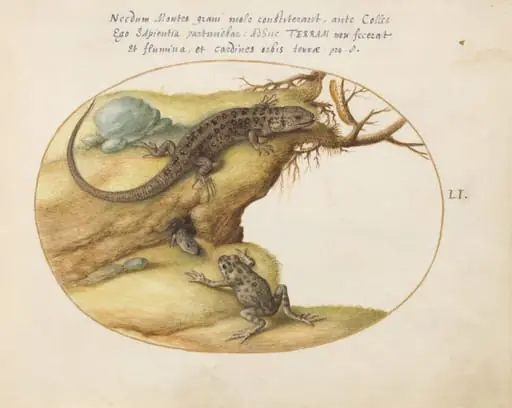 Plate 51: Two Sand Lizards, a Common Parsley Frog(?), and a Caterpillar
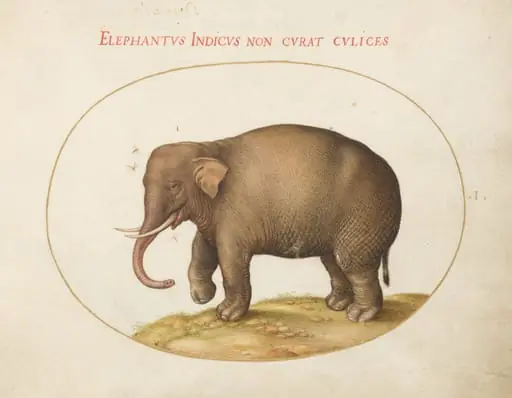 Plate 1: Elephant with Insects
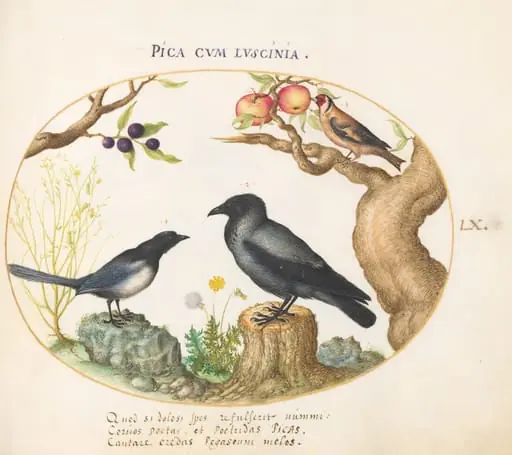 Plate 60: Magpie, Crow, and Goldfinch
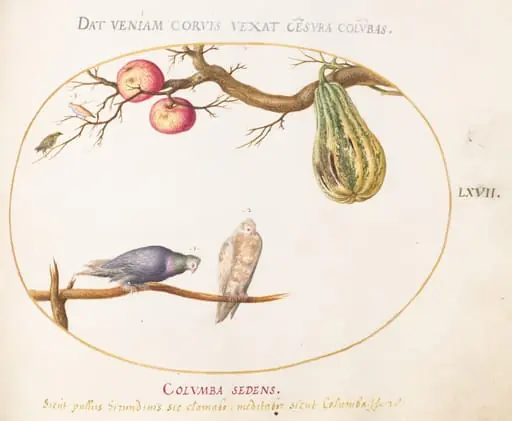 Plate 67: Two Doves beneath a Gourd and Apples
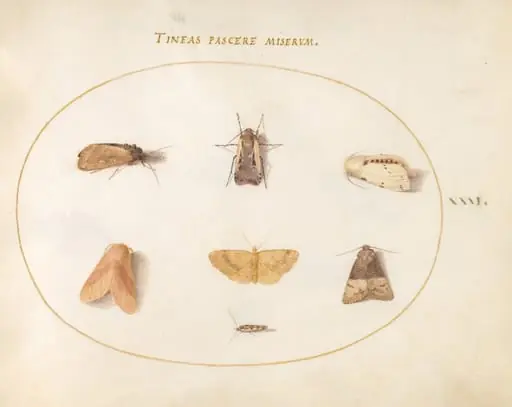 Plate 31: Seven Moths
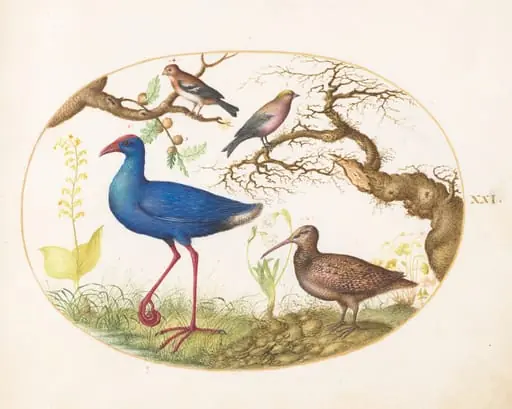 Plate 21: Swamp Hen and Woodcock with a Streaked Rosefinch, a Finch, and Oak Galls
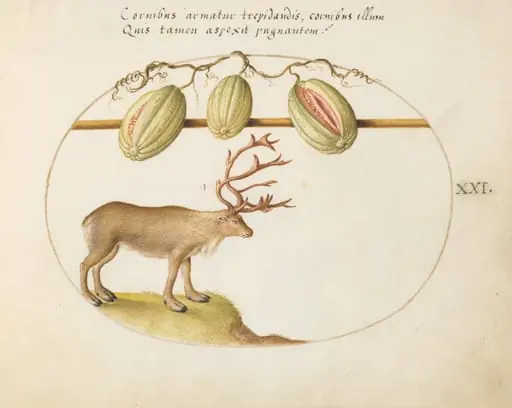
- Plate 21: Reindeer with Melons
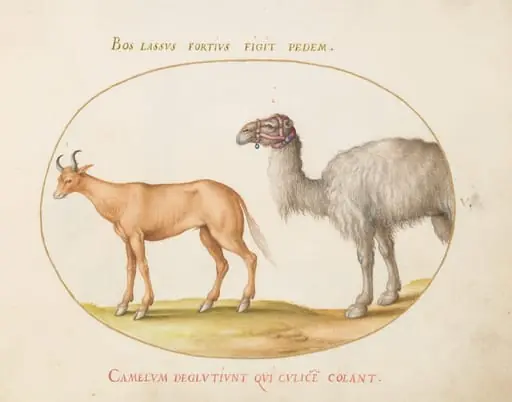 Plate 5: An Ox and a Camel
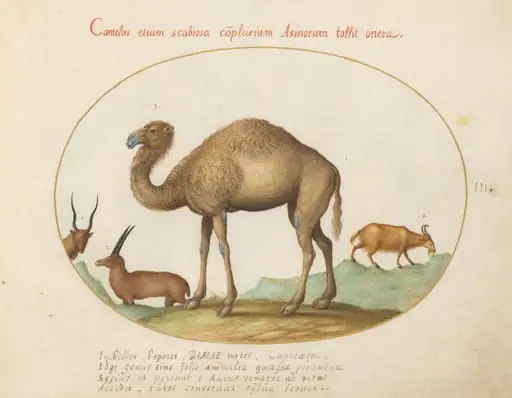 Plate 3: Camel, Ibex, and Goat
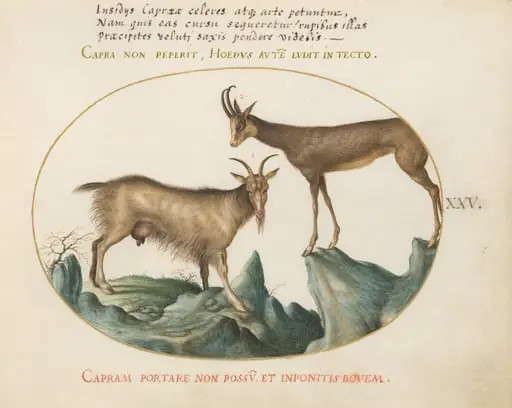 Plate 25: Two Wild Goats
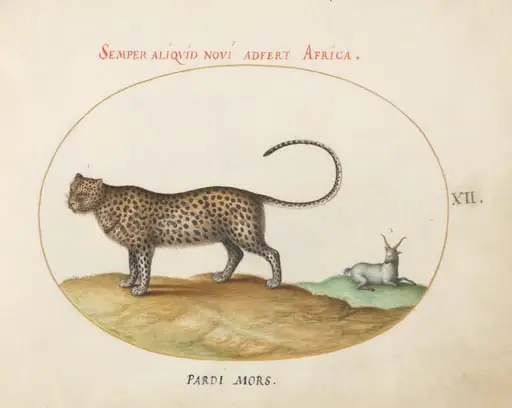 Plate 12: A Cheetah(?) and a Wild Sheep
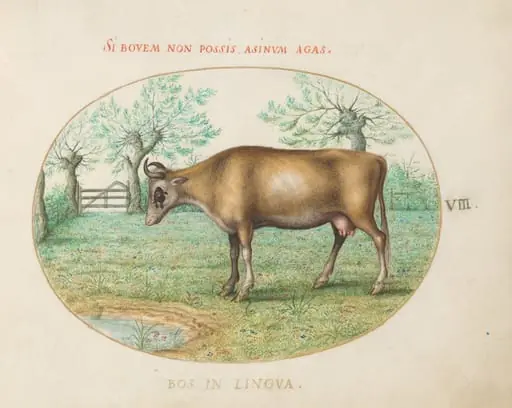 Plate 8: A Cow
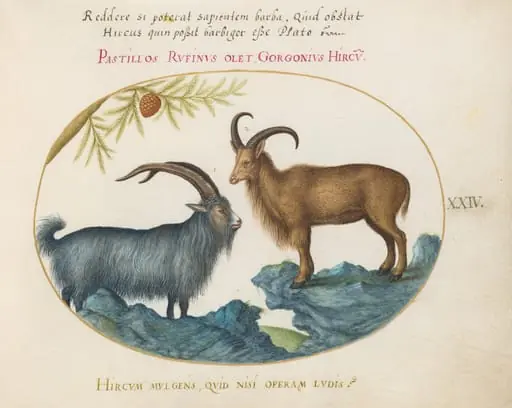 Plate 24: A Wild Goat and a Barbary Sheep(?)
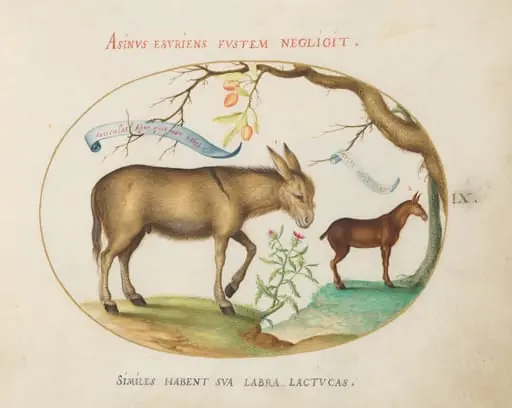 Plate 9: A Donkey and a Mule
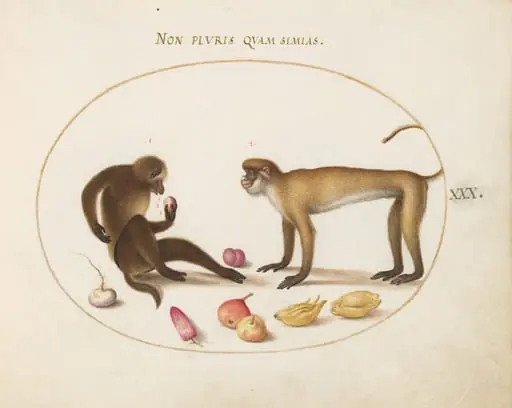 Plate 30: Two Monkeys
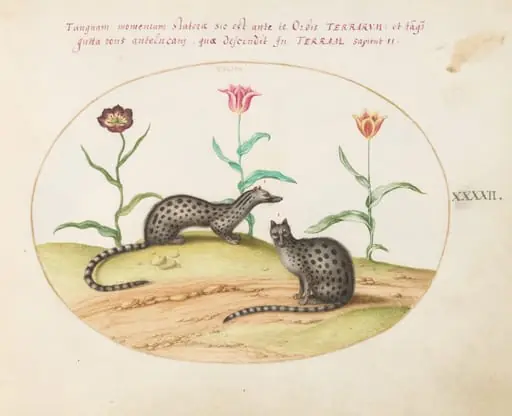 Plate 42: Two Genets or Civet Cats with Tulips