Artwork
Plate 70: Worm, Centipede, Millipede, and Other Long Creatures
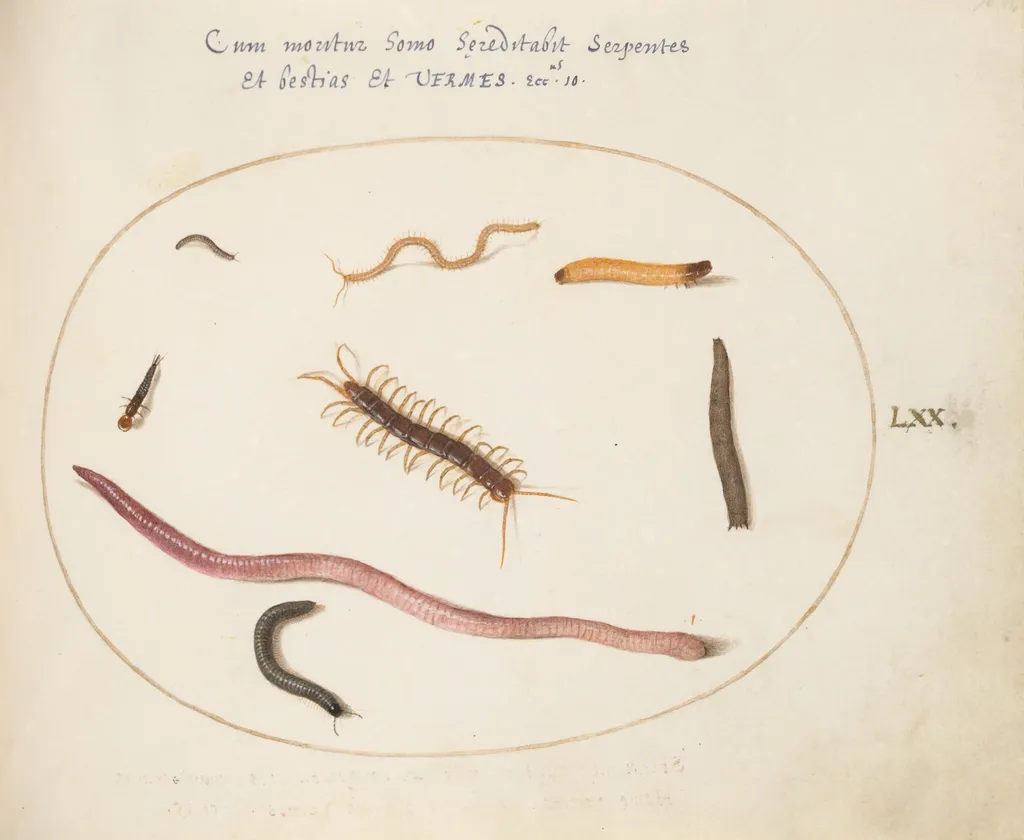
Plate 70: Worm, Centipede, Millipede, and Other Long Creatures is a gouache drawing by the Renaissance artist Joris Hoefnagel. It dates from 1594 and is held in the collection of the National Gallery of Art.
- Inscription
- Inscribed:upper center in blue/black ink: Cum moritur homo h[a]ereditabit serpentes / Et bestias et VERMES.Ecc[us].10. (“For when a man shall die, he shall inherit serpents and beasts and worms.” Ecclesiasticus 10:13) (Latin Vulgate Bible); center right in brown ink: LXX.; worm in image numbered .1., in red ink Facing page: upper center in brown ink: Humilia valde spiritum tuum quoniam vindicta / carnis impii ignis et vermis.Ecc:7: (“Be very humble, because the punishment of the ungodly is fire and worms.” Ecclesiasticus 7:19) (Latin Vulgate Bible); lower center in red ink: Stellae non sunt mundae in conspectu eius: quanto magis / Homo putredo: et filius hominis vermis. Job: 25. (“The stars are not pure in his sight. How much less man that is rottenness and the son of man who is a worm?” Job 25:5-6) (Latin Vulgate Bible)
About this work
Overview
Plate 70: Worm, Centipede, Millipede, and Other Long Creatures is a watercolor and gold paint drawing on parchment, created by Flemish artist Joris Hoefnagel around 1594. The piece features a diverse array of elongated creatures set against a plain white background, showcasing Hoefnagel’s meticulous observation of natural forms.
Subject & Meaning
The subject matter focuses on various invertebrates, including worms, centipedes, and millipedes, highlighting their physical characteristics through detailed, colorful renderings. The work exemplifies Hoefnagel’s contribution to the emerging field of natural history illustration during the Renaissance.
Technique & Style
Executed in watercolor and gold paint on parchment, the drawing blends artistic finesse with scientific precision. Hoefnagel’s style reflects the transitional period from ornate manuscript illuminations to more straightforward, observant naturalistic studies prevalent in northern Europe during the late 16th century.
History & Provenance
Created circa 1594, the piece is part of Hoefnagel’s body of work that advanced topographical and scientific illustration techniques. While specific ownership history is not detailed here, it is associated with the broader Renaissance art movement.
Context
Within the Renaissance, this work sits at the intersection of art and burgeoning scientific inquiry, particularly in natural history. It reflects the era’s growing interest in detailed, realistic representations of the natural world.
Legacy
Plate 70 contributes to Hoefnagel’s legacy as a pivotal figure in the development of naturalistic illustration in northern Europe, influencing the trajectory of both artistic and scientific depiction of flora and fauna.
Own this work as a print
Artist & collection

Artist
Joris Hoefnagel or Georg Hoefnagel (1542 – 24 July 1601) was a Flemish painter, printmaker, miniaturist, draftsman and merchant.

 Forum Vulcani: The Hot Springs at Pozzuoli
 Plate 76: Insects with a Pink and Cream Columbine
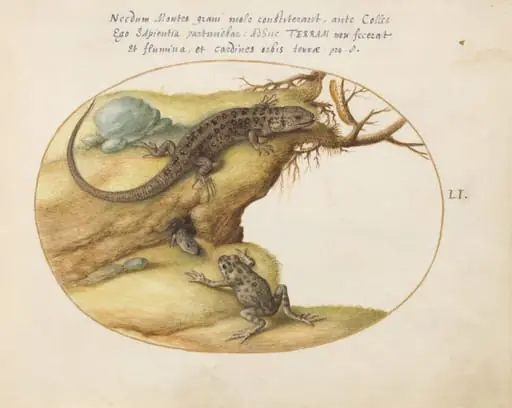 Plate 51: Two Sand Lizards, a Common Parsley Frog(?), and a Caterpillar
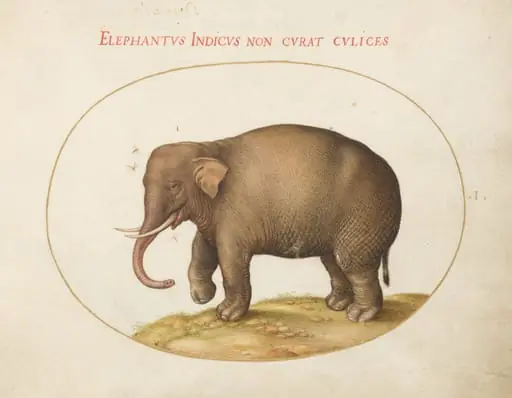 Plate 1: Elephant with Insects
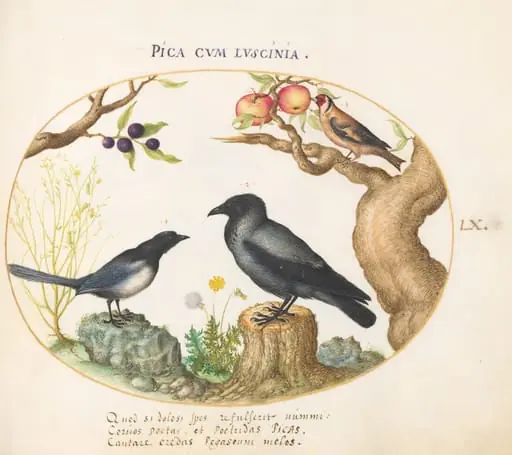 Plate 60: Magpie, Crow, and Goldfinch
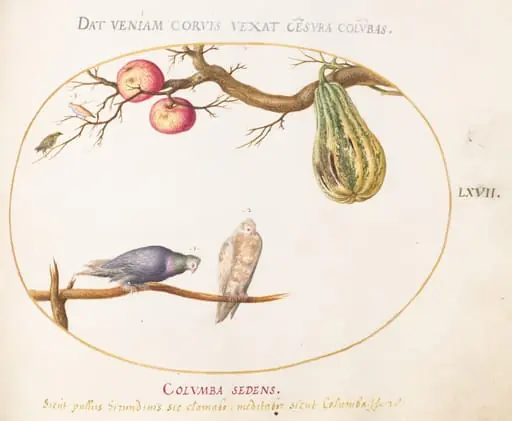 Plate 67: Two Doves beneath a Gourd and Apples
 Plate 31: Seven Moths
 Plate 21: Swamp Hen and Woodcock with a Streaked Rosefinch, a Finch, and Oak Galls
- Plate 64: Leopard Slug, Ground Beetle Larva, a Rat-tailed Maggot, and Other Creatures
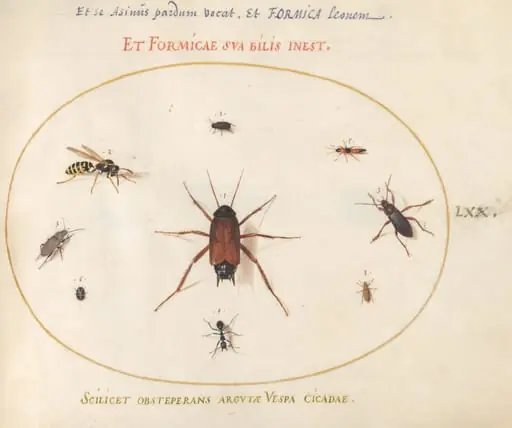 Plate 70: A Roach Surrounded by Insects
 Plate 56: Water Scorpion, Water Measurer, Pond Skater, Red Water Mite, Leech(?), and Other Water Insects
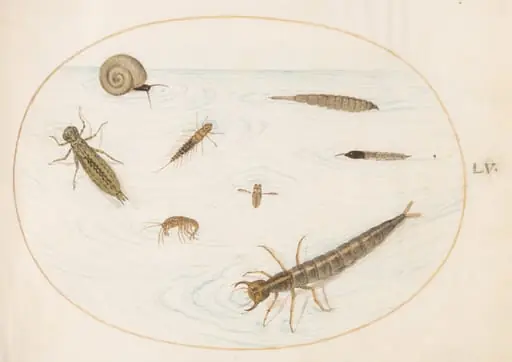 Plate 55: Aquatic Insects and Invertebrates, Including a Snail
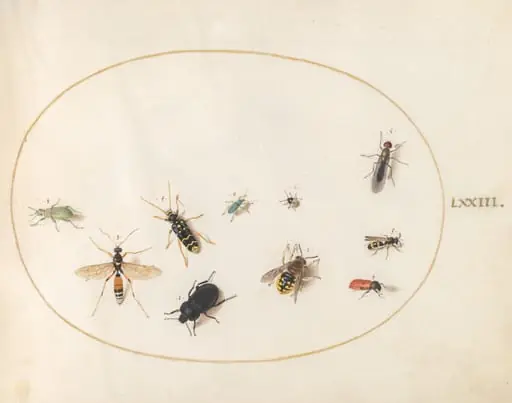 Plate 73: Ten Insects
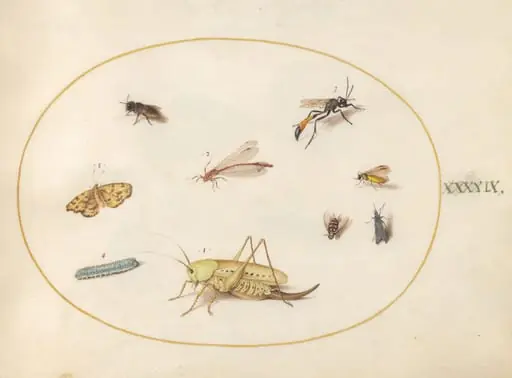 Plate 49: A Grasshopper, a Caterpillar, a Butterfly, a Moth, and Other Insects
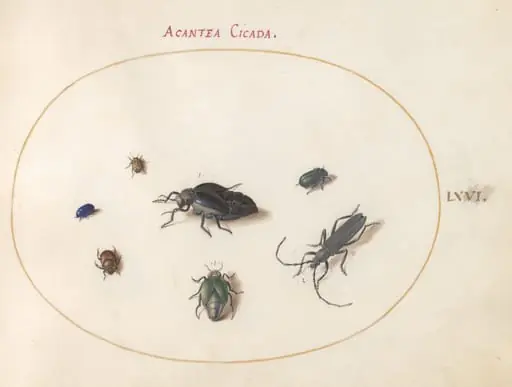 Plate 66: Two Oil Beetles, a Longhorn Beetle, and Four Other Insects
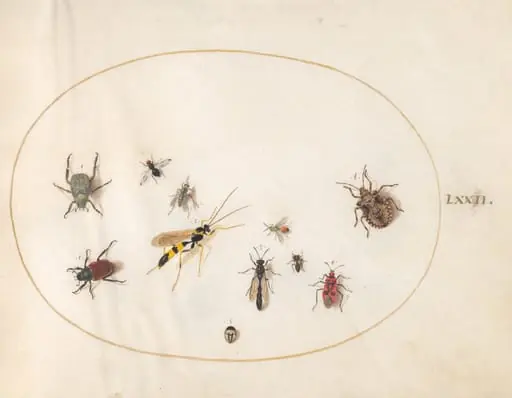 Plate 72: Shield Bug, Cinnamon Bug, Wasp, and Other Insects
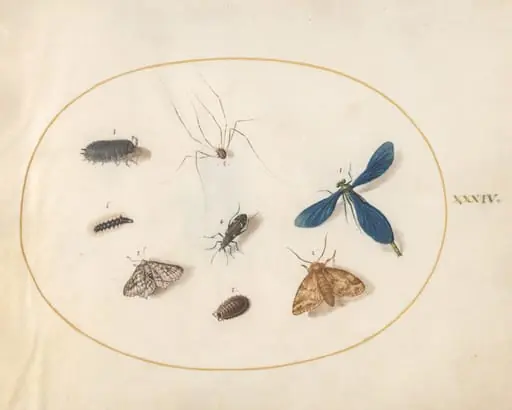 Plate 34: Two Moths with a Spider, a Caterpillar, a Damselfly, and Other Insects
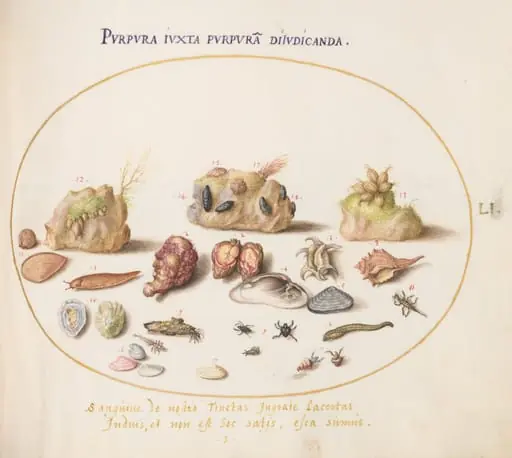 Plate 51: Murex Mollusks, Shells, Hermit Crabs, a Slug, Insects, and Other Sea Life
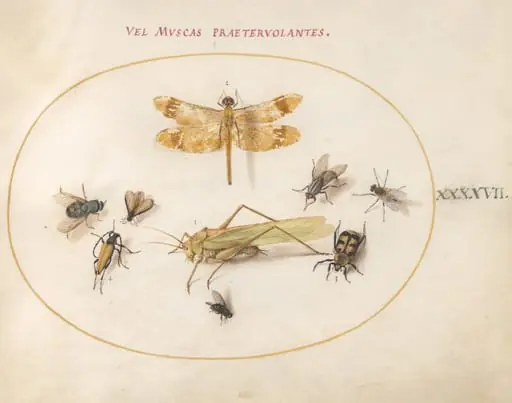 Plate 47: A Dragonfly (Banded Darter?), Grasshopper, Houseflies, a Carrion Beetle, a Flower Longhorn Beetle, and Other Insects
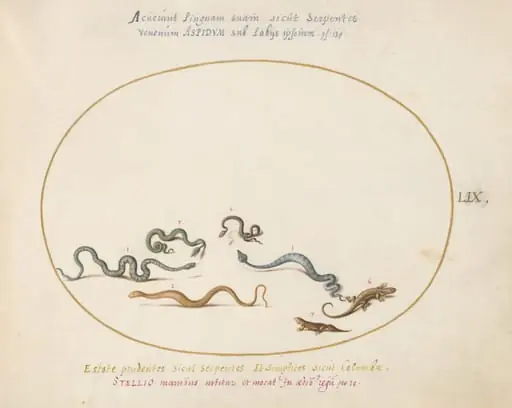 Plate 59: Snakes and a Lizard