Artwork
Plate 59: Snakes and a Lizard
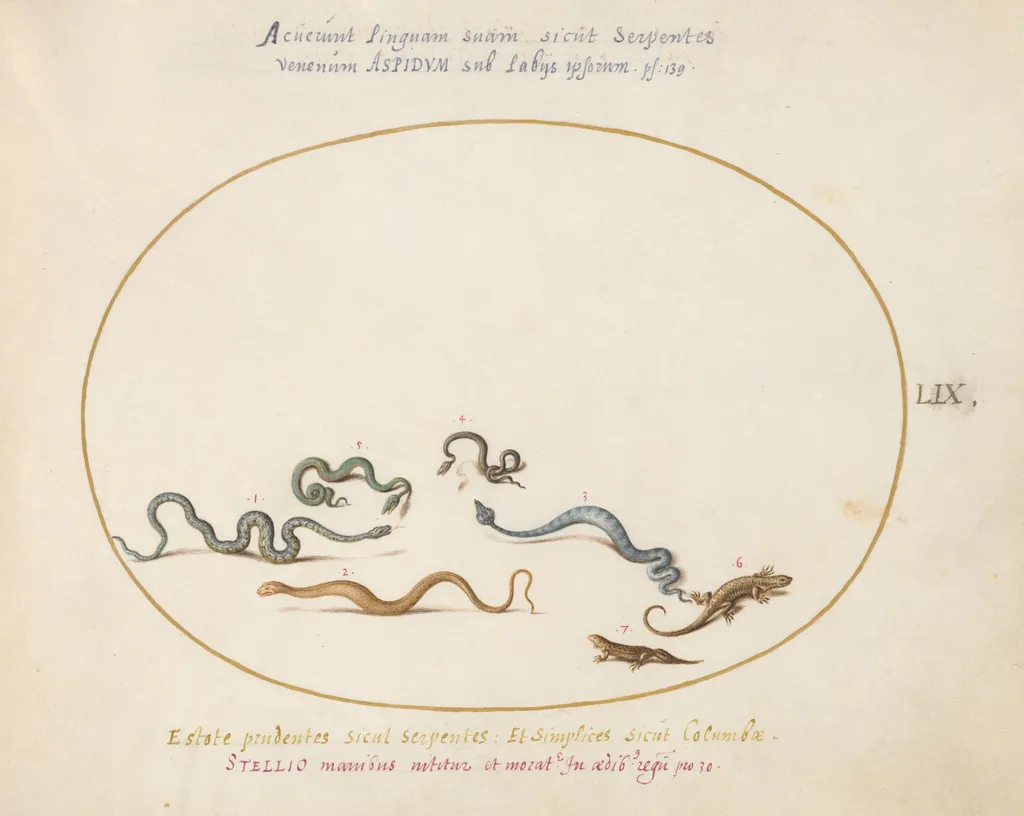
Plate 59: Snakes and a Lizard is a gouache drawing by the Renaissance artist Joris Hoefnagel. It dates from 1594 and is held in the collection of the National Gallery of Art.
- Inscription
- Inscribed:upper center in light blue ink: Acuerunt linguam suam sicut Serpentes / venenum ASPIDVM sub labiis ipsorum.ps:139. (“They have sharpened their tongues like a serpent; adders’ poison is under their lips.” Psalms 139:4) (Latin Vulgate Bible); center right in (gold?): LIX.; animals in image numbered .1., .2., .3., .4., .5., .6., and .7., in red ink; lower center in (gold?): Estote prudentes sicut serpentes: Et simplices sicut Columbae.; lower center in red ink: STELLIO manibus nititur et morat[ur] in aedib[us] regu[m].pro.30. (“A spotted lizard takes hold with it hands and lingers in kings’ palaces.” Proverbs 30:28) (Latin Vulgate Bible) Facing page: upper center in red ink: Spiritus eius creavit Coelos: Et obstetricante manu eius / productus est serpens Tortuosus: Job.26. (“By his spirit he has garnished the heavens; his hand has formed the crooked serpent.” Job 26:13) (Latin Vulgate Bible); lower center in brown ink: Ipsa caloris egens, gelidum non transit in orbem / Sponte sua, Niloq[ue] tenus metitur arenas. / Sed quis erit nobis lucri pudor? Indepetuntur / Huc lybici montes, et fecimus ASPIDA merces.
About this work
Overview
Created circa 1594, Plate 59: Snakes and a Lizard is a small-scale work executed in watercolor and gold on parchment. The drawing presents a close‑up grouping of two serpents and a lizard, rendered with meticulous attention to the anatomy and surface texture of each creature. It exemplifies the artist’s commitment to precise observation within a decorative framework.
Subject & Meaning
The composition focuses on the natural forms of the reptiles, arranging them in a balanced triangular layout that emphasizes their sinuous lines and contrasting scales. While the work does not convey an overt narrative, the careful rendering suggests an interest in cataloguing and celebrating the diversity of fauna, a common aim among early modern naturalists.
Technique & Style
Employing transparent watercolor washes alongside delicate applications of gold leaf, the artist achieves a luminous surface that highlights the sheen of the reptiles’ skins. The fine linear drawing, typical of Flemish illumination, combines scientific exactness with ornamental elegance, allowing subtle gradations of tone to suggest depth without abandoning the flat decorative plane of the parchment support.
History & Provenance
The piece is attributed to Joris Hoefnagel, a Flemish illustrator whose career spanned the late sixteenth century. It belongs to a larger manuscript series that documented flora and fauna for aristocratic patrons. The drawing has remained in the collection of a European museum since the nineteenth century, where it is catalogued as part of Hoefnagel’s surviving illuminated manuscripts.
Context
Plate 59 reflects this transitional moment, marrying decorative illumination with empirical observation.
Hoefnagel worked at a time when the boundaries between art and emerging scientific inquiry were fluid. His watercolors contributed to the nascent tradition of topographical and natural‑history illustration in the Low Countries, and they prefigure the floral still‑life genre that would later flourish in northern Europe. Plate 59 reflects this transitional moment, marrying decorative illumination with empirical observation.
Own this work as a print
Artist & collection

Artist
Joris Hoefnagel or Georg Hoefnagel (1542 – 24 July 1601) was a Flemish painter, printmaker, miniaturist, draftsman and merchant.

 Forum Vulcani: The Hot Springs at Pozzuoli
 Plate 76: Insects with a Pink and Cream Columbine
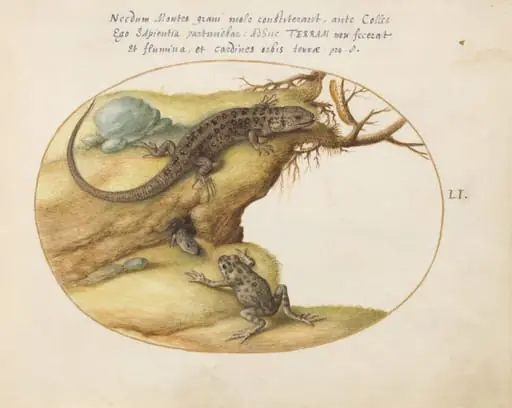 Plate 51: Two Sand Lizards, a Common Parsley Frog(?), and a Caterpillar
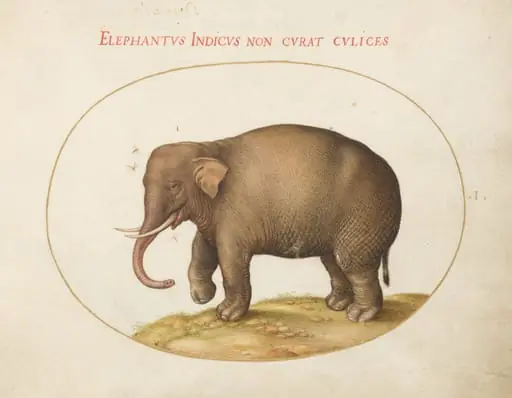 Plate 1: Elephant with Insects
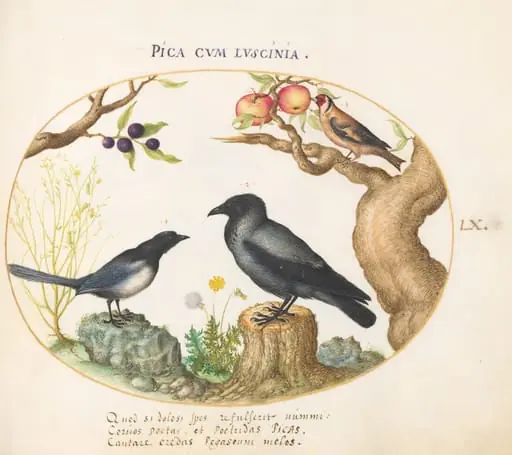 Plate 60: Magpie, Crow, and Goldfinch
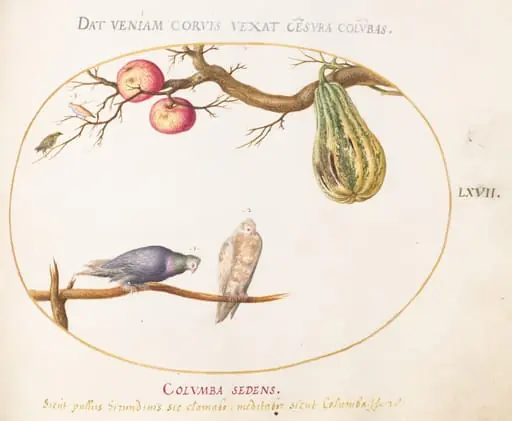 Plate 67: Two Doves beneath a Gourd and Apples
 Plate 31: Seven Moths
 Plate 21: Swamp Hen and Woodcock with a Streaked Rosefinch, a Finch, and Oak Galls
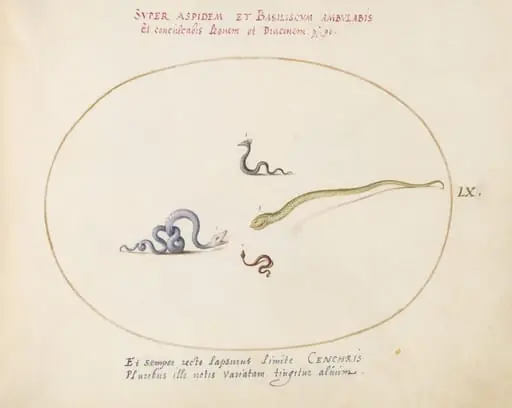
- Plate 60: Four Small Snakes
 Plate 57: A Snake, a Fire Salamander, and a Snakelike Creature with Two Legs
 Plate 52: Two Sand Lizards
 Plate 70: Worm, Centipede, Millipede, and Other Long Creatures
 Plate 58: Asps and Vipers
 Snake
Snake Plate 54: Frogs, Lizards, and Salamanders(?) in a Landscape
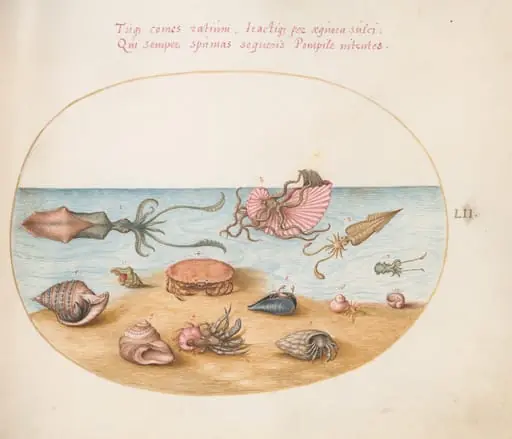 Plate 52: An Argonaut, Squid, Hermit Crabs, Shells, and a Crab
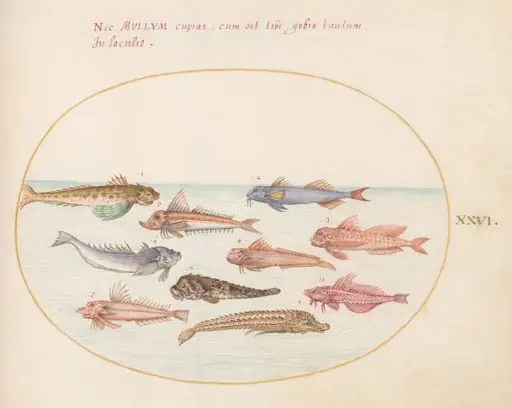 Plate 26: Gurnards, Dragonets, and Other Fish
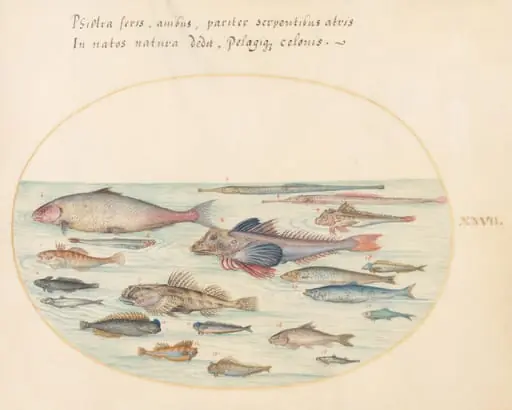 Plate 27: Blennies, Scorpion Fish, and Other Fish
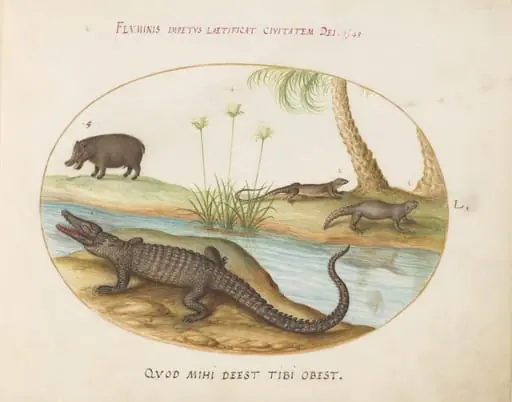 Plate 50: A Crocodile, a Hippopotomus, a Land Crocodile or Tegu Lizard(?), and a Crocodile or Spiny-Tailed Lizard with a Papyrus Plant