Artwork
Plate 8: A Dolphin, Two Seals, a Brethmechin, and Shells
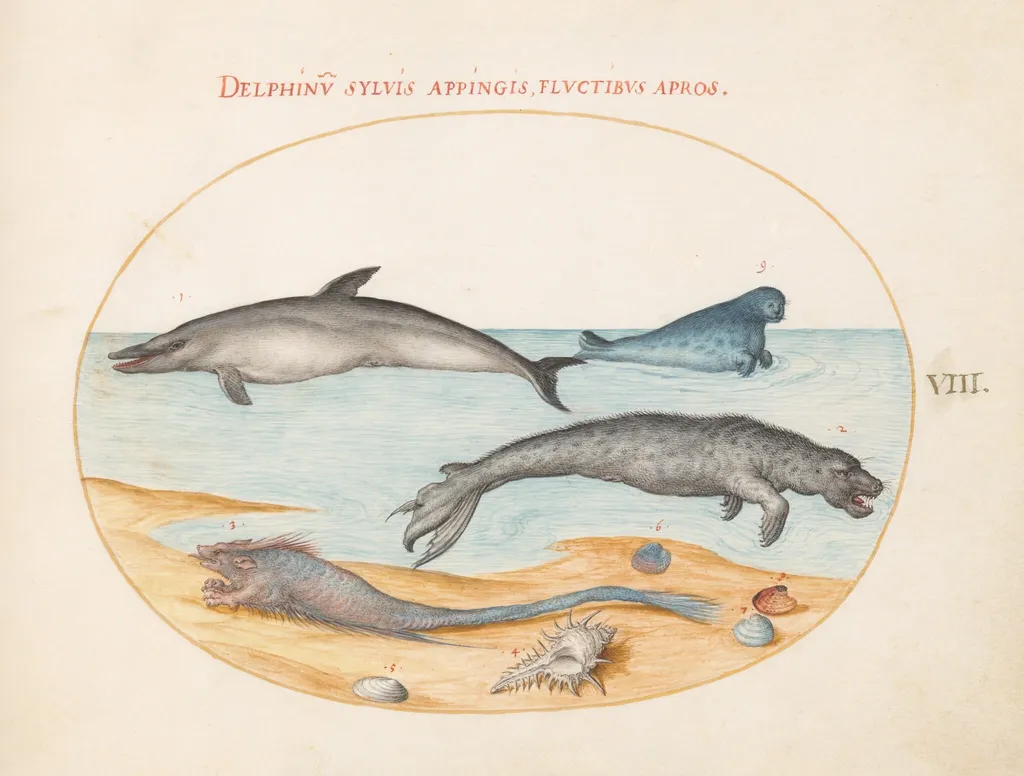
Plate 8: A Dolphin, Two Seals, a Brethmechin, and Shells is a gouache drawing by the Renaissance artist Joris Hoefnagel. It dates from 1594 and is held in the collection of the National Gallery of Art.
- Inscription
- Inscribed:upper center in red ink: DELPHINV[M/N] SYLVIS APPINGIS, FLVCTIBVS APROS.; creatures in image numbered ..1., .2., .3., and .9. in red ink; shells in image numbered .4., .5., .6., .7., and .8.; center right in brown ink: VIII. Facing page: upper center in black ink: Quis ignorat, quod o[m/n]ia h[a]ec manus / Domini fecerit? Job.12. (“Who is ignorant that the hand of the Lord has made all these things?” Job 12:9) (Latin Vulgate Bible); lower center in brown ink: Pisce super curvo Vectus cantabat Arion.
About this work
Overview
Created circa 1594, this miniature drawing by Flemish artist Joris Hoefnagel combines watercolor and gold pigment on parchment. It portrays a marine tableau that includes a dolphin, two seals, a brethmechin, a type of sea urchin, and assorted shells, rendered with meticulous attention to texture and surface detail.
Subject & Meaning
The composition assembles a variety of sea life, allowing the viewer to compare the sleek skin of the dolphin with the dense fur of the seals and the intricate patterns of the shells. By juxtaposing these organisms, Hoefnagel emphasizes the diversity of marine fauna and invites a close, observational study of their natural characteristics.
Technique & Style
Hoefnagel employs transparent watercolor washes to model form, while fine brushwork delineates fur, scales, and shell ornamentation. Gold paint is applied sparingly to accentuate highlights and lend a subtle richness to the surface, a nod to the manuscript illumination tradition from which he emerged.
History & Provenance
The work belongs to a late phase of Hoefnagel’s career, when he was among the final generation of artists working in the illuminated manuscript format. It reflects his broader involvement in topographical drawing and the early development of still‑life painting as an autonomous genre in northern Europe.
Context
At the turn of the 17th century, natural history illustration was gaining scientific credibility. Hoefnagel’s approach, combining artistic skill with an almost empirical eye for detail, mirrored contemporary interests in cataloguing the natural world, bridging decorative art and emerging scientific documentation.
Own this work as a print
Artist & collection

Artist
Joris Hoefnagel or Georg Hoefnagel (1542 – 24 July 1601) was a Flemish painter, printmaker, miniaturist, draftsman and merchant.

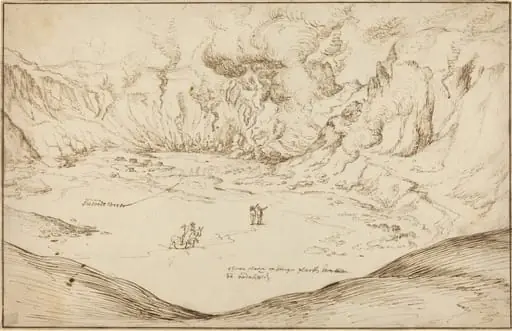 Forum Vulcani: The Hot Springs at Pozzuoli
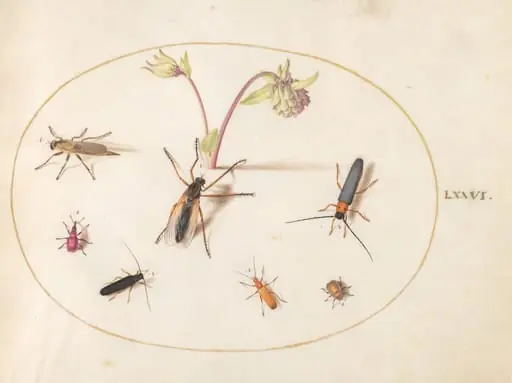 Plate 76: Insects with a Pink and Cream Columbine
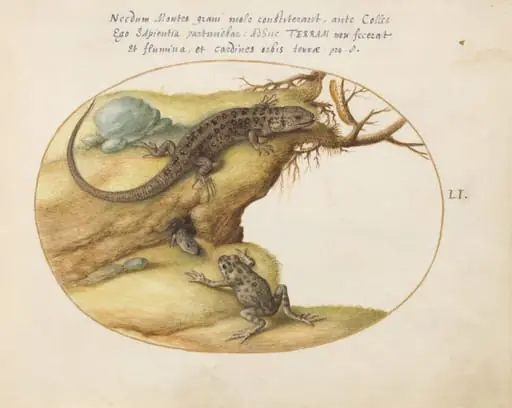 Plate 51: Two Sand Lizards, a Common Parsley Frog(?), and a Caterpillar
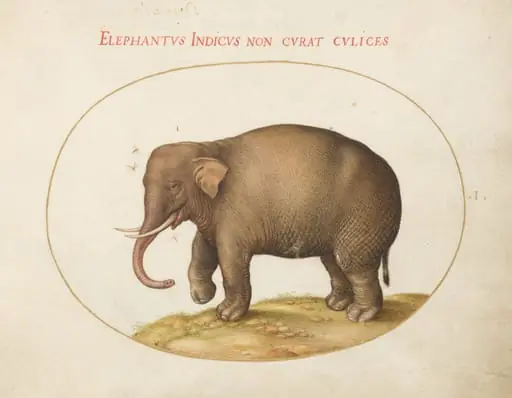 Plate 1: Elephant with Insects
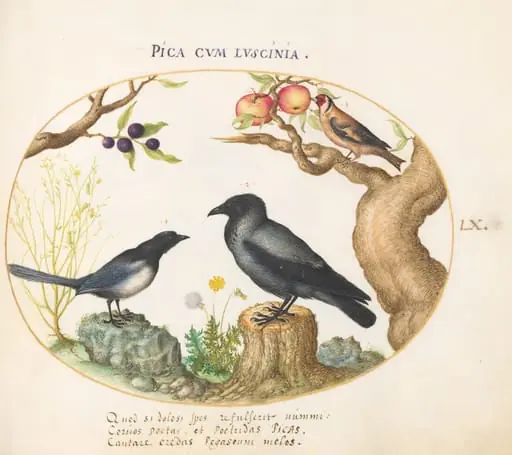 Plate 60: Magpie, Crow, and Goldfinch
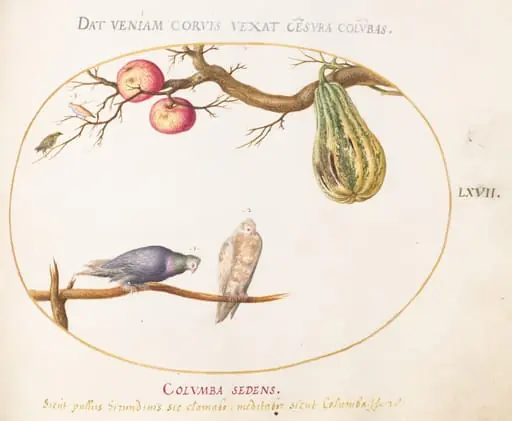 Plate 67: Two Doves beneath a Gourd and Apples
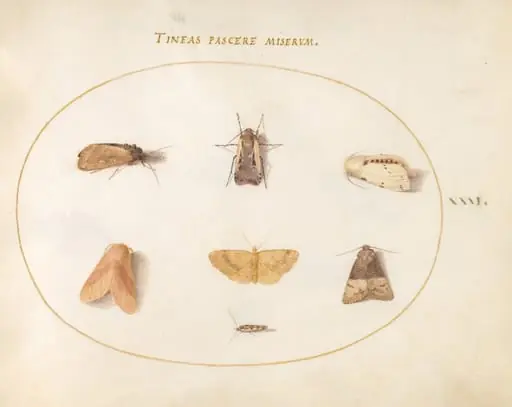 Plate 31: Seven Moths
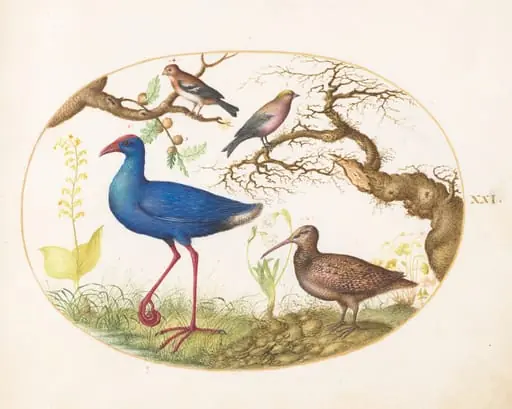 Plate 21: Swamp Hen and Woodcock with a Streaked Rosefinch, a Finch, and Oak Galls
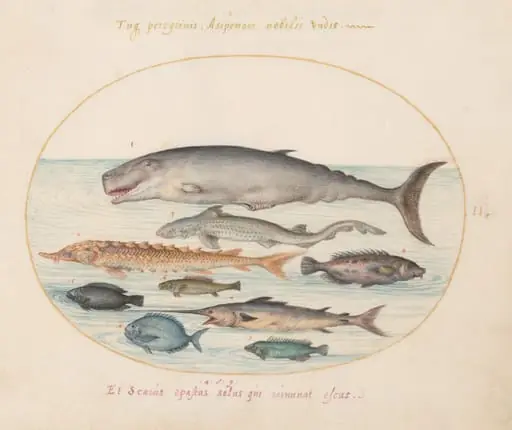
- Plate 2: Sperm Whale, Sturgeon, Shark, and Other Fish
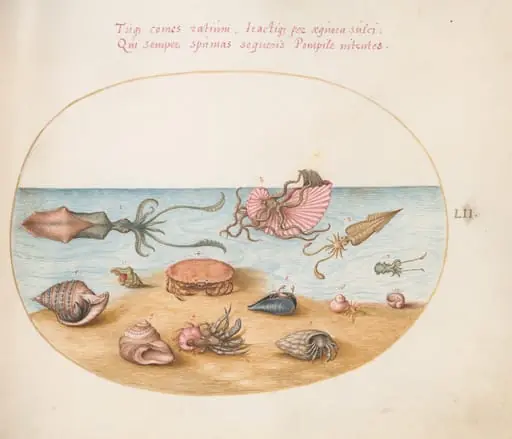 Plate 52: An Argonaut, Squid, Hermit Crabs, Shells, and a Crab
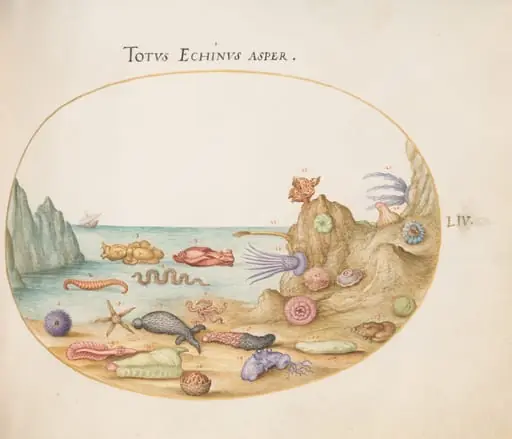 Plate 54: Sea Cucumbers, Sea Urchins, Starfish, a Sea Nettle, a "Sea Hare," and Other Marine Life
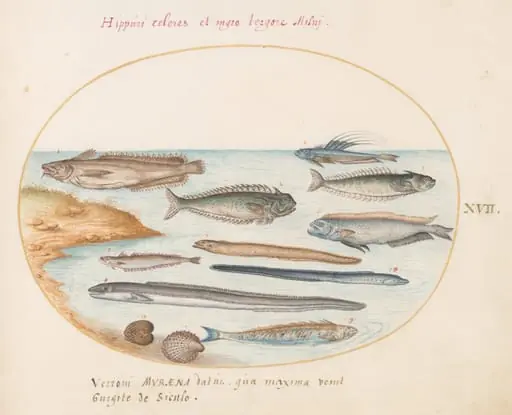 Plate 17: A Cod, Weever Fish, Eels, and Other Fish
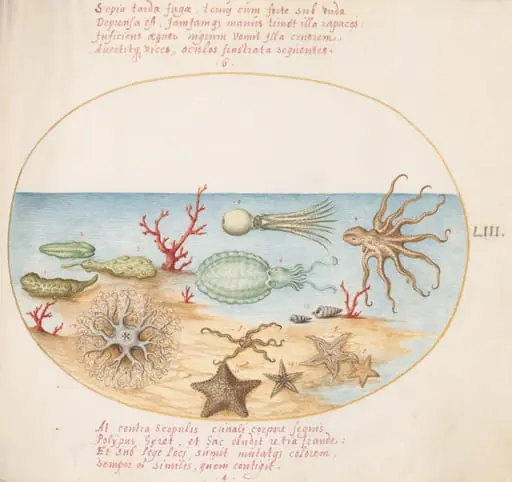 Plate 53: Sea Cucumbers, Coral, Octopus, Starfish, Squid, and Other Sea Creatures
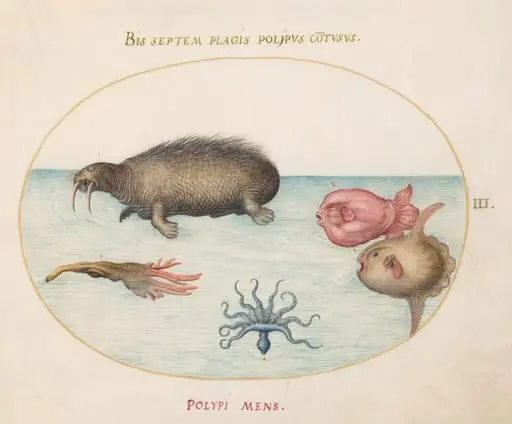 Plate 3: A Walrus, a Nine-Legged Octopus, and Ocean Sunfish
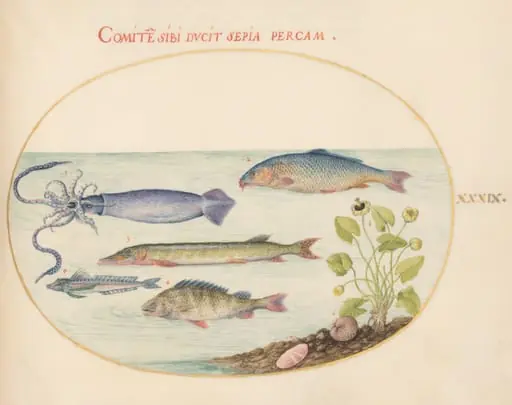 Plate 39: Squid, Gurnard, Pike, and Other Fish
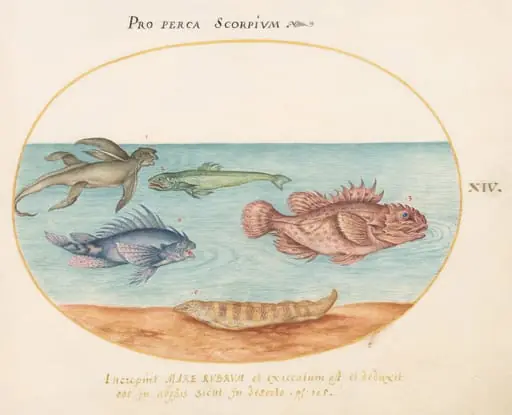 Plate 14: A "Sea Ape," Two Scorpion Fish, and Two Other Fish
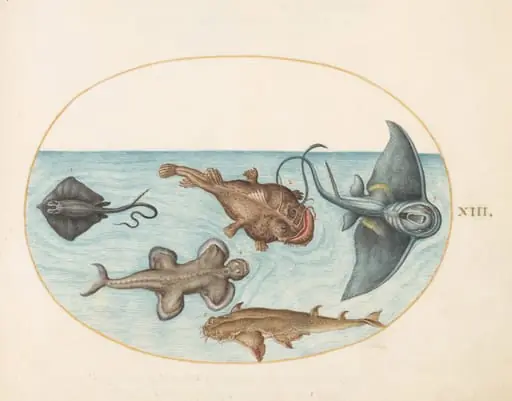 Plate 13: Two Stingrays, an Anglerfish, a Monkfish(?) and an Angel Shark
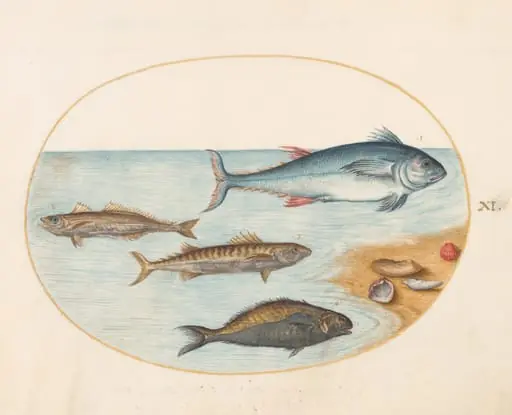 Plate 11: Four Fish and Shells
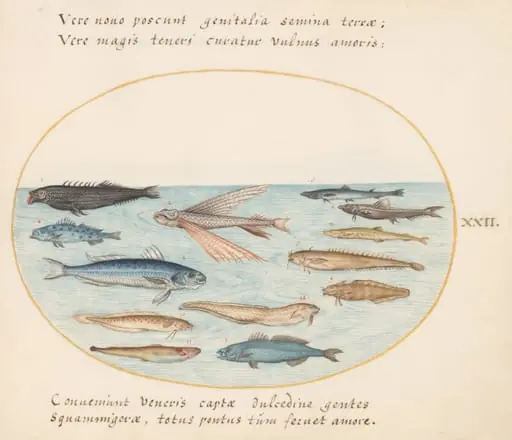 Plate 22: Mullet, Flying Fish, Eels, and Other Fish
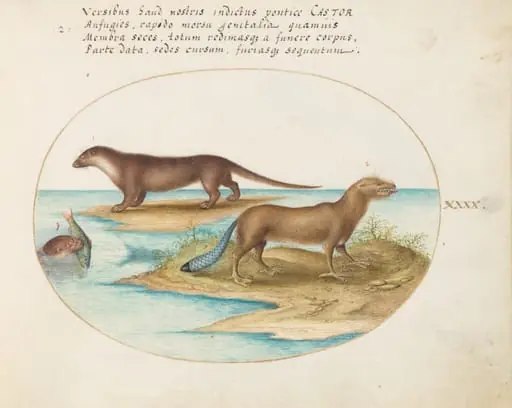 Plate 40: Two Otters and a Beaver