Artwork
Plate 54: Sea Cucumbers, Sea Urchins, Starfish, a Sea Nettle, a "Sea Hare," and Other Marine Life
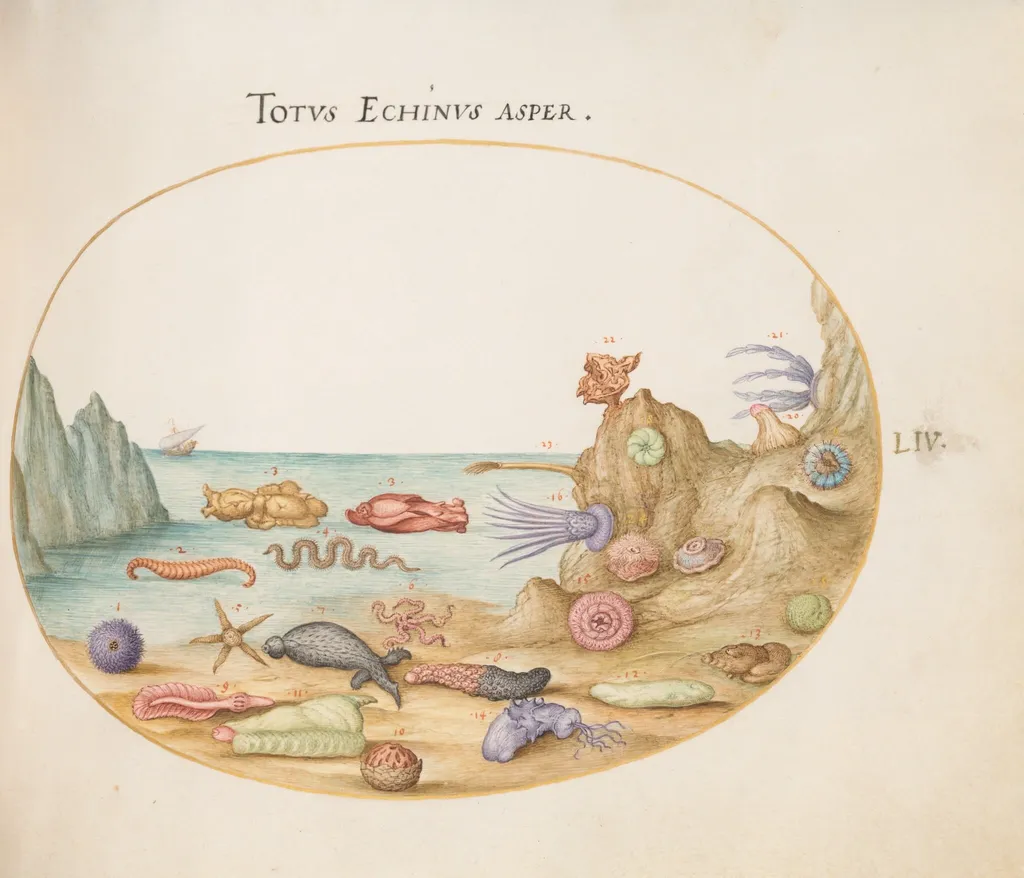
Plate 54: Sea Cucumbers, Sea Urchins, Starfish, a Sea Nettle, a "Sea Hare," and Other Marine Life is a gouache drawing by the Renaissance artist Joris Hoefnagel. It dates from 1594 and is held in the collection of the National Gallery of Art.
- Inscription
- Inscribed:upper center in black ink: TOTVS ECHINVS ASPER. (“A sea urchin is rough all over.” Erasmus, _Adages_, 2.9.59) (trans. Bass 2019, 221); echinoderms in image numbered .1., .2., .3., .4., .5., .6., .7., .8., .9., .10., .11, .12., .13., .14., .15., .16., .20., .21., .22., and .23., in red ink; center right in brown ink: LIV. Facing page: upper center in blue ink: .1. / Iste licet digitos testudines pungat acuta: / Cortice deposito, mollis Echinus erit.; lower center in red/violet ink: Vive tibi tecumq[ue] habita nec grandia tentes; / Effugit immodicas, parvula puppis AQVAS (“Live for yourself and reside with yourself, and do not try great things. The small ship flees unruly waters.” Labeled as Ovid in Comenius, _Lexicon atriale_, 473-74) (trans. Bass 2019, 221)
About this work
Overview
Created circa 1594, this watercolor and gold-painted illustration on parchment presents a compact underwater tableau populated by a variety of marine organisms. The composition is framed by a gilded border and includes a distant ship on the horizon, suggesting a broader seascape beyond the detailed study.
Subject & Meaning
The image records several invertebrates, sea cucumbers, sea urchins, starfish, a sea nettle, and a creature identified as a “sea hare”, arranged among spiky and filamentous forms that may represent algae or other sea flora. The labeling of each specimen indicates an intent to catalogue rather than merely decorate.
Technique & Style
Executed in transparent watercolor washes layered to achieve depth, the work also incorporates fine gold leaf accents that outline forms and enhance the sense of light filtering through water. The delicate glazing and precise line work reflect Hoefnagel’s background in manuscript illumination.
History & Provenance
The drawing is part of a larger series of marine studies produced by the Flemish artist Joris Hoefnagel, who combined his skills as a draftsman and a merchant to travel and document natural subjects. The plate was likely assembled for a private collection of natural history illustrations in the late sixteenth century.
Context
Hoefnagel’s marine plates contributed to the emergence of topographical and still‑life genres in northern Europe, bridging scientific observation with artistic representation. His meticulous approach anticipates later natural‑history illustration traditions that emphasized accuracy alongside aesthetic appeal.
Own this work as a print
Artist & collection

Artist
Joris Hoefnagel or Georg Hoefnagel (1542 – 24 July 1601) was a Flemish painter, printmaker, miniaturist, draftsman and merchant.

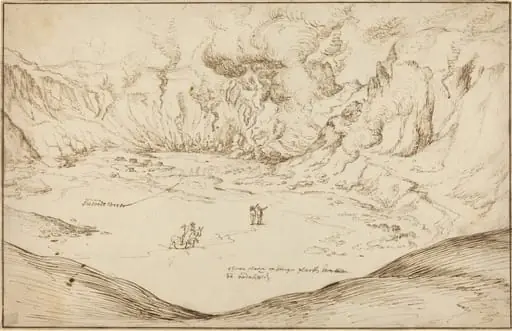 Forum Vulcani: The Hot Springs at Pozzuoli
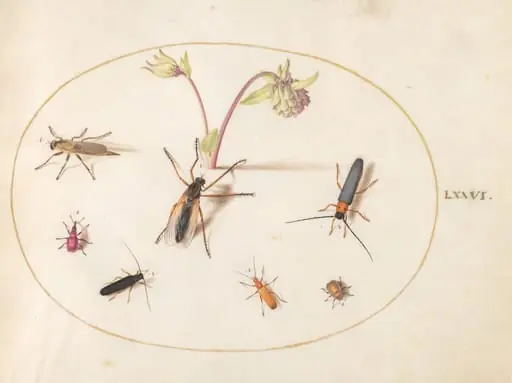 Plate 76: Insects with a Pink and Cream Columbine
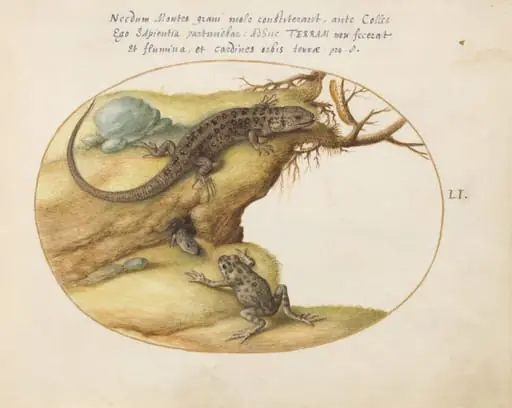 Plate 51: Two Sand Lizards, a Common Parsley Frog(?), and a Caterpillar
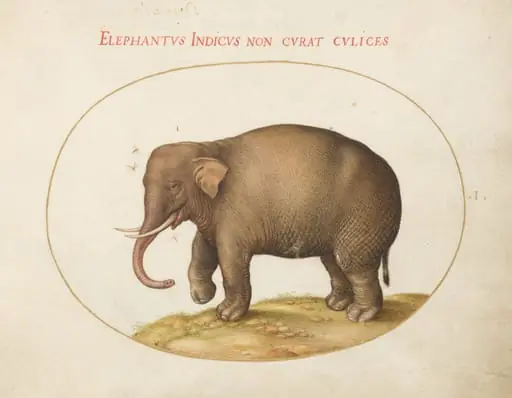 Plate 1: Elephant with Insects
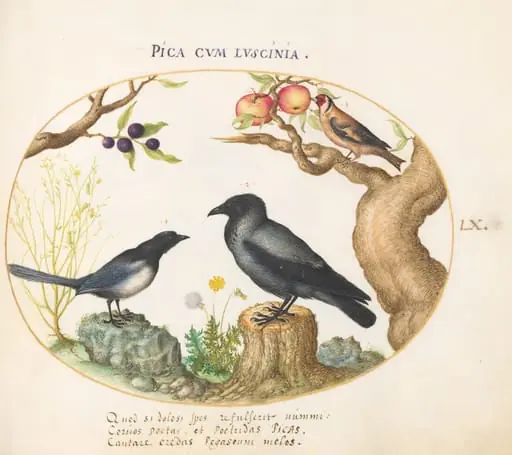 Plate 60: Magpie, Crow, and Goldfinch
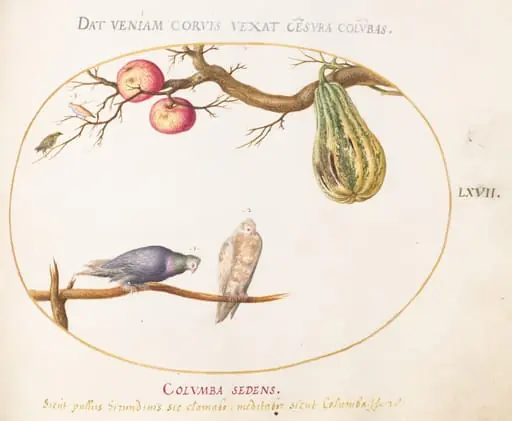 Plate 67: Two Doves beneath a Gourd and Apples
 Plate 31: Seven Moths
 Plate 21: Swamp Hen and Woodcock with a Streaked Rosefinch, a Finch, and Oak Galls
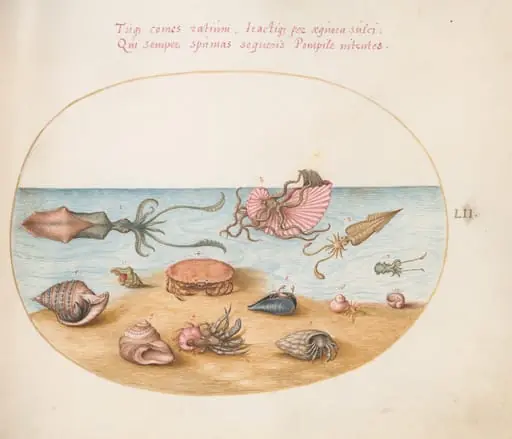
- Plate 52: An Argonaut, Squid, Hermit Crabs, Shells, and a Crab
 Plate 17: A Cod, Weever Fish, Eels, and Other Fish
 Plate 53: Sea Cucumbers, Coral, Octopus, Starfish, Squid, and Other Sea Creatures
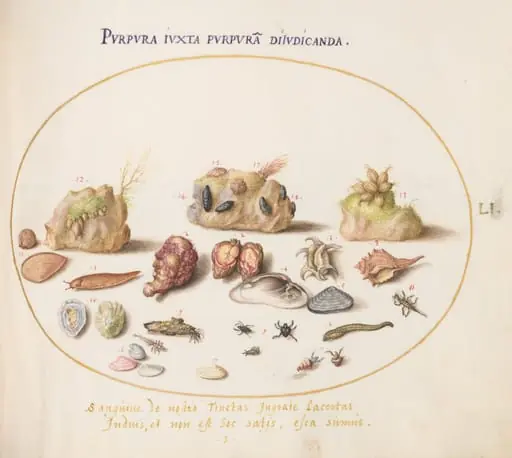 Plate 51: Murex Mollusks, Shells, Hermit Crabs, a Slug, Insects, and Other Sea Life
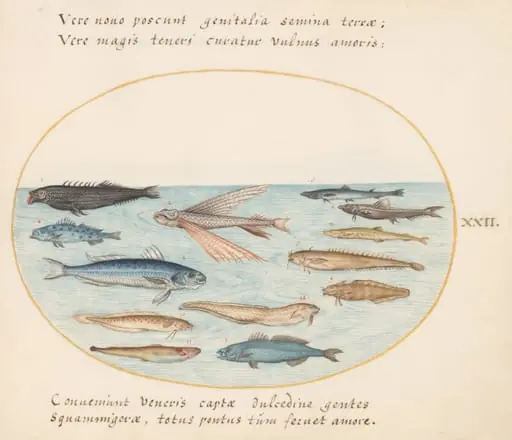 Plate 22: Mullet, Flying Fish, Eels, and Other Fish
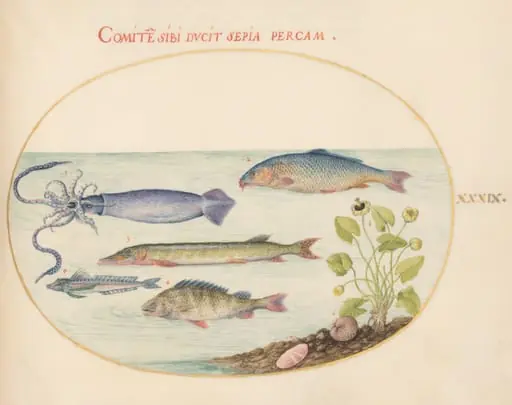 Plate 39: Squid, Gurnard, Pike, and Other Fish
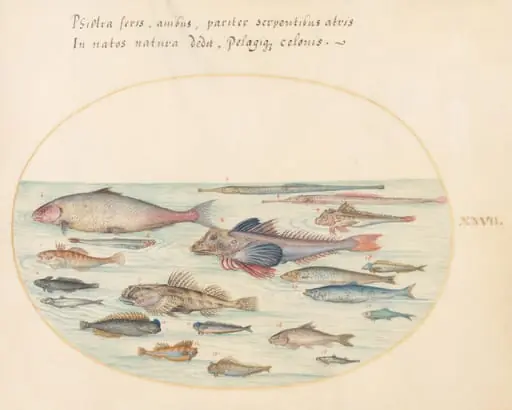 Plate 27: Blennies, Scorpion Fish, and Other Fish
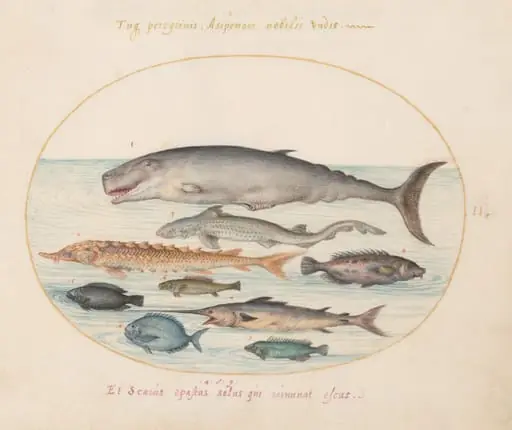 Plate 2: Sperm Whale, Sturgeon, Shark, and Other Fish
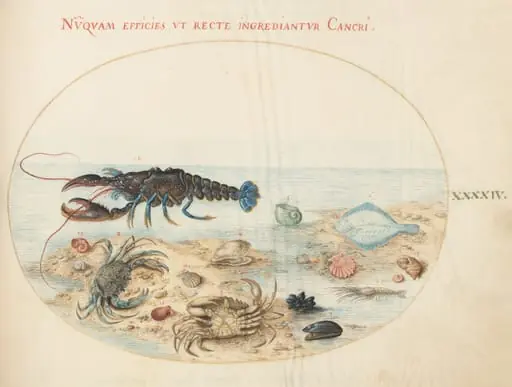 Plate 44: Lobster, Two Crabs, Scallop Shells, and Other Sea Life
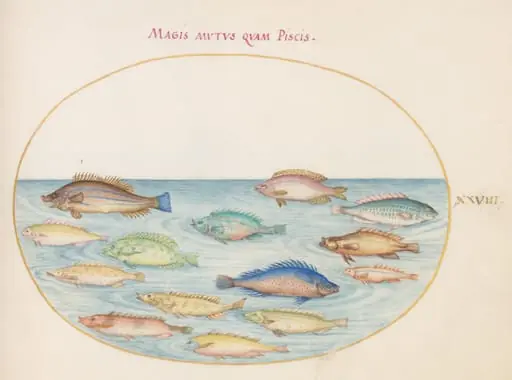 Plate 28: Sea Bream(?) and Other Fish
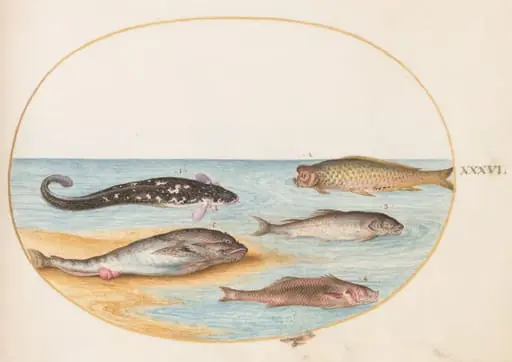 Plate 36: Five Fish, Including Carp(?)