Artwork
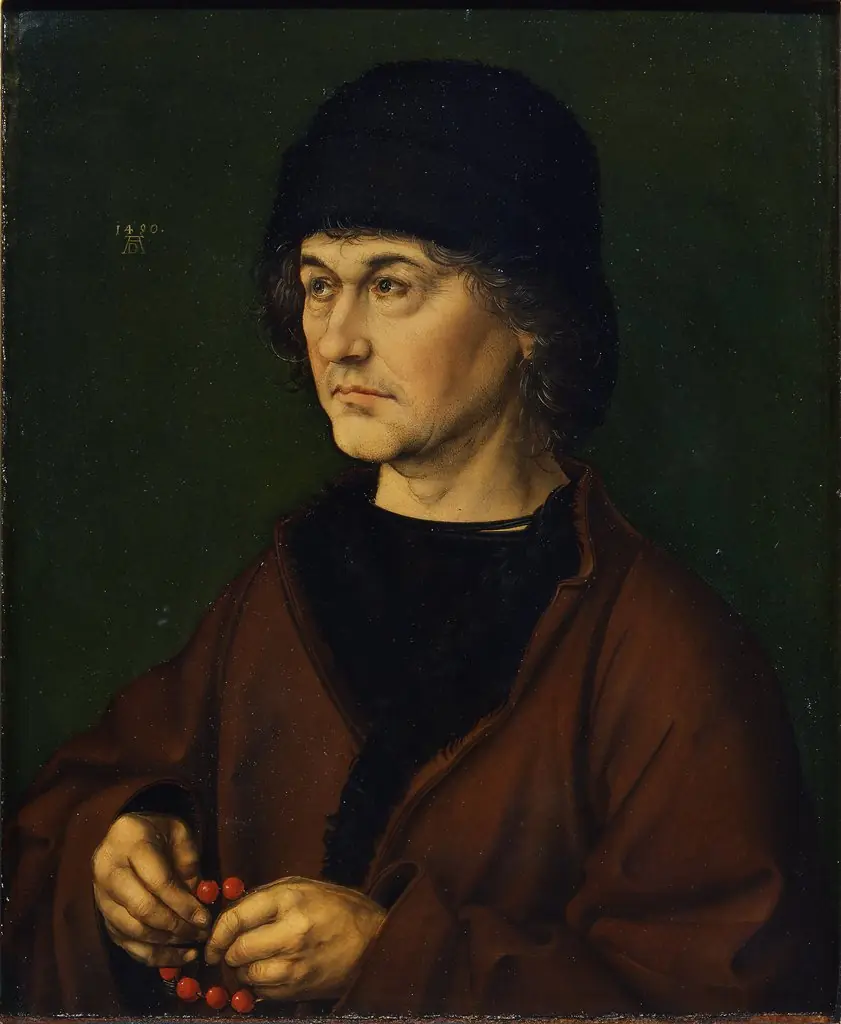
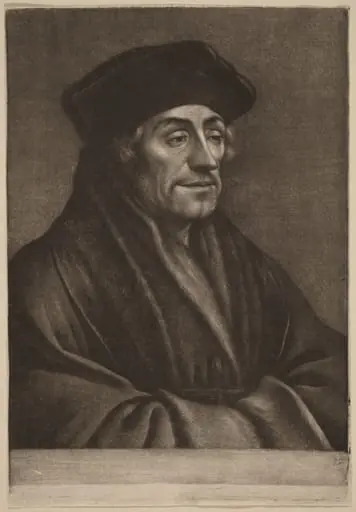
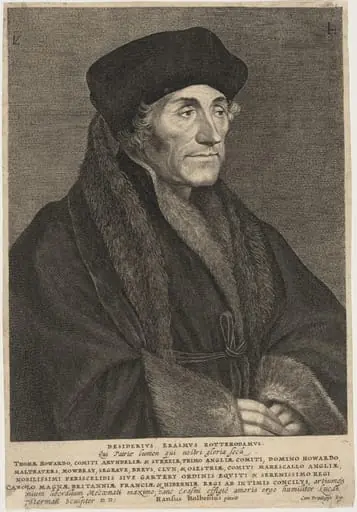
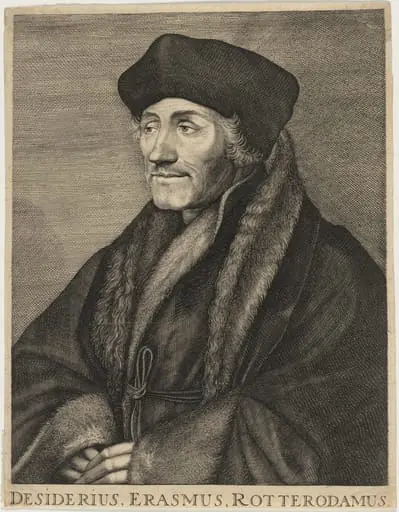
Albrecht Durer's Father
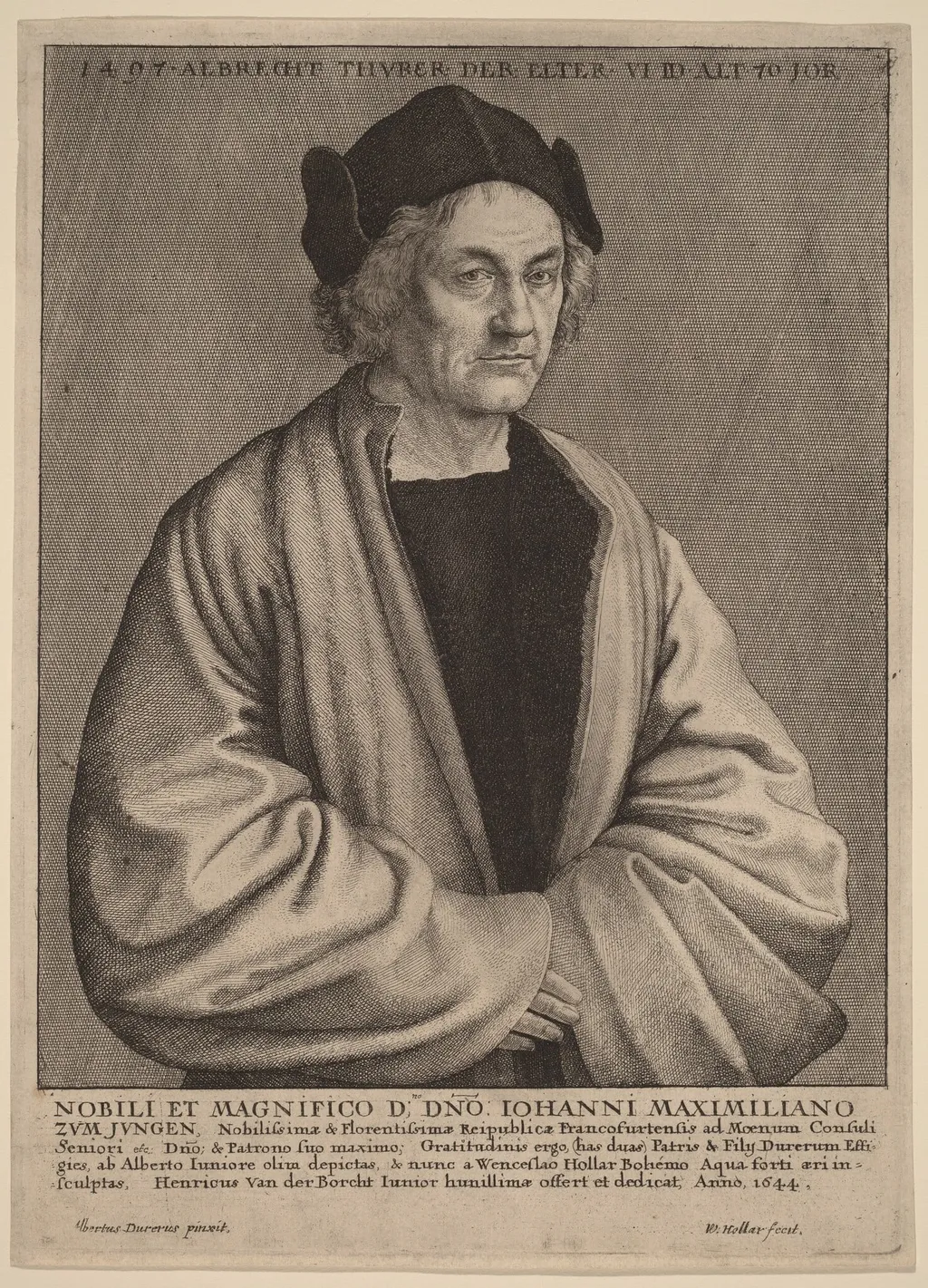
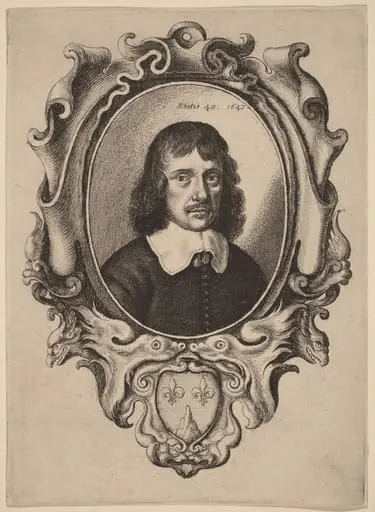
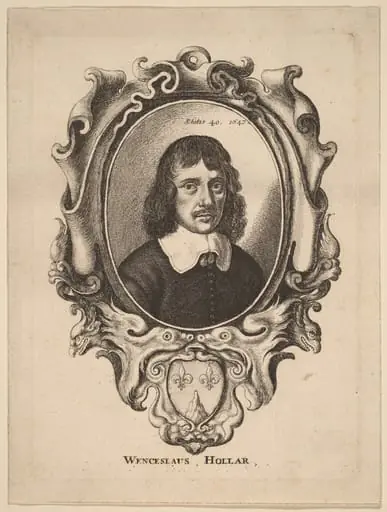
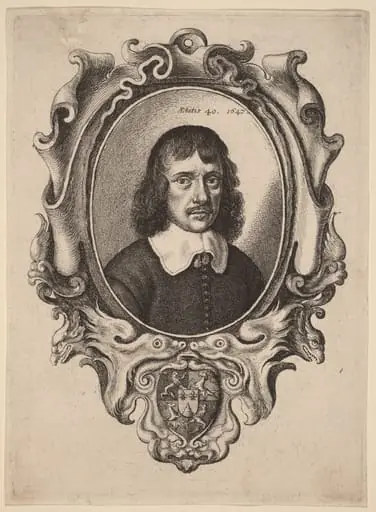
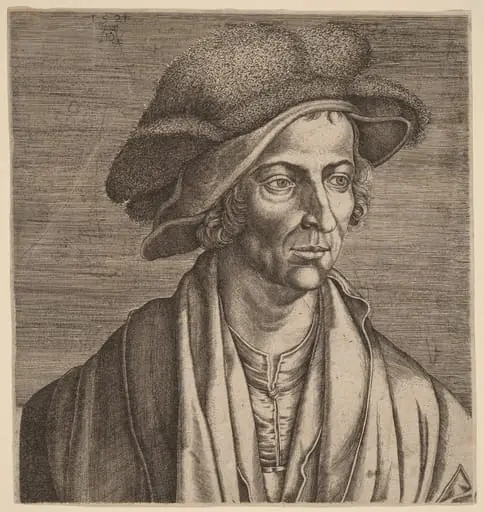
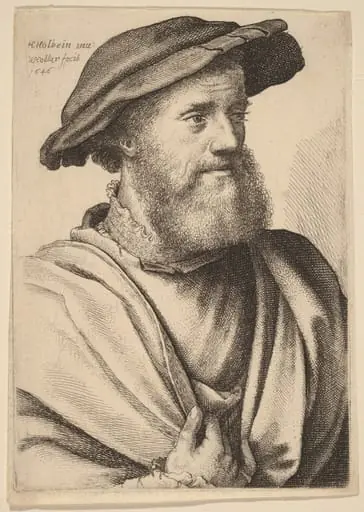
Albrecht Durer's Father is an ink print by the Baroque artist Wenceslaus Hollar. It dates from 1644 and is held in the collection of the National Gallery of Art.
About this work
Overview
Though not an original work by Dürer himself, it engages with his legacy by depicting a figure closely associated with his early life and artistic formation.
This 1644 etching by Wenceslaus Hollar portrays the father of the German artist Albrecht Dürer. Created during Hollar’s years in London, the work is a portrait study in monochrome, rendered with fine linear precision typical of his etching technique. Though not an original work by Dürer himself, it engages with his legacy by depicting a figure closely associated with his early life and artistic formation.
Subject & Meaning
The subject is an elderly man, identified as Albrecht Dürer the Elder, rendered with quiet dignity. His crossed arms and direct gaze convey a sense of solemn introspection. The plain background and muted tones focus attention on his weathered face and graying hair, emphasizing age and lived experience.
The portrait functions as a tribute to the paternal figure behind one of the Northern Renaissance’s most influential artists.
Technique & Style
Hollar employed fine, controlled etching lines to model form and texture, capturing the folds of the cloak, the texture of the hat, and the subtle contours of the face. The tonal range is restrained, relying on line density rather than wash or shading to suggest depth. His approach reflects the Northern European tradition of portrait etching, prioritizing clarity and psychological presence over dramatic effect.
History & Provenance
The etching was made in London in 1644, during Hollar’s extended stay in England, where he worked for patrons including the Earl of Arundel. It was likely produced as part of a series of portraits of notable figures from art history. Hollar, who died and was buried in London, maintained a lifelong interest in German artistic heritage, which informed this and other works referencing Dürer’s lineage.
Context
In mid-17th-century England, there was growing interest in Northern Renaissance artists, particularly Dürer, whose prints were widely collected. Hollar, though Czech by birth and trained in continental Europe, contributed to this revival by reinterpreting Dürer’s family through his own etching practice. The portrait reflects a broader cultural fascination with the origins of artistic genius.
Legacy
Hollar’s etching remains a documented reference to Albrecht Dürer’s father, preserving his image through the lens of a later generation. While not widely exhibited, it contributes to the visual record of Dürer’s familial context and exemplifies how 17th-century printmakers engaged with earlier artistic legacies. The work endures as a quiet, precise meditation on lineage and memory.
Own this work as a print
Artist & collection
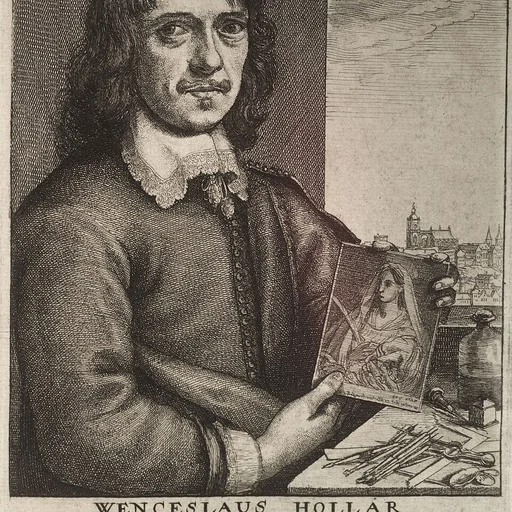
Artist
Wenceslaus Hollar (Czech: Václav Hollar (Czech pronunciation: ), German: Wenzel Hollar; 23 July 1607 – 25 March 1677) was a Czech engraver, etcher and painter.