Artwork
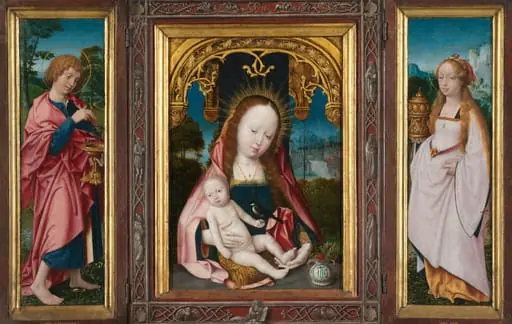
Triptychon. Heimsuchung Mariae zwischen St. Ursula mit den Zehntausend Jungfrauen und St. Martha. Aussenseiten der Flügel: Verkündigung Mariae
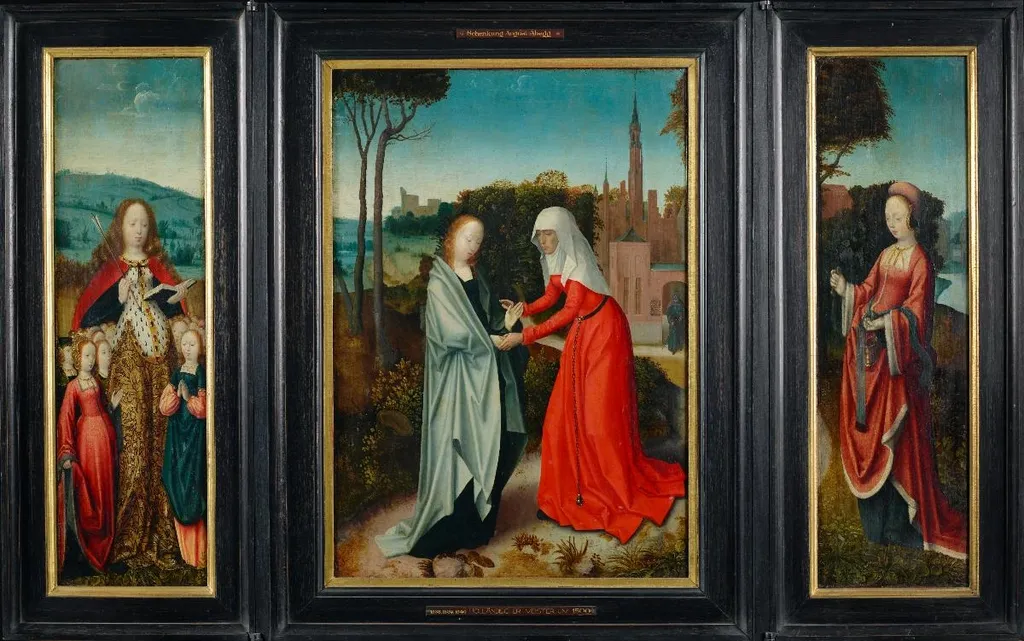
Triptychon. Heimsuchung Mariae zwischen St. Ursula mit den Zehntausend Jungfrauen und St. Martha. Aussenseiten der Flügel: Verkündigung Mariae is an oil painting by the Northern Renaissance artist Unknown. It dates from 1500 and is held in the collection of the Kunsthaus Zürich. The work is an oil‑painted triptych titled *Triptychon.
About this work
Overview
The work is an oil‑painted triptych titled *Triptychon. Heimsuchung Mariae zwischen St. Ursula mit den Zehntausend Jungfrauen und St. Martha*, with the outer wing panels depicting the Annunciation. It consists of three distinct panels: a left scene with a richly dressed woman and children, a central scene of two women in dialogue, and a right scene showing a solitary woman in red.
Subject & Meaning
The central narrative juxtaposes three female figures, each embodying a different aspect of Marian devotion.
The central narrative juxtaposes three female figures, each embodying a different aspect of Marian devotion. The left panel’s woman in a red cape and gold dress surrounded by children suggests a protective, maternal role, while the central conversation between two women may reference theological discourse about Mary. The solitary figure on the right, also in red, reinforces themes of contemplation and solitary prayer.
Technique & Style
Executed in oil, the artist achieves a layered surface that conveys depth and texture across the three panels. Fine brushwork renders the intricate folds of the garments and the delicate features of the children, while subtle chiaroscuro models the figures against a muted background, enhancing the sense of three‑dimensional space within the flat plane.
Context
The triptych format aligns with liturgical art traditions, allowing the work to function both as an altarpiece and a portable devotional object. The inclusion of St. Ursula with the legend of the ten thousand virgins and St. Martha situates the piece within medieval hagiographic narratives, reflecting the period’s emphasis on female sanctity and intercessory prayer.
Legacy
Although specific provenance details are scarce, the painting exemplifies the continued use of multi‑panel compositions in post‑medieval religious art, illustrating how artists adapted traditional formats to convey complex theological ideas through a unified visual program.
Artist & collection

 Domestic Scene
 Giacomo and Cardinal Marco, investing Andrea, Abbot of San Zeno, with his Benefice
 The Nymph of Fontainebleau
 Portrait of a Woman
 Madonna and Child with Saints in the Enclosed Garden
 Venus and Minerva
 Family Group of Four on Sofa
 Wall painting from Room H of the Villa of P. Fannius Synistor at Boscoreale
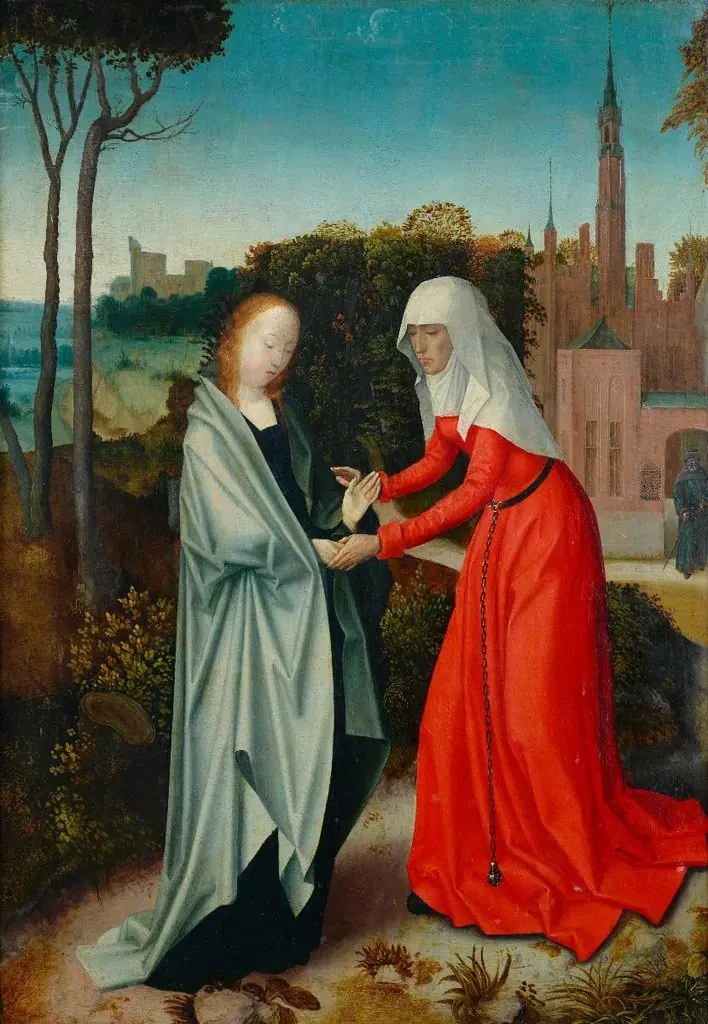 Heimsuchung Mariae zwischen St. Ursula mit den Zehntausend Jungfrauen und St. Martha. Aussenseiten der Flügel: Verkündigung Mariae
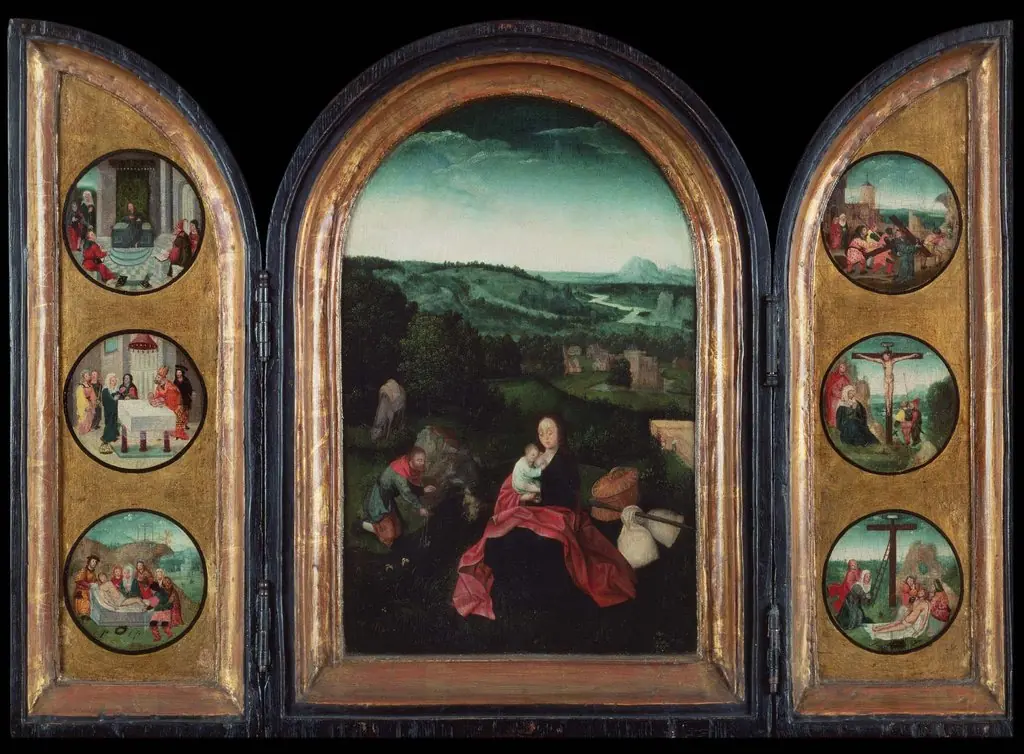 Triptych: Rest on the Flight into Egypt
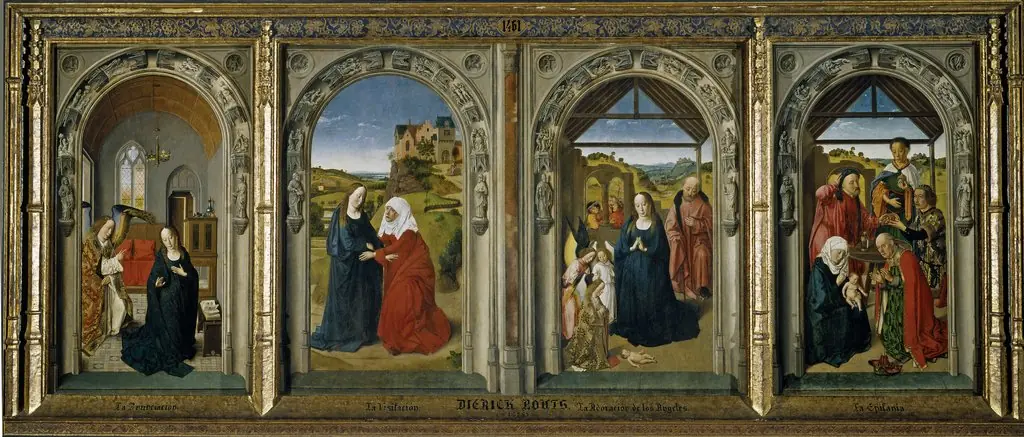 Triptych with Scenes from the Life of the Virgin
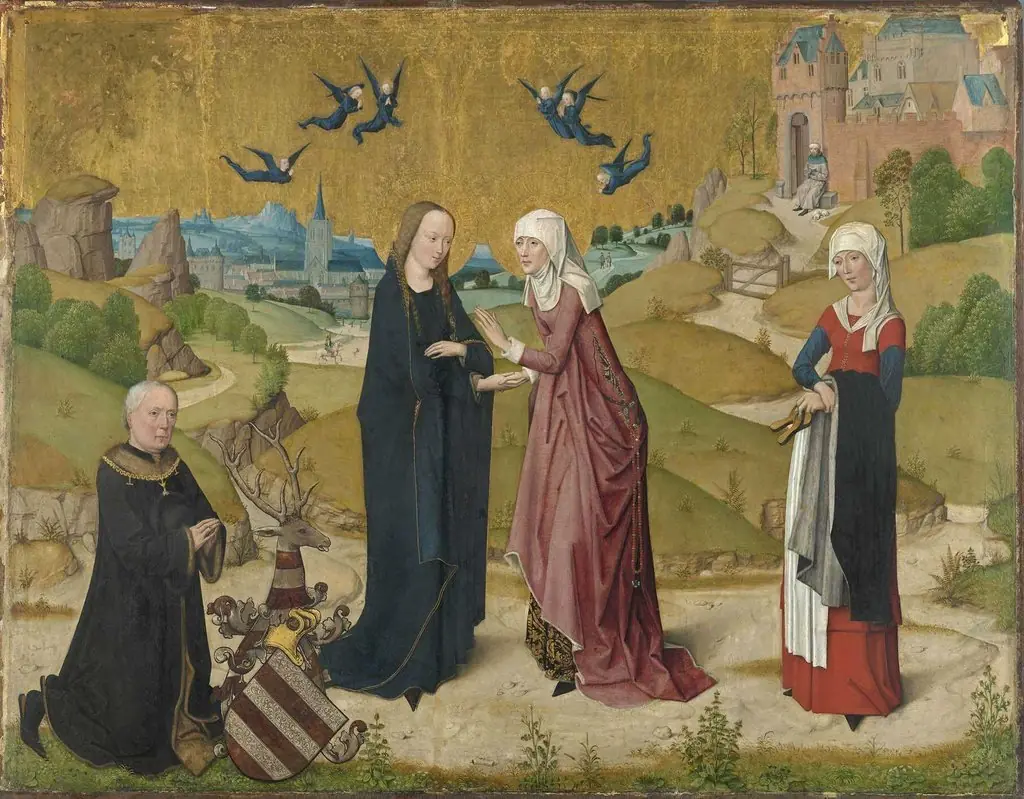 The Visitation with a portrait of donor Johann von Hirtz (?-?)
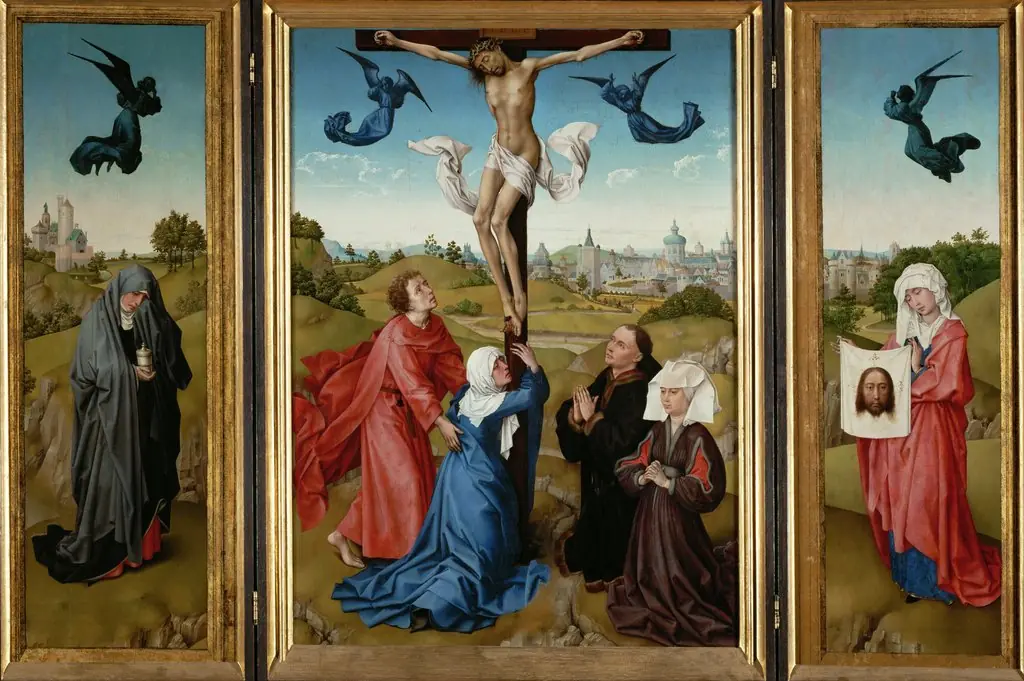 Crucifixion Triptych
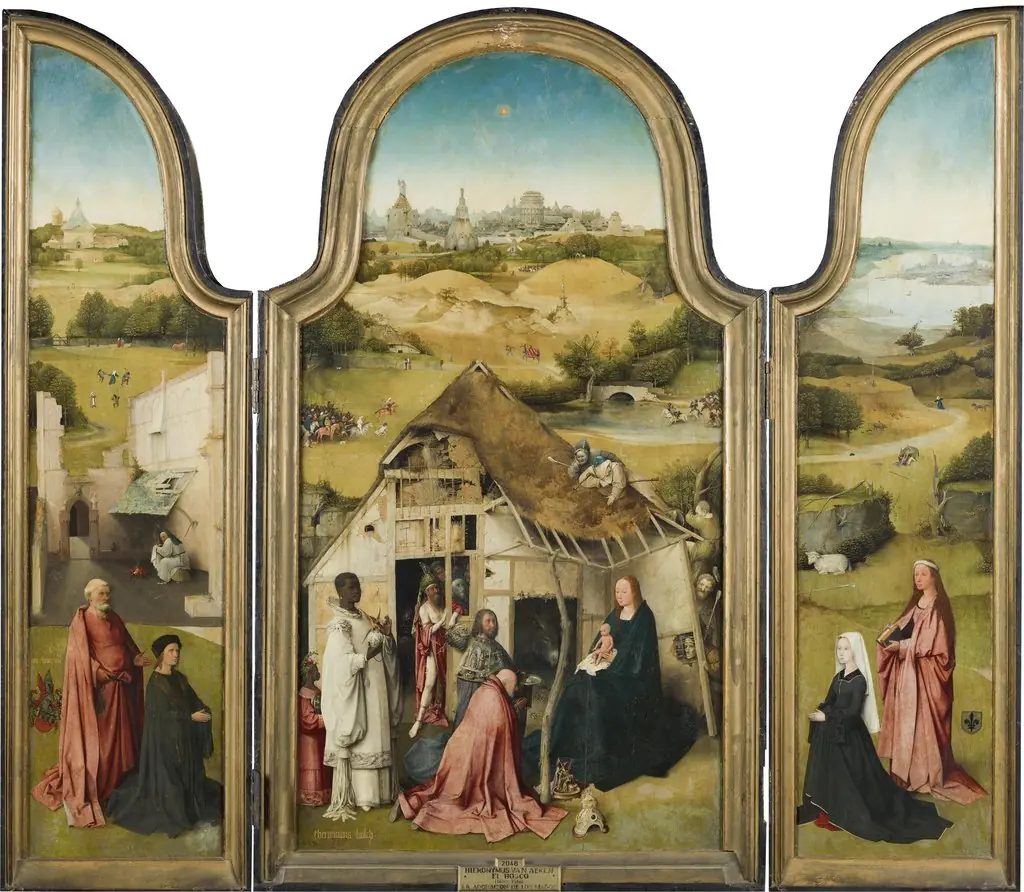 The Epiphany
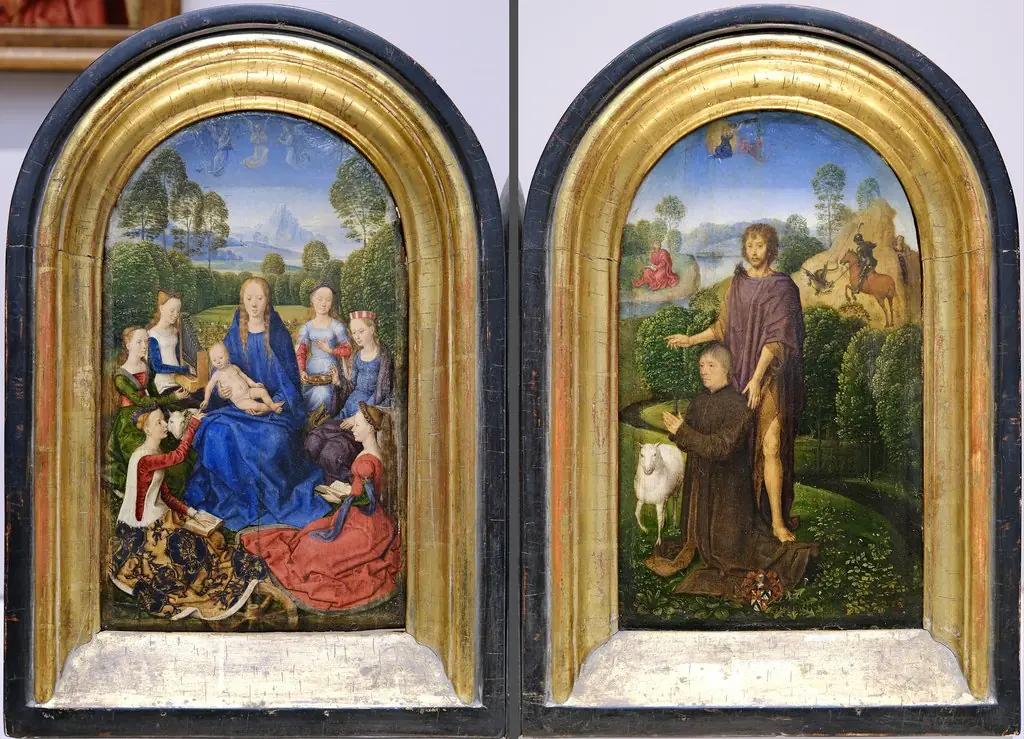 Diptych of Jan du Cellier
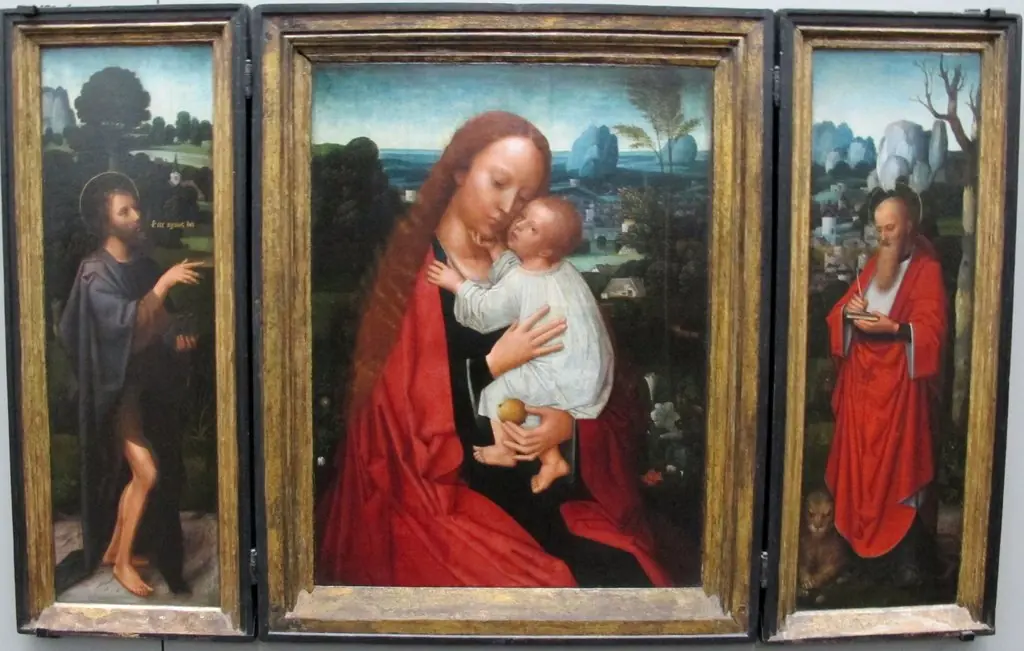 Madonna with John the Baptist and Saint Jerome
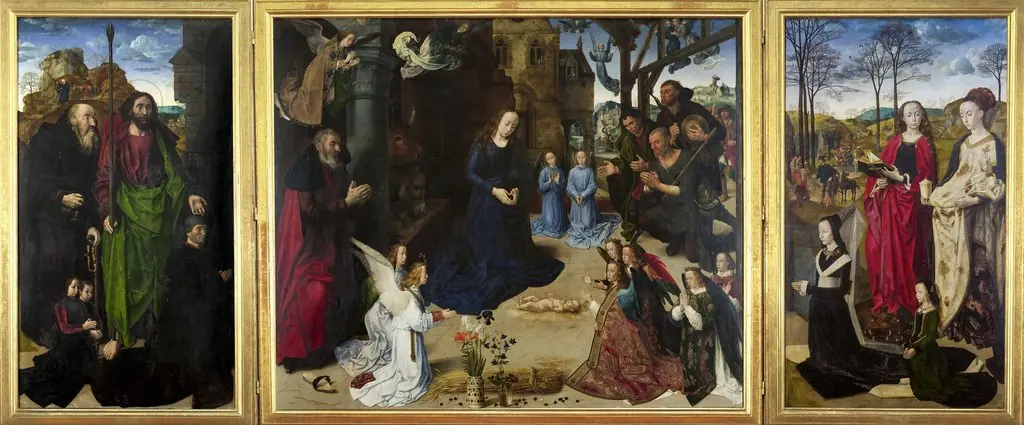 Portinari Triptych
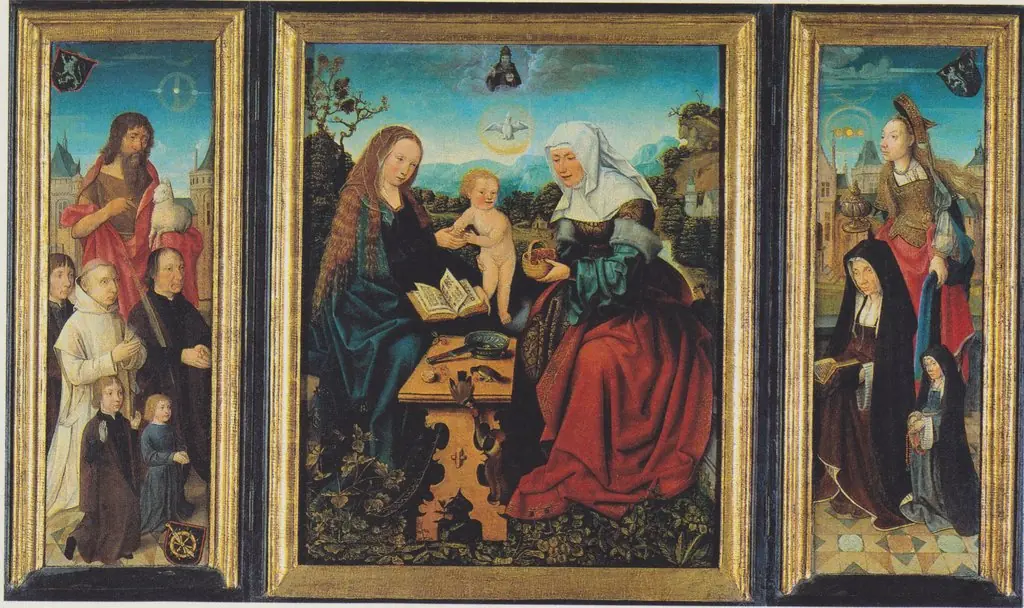 Portrait of Dirck van Heemskerck van Beest & sons with John the Baptist, Madonna and Child with St Anne, and Gertruid van Diemen & daughter with Mary Magdalene
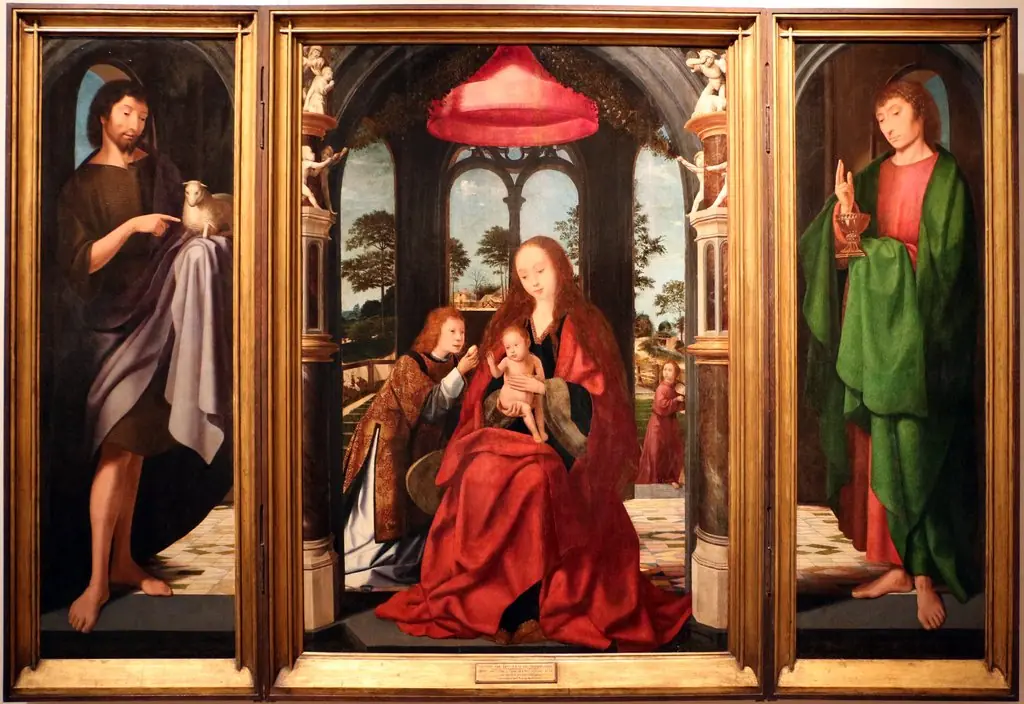 Triptych of the Virgin with the Child and Angels, St. John the Baptist and St. John the Evangelist
 Triptych with Virgin and Child, Saint John the Evangelist (left wing) and Mary Magdalene (right wing)